Why Four National Forests Share an Asheville Office
Many hunters are familiar with the names Pisgah, Nantahala, Uwharrie, and Croatan National Forests, but it often puzzles folks why four distinct, ecologically diverse regions all operate under one roof in Asheville. This centralized management can initially seem counterintuitive, yet it profoundly impacts how these vast public lands are conserved and made accessible for hunting. This guide will unravel the administrative structure behind North Carolina's national forests and explain how this unified approach, despite the varied landscapes, ultimately benefits hunters across the state.
Understanding North Carolina's National Forests: A Unified Management Approach
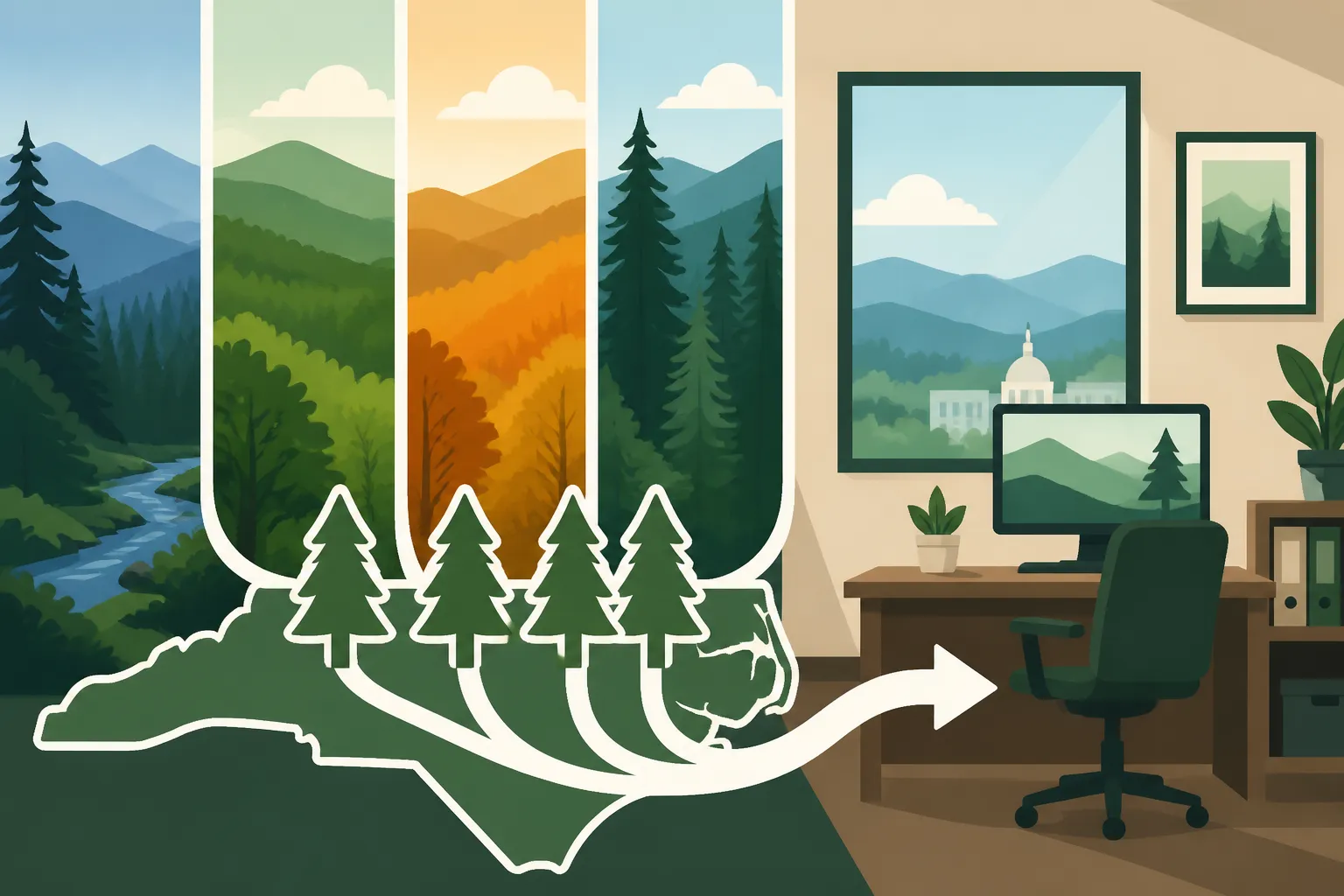
Imagine managing millions of acres of incredibly diverse terrain, from towering mountain peaks to sprawling coastal swamps, all within a single state. It's a monumental task. The U.S. Forest Service in North Carolina tackles this by consolidating the administration of its four national forests under one office located in Asheville. This isn't just about efficiency; it's a strategic decision rooted in conservation history and practical logistics, shaping everything from trail maintenance to hunting regulations.
A Legacy of Conservation and Centralized Administration
The concept of national forests emerged from a need to protect vital timber resources and watersheds, and later, to provide public recreation and wildlife habitat. In North Carolina, the Pisgah and Nantahala National Forests, born from early 20th-century land purchases under the Weeks Act, are prime examples of this legacy. Over time, the Uwharrie and Croatan National Forests were added, expanding the public land footprint across the state. Rather than creating entirely separate administrative bodies for each, the Forest Service found that a unified regional approach offered significant advantages. This structure allows for a consistent application of federal regulations, shared expertise among forest managers, and a more cohesive strategy for dealing with issues like wildfire, invasive species, and recreational planning, including hunting. It means that while each forest has its own unique character, they all operate under the same overarching principles, funneling decisions and resources through a single administrative hub.
This isn't to say that local ranger districts don't have a crucial role. They absolutely do, acting as the boots on the ground, but the big-picture planning, budgeting, and coordination often originate from the Asheville office. For hunters, this translates into a degree of predictability. Even if you're traveling from the mountains to the coast, you're still dealing with the same fundamental framework of rules and management philosophies, which can be a relief when navigating federal land regulations. It creates a continuity that might be lost if each forest were an entirely independent entity trying to reinvent the wheel.
The Role of the National Forests in North Carolina Hunting
These four national forests collectively represent an incredible expanse of public hunting ground, offering opportunities that range from backcountry solitude to more accessible areas near population centers. For many hunters, especially those without access to private land, these forests are the primary avenues for pursuing game. The Pisgah and Nantahala National Forests provide vast tracts of mountainous terrain for deer, bear, and grouse. Uwharrie, a gem in the Piedmont, offers rolling hills and mixed forests perfect for whitetails and turkeys. And down on the coast, Croatan provides a challenging, swampy landscape where big bears roam.
The unified management means that decisions made at the Asheville office, such as forest-wide habitat improvement projects, road closures, or special permit hunts, can impact all four forests, or at least be coordinated across them. This allows for larger-scale conservation initiatives that might benefit migratory birds, wide-ranging bear populations, or deer herds that move between public and private lands. Without this centralized oversight, individual forests might struggle to implement comprehensive strategies, potentially leading to disjointed efforts that are less effective for wildlife management and, by extension, less beneficial for hunters who rely on healthy, robust game populations.
Pisgah National Forest: Mountain Majesty and Diverse Opportunities
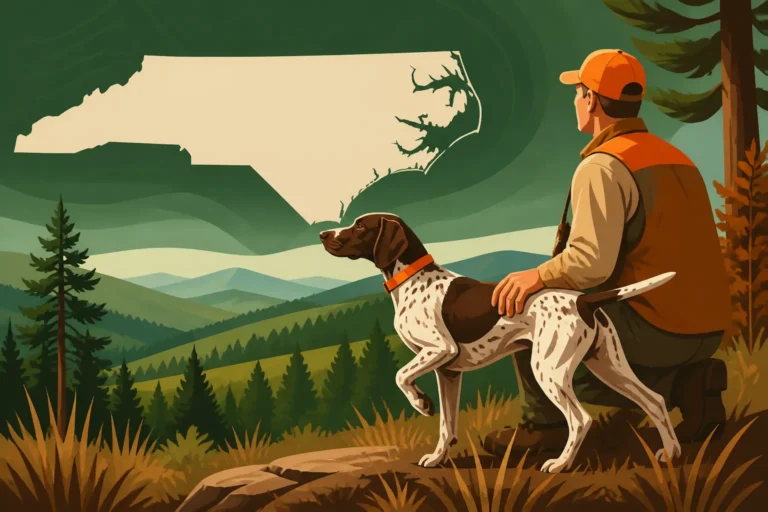
For many, Pisgah National Forest is the quintessential mountain hunting experience in North Carolina. It embodies rugged beauty, dramatic elevation changes, and challenging terrain that tests even seasoned outdoors enthusiasts. When you think of hunting the North Carolina mountains, Pisgah is often the first place that comes to mind, and for good reason.
Rugged Terrain and Wildlife Abundance
Pisgah's landscape is defined by its majestic mountains, dense hardwood forests, and a network of swift-flowing rivers and streams. Elevations can soar, leading to varied microclimates and diverse habitats. Hunters here often find themselves navigating steep slopes, deep hollows, and thick rhododendron thickets. This challenging environment, however, is precisely what makes it so rewarding. Deer in Pisgah are often harder-earned, but the sense of accomplishment is immense. Black bears thrive in these vast, remote areas, utilizing the abundant mast crops and dense cover. You'll also find opportunities for small game like squirrels and, in specific high-elevation areas, even ruffed grouse. Hunting here is a true wilderness experience, demanding physical fitness, keen woodsmanship, and a good understanding of mountain thermals and wind currents. For more insights on hunting in these challenging conditions, check out our guide on Hunting the North Carolina Mountains.
The sheer scale of Pisgah means that there's always new ground to explore. Hunters often rely on topo maps and mapping apps like onX Hunt to identify potential bedding areas, travel corridors, and access points. It’s not uncommon to hike several miles into a remote basin before setting up a stand or beginning a still-hunt. This type of hunting isn't for everyone, but for those who embrace the challenge, Pisgah offers some of the most genuine big-woods hunting available in the state. Just be prepared for quick weather changes, steep climbs, and potentially long drags back to the vehicle. For those interested in pursuing upland birds in the region, a read on Grouse Hunting the Blue Ridge Escarpment might prove valuable.
Access and Permitting for Pisgah Hunters
Accessing Pisgah National Forest for hunting requires understanding both federal and state regulations. While the Asheville office coordinates the broader management, individual ranger districts within Pisgah handle the day-to-day operations and specific local access points. Generally, national forests fall under North Carolina's Game Lands program, meaning you'll need a state hunting license with the appropriate big game privileges, plus a Game Lands license. This is a critical distinction that sometimes confuses hunters new to public land. The beauty of the centralized Forest Service office in Asheville is that it works in tandem with the North Carolina Wildlife Resources Commission (NCWRC) to ensure regulations are harmonized, or at least clearly communicated, minimizing confusion for hunters.
Permits for specific areas or special hunts might be required, but for general hunting, it's usually a matter of having the correct state licenses. Information on these requirements is often available through the NCWRC website, but local ranger stations can also provide maps and details on specific road closures or seasonal access restrictions. Always check before you go, as conditions can change. The ease of finding this information, often through a single point of contact (even if it means checking both federal and state sites), is a direct benefit of the coordinated management. Understanding these requirements is essential, and our guide on North Carolina Game Lands License Requirements offers a deeper dive into what you'll need before heading out.
Nantahala National Forest: Western North Carolina's Wild Heart
Adjacent to Pisgah, the Nantahala National Forest covers the southwestern corner of North Carolina, offering a similarly rugged but distinct hunting experience. Its name, "Land of the Noonday Sun," aptly describes the deep, shaded gorges and towering ridges that characterize much of its terrain, making it a truly wild and captivating place for hunters.
Deep Coves and Remote Hunting Experiences
Nantahala National Forest is known for its dramatic topography, featuring deeper valleys, steeper slopes, and often more remote areas than some parts of Pisgah. It boasts some of the highest peaks in the eastern United States, creating an incredibly diverse ecosystem. The forest is characterized by vast tracts of mature timber, mixed with pockets of dense laurel and rhododendron, making for incredibly challenging but rewarding hunting. Here, deer and bear populations thrive, often growing to impressive sizes due to the abundant forage and reduced human pressure in its more remote reaches. Nantahala National Forest Hunting provides a deeper look into what to expect in this rugged country.
Hunting in Nantahala often means committing to long hikes and extended stays in the backcountry. Roads are fewer and further between in some areas, pushing hunters to develop strong navigation skills and a robust understanding of the terrain. Still-hunting along Nantahala's ridges, especially during the rut, can be a highly effective tactic, as deer often use these elevated travel corridors. The deep coves provide sanctuary and excellent bedding cover, requiring patience and strategic planning to access effectively. Bear hunting is also a major draw, particularly in the fall when mast crops are plentiful. For those pursuing bruins, Hunting the Mountain Bear Zones details key strategies. The very nature of this wild country means that you'll need to be self-sufficient and prepared for whatever Mother Nature throws your way.
Navigating Nantahala: Tools and Tactics
Successfully navigating the vast and often confusing terrain of Nantahala National Forest is paramount for a safe and productive hunt. With its deep drainages and endless ridge lines, it's easy to get disoriented, especially when focused on tracking game. This is where modern navigation tools truly shine. Many seasoned hunters rely heavily on robust GPS units or smartphone apps like onX Hunt, which provides detailed topographical maps, satellite imagery, and public/private land boundaries right in the palm of your hand, even in areas with no cell service. Before heading out, downloading offline maps for your specific hunting area is an absolute must.
Beyond technology, traditional woodsmanship remains critical. Learning to read the land, understand contour lines, and anticipate animal movement based on topography are skills that no app can fully replace. Scouting extensively before the season, even if it's just digitally from your couch, allows you to identify potential access points, pinch points, and escape routes. Being physically prepared for strenuous climbs and long hikes is also non-negotiable. The ability to climb quietly and strategically, often through thick undergrowth, is key to success when Still-Hunting Nantahala Forest Ridges. The unified management from the Asheville office ensures that while the terrain is wild, boundary markers and official information are consistently maintained, helping hunters verify their location and stay within legal hunting areas.
Uwharrie National Forest: Piedmont Foothills and Hidden Gems
Nestled within the central Piedmont region of North Carolina, Uwharrie National Forest might not boast the soaring peaks of Pisgah or Nantahala, but it offers a unique and highly accessible public hunting experience. It's a place where rolling hills, mixed hardwoods, and historic landscapes combine to create a distinct challenge and charm for hunters.
Unique Piedmont Habitat and Hunting Pressure
Uwharrie National Forest presents a different kind of hunting puzzle than its mountain counterparts. The terrain consists of rolling hills, much more gentle than the Blue Ridge, but still plenty steep in places to get your heart pumping. The forest is a mix of mature hardwoods, pine plantations, and bottomland areas, providing excellent habitat for a variety of game. White-tailed deer are the primary draw, and while the deer density might not be as high as in some coastal areas, the forest often produces mature bucks that know how to avoid pressure. Wild turkeys also thrive here, especially in areas with a good mix of open woods and dense cover.
Because Uwharrie is relatively close to major population centers like Charlotte and Greensboro, it tends to see more hunting pressure, especially on opening day and weekends. This means hunters need to be strategic in their approach. Finding those overlooked pockets, walking a little further, or hunting mid-week can significantly improve your odds. Understanding how deer react to pressure, and utilizing features like thick creek bottoms or hidden benches, becomes crucial. For tips on how to approach these types of areas, exploring methods like Hunting Piedmont Farmland Deer can be surprisingly relevant, even though Uwharrie isn't farmland. The consistent management from the Asheville office helps ensure that even with pressure, the habitat is maintained for long-term sustainability of game.
Adapting Strategies for Uwharrie's Landscapes
Hunting Uwharrie requires a flexible and often patient approach. Unlike the vast, uninterrupted tracts of the mountain forests, Uwharrie can feel a bit more fragmented, with private land often bordering public sections. This necessitates careful attention to property lines, using tools like mapping applications to avoid trespassing. The rolling topography creates numerous small drainages, saddles, and bench systems that deer use as travel corridors and bedding areas. Learning to identify these subtle terrain features is key.
For turkey hunters, Uwharrie offers fantastic spring opportunities. The mixed hardwoods and pine stands create excellent roosting and foraging habitat. Early morning gobblers are a common sound, but they can get quiet quickly once pressure sets in. Adapting your calling strategy and being willing to move often are essential tactics. The centralized management model helps ensure that even with different ecological zones, there's a continuity in how wildlife populations are monitored and managed. This allows the NCWRC to track trends, such as North Carolina Turkey Population Trends, and make informed decisions that benefit hunters across various landscapes. Whether you're chasing deer or turkeys, Uwharrie offers a challenging yet accessible experience that rewards those who put in the effort to understand its unique rhythms.
Croatan National Forest: Coastal Swamps and Bear Country
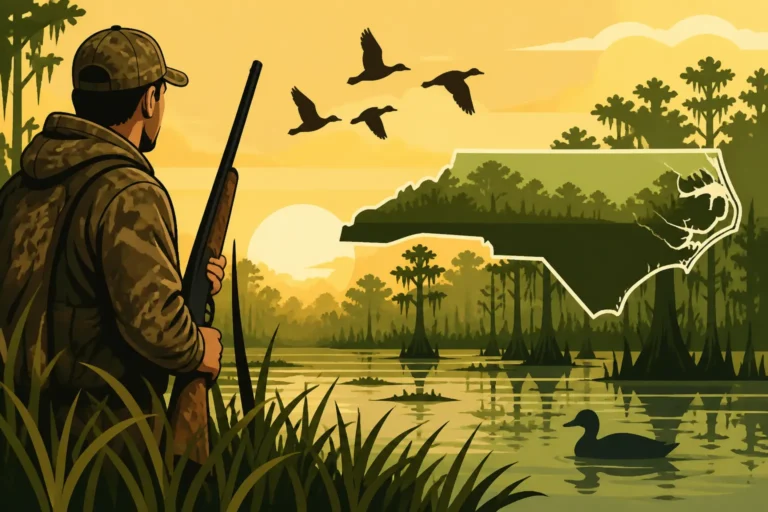
Shifting gears entirely from the mountains and Piedmont, we find the Croatan National Forest, a truly unique and challenging hunting destination situated on North Carolina's central coast. This is not your typical deer woods; it's a land of pocosin swamps, pine flats, and maritime forests, demanding a specialized skill set and a robust spirit.
Coastal Plain Challenges and Rewards
The Croatan National Forest is unlike any other national forest in North Carolina. Its landscape is dominated by vast, dense pocosins (elevated, boggy swamps), pine savannahs, and areas of thick maritime forest. Water is a constant presence, whether it's standing water in the swamps or the influence of tidal creeks. This environment presents significant challenges for hunters: thick vegetation, difficult footing, abundant biting insects, and the constant potential for getting wet. However, these very challenges are what make Croatan a haven for wildlife, particularly North Carolina's famous coastal black bears. These bears grow to enormous sizes, thriving in the dense, undisturbed cover and plentiful food sources. Pursuing them in Croatan is an experience not soon forgotten, and our guide on Croatan National Forest Hunting delves into what makes it so special.
Deer hunting in Croatan also demands a unique approach. Whitetails here are masters of navigating the thick cover, and hunters often find success by focusing on the edges of pocosins, clear-cuts, or natural funnels where deer movement is concentrated. Understanding how deer use these natural corridors is crucial. For instance, knowing how to hunt a specific feature like Hunting a Funnel Between Two Pocosins can be the key to success. The rewards of hunting Croatan are immense for those willing to brave the elements: the chance to pursue trophy-class bears and deer in an ancient, wild landscape that feels truly untamed.
Specialized Gear and Knowledge for Croatan
To successfully hunt the Croatan National Forest, you need to come prepared with the right gear and a solid understanding of this unique environment. Forget your standard mountain boots; you'll likely need waterproof rubber boots, waders, or even a small boat or canoe to access some of the prime hunting areas. Insect repellent is not optional; it's a necessity, especially during early seasons. Because of the dense cover, shot distances for deer are often very short, making a shotgun with slugs or a close-range rifle a suitable choice. For bear hunting, robust firearms are recommended, and many hunters utilize dogs where permitted, a common tradition in the coastal bear zones.
Knowledge of the local terrain and conditions is equally important. Understanding water levels, tidal movements, and how game animals react to both natural cycles and hunting pressure will significantly impact your success. Scouting from the edges, looking for sign along roads, or even using aerial maps to identify drier ground within the pocosin can give you an edge. The Asheville office's oversight ensures that resources like detailed maps and information on hunting seasons are uniformly provided, aiding hunters in planning their trips to this wild coastal forest. For specific strategies on pursuing bears in this challenging environment, refer to Hunting Coastal Bears in Thick Pocosin Cover.
The Benefits of Centralized Management for Hunters
While it might seem counterintuitive at first glance, the unified management of North Carolina's four national forests from a single Asheville office offers distinct advantages that ripple down to the individual hunter. This isn't just about administrative neatness; it's about consistency, coordination, and more effective conservation efforts across disparate landscapes.
Streamlined Regulations and Information
One of the most immediate benefits for hunters is the streamlining of regulations and the centralized availability of information. Imagine if each national forest had entirely different sets of rules, reporting procedures, and administrative hoops to jump through. It would create a logistical nightmare for hunters, especially those who travel between regions. With the Asheville office as the hub, the U.S. Forest Service can maintain a consistent framework for land use policies, ensuring that while there might be local nuances, the core principles remain the same. This predictability simplifies planning and reduces the chance of accidental infractions.
This coordination extends to collaboration with the North Carolina Wildlife Resources Commission. The Forest Service often works closely with the NCWRC on wildlife management plans, season structures, and special regulations that affect hunting on national forest lands. This means that when you're looking up requirements for a hunting license, or checking specific season dates, you can trust that the information, whether from the NCWRC or the Forest Service, is harmonized. This joint effort simplifies the process of getting the necessary permits, understanding where you can hunt, and knowing the specific rules that apply. For example, general inquiries about North Carolina Hunting Licenses and What They Cost are much easier when the various agencies are aligned. This consistency makes it less daunting for new hunters to get started and more straightforward for experienced hunters to navigate the diverse public land opportunities.
Coordinated Conservation Efforts and Resource Allocation
Beyond administrative efficiency, centralized management allows for more effective, large-scale conservation efforts. Wildlife, particularly game species like deer, bear, and turkey, don't recognize forest boundaries. A bear might range across Pisgah and Nantahala, or a deer herd might utilize both national forest land and adjacent private property. By having a single management entity, resources—both financial and personnel—can be allocated strategically across the entire national forest system in North Carolina. This allows for coordinated habitat improvement projects, such as prescribed burns, timber thinning for wildlife, or stream restoration, that benefit broader ecosystems rather than just isolated pockets.
This holistic approach means that wildlife biologists can monitor populations and implement management strategies that consider the interconnectedness of habitats, even those separated by hundreds of miles. For instance, studies on deer herd health or bear population dynamics can draw on data and expertise from all four forests, leading to more informed decisions about hunting seasons, bag limits, and conservation priorities. Researchers, and even hunters looking for insights, can often find aggregated data and reports, with tools like GoHunt becoming invaluable for understanding these trends and planning their hunts. This collaboration ultimately results in healthier game populations and more sustainable hunting opportunities for everyone who ventures into North Carolina's national forests.
North Carolina National Forests at a Glance
To help visualize the diversity and unified management, here's a brief comparison of the four national forests:
| Feature | Pisgah National Forest | Nantahala National Forest | Uwharrie National Forest | Croatan National Forest |
|---|---|---|---|---|
| Location | Western NC, Blue Ridge Mountains | Southwestern NC, Appalachian Mountains | Central NC, Piedmont Foothills | Eastern NC, Coastal Plain |
| Primary Terrain | Rugged mountains, high elevations, hardwood forests | Deep coves, steep slopes, old-growth timber | Rolling hills, mixed hardwoods/pine | Pocosin swamps, pine flats, maritime forest |
| Key Game Species | Deer, Bear, Grouse, Turkey, Small Game | Deer, Bear, Turkey, Small Game | Deer, Turkey, Small Game | Bear, Deer, Waterfowl, Small Game |
| Hunting Challenge | Strenuous hikes, elevation changes, dense cover | Remote access, steep climbs, deep drainages | Hunting pressure, fragmented public land | Wet, thick cover, insects, difficult navigation |
| General Access | Good road network, some remote areas | More remote, fewer roads in certain areas | More accessible, closer to population | Often requires boats/waders, limited roads |
This table clearly shows the distinct character of each forest while highlighting their shared purpose under the Asheville office's management. Each offers a unique adventure, but all are part of a larger, coordinated effort to provide public land hunting opportunities in North Carolina.
Disclaimer
This article is for general informational purposes only and does not constitute professional advice. Laws, prices and regulations vary by location and change over time. Consult a qualified professional for guidance on your specific situation.