Hunting the Coastal Plain and Sandhills
Hunting North Carolina's Coastal Plain and Sandhills presents a unique set of challenges that can leave even seasoned hunters feeling bewildered. Unlike the predictable ridge lines of the mountains or the farm country woodlots of the Piedmont, this vast, often flat, and sometimes swampy terrain demands different strategies, different gear, and a whole new way of thinking about how game moves. If you've ever found yourself staring at a dense pocosin edge, wondering where to even begin, or feeling overwhelmed by the sheer scale of the pine forests, this guide is for you. We're going to break down the distinct characteristics of these regions, explore effective hunting tactics, and help you unlock the potential of North Carolina's eastern hunting grounds.
Understanding the Unique Landscapes of Eastern North Carolina
The eastern half of North Carolina is a world apart from its central and western counterparts, offering distinct hunting environments: the Coastal Plain and the Sandhills. Each region has its own unique ecological characteristics, which in turn dictate the types of game found there and the most effective hunting strategies. Ignoring these differences is a surefire way to come home empty-handed and frustrated.
The Coastal Plain: Swamp, Pines, and Dense Thickets
Imagine vast expanses of flat land, crisscrossed by rivers, creeks, and drainage ditches, dotted with cypress swamps, dense pocosin thickets, and endless pine plantations. That’s the North Carolina Coastal Plain. This region is famous for its high humidity, an abundance of water, and some truly impenetrable cover. Deer often thrive here, finding refuge in the dense undergrowth, and black bears can grow to impressive sizes, feasting on the rich mast crops and readily available food sources in these wild areas. Waterfowl, of course, are also a huge draw, with the sounds and estuaries providing critical wintering habitat.
Hunting here means embracing the wet and wild. You'll encounter sandy soils that can turn to mud with a heavy rain, thick briar patches that seem to grab at you from every direction, and low-lying areas that might be under several inches of water. The sheer density of vegetation makes long-range shots rare; instead, it's a game of close encounters and stealth. Understanding how deer and other game utilize these pockets of cover, especially where pines meet pocosin or where a creek bottom offers a travel corridor, is paramount. This isn't wide-open country where you can glass for miles; it's intimate, often claustrophobic hunting that requires keen observation and patience.
The Sandhills: Longleaf Pines and Rolling Terrain
Just inland from the Coastal Plain lies the Sandhills region, characterized by rolling topography, dry, sandy soils, and iconic longleaf pine forests. This ecosystem is a result of ancient ocean beds, and while not as dramatically mountainous as the western part of the state, it's far from flat. The land gently rises and falls, creating natural depressions and drainages that become critical game corridors. The open understory, maintained by frequent prescribed burns, often features wiregrass, scrub oaks, and scattered gallberry bushes, which offer different food sources and cover compared to the Coastal Plain's dense thickets.
Deer here tend to be a bit more spread out, and their movements are often influenced by the open nature of the longleaf stands and the location of natural browse and acorn crops. Visibility is generally better than in the deep pocosins, but the sandy soil can make tracking challenging. Turkey hunting is also excellent in the Sandhills, as the open woods and mast production create ideal conditions for gobblers. You might also find good opportunities for small game like squirrels and rabbits, especially in areas with mature hardwoods mixed into the pine. The key to hunting the Sandhills is understanding the subtle contours of the land and how game uses transitions between different types of timber and elevation changes.
Deer Hunting Strategies for Eastern North Carolina
Deer are the bread and butter for many hunters in the Coastal Plain and Sandhills, but getting one in these distinct environments requires different approaches. Forget about spotting them from a quarter-mile away across an open bean field, unless you're hunting specific agricultural transitions. Here, it’s about understanding cover, scent, and subtle movements.
Still-Hunting Pine Plantations and Pocosin Edges
Still-hunting is one of the most effective, yet challenging, methods in eastern North Carolina. It's not about being motionless, but about moving incredibly slowly, pausing frequently, and observing your surroundings. In dense pine plantations, especially those recently thinned or with a thick understory, deer will often bed down just out of sight. You need to move quietly, often just a few steps at a time, looking for horizontal lines in a vertical world – the back of a deer, an ear flick, or the faint outline of a leg. The wind direction is absolutely critical here; you must hunt into it, or with a crosswind, to keep your scent from blowing ahead of you. Still-Hunting Nantahala Forest Ridges might talk about mountains, but the principle of slow, deliberate movement applies here too.
When still-hunting pocosin edges, focus on the transition zones. Deer love the security of the thick stuff but need to come out to feed. Look for trails leading into and out of the dense cover, particularly along the edges of agricultural fields, cut-overs, or even along old logging roads. These edges are natural funnels. Move along them, using the wind to your advantage, and pay close attention to changes in terrain or vegetation that might offer a hidden bedding area or a preferred food source. It's a game of patience and constant awareness, where a single twig snap can ruin your hunt.
Stand Hunting Over Food Sources and Funnels
Setting up a static stand, whether a ladder stand, climber, or ground blind, can be highly effective when you've identified key deer activity areas. Food sources are always a draw. In the Coastal Plain, this often means agricultural fields like corn, soybeans, or peanuts. Setting up on a field edge where deer enter and exit, especially near heavy cover, is a classic tactic. For this, Setting Up on a Piedmont Field Edge provides great advice that translates well to eastern farmland.
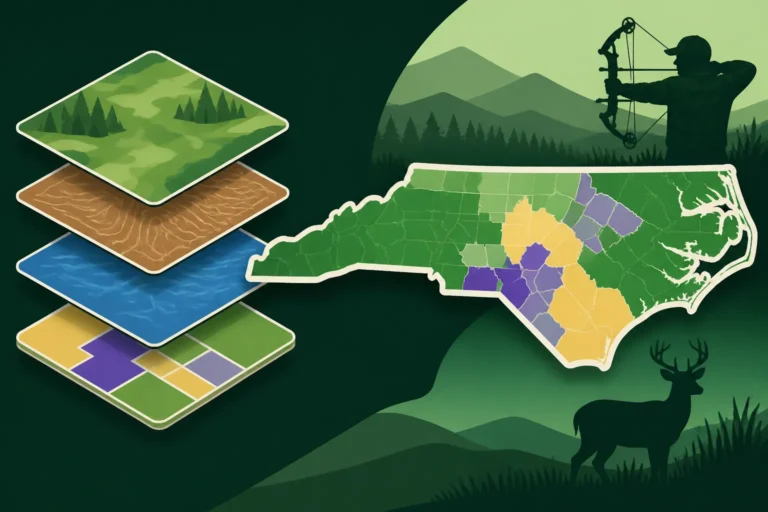
Natural funnels are another prime location for stands. These are pinch points in the landscape that naturally channel deer movement. Think about narrow strips of woods between two large swamps, a small woodlot connecting two expansive clear-cuts, or a small island of high ground surrounded by low, wet areas. Deer will invariably use these routes. A stand placed overlooking such a funnel can provide shot opportunities at deer moving between bedding and feeding areas. Using a mapping tool like onX Hunt is invaluable for identifying these terrain features and property lines, allowing you to pinpoint optimal stand locations and navigate the often featureless terrain. Remember, deer in these areas are often accustomed to human activity, so scent control and quiet entry/exit are paramount.
Organized Deer Drives in Thick Cover
In the Coastal Plain, especially in those vast, thick pocosins and dense pine blocks, deer drives are a time-honored tradition and often the most productive way to move deer. This isn't a casual stroll; it's a coordinated effort involving "drivers" who push through the cover and "standers" positioned to intercept deer trying to escape. Communication and safety are absolutely critical. Knowing the terrain, where deer will typically try to escape, and how to safely position hunters is paramount. Deer Drives With Three or Four Hunters offers a good starting point for understanding the dynamics.
A successful drive requires intimate knowledge of the area. You need to know where the dense cover gives way to more open ground, where natural escape routes are, and where deer might double back or hold tight. Drivers need to move steadily, making enough noise to push deer without spooking them into a dead sprint. Standers must be vigilant, positioned for clear shots, and aware of every other hunter's location. The frustration of trying to hunt dense cover individually often leads to the efficiency of a well-executed drive, especially on large tracts of public land or private hunting clubs where multiple hunters can coordinate effectively.
Bear Hunting the North Carolina Pocosins
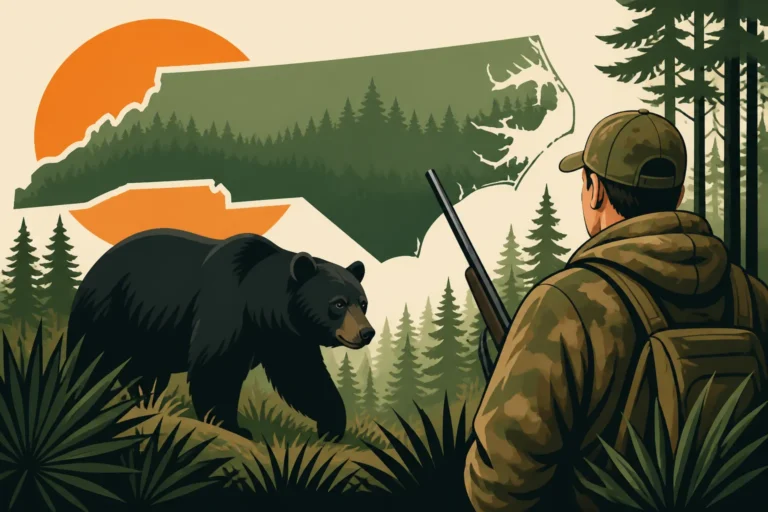
North Carolina boasts a thriving black bear population, and the Coastal Plain pocosins are home to some of the largest bears in the country. These dense, swampy thickets provide incredible cover and abundant food, allowing bears to grow to massive sizes. Hunting these giants is an unforgettable experience, but it’s far from easy.
Locating Bear Sign and Travel Corridors
Bears are creatures of habit, and while they can disappear into the thickest cover, they often leave clues about their presence and travel patterns. Look for tracks in soft mud around water sources or along logging roads. Torn-up logs or stumps indicate they've been searching for grubs, and scat piles will tell you what they're eating – often berries, acorns, or corn if near agricultural fields. Finding where they're feeding heavily is crucial. In areas with wild berries like gallberry or huckleberry, look for trampled vegetation and fresh droppings.
Bear travel corridors in the pocosins are often subtle. They'll use the easiest path through the dense cover, which might be an old survey line, a dry ridge through a swamp, or even just a slightly less thick section of timber. Pay attention to "rub trees" – trees with bark rubbed off, usually at shoulder height, which bears use to mark territory. These can indicate a frequently used travel route. Setting trail cameras on these likely corridors can help confirm activity and give you an idea of the size and number of bears in the area. Hunting Coastal Bears in Thick Pocosin Cover delves deeper into these specific tactics.
Stand Placement and Still-Hunting in Dense Cover
Just like with deer, stand placement is critical for bear hunting. Since bears often move in low light, positioning a stand along a known travel corridor leading to a food source or bedding area is ideal. Elevated stands offer a wider view over the dense undergrowth and help keep your scent above a bear's keen nose. However, the sheer density of the cover means shot opportunities might be fleeting and close-range.
Still-hunting bears in the pocosin is an exercise in extreme patience and quiet movement. Bears have incredible senses, and surprising one in its lair is rare. Focus on moving silently against the wind, pausing frequently to listen and scan. Look for the tell-tale shimmer of black fur against the dark background, or the movement of branches. This method is incredibly demanding physically and mentally, but for those who succeed, it's deeply rewarding. It's not uncommon to spend hours moving only a few hundred yards.
Waterfowl Opportunities in the Eastern Zones
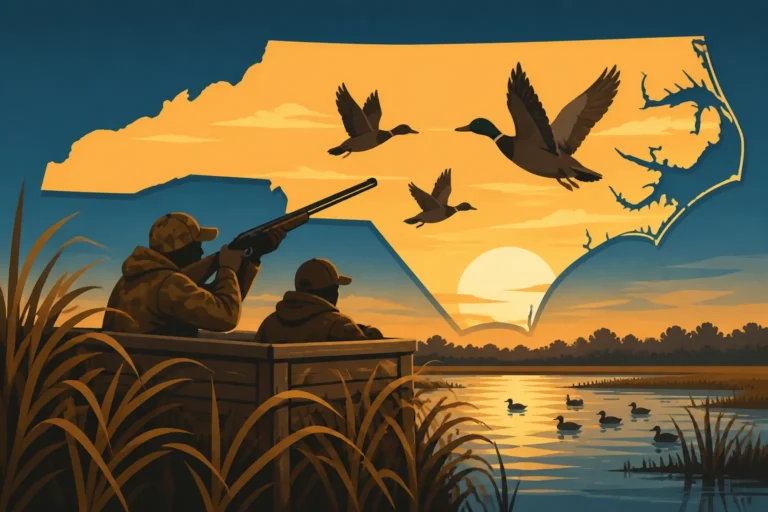
North Carolina's Coastal Plain is a major stopover on the Atlantic Flyway, making it a premier destination for waterfowl hunting. From the vast sounds to inland impoundments and flooded timber, the opportunities are diverse and plentiful.
Hunting the Coastal Sounds and Estuaries
The expansive sounds, like Currituck Sound or Pamlico Sound, are legendary for their diving ducks and sea ducks. Here, layout blinds on open water or marsh boats tucked into natural vegetation are common setups. Understanding the tides, wind direction, and flight patterns of specific species is key. Divers like Canvasbacks, Redheads, and Bluebills often feed in open water, while puddle ducks might favor shallower marshes. Hunting Currituck Sound Diving Ducks goes into detail about these experiences.
Access to these areas can be challenging, often requiring specialized boats or considerable local knowledge. Many hunters utilize guide services or join clubs that have access to prime locations. Decoy spreads can be massive, imitating large rafts of birds to attract passing flocks. The weather plays a huge role; cold fronts and strong winds often push birds south, making for incredible hunting.
Inland Flooded Timber and Impoundments
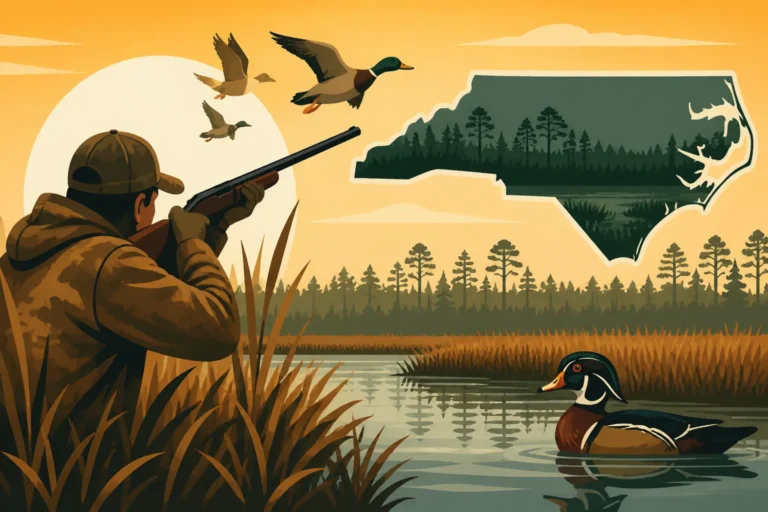
Further inland, hunters target puddle ducks like Wood Ducks, Mallards, and Teal in flooded timber, beaver swamps, and managed impoundments. These areas often offer more sheltered hunting and different challenges. Setting up in flooded woods means finding good timber with acorn production or other food sources. Decoys are often placed in openings, mimicking ducks feeding in shallow water.
Managed impoundments, especially on public game lands or private farms, are designed specifically to attract and hold waterfowl. These might be flooded cornfields or millet plots. Hunters often use pit blinds, layout blinds, or brushed-in structures around the edges. The key is to scout these areas to understand flight paths and feeding patterns, which can change daily based on weather and hunting pressure. Hunting Flooded Timber for Wood Ducks gives insight into this specific kind of waterfowl hunting, which is a favorite for many in the region.
Small Game and Predators in the East
While big game often grabs the headlines, the Coastal Plain and Sandhills offer fantastic opportunities for small game and year-round predator hunting. These hunts can be incredibly fun, offer more liberal seasons, and are a great way to introduce new hunters to the outdoors.
Squirrel and Rabbit Hunting
Squirrels, particularly gray squirrels, are abundant in the mixed hardwood and pine forests of eastern North Carolina. Look for mast-producing trees like oaks and hickories, especially along creek bottoms or in mature timber stands. Hunting squirrels is a fantastic way to hone your woodsmanship skills – listening for bark chatter, spotting movement high in the canopy, and moving quietly. A good squirrel dog can make the experience even more exciting, but still-hunting or sitting quietly can also be very productive. Squirrel Hunting North Carolina Bottomland Hardwoods highlights prime habitat.
Rabbits are found throughout the region, often in thick brush, fencerows, clear-cuts, and field edges. These areas provide the dense cover they need for protection. Rabbit hunting is often done with a group of hunters and beagles, which chase the rabbits in circles, presenting shot opportunities. For solo hunters, still-hunting thickets or walking brushy edges can also produce rabbits, especially on crisp fall mornings.
Feral Hogs and Coyotes: Year-Round Opportunity
Feral hogs are a significant problem across much of North Carolina, particularly in the Coastal Plain, where they thrive in the dense cover and abundant food sources. The good news for hunters is that they can be pursued year-round on private land, often with generous bag limits. Hogs are destructive to agriculture and native wildlife, so hunting them is both a recreational pursuit and a valuable service to landowners. Look for fresh rooting, wallows, and tracks near water sources and agricultural fields. Night hunting with lights is often permitted on private land, providing a unique and effective way to target these nocturnal animals. Night Hunting Hogs With Lights on Private Land outlines rules and tactics.
Coyotes are another year-round target that has expanded its range across North Carolina. They are cunning predators that can be challenging to hunt but offer exciting opportunities for calling. In the open longleaf pines of the Sandhills or along the edges of farm fields in the Coastal Plain, calling tactics can be very effective. Using distress calls (rabbit, fawn) or even howling can draw them in. Early mornings or late evenings are often the best times, and patience is key. Coyote Calling in North Carolina Farm Country offers great advice on getting started.
Navigating Public vs. Private Land Access
Access to hunting land is often the biggest hurdle for hunters in North Carolina, and the eastern regions present their own unique challenges and opportunities for both public and private ground.
Hunting North Carolina Game Lands
The North Carolina Wildlife Resources Commission (NCWRC) manages numerous Game Lands across the state, many of which are located in the Coastal Plain and Sandhills. These areas offer invaluable public access for hunting, but they come with specific regulations that hunters must understand. A Game Lands permit is required in addition to your base hunting license and big game privileges. Always check the specific rules for the Game Land you intend to hunt, as regulations can vary regarding open seasons, permitted weapons, and even daily sign-in requirements. North Carolina Game Lands License Requirements provides details on the permits needed.
Hunting public land in these regions often means dealing with dense cover, challenging terrain, and potentially higher hunting pressure, especially on opening days. Using tools like onX Hunt is incredibly helpful for navigating Game Land boundaries, identifying access points, and scouting potential hunting spots remotely. Look for areas away from easy access points, deeper in the woods, or those with difficult terrain (like swamps) that deter other hunters. You might find success by simply walking further than most are willing to go.
Gaining Private Land Permission
Private land accounts for the vast majority of huntable acreage in eastern North Carolina, especially in the farming communities of the Coastal Plain. Gaining permission to hunt these lands can unlock incredible opportunities for deer, hogs, and small game. The key is respectful communication and building a good relationship with landowners. Start by knocking on doors well before the season, clean-cut and polite, and offer to help with chores or nuisance animals like hogs that are damaging crops.
Many farmers appreciate having hunters help manage deer populations that can eat crops, or hogs that root up fields. Be clear about what you want to hunt, when, and how. Offer to share game or help out on the farm. Showing respect for their property, closing gates, leaving no trash, and being safe are fundamental to maintaining access. A handshake agreement is often enough, but some landowners prefer written permission, especially if you're bringing multiple hunters. Knocking on Doors in Piedmont Farm Country has advice that applies equally well to eastern farms.
Essential Gear and Preparation for Eastern Hunts
The unique conditions of the Coastal Plain and Sandhills demand specific gear and preparation to ensure a comfortable, safe, and successful hunt. Neglecting these details can quickly turn an exciting trip into a miserable one.
Footwear and Clothing for Wet and Humid Conditions
Good footwear is non-negotiable. In the Coastal Plain, you'll likely encounter mud, standing water, and boggy ground, even on seemingly dry days. Waterproof rubber boots that come up to your knees are often the best choice for staying dry and comfortable. Look for insulated versions for colder late-season hunts. In the Sandhills, a sturdy, waterproof hiking boot with good ankle support will serve you well for the rolling terrain and potentially long walks through sandy soil.
Clothing should be breathable and moisture-wicking, especially during the early seasons when temperatures can still be quite warm and humidity high. Layers are always a good idea, as temperatures can fluctuate. For colder weather, waterproof outer layers are essential to combat rain, sleet, or wet snow. Don't forget your blaze orange or pink! North Carolina has specific requirements for outer clothing during certain seasons, and being visible for safety is paramount, especially in areas where deer drives are common. How Much Blaze Orange North Carolina Requires will tell you exactly what you need.
Navigation and Scent Control
Eastern North Carolina, with its vast tracts of similar-looking pine forest and dense pocosins, can be incredibly disorienting. A reliable GPS unit or a smartphone app like onX Hunt with downloaded offline maps is an absolute necessity. Don't rely solely on cell service, as it can be spotty in remote areas. Mark your truck, stand locations, and any significant landmarks. Knowing where property lines are, especially on public land bordered by private tracts, is critical for staying legal and avoiding trespass issues. Using NC Wildlife Without Cell Service emphasizes the importance of downloaded maps.
Scent control is always important, but it takes on added significance in the often still, humid air of the Coastal Plain. Your scent can hang heavy in the air, drifting through the dense vegetation and alerting game. Showering with scent-eliminating soap, washing clothes in scent-free detergent, and storing them properly can help. However, the most effective scent control is always playing the wind correctly. Even with the best sprays and laundry, if the wind is wrong, you're busted.
Dealing with the Elements: Heat, Bugs, and Water
The beautiful, wild nature of eastern North Carolina comes with its own set of environmental challenges. Being prepared for these can make or break your hunting experience.
Managing Heat, Humidity, and Insects
Early season hunts in September and October, especially in the Coastal Plain, can be brutally hot and humid. Dehydration is a real risk. Carry plenty of water, and consider electrolytes. Dress in light, breathable clothing that can be shed if needed. Take frequent breaks and listen to your body.
Insects are another persistent challenge. Mosquitos, ticks, and gnats are abundant, especially near water and in thick cover. Permethrin-treated clothing is highly recommended for tick and chigger protection, and a good insect repellent with DEET or picaridin is essential for keeping biting insects at bay. Tick checks after every hunt are non-negotiable to prevent Lyme disease and other tick-borne illnesses.
Water Crossings and Recovery Challenges
Hunting in the Coastal Plain often means encountering water – creeks, ditches, and flooded areas. Be prepared to cross them. Waders might be necessary for some hunts, or at least tall rubber boots. Always test the depth and current before crossing. A hiking stick can be invaluable for stability.
Recovering game in these conditions can be a monumental task. A deer that runs into a pocosin or a bear that falls in a swamp presents a significant challenge. Having a plan for game recovery is crucial. This might involve calling in friends, having a game cart (though often useless in deep swamps), or even needing a boat for truly wet areas. The thick vegetation and often featureless terrain make tracking difficult, so pay close attention to the shot and the animal's direction of travel. Dragging a Deer Out of a Coastal Swamp offers practical advice.
Remember, the beauty of hunting the Coastal Plain and Sandhills lies in these very challenges. It's a land that demands respect, patience, and adaptability. But for those willing to put in the effort, it offers incredible opportunities and some of the most unique hunting experiences North Carolina has to offer.
| Feature / Aspect | North Carolina Coastal Plain | North Carolina Sandhills |
|---|---|---|
| Terrain | Flat to gently rolling, extensive lowlands, swamps, pocosins. | Rolling hills, ancient dunes, dry sandy soils. |
| Dominant Vegetation | Loblolly pine plantations, cypress swamps, mixed hardwoods, dense pocosin thickets, agricultural fields. | Longleaf pine savannas, wiregrass, scrub oaks, gallberry. |
| Key Game Species | White-tailed deer (high density), Black Bear (large), Feral Hogs, Waterfowl (diverse), Squirrels, Rabbits. | White-tailed deer, Wild Turkey, Squirrels, Rabbits, Quail (restoration areas). |
| Typical Challenges | Heat, high humidity, abundant insects, standing water, dense cover, difficult game recovery. | Sandy soils (tough walking), potential for heat/dryness, open woods require stealth, rattlesnakes. |
| Common Tactics | Deer drives, stand hunting field edges, still-hunting pocosin edges, waterfowl blinds/boats. | Still-hunting open pine woods, spot-and-stalk (subtle), stand hunting near food sources/water, turkey calling. |
| Ideal Footwear | Knee-high rubber boots (insulated for cold). | Sturdy, waterproof hiking boots with good ankle support. |
| Navigation Aids | GPS/Offline maps (critical for dense, featureless areas). | GPS/Offline maps (important for distinguishing subtle terrain features). |
Disclaimer
This article is for general informational purposes only and does not constitute professional advice. Laws, prices and regulations vary by location and change over time. Consult a qualified professional for guidance on your specific situation.