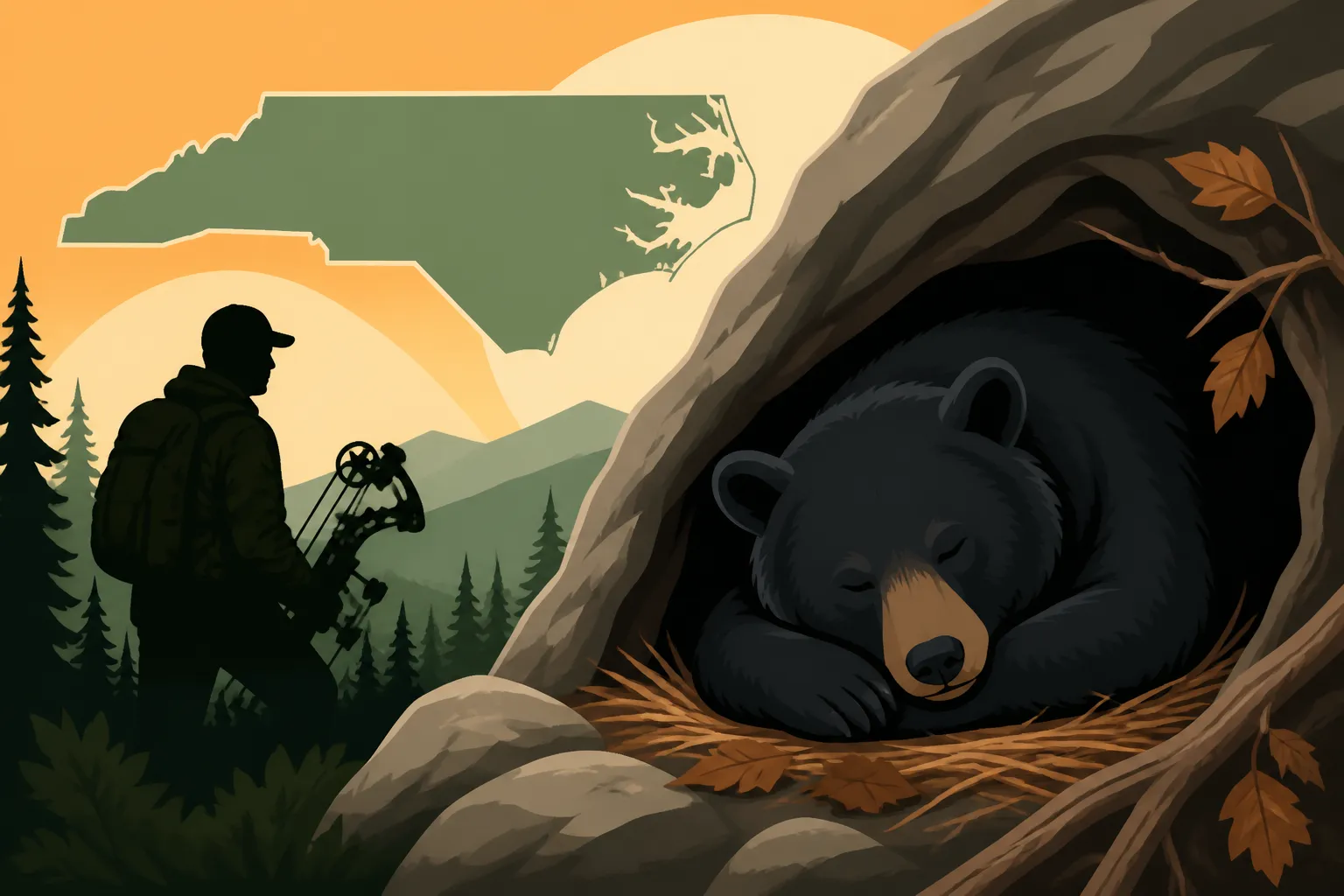
North Carolina Bear Denning Behavior
It's always a fascinating mystery: where do North Carolina's black bears go when winter truly sets in? While we don't have the long, deep snows of the far north, our bears still have a critical period where they retreat from the world. This guide will pull back the curtain on the secretive world of bear denning behavior in North Carolina, helping you understand their winter survival strategies and how they raise their young.
The Rationale Behind Bear Denning in North Carolina
When the leaves fall and the chill bites, many assume North Carolina's black bears are simply "hibernating" in the traditional sense, like a groundhog. But for bears, it’s a bit different, and it's less about deep sleep and more about intelligent survival. Denning is a crucial physiological and behavioral adaptation that allows our bears to navigate periods of food scarcity and to ensure the survival of their offspring, especially in the diverse habitats found across our state.
More Than Just Sleep: The Biology of Torpor
Unlike true hibernators, which enter a state of profound physiological inactivity, black bears experience what biologists call "torpor." This is a remarkable metabolic slowdown, but it’s not the same as a deep, unresponsive coma. While a bear’s heart rate can drop dramatically, sometimes to as low as 8-10 beats per minute, and their body temperature decreases, it usually stays well above freezing. This allows them to be aroused relatively easily, which is a vital defense mechanism if their den is disturbed. Imagine being tucked away, relying on fat reserves, and still needing the ability to react to a threat – that's the bear's reality. Their bodies are incredibly efficient during this time, recycling waste products to maintain muscle mass and bone density, meaning they emerge in spring surprisingly strong despite months of fasting. This intricate biological process is a testament to their adaptability and their deep evolutionary connection to the rhythms of the natural world.
Survival Strategies: Winter Scarcity and Reproduction
The primary drivers for denning in North Carolina are, quite simply, food availability and reproduction. As winter progresses, the rich mast crops of acorns and hard nuts, along with other seasonal berries and fruits, disappear. The insect populations dwindle, and green vegetation becomes scarce. Without these crucial caloric sources, maintaining an active metabolism would quickly deplete a bear's fat reserves, risking starvation. So, denning is a smart energy-saving strategy, allowing them to stretch their stored fat through the lean months.
However, the most significant reason, particularly for female bears, is the need for a safe, secluded place to give birth and raise vulnerable newborn cubs. Pregnant sows typically enter their dens earlier and emerge later than other bears. These tiny, helpless cubs, often weighing less than a pound at birth, are born during the coldest part of winter, usually in January or February. The den provides a warm, secure nursery, protecting them from predators and the harsh elements during their most fragile stage. Understanding this reproductive cycle is key to understanding North Carolina's Black Bear Population dynamics and is why wildlife managers pay close attention to denning success.
When and Where North Carolina Bears Choose Their Winter Homes
The timing and location of bear denning in North Carolina are surprisingly variable, influenced by everything from the state's diverse geography to the individual bear's condition and the local weather patterns. It's not a one-size-fits-all approach, and a serious hunter or wildlife observer needs to understand these nuances to truly appreciate our bear populations.
Timing the Retreat: Factors Influencing Den Entry
Generally, North Carolina black bears begin to den in late November or early December, with most settled by mid-December. However, this isn't a hard and fast rule. Several factors can sway the timing:
- Food Availability: A bountiful fall mast crop can delay denning, as bears continue to gorge themselves, packing on critical fat reserves. Conversely, a poor mast year might see bears denning earlier, driven by hunger.
- Weather Conditions: While North Carolina doesn't experience extreme arctic blasts often, consistently cold temperatures and early snowfalls, particularly in the mountains, can prompt an earlier retreat. Milder winters might see some non-pregnant bears remain active longer.
- Reproductive Status: As mentioned, pregnant sows are almost always the first to den up, sometimes as early as November, ensuring they have ample time and undisturbed seclusion for birthing. Younger bears and males, who don't have the same reproductive imperative, might stay out longer, sometimes even taking short breaks from their dens during mild spells.
- Bear Zone Differences: Bears in the colder, higher elevations of the mountains, often found within the North Carolina Mountain Bear Zone Rules, tend to den earlier and stay denned longer than their coastal counterparts. The milder winters and often more consistent food sources in the Coastal Plain can lead to later denning and earlier emergence, or even periods of activity throughout winter for some individual bears.
Location, Location, Location: Den Site Selection Across NC
The choice of a den site is critical for a bear's survival and reproduction. Bears are opportunistic and resourceful, utilizing a variety of natural and sometimes man-made structures for their winter homes. The specific type of den often reflects the dominant habitat features of the region, and understanding this can be invaluable for those scouting.
In the rugged Mountains, den sites are frequently found in:
- Rock crevices and caves: Natural rock shelters, often in steep, south-facing slopes that receive more sun.
- Hollow logs or stumps: Large, decaying timber provides excellent insulation and cover.
- Brush piles and thickets: Dense rhododendron or laurel thickets offer concealment and protection.
If you're out Hunting the Mountain Bear Zones, knowing these natural hideaways can give you a better sense of where bears might be seeking refuge.
In the Coastal Plain and Pocosins, the landscape dictates different choices:
- Dense pocosin thickets: These impenetrable swamps, rich in evergreen shrubs like gallberry and titi, offer incredible concealment and protection from the elements and predators. This is a common theme for bears whose range overlaps with Where Coastal Pocosin Bears Range.
- Hollow trees: Large, old cypress or gum trees with hollow interiors provide secure, elevated den sites, protecting bears from rising water.
- Cane brakes: Dense stands of river cane can form thick, insulating shelters.
- Ground dens: In areas with softer soil, bears may excavate shallow depressions or utilize existing burrows under tree roots, lining them with leaves and debris for insulation.
Many serious hunters often utilize mapping tools like GoHunt to analyze terrain features, identify areas of dense cover, and pinpoint potential denning habitat long before the season even begins. This kind of advanced scouting can provide an edge, whether you're looking for signs of bear activity or simply trying to understand their seasonal movements.
The Architecture of a Bear Den: Natural and Improvised Shelters
Bear dens aren't always grand, elaborate structures. They range from naturally occurring nooks and crannies to more carefully constructed, though still primitive, shelters. What they all share is the core purpose: to provide protection, insulation, and concealment.
Natural Wonders: Rock Formations and Tree Cavities
North Carolina's natural landscape provides a wealth of ready-made denning opportunities. In the mountainous regions, this often means utilizing the geological features that have existed for millennia. Bears will squeeze into tight rock crevices, sometimes barely larger than their own bodies, seeking out the deepest, most sheltered spots. These natural caves or overhangs offer excellent protection from wind, snow, and rain, and the earth itself provides a stable temperature buffer. For hunters or hikers exploring areas like the Pisgah or Nantahala National Forests, being aware of these features is crucial, as you might stumble upon an old den site or even, rarely, an active one.
Another common natural den type is the hollow tree or log. A massive, decaying hardwood or conifer, especially one that has fallen or has a large cavity at its base, can become a bear's winter sanctuary. The thick wood offers superior insulation, and the confined space helps a bear conserve body heat. These dens can be surprisingly well-hidden, blending seamlessly into the forest floor or appearing as just another deadfall to the untrained eye. When searching for signs of bear activity, especially after a successful season where North Carolina Bear Harvest Trends might indicate a robust local population, knowing where these natural structures are prevalent is a good starting point for your scouting plan.
Improvised Comfort: Brush Piles and Ground Dens
Bears are not architects in the human sense, but they are incredibly adept at making the most of what's available. In areas where large rock formations or hollow trees are scarce, particularly in some parts of the Piedmont and Coastal Plain, bears often resort to more improvised dens.
One of the most common improvised dens is simply a dense brush pile or thicket. This could be a natural accumulation of fallen timber and heavy undergrowth, or even a man-made pile from logging operations. The bear will crawl deep inside, creating a hollowed-out space and often lining it with leaves, grasses, or pine needles for added insulation. The sheer density of these thickets offers excellent thermal protection and makes it almost impossible for predators (or curious humans) to detect their presence. If you're Hunting the Coastal Bear Pocosins, you'll quickly learn just how thick these areas can be, providing perfect, hidden bear habitat.
In softer, well-drained soils, bears will sometimes create ground dens. These are usually shallow depressions dug into the earth, often at the base of a large tree, under a root wad, or beneath a tangle of fallen branches. The bear shapes the ground to fit its body and then piles insulating material over and around itself, effectively burying itself under a protective mound of debris. These ground dens are surprisingly effective at buffering against cold temperatures and providing concealment. It’s a low-effort, high-reward strategy that speaks to the black bear's pragmatic approach to survival. For hunters who rely on tools like GoHunt to visualize terrain, understanding where these types of dens might occur based on soil type and vegetation can be incredibly helpful for identifying overlooked areas.
Here's a quick look at common den types across North Carolina:
| Den Type | Primary Location | Key Characteristics | Benefits |
|---|---|---|---|
| Rock Crevice/Cave | Mountains | Natural fissures, overhangs, sometimes small caves; often on steep slopes. | Excellent thermal insulation, strong protection from elements and predators, very secure. |
| Hollow Log/Stump | Mountains, Piedmont | Large, decaying trees or stumps with internal cavities. | Good insulation from wood, concealed entrance, natural shelter. |
| Brush Pile/Thicket | All Zones | Dense accumulations of branches, fallen trees, rhododendron, cane, or logging debris. | High concealment, good windbreak, decent insulation, easy to create or find. |
| Hollow Tree (Standing) | Coastal Plain | Large, standing trees (e.g., cypress, gum) with internal rot. | Elevated, protecting from water; excellent insulation; very secure. |
| Ground Den | All Zones (softer soil) | Shallow excavations under root wads, fallen trees, or dense undergrowth, lined with debris. | Good thermal mass from earth, easily constructed, well-concealed, less exposed to wind. |
Inside the Den and Beyond: Life in Winter and Spring Emergence
What truly goes on inside those secretive dens is one of nature's most fascinating stories, particularly for the female bears. It's a period of intense physiological transformation and the beginning of new life, often unfolding in the quiet solitude of our North Carolina wilderness.
A Winter Nursery: Birthing and Raising Cubs
For pregnant sows, the den is much more than just a place to sleep; it’s a critical nursery. Sometime in late January or early February, usually while the sow is in her deepest state of torpor, she gives birth to one to five tiny cubs. These newborns are incredibly altricial – essentially hairless, blind, and weighing only about half a pound, making them look more like large rats than bears. The mother bear’s metabolism is still slowed, but she is responsive enough to care for her young. The cubs rely entirely on her for warmth and nutrition, suckling frequently throughout the winter months. Her rich milk, high in fat, allows them to grow rapidly, transforming from helpless newborns to robust, furry bundles by the time spring arrives.
This period in the den is paramount for cub survival. The confined, protected space shields them from the harsh winter temperatures and the many predators that would easily dispatch them if exposed. The mother's body heat further aids in their development. By the time they emerge, they’ve grown considerably, usually weighing several pounds, and are ready to face the outside world, albeit under the watchful eye of their mother. This early survival phase is a key factor in the overall health of North Carolina's Black Bear Population.
Spring's Awakening: Emerging from the Den
As the days lengthen, temperatures warm, and new green growth begins to appear, North Carolina's bears gradually emerge from their dens. This typically happens in late March or early April, though mild winters can see some earlier activity, especially from non-pregnant males. The emergence isn't usually a sudden burst of energy; rather, bears will often spend a few days near the den entrance, stretching, acclimatizing to the light, and consuming available greens to jumpstart their digestive systems after months of fasting.
Sows with cubs are often the last to leave their dens, sometimes delaying emergence until late April or even early May, especially if the spring weather is unseasonably cold or wet. These first few weeks out of the den are crucial for the cubs, as they learn to forage and navigate their world under their mother's strict guidance. They will typically stay with their mother for over a year, learning vital survival skills before dispersing. This period of emergence means that encounters with bears, especially sows with cubs, become more likely. Whether you're hiking, scouting for turkey season, or just enjoying the outdoors, being aware that bears are becoming active again is important for safety, particularly to avoid Bear Encounters Around Mountain Cabins or other populated areas. For any serious outdoors enthusiast, understanding this cycle, and perhaps even utilizing tools like GoHunt to scout areas known for bear activity, provides a deeper appreciation for our wild neighbors.
Disclaimer
This article is for general informational purposes only and does not constitute professional advice. Laws, prices and regulations vary by location and change over time. Consult a qualified professional for guidance on your specific situation.