Why the Western Zone Opens Six Weeks Later
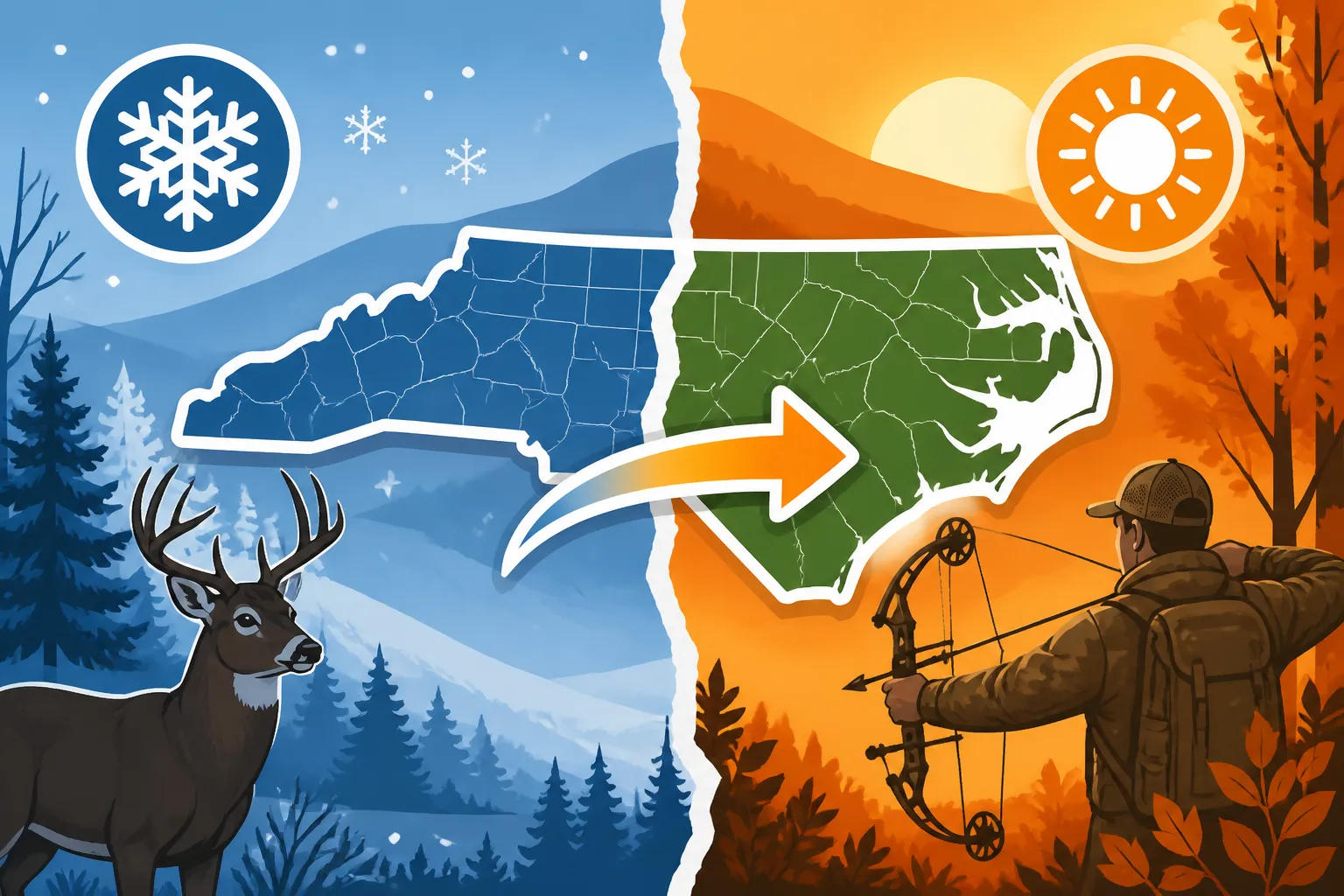
Many hunters coming to North Carolina, or even those who've lived here their whole lives but primarily hunted in the Piedmont or Coastal Plain, often scratch their heads when they look at the deer season dates for the Western Zone. Why does the deer season in the mountains open a full six weeks later than the rest of the state? This significant delay isn't arbitrary; it's rooted deeply in biological realities and careful wildlife management, and understanding it can completely change how you approach deer hunting in the beautiful but challenging western part of our state. This guide will walk you through the precise reasons behind this staggered opening.
Understanding North Carolina's Deer Zones and Their Calendars
North Carolina is a remarkably diverse state, stretching from the sandy shores of the Atlantic Ocean all the way to the rugged peaks of the Appalachian Mountains. This vast geographical spread means that deer populations across the state face vastly different environmental conditions, and their life cycles respond accordingly. To properly manage these distinct herds, the North Carolina Wildlife Resources Commission (NCWRC) has wisely divided the state into specific deer hunting zones.
A Quick Look at the Statewide Structure
To give you a better sense of how things are laid out, North Carolina is primarily segmented into three main deer hunting zones: the Eastern, Central, and Western zones. Each of these zones operates on its own calendar, with specific opening and closing dates for archery, muzzleloader, and gun hunting. This zonal system is crucial for tailoring hunting pressure to the ecological realities of each region.
For instance, if your hunting grounds are in the Eastern Zone, you're likely to be in a treestand as early as mid-September, with the gun season kicking off in early October. The Central Zone often follows a similar, slightly later schedule, with its gun season also typically opening in October. These earlier starts in the lower elevations reflect the generally warmer climate and the accelerated biological cycles of the deer residing in these flatter, often more agriculturally rich regions. These are critical considerations for anyone planning their hunt, and understanding the nuances of North Carolina Deer Season Structure Explained is a must.
This approach is designed to provide hunters with ample opportunity while aligning with the deer's natural rhythms. However, it's when you turn your attention to the mountainous terrain that the calendar truly shifts. The difference isn't just a few days; it's a profound, deliberate delay that impacts every aspect of a hunter's plan. What works for Hunting Coastal Plain Pocosin Swamps simply won't cut it on a mountain ridge.
The Distinct Geography of the Western Zone
The Western Zone of North Carolina stands apart geographically and ecologically. This region encompasses the majestic Appalachian Mountains and their immediate foothills, a landscape dramatically different from the rest of the state. Think of counties like Ashe, Watauga, Jackson, Macon, and Cherokee – all characterized by significant elevation changes, steep slopes, expansive hardwood forests, and a distinctly cooler, often harsher, climate.
Unlike the sprawling, gentle farmlands and rolling hills of the Piedmont or the vast, flat coastal plains, the Western Zone's topography is rugged and demanding. You'll encounter deep, winding valleys, towering ridges, and often remote, extensive tracts of national forest land, such as the Pisgah and Nantahala National Forests. This unique landscape itself profoundly influences deer movement, their distribution patterns, and even their dietary habits, as food sources can vary drastically with elevation and slope aspect.
The cooler average temperatures and higher elevations in the Western Zone mean a significantly shorter growing season for many plants, and snow cover can be both substantial and prolonged during the winter months. This environmental disparity is the foundational reason behind the NCWRC's decision to set a later hunting season. Deer in these challenging environments simply operate on a different biological clock, one that is intrinsically linked to the availability of forage and the sheer demands of survival in a more rigorous climate. Understanding this distinct character is key to successful Reading a Ridge for Mountain Zone Deer.
Biological Factors Driving the Western Zone's Later Start
The decision to delay the Western Zone's deer season isn't a random administrative choice; it's deeply rooted in the distinct biological rhythms of the deer living in North Carolina's mountains. These physiological differences are critical for the health of the herd and dictate when hunting opportunities are both effective and ethical.
Later Peak Rut in the Mountains
Perhaps the most compelling biological reason for the delayed opening in the Western Zone is the timing of the deer rut, or breeding season. The rut is a period of heightened activity for bucks, making them less cautious and, consequently, more susceptible to hunters. In most of North Carolina’s Eastern and Central Zones, the peak rut typically occurs around mid-November. This is when many hunters schedule their prime hunting efforts, hoping to catch a mature buck chasing a doe, often employing aggressive tactics like Rattling and Grunting in North Carolina.
However, in the cooler, higher elevations of the mountains, the entire breeding cycle is significantly delayed. Scientific studies and extensive observations by wildlife biologists consistently show that the peak rut in the Western Zone can be as late as early to mid-December, and sometimes even stretches into the latter half of December in the highest reaches of the Appalachians. This six-week or more shift is a direct physiological adaptation by the deer to their specific environment. The later rut essentially resets the entire calendar for these mountain deer, impacting their activity patterns and vulnerability.
Consider the ripple effect of this delay. A fawn born in late May or early June in the Coastal Plain enjoys several months of warm weather and abundant, easily accessible forage to grow strong before the first hard frosts arrive. Now, envision a fawn born in late July or early August in the mountains, a direct consequence of its parents breeding in December. That mountain fawn has a much narrower window to put on crucial weight and develop sufficiently before the onset of a potentially harsh mountain winter, which often brings early and prolonged snowfall. The delayed hunting season directly aims to capitalize on the deer’s natural activity during this later rut, providing a more ethical and effective hunting experience when the deer are most active and vulnerable, rather than forcing hunters to pursue them during less biologically appropriate times.
Impact on Fawn Recruitment and Survival
The timing of the rut has profound implications for fawn recruitment (the number of fawns that survive to adulthood) and overall fawn survival rates – metrics that are paramount for responsible wildlife management. If deer in the Western Zone were to breed too early, say in October like their eastern counterparts, their fawns would be born in late April or early May. While this might sound beneficial, these fawns would face a unique set of challenges tailored to the mountain environment.
Firstly, the availability of prime, highly nutritious forage might not be as abundant or sustained in the cooler, higher elevations during early spring compared to the lush, rapidly growing vegetation further east. More critically, fawns born too early in the mountains could be vulnerable to late-season frosts or unexpected, severe snow events, which can be absolutely devastating for newborns that lack the necessary insulation and physical strength to withstand extreme cold. Additionally, an extremely early birth might prolong their period of vulnerability to various predators, such as coyotes or bears, before they develop the speed and agility needed for escape.
By having a naturally later rut, fawns in the Western Zone are typically born later in the summer, generally in July or August. This timing ensures they arrive when the peak of the growing season is in full swing, guaranteeing ample forage for lactating does and rapid growth for the fawns themselves. It also provides a concentrated period of warmer weather for them to develop and put on critical fat reserves before the onset of winter. The six-week delay in the hunting season is a direct supportive measure for this biological rhythm, designed to ensure the long-term health, vigor, and sustainability of the deer herd within the challenging mountain environment. Preserving these young deer and allowing them the best chance at survival is a cornerstone of responsible wildlife management, which is why the NCWRC meticulously tracks metrics like North Carolina Fawn Survival Rates and overall North Carolina Deer Population Estimate.
Historical Context and Wildlife Management Decisions
The current system of staggered deer seasons in North Carolina isn't a recent invention; it's a testament to decades of evolving wildlife science and careful, adaptive management by the NCWRC. Understanding this historical progression helps illuminate the rationale behind today's regulations.
Evolution of North Carolina's Deer Seasons
North Carolina's current deer season structure has undergone significant evolution. In the earlier days of wildlife management, before robust scientific data and advanced tracking methods were available, hunting seasons were often set more uniformly across the state, or based on less precise observations. However, as wildlife science progressed and deer populations, once severely depleted, expanded and recovered across different regions, it became increasingly apparent that a blanket, one-size-fits-all approach was not only inefficient but potentially detrimental to local herd health in certain areas.
Biologists began to systematically observe and document the distinct differences in rut timing, fawn survival rates, and the overall health of deer populations between the varied landscapes of the coastal plains, the rolling piedmont, and the rugged mountains. This wealth of data-driven insights ultimately led to the establishment of the distinct zonal system we have today. The staggered opening dates, particularly the significantly later start in the Western Zone, were specifically implemented to better align hunting pressure with the natural biological peaks of deer activity in those unique environments. This maximizes hunter success by targeting periods when deer are most active, while simultaneously safeguarding the long-term health of the deer resource.
This continuous evolution in season setting reflects the NCWRC's unwavering commitment to sound, scientific management principles. The agency regularly reviews harvest data, conducts detailed population surveys, and analyzes various environmental factors to make informed adjustments to regulations. This ensures that hunting opportunities remain sustainable and effective for future generations of hunters. Keeping an eye on trends in North Carolina Deer Harvest Records can often provide a glimpse into the rationale behind these ongoing adjustments.
Balancing Hunter Opportunity and Herd Health
The NCWRC, like all state wildlife agencies, faces the constant and complex task of balancing hunter opportunity with the imperative to maintain the long-term health and sustainability of the state's deer herd. On one hand, hunters, who are often the primary funders of wildlife conservation through license sales and excise taxes, desire reasonable access and ample opportunities to pursue game. On the other hand, the agency has a fundamental mandate to conserve and protect wildlife populations for future generations to enjoy. The Western Zone's later opening season is a quintessential example of this careful and often delicate balancing act.
By delaying the hunting season in the mountains, hunters in that region are afforded the opportunity to hunt during a period when the deer are naturally more active due to the peak of the rut. This often translates directly into higher hunting success rates and a more rewarding experience, as bucks are moving more freely, covering ground in search of receptive does. If the season were to open prematurely, aligning with the Eastern Zone's schedule, mountain hunters would likely face weeks of less productive hunting. During such an early period, deer are not yet fully engaged in their prime rutting behaviors and are often scattered, primarily focused on abundant early-season food sources rather than breeding.
Moreover, this carefully considered management decision plays a crucial role in ensuring that a sufficient number of does are bred successfully and that fawns are given the best possible chance of survival in a challenging environment. A healthy and robust fawn crop is undeniably the lifeblood of any thriving deer population, directly influencing future herd numbers and quality. This meticulous approach to wildlife management isn't unique to deer; it extends to other significant game species, as exemplified by the careful regulations governing North Carolina's Black Bear Population, where zones and seasons are also highly tailored to local biology and population dynamics. This kind of nuanced regulation underscores the depth of consideration the NCWRC applies to both ecological principles and hunter satisfaction in its decision-making processes.
Practical Implications for Western Zone Hunters
Understanding why the Western Zone's season opens later is one thing; actually adjusting your hunting plans and strategies accordingly is another. This later start requires a distinct approach that differs significantly from hunting in other parts of the state.
Adapting Hunting Strategies
For hunters accustomed to the earlier starts of the Eastern or Central Zones, venturing into the Western Zone demands a significant shift in strategy and mindset. Firstly, the weather conditions will almost certainly be much colder, with a considerably higher probability of encountering frost, freezing rain, or even significant snowfall, especially on the higher ridges and exposed slopes. This means that appropriate layering of clothing becomes absolutely critical – think technical wool and synthetic fabrics that effectively manage moisture, retain warmth even when damp, and allow for quiet movement, much like the advice offered in our guide on Clothing for a North Carolina Late Season.
Secondly, the available food sources will have changed dramatically compared to early fall. Lush green growth, various soft mast, and the abundant early-season acorns that deer devour in September and October will largely be gone or covered by leaf litter and snow. Deer in the late season will be heavily reliant on persistent hard mast, late-season browse, and any remaining agricultural fields, though these are far less common in the deeper mountain terrain. Locating these limited, often scattered food sources, or understanding how deer move efficiently between thermal cover and food, becomes paramount. Extensive scouting during the late summer and early fall, even if you can't hunt yet, is invaluable for identifying these key areas.
Furthermore, the rut-focused tactics you might employ will be adapted to the later breeding cycle. While rattling and grunting can certainly be effective, they are typically used more intensely when the rut is actually peaking, which, as we've discussed, is later here. Also, consider that deer might exhibit more nocturnal movement or utilize mid-day hours to seek out sunlit, south-facing slopes for warmth. Utilizing advanced mapping tools, such as those offered by GoHunt, can be incredibly beneficial. These applications allow you to identify south-facing slopes, hidden benches, and potential travel corridors or bedding areas that might hold deer later in the season. These digital scouting tools are fantastic for pinpointing overlooked pockets of public land, especially when combined with a keen understanding of Wind and Thermals on a Blue Ridge Slope.
Planning Trips and Licensing
When meticulously planning a hunting trip to the Western Zone, it is absolutely essential to double-check the specific season dates for the precise county you intend to hunt in. While there's a general Western Zone framework, there can occasionally be minor variations or special regulations within particular areas that could impact your hunt. The official North Carolina Wildlife Resources Commission (NCWRC) website and its annual regulations digest are always the definitive sources for the most current and accurate information. If you're traveling from out of state or even from another part of North Carolina, consider how these later season dates might impact your personal work schedule, family commitments, or vacation planning.
Licensing requirements themselves remain consistent across zones, but you must ensure that your hunting license and any necessary big game privilege are valid through the later closing dates of the Western Zone season. It is critically important to remember that all deer harvested must be reported to the NCWRC within specified timeframes, a process often done via their app or website. Our comprehensive guide to North Carolina Hunting Licenses and What They Cost can help clarify all the various options and ensure you're fully compliant with state regulations. Again, tools like GoHunt can be invaluable in assisting you with navigating regulations, checking public land boundaries, and pinpointing accessible game lands or national forest tracts suitable for your late-season mountain endeavors.
Beyond regulatory compliance, meticulous logistical planning is crucial: Where will you stay? Are campsites or private lodging still open and safely accessible in December, especially higher in the mountains? Road conditions can deteriorate rapidly with winter weather, so always check local forecasts and travel advisories before and during your trip. Prepare for significantly colder temperatures, the distinct possibility of snow, and shorter daylight hours compared to early season hunts. Packing extra emergency gear, multiple layers of warm clothing, and sturdy, insulated, waterproof boots designed for rugged, potentially icy terrain is not just advisable; it’s absolutely essential for a safe, enjoyable, and ultimately successful late-season hunt in the majestic North Carolina mountains. This often involves detailed scouting as described in Scouting North Carolina Public Land Before Season.
Here's a table comparing the general rut timing and season openers for North Carolina's deer zones, highlighting the Western Zone's unique schedule:
| Deer Zone | General Rut Timing (Peak Activity) | Archery Season (General Opening) | Gun Season (General Opening) | Key Geographic Features |
|---|---|---|---|---|
| Eastern | Mid-November | Mid-September | Early October | Coastal Plain, swamps, farmlands, low elevation |
| Central | Mid-November | Late September | Mid-October | Piedmont, rolling hills, mixed forests, moderate elevation |
| Western | Early to Mid-December | Mid-October | Mid-November | Appalachian Mountains, steep terrain, high elevation, harsh winters |
Disclaimer
The information provided in this guide is for general informational purposes only and does not constitute legal advice. Hunting regulations, seasons, and licensing requirements are subject to change without notice. Always consult the official North Carolina Wildlife Resources Commission (NCWRC) website or official regulations digest for the most current and accurate information before planning any hunting activity. Failure to comply with all applicable laws and regulations may result in penalties.