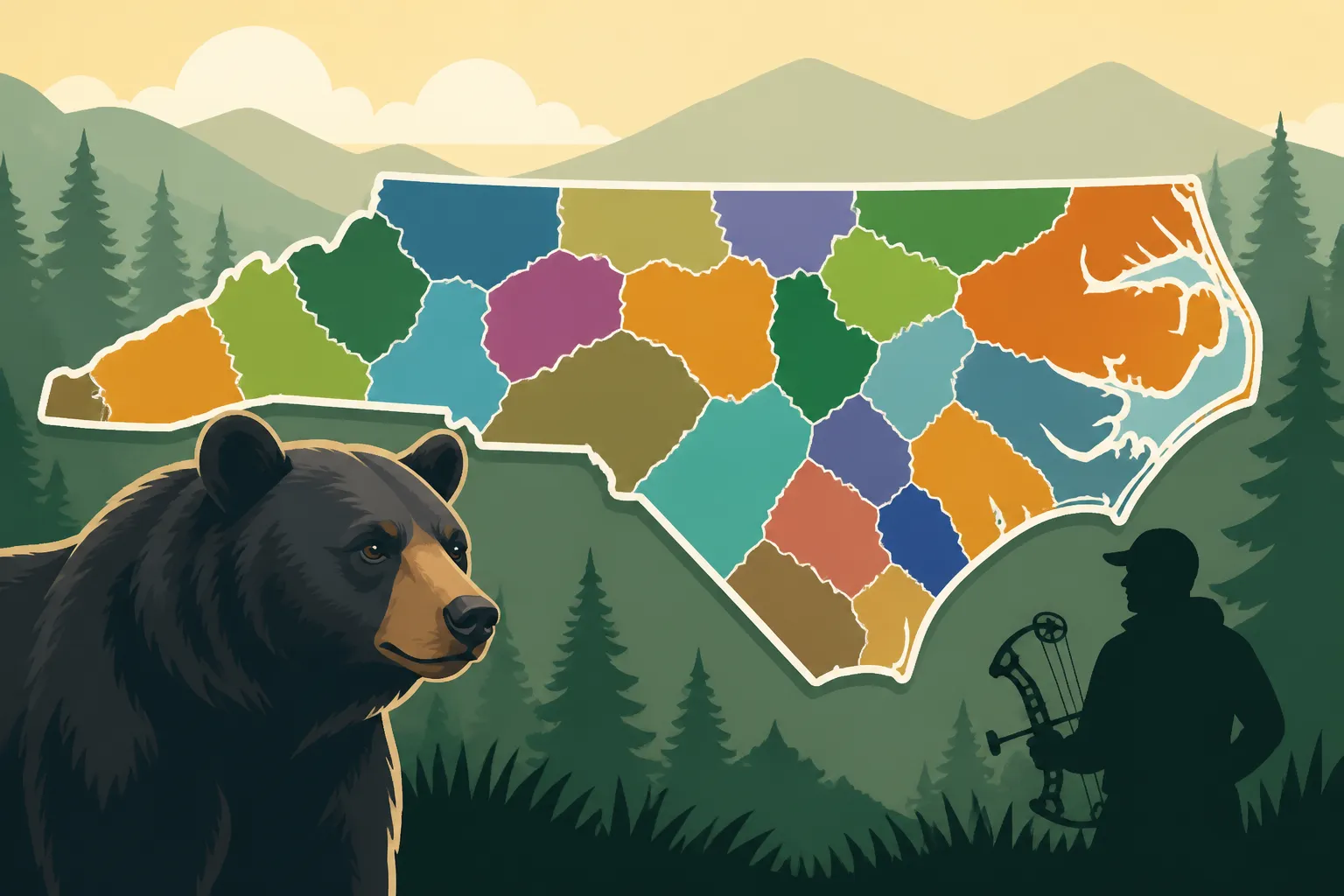
North Carolina’s Twenty-Two Bear Management Zones
Trying to wrap your head around North Carolina's bear hunting regulations can feel like deciphering an ancient scroll written in a language you barely understand, especially when you hit the part about the state's twenty-two different bear management zones. It's enough to make even a seasoned hunter's head spin, leaving you wondering where you can actually hunt, when, and what rules apply. This guide is here to untangle that knot, breaking down each zone type and offering practical insights to help you navigate North Carolina's unique bear hunting landscape with confidence.
Understanding the "Why": The Purpose Behind Bear Management Zones
It's easy to get frustrated by the sheer number of regulations and zones North Carolina throws at us when it comes to bear hunting. Twenty-two distinct zones? It sounds excessive, a bureaucratic nightmare designed to complicate an already challenging pursuit. But trust me, there's a method to the madness. These zones aren't just arbitrary lines drawn on a map by someone in an office; they're the result of careful scientific study and a deep understanding of how North Carolina's diverse landscapes influence its robust black bear population. The goal is to ensure a healthy, sustainable bear population for generations to come, while also managing potential conflicts with humans and agricultural interests. It’s a delicate balancing act, and these zones are a key part of the strategy.
Balancing Bear Populations and Human-Wildlife Interactions
North Carolina boasts one of the largest black bear populations in the Southeast, a testament to successful conservation efforts. However, this success comes with its own set of challenges. As bear numbers increase and their range expands, so does the potential for human-wildlife interactions, which can sometimes lead to property damage or public safety concerns, especially in areas bordering suburban development or agricultural fields. The creation of distinct bear management zones allows the North Carolina Wildlife Resources Commission (NCWRC) to implement targeted management strategies. For example, areas with higher bear densities or more frequent human encounters might have longer seasons or higher harvest quotas to help stabilize the population, while areas where bears are less numerous might have more conservative regulations. It’s about being precise, rather than applying a one-size-fits-all approach that simply wouldn't work for a state as ecologically varied as North Carolina.
Tailoring Management to Regional Ecological Differences
North Carolina is a state of incredible ecological diversity, stretching from the rugged peaks of the Appalachian Mountains to the vast, marshy plains of the Atlantic Coast. Bears in these different regions face entirely different challenges and opportunities, influencing their behavior, diet, reproductive rates, and overall population dynamics. For instance, bears in the western mountains might rely heavily on mast crops like acorns and hickory nuts, while coastal bears often thrive in the dense pocosin swamps and agricultural areas, feeding on everything from corn to berries. These regional differences necessitate distinct management approaches. A season length that works perfectly for a mountainous region with difficult terrain and lower bear densities would be completely inappropriate for a coastal plain area teeming with bears and abundant food sources. The 22 zones allow the NCWRC to account for these specific ecological nuances, ensuring that management efforts are effective and appropriate for each unique environment.
The Role of Scientific Data in Zone Creation
The creation and ongoing adjustment of these 22 bear management zones are heavily rooted in scientific data. Wildlife biologists continuously collect information on bear populations, including density, reproductive rates, harvest success, and habitat use across the state. This data is gathered through various methods, such as bear harvest reports, live-trapping and tagging operations, and monitoring efforts using GPS collars. When you report your harvest through the North Carolina Bear Checking Requirements system, that data directly feeds into the scientific models used to fine-tune these zones and regulations. It's a dynamic system, constantly being evaluated and updated based on the most current scientific understanding of the state's bear populations and their interactions with the environment and human activity. This commitment to data-driven decision-making is crucial for maintaining the long-term health of North Carolina's black bears.
Navigating the Map: Differentiating North Carolina's Bear Hunting Regions
Stepping back, North Carolina's 22 bear management zones can be broadly categorized into two main geographical regions: the Mountains and the Coastal Plain. Within these two larger regions, the specific zones then delineate even finer distinctions, often based on county lines, major rivers, or highways. Understanding these overarching regions is the first step in making sense of the complexity. Each region presents its own unique landscape, habitat types, bear behavior, and, consequently, its own set of hunting opportunities and challenges. If you're wondering Where North Carolina Black Bears Live Today, you'll find them thriving in both of these distinct environments.
The Distinct Characteristics of Mountain Bear Zones
The Mountain Bear Zones are, as the name suggests, located in the western part of the state, encompassing the rugged terrain of the Appalachian Mountains. Here, you'll find vast expanses of national forests like Pisgah and Nantahala, characterized by steep slopes, dense hardwood forests, and often remote, challenging access. Bear populations in these areas, while healthy, tend to be less dense than their coastal counterparts due to the less fertile soil and variable mast crop production. Hunting in the mountains often involves significant physical exertion, long walks, and an intimate understanding of topography and bear movement patterns through ridgelines and coves. The seasons here are often shorter and more conservative, reflecting the slower reproductive rates and more dispersed nature of mountain bears. Hunters pursuing bears in these zones often prioritize stealth, endurance, and keen observation, making it a truly challenging but rewarding experience.
The Unique Challenges of Coastal Bear Zones
In stark contrast, the Coastal Plain Bear Zones stretch across eastern North Carolina, defined by a landscape of vast pocosins, cypress-tupelo swamps, agricultural fields, and extensive timberlands. This region is renowned for its incredibly dense bear populations and, frankly, for producing some of the biggest black bears in the entire Southeast. The rich soils and abundant food sources, both natural and agricultural, allow coastal bears to grow to impressive sizes, contributing to How North Carolina Grows Some of the East's Biggest Bears. However, hunting in the coastal zones comes with its own set of challenges. The terrain is often thick, wet, and difficult to navigate on foot, making dog hunting a popular and effective method where allowed. Visibility can be extremely limited, and temperatures can be surprisingly warm, even into late fall. The seasons in many coastal zones are typically longer, reflecting the need to manage these booming populations, but success often hinges on specialized tactics suited to the unique environment.
Understanding the Zone Boundary Lines
The boundaries for North Carolina's 22 bear management zones aren't just arbitrary squiggles on a map. They are clearly defined by identifiable geographical features, making it easier for hunters to know exactly which zone they are in. These boundaries often follow major interstates, state highways, county lines, or prominent rivers and sounds. For example, one side of a river might be in Zone 1, while the other side is in Zone 2. Or, a specific highway might divide one zone with a limited season from another with a longer season. This precision is vital because season dates, bag limits, and even allowable hunting methods (like the use of bear dogs or baiting, where regulated) can change drastically from one side of a road or river to the next. Before you head out, it's absolutely critical to pinpoint your exact location and confirm the specific zone you'll be hunting in, lest you inadvertently violate regulations. Using tools like the NCWRC's interactive maps or a digital hunting app like GoHunt can be invaluable for this precise navigation.
A Closer Look at the Mountain Bear Zones
When you look at the entirety of North Carolina's Black Bear Population, you'll notice a significant concentration in the mountainous west. These are prime areas for bear hunting, but the complexity of the 22 zones means that "mountain bear hunting" isn't a monolithic experience. Instead, it's a mosaic of different opportunities, each with its own season dates, challenges, and local characteristics. The mountain zones range from the true high country of the Appalachian chain down into the foothills, creating varied habitats and bear behaviors that hunters need to understand.
Western Zone Season Dates and Popular Spots
The bear season dates in North Carolina's Western Zone are carefully structured to align with ecological factors like bear denning patterns and mast crop availability, and to manage hunting pressure. Generally, these seasons are shorter and later in the year compared to some coastal zones, often opening in October or November and running for limited periods. It's not uncommon to see a split season, with an early period and a later, sometimes shorter, period. For precise dates, always consult the current year's NCWRC regulations, as they can shift slightly.
Popular hunting spots often include the vast public lands of the Pisgah and Nantahala National Forests. These forests offer hundreds of thousands of acres of challenging but rewarding terrain. For example, certain areas within the Pisgah Ranger District might see different bear activity than others, making scouting crucial. Hunters here often focus on areas with good mast production, dense cover, and remote pockets away from heavy human disturbance. Finding a good ridge system with access to multiple coves where bears might be feeding on acorns can be a game-changer when Hunting the Mountain Bear Zones. The physical demands are high, but the reward of a hard-earned bear in this stunning landscape is truly unparalleled.
Specific Zone Nuances: From Appalachian to Foothills
Within the broader "mountain" region, the 22 zones further subdivide into distinct areas that account for subtle yet significant differences. For example, some zones cover the high-elevation, rugged Appalachian core, characterized by deep coves and spruce-fir forests. Here, bears might have larger home ranges, and finding them often means covering extensive ground and understanding how wind and thermals affect their movement. Other zones dip into the foothills, where the mountains transition to rolling terrain and agricultural interfaces. In these transitional zones, bears might utilize a mix of forest cover and crop fields, offering different hunting tactics.
It's crucial to understand these granular distinctions. For instance, a zone deep in the high mountains might have very strict prohibitions on baiting, while a foothill zone bordering private timberlands might have different regulations. The terrain itself changes bear behavior; a bear living in a dense laurel thicket on a steep mountainside will behave differently than one frequenting the edges of agricultural fields in a lower-elevation zone. Knowing these local nuances, sometimes even down to the specific valley or ridge, is what truly separates successful mountain bear hunters from those who struggle.
Permit Requirements and Quota Hunts in Mountain Areas
While most bear hunting in North Carolina operates under general license and big game privilege requirements, some specific areas, particularly within the national forests, may have additional permit requirements or be managed as quota hunts. These quota hunts are designed to limit hunter numbers and manage harvest levels in sensitive or high-demand areas. Applying for a quota hunt often involves an application period and a draw system, making success far from guaranteed.
For example, certain tracts within the Great Smoky Mountains National Park (though primarily managed by the NPS, adjacent areas might have specific rules) or particular Game Lands within the mountain region might operate under these more restrictive systems. Beyond just season dates, hunters must also be aware of specific regulations regarding the use of dogs, baiting (which is generally prohibited on most public lands in the mountains), and even the type of firearm allowed. Always double-check the NCWRC regulations pamphlet and the specific Game Land rules for your intended hunting area. These additional layers of regulation, while sometimes frustrating, are there to manage pressure and preserve the quality of the hunting experience in these precious mountain habitats.
Delving into the Coastal Plain Bear Zones
The Coastal Plain is where North Carolina truly shines in terms of bear density and the sheer size of its black bears. The expansive, often impenetrable pocosins, vast timberlands, and rich agricultural fields provide an ideal habitat for bears to thrive. This abundance, however, leads to a different set of management challenges and hunting opportunities compared to the mountains, reflected in the varied regulations across its numerous zones. When considering Bear Hunting North Carolina's Coast and Mountains, the coastal experience is distinctly unique.
Eastern Zone Season Dates and Key Habitats
The Eastern Bear Zones, which comprise a significant portion of the Coastal Plain, often feature longer and sometimes earlier season dates than their mountain counterparts. This is a direct response to the higher bear populations and the need to manage them effectively to mitigate agricultural damage and human-wildlife conflicts. While specific dates vary by zone each year, you'll typically find seasons opening in September or October and running for several weeks, sometimes with shorter closures in between. You can always find the exact dates for North Carolina Bear Season Dates on the Coast in the official NCWRC regulations.
Key habitats in these zones are the dense, often swampy pocosins, which are unique to the Atlantic Coastal Plain. These evergreen shrub bogs provide incredible cover and forage, making them prime bear country. Hunters also target areas bordering agricultural fields (corn, soybeans, peanuts), where bears frequently feed, particularly in late summer and early fall. Other important habitats include managed timberlands, river bottoms, and large tracts of private land. The sheer thickness of the vegetation means that still-hunting can be incredibly challenging, and many successful hunters utilize game cameras to pattern movement before the season begins.
Unique Coastal Challenges: Heat, Hounds, and Habitat
Hunting in North Carolina's Coastal Plain presents a distinct set of challenges that mountain hunters might not encounter. First, the heat can be oppressive, even in early fall. Temperatures can easily reach into the 70s or 80s Fahrenheit, making physical exertion difficult and requiring meticulous meat care immediately after a harvest. Dehydration and heatstroke are real concerns for hunters and their dogs.
Secondly, the use of bear dogs is a prevalent and highly effective hunting method in many coastal zones, though not all. The dense cover often makes it nearly impossible to spot and stalk bears, so dogs are essential for locating, chasing, and baying bears. However, the use of dogs comes with its own set of regulations, including specific rules on how many dogs can be used, when, and where. Understanding North Carolina Bear Dog and Bait Rules for your specific zone is critical if you plan to use this method.
Lastly, the habitat itself is a challenge. Miles of impenetrable pocosin swamps, often with standing water, can make access arduous. Hunters often rely on ATVs, specialized buggies, or even small boats to get into remote areas. These environments demand specific gear, like rubber boots or waders, and a high level of preparedness for navigating difficult terrain. The reward, however, can be a truly giant coastal bear, the kind that makes all the effort worthwhile.
Understanding Different Coastal Zone Management Approaches
Just as in the mountains, the many coastal zones operate under different management approaches tailored to local conditions. Some zones, particularly those with vast public lands like the Croatan National Forest or large private timber holdings, might have longer seasons and higher harvest objectives. Others, perhaps those closer to urban areas or with specific ecological sensitivities, might have shorter seasons, antlerless-only designations (though rare for bears, it highlights varied management), or other specific restrictions.
For example, zones that encompass significant agricultural areas might have more liberal hunting opportunities to help control bear populations that cause crop damage. Conversely, a zone with a recovering population or a particular conservation focus might have very limited hunting days. These differences are vital for hunters to recognize. It's not enough to know you're in the "Eastern Zone"; you need to know which specific Eastern Zone you're in to understand the nuances of the regulations. This dynamic approach allows the NCWRC to fine-tune management efforts, ensuring that each bear population segment receives the attention it needs based on its local context and the objectives for that specific zone.
Seasonal Overlap and Hunting Pressure: What to Expect in Each Zone
One of the biggest frustrations for hunters diving into North Carolina's regulations is the sheer variability of season dates across the 22 bear management zones. You might have a specific set of dates for North Carolina Bear Season Dates in the Mountains, and then completely different ones on the coast. This isn't just to make things confusing; it's a deliberate strategy to spread out hunting pressure, manage harvest efficiently, and account for ecological differences that dictate when bears are most active and accessible in different regions. Being prepared for these variations and understanding how they influence hunter numbers is key to a successful hunt.
Peak Hunting Times and Weekday vs. Weekend Pressure
Across all 22 zones, certain periods will naturally see higher hunting pressure. The opening days of any season, especially weekends, always draw the largest crowds. This is true whether you're in the remote mountains or the sprawling coastal plain. Hunters eager to get into the woods on the first available day create a surge of activity, which can disperse bears and make them warier. If you have the flexibility, hunting on weekdays, particularly midweek, can often lead to a significantly quieter woods and potentially better opportunities.
In zones with longer seasons, pressure might ebb and flow. There might be a peak early on, then a lull, followed by another surge around Thanksgiving or the late season weekends. Coastal zones, especially those allowing dog hunting, can see intense pressure on opening weekends, with multiple dog boxes and trucks lining public road access points. Mountain zones, while perhaps less crowded overall, can still have popular trailheads or logging roads packed with vehicles on prime hunting days. Understanding these patterns, specific to your zone, can help you strategize your hunt and avoid the masses, or at least be prepared for them.
Adjusting Tactics for Early vs. Late Season in Different Zones
The strategy you employ for bear hunting will likely need to shift dramatically depending on whether you're hunting early or late in the season, and how that corresponds with the specific zone's characteristics. Early season in a coastal zone, for example, might mean warmer temperatures and bears still heavily focused on agricultural crops or natural soft mast. Tactics might involve hunting field edges, swamp fringes, or using still-hunting through less dense cover.
Conversely, a late season hunt in a mountain zone could mean frigid temperatures, snow on the ground, and bears focused almost exclusively on remaining hard mast (acorns, hickory nuts) before denning up. Tactics here might involve glassing distant slopes, hunting steep coves where oaks are plentiful, or tracking fresh sign in the snow.
The timing of the rut for deer, and its overlap with bear season, can also subtly influence bear behavior in certain areas. Bears might be less visible if deer hunters are abundant, or they might be drawn to areas where deer activity (and discarded gut piles) is high. Being adaptable and understanding the seasonal availability of food and cover in your specific zone is far more important than clinging to one fixed hunting method.
Navigating Bear Dog and Bait Rules by Zone
Perhaps one of the most significant differences between North Carolina's 22 bear zones lies in the regulations surrounding bear dogs and baiting. It's not a statewide blanket rule; instead, these methods are specifically allowed or prohibited depending on the individual zone you are hunting in, and sometimes even by specific Game Land or private property rules within a zone. This is a critical point that can lead to severe penalties if misunderstood.
For example, many mountain zones, particularly on public lands like the national forests, strictly prohibit the use of bait and dogs for bear hunting. The focus here is typically on still-hunting or stand hunting over natural food sources. In contrast, many coastal plain zones do allow the use of bear dogs, and some even permit baiting on private land (with specific regulations on bait type, quantity, and distance from property lines, etc.). This makes a huge difference in how you approach your hunt. Hunters must meticulously review the current year's regulations for Finding Which of the Twenty-Two Bear Zones You're In and confirm the rules for using dogs or bait in that exact location. Misinterpreting these rules can result in citations, fines, and the loss of hunting privileges, so thorough research is non-negotiable.
Here's a simplified comparison of general features, but always refer to current regulations for specific zone details:
| Feature | Mountain Bear Zones (General) | Coastal Plain Bear Zones (General) |
|---|---|---|
| Terrain | Steep, rugged, high elevations, dense hardwoods | Flat, swampy, pocosin, agricultural fields, timberlands |
| Bear Density | Moderate to High (less dense than coast) | Very High (often highest in the Southeast) |
| Typical Bear Size | Large, but Coastal often boasts heaviest | Often record-breaking in weight and size |
| Season Length | Shorter, later in fall (e.g., Nov-Dec), often split | Longer, earlier start (e.g., Sep-Oct), sometimes split |
| Hunting Methods | Still-hunting, stand hunting, tracking over natural food | Dog hunting common, stand hunting over agriculture/bait (where allowed) |
| Access Challenges | Physical exertion, long walks, remote areas | Thick vegetation, water, heat, reliance on ATVs/boats |
| Baiting Rules | Generally prohibited on public land, restricted on private | Varies greatly; allowed on private land in some zones (with rules) |
| Dog Use | Generally prohibited | Allowed in many zones |
| Key Food Sources | Hard mast (acorns, hickory), soft mast (berries) | Agricultural crops (corn, soybeans), soft mast, carrion |
Planning Your Hunt: Tools and Resources for Zone Success
With 22 distinct bear management zones, planning a hunt in North Carolina requires a methodical approach and the right tools. It's not enough to simply know where bears live; you need to understand the specifics of your chosen zone, from regulations to terrain. The NCWRC has made significant strides in providing resources, and modern digital mapping tools have become indispensable for serious hunters. Taking the time to plan thoroughly will greatly increase your chances of success and ensure you stay within the bounds of the law, especially when navigating the various rules for North Carolina Bear Management Stamp Rules.
Utilizing the NC Wildlife Resources Commission's Online Maps
The North Carolina Wildlife Resources Commission (NCWRC) website is your absolute best friend when it comes to understanding bear zones. They offer interactive maps that clearly delineate all 22 bear management zones, allowing you to zoom in, identify specific boundaries (often following roads, rivers, or county lines), and see how they relate to Game Lands and other public access areas. These maps are updated annually, so always refer to the most current version.
Beyond just the zone boundaries, the NCWRC website provides detailed regulation pamphlets specific to each hunting season. These pamphlets outline the exact season dates for each zone, legal hunting methods (including specific rules for dogs and baiting), bag limits, and any special restrictions. It's not an option to skim these; you need to read them thoroughly and understand them. Many experienced hunters print out the relevant pages for their chosen zone and carry them in the field as a quick reference, just in case a question arises about a specific boundary or rule.
Scouting and Digital Mapping with Tools like GoHunt
In today's hunting world, digital mapping applications have become almost as essential as a good rifle or bow. Tools like GoHunt (among others such as onX Hunt or Gaia GPS) allow you to overlay property lines, public land boundaries, and topographic features directly onto your phone or GPS device. This is invaluable for bear hunting in North Carolina's complex zone structure. You can accurately pinpoint your location in relation to a zone boundary, ensuring you're hunting legally.
Beyond legal navigation, these apps are powerful scouting tools. You can mark potential stand locations, identify natural funnels, locate historical mast-producing trees (if scouting virtually), and plan entry and exit routes. For coastal hunters, these apps can help identify dry ground within a vast swamp or map out access roads. For mountain hunters, they are crucial for understanding elevation changes, identifying remote basins, and even estimating walking distances. Before the season, you can spend hours digitally scouting, identifying areas of interest, and then confirm them with boots on the ground. This combination of digital preparation and physical scouting is a highly effective strategy for increasing your odds in any of North Carolina's diverse bear zones.
Essential Gear Considerations for Specific Zones
The gear you bring will vary significantly depending on whether you're hunting in a mountain or coastal bear zone. In the mountains, durability and comfort for long walks are paramount. Sturdy, waterproof hiking boots with good ankle support are a must for traversing steep, uneven terrain. Layers of clothing, preferably wool or synthetics, are essential for adapting to rapidly changing mountain weather, from crisp mornings to warmer midday temperatures. A comfortable, large day pack for carrying water, food, emergency supplies, and perhaps even gear for boning out a bear is crucial.
For coastal hunting, waterproof gear takes precedence. Rubber boots or chest waders are often necessary for navigating wet pocosin swamps and river bottoms. Lightweight, breathable clothing is important for dealing with early season heat and humidity, but also pack rain gear for sudden downpours. Bug spray is non-negotiable. If you're hunting with dogs, specific dog-related gear like GPS collars, protective vests, and tracking devices are also essential. Regardless of the zone, a reliable headlamp, a well-stocked first-aid kit, and high-quality optics (binoculars, rangefinder) are universal necessities. Always tailor your gear selection to the specific environmental conditions and hunting style dictated by your chosen bear zone.
Common Questions and Misconceptions About Bear Zones
Despite the NCWRC's best efforts to clarify, the intricate system of North Carolina's 22 bear management zones inevitably leads to questions and sometimes, outright confusion among hunters. It's a natural byproduct of a system designed to be highly adaptive and nuanced. Addressing these common queries and clearing up misconceptions is vital for ensuring ethical hunting practices and reducing the frustration of trying to understand the rules. For more general information about the state's bear population, you might consult North Carolina's Black Bear Population.
Why Do Seasons Seem So Short in Some Areas?
It's a common lament: "Why is the bear season so short in my area?" Many hunters, especially those new to a particular zone, might feel that the season dates are overly restrictive, offering only a few days or weeks of hunting opportunity. This perception is understandable, but it often overlooks the biological and social reasons behind these shorter seasons. Shorter seasons are a deliberate management tool employed by the NCWRC for several reasons:
- Population Management: In zones where bear populations are lower or where conservation goals prioritize slower growth, shorter seasons help limit harvest numbers to ensure sustainability.
- Reproductive Rates: Bears in some regions, particularly the mountains, have slower reproductive rates compared to coastal bears. Shorter seasons account for this to protect the breeding stock.
- Hunter Opportunity & Pressure: Shorter, intense seasons can concentrate hunting efforts, which might be desirable in certain areas, or conversely, used to limit overall pressure in sensitive habitats.
- Human-Wildlife Conflict Mitigation: In areas with less agricultural conflict or fewer residential interfaces, the need for aggressive population control through hunting is reduced, leading to more conservative seasons.
- Habitat & Food Availability: Season dates are often set to coincide with peak bear activity related to specific food sources (like fall mast crops) or to avoid periods when bears are less active (e.g., early denning).
Ultimately, a "short" season is a reflection of a carefully considered management strategy, not an arbitrary decision.
What Happens if a Bear Crosses a Zone Line?
This is a scenario that worries many hunters, particularly those hunting near a clearly defined zone boundary. What if you shoot a bear legally in Zone A, but it runs and expires just over the line into Zone B, which has a different season, or perhaps no open season at all? Generally, the legality of your harvest is determined by where the bear was when you fired the shot. If you were legally hunting in Zone A and the bear was within Zone A at the moment of the shot, then the harvest is usually considered legal for Zone A, even if the bear then crosses into Zone B to expire.
However, there's a crucial caveat: you must be absolutely certain of your location and the bear's location at the time of the shot. This is where those detailed maps and digital tools become invaluable. If there's any doubt about whether the shot occurred in an open zone, or if you intentionally shoot a bear knowing it's in a closed zone, you could face severe penalties. Additionally, you are responsible for retrieving your game. If retrieving a bear requires you to enter private land, you must have permission from the landowner. If it crosses into an area where hunting is prohibited (like a wildlife sanctuary or certain state parks), you would need to contact the NCWRC or local law enforcement for assistance with retrieval, which may involve additional regulations or restrictions. Always err on the side of caution and ensure you're hunting well within your chosen zone's boundaries.
Changes and Updates: Staying Current with Regulations
One of the biggest misconceptions is that hunting regulations are static from year to year. This is absolutely not the case, especially with complex management strategies like North Carolina's 22 bear zones. Regulations are dynamic; they are reviewed and often adjusted annually based on new biological data, population trends, public feedback, and harvest success. What was legal last year might not be legal this year.
This means that relying on a several-year-old regulation pamphlet or verbal information from a buddy who hasn't checked the latest updates is a recipe for disaster. Every single year, before you head into the woods for bear season, you must obtain and thoroughly read the current year's North Carolina Inland Fishing, Hunting & Trapping Regulations Digest. These are available online through the NCWRC website and at most license agents. The NCWRC also provides updates through press releases and their website, especially for significant changes. Staying informed is a hunter's responsibility, and it's the only way to ensure a legal, ethical, and successful bear hunt in North Carolina's constantly evolving regulatory landscape.
Disclaimer
Please be aware that hunting regulations, season dates, and zone boundaries can change. Always consult the official North Carolina Wildlife Resources Commission (NCWRC) website and their most current Inland Fishing, Hunting & Trapping Regulations Digest before planning or embarking on any hunt. This article is intended for informational purposes only and should not be considered a substitute for official state regulations.