Night Hunting Rules for North Carolina Coyotes
The increasing presence of coyotes across North Carolina has become a real headache for many landowners and hunters, impacting everything from deer fawn survival to small game populations. If you’re like many folks, you've probably felt the frustration of seeing these adaptable predators thrive while traditional daytime hunting efforts just aren't keeping their numbers in check. This guide dives deep into the specific rules, essential gear, and best practices for effectively night hunting coyotes in North Carolina, giving you the tools to make a difference on your property.
Understanding North Carolina's Coyote Hunting Regulations
It can feel like a maze trying to navigate North Carolina's hunting regulations, especially when it comes to species like coyotes that fall outside the traditional big game categories. The rules for hunting coyotes, particularly at night, are distinct from deer or turkey seasons, and understanding these nuances is crucial to stay on the right side of the law.
General Hunting Hours and Exceptions for Coyotes
For most game animals in North Carolina, hunting hours are strictly defined, typically from 30 minutes before sunrise to 30 minutes after sunset. This is a fundamental rule ingrained in every hunter's mind, and for good reason – it ensures fair chase and promotes safety. However, coyotes are a special case. Recognizing their impact as an invasive, non-native species and their nocturnal habits, the North Carolina Wildlife Resources Commission (NCWRC) has carved out significant exceptions for them.
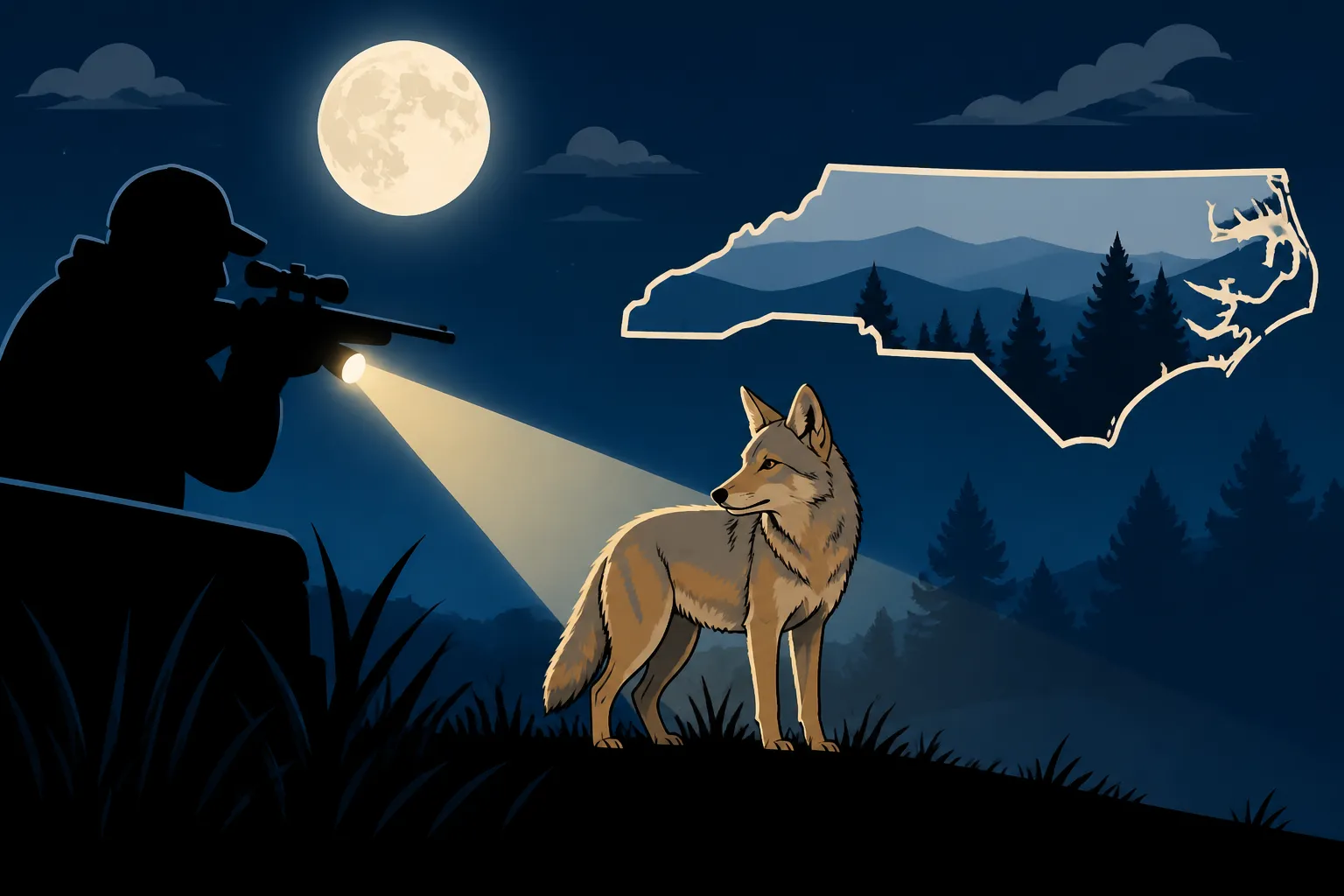
On private land, you are legally allowed to hunt coyotes year-round, day or night. This is a critical distinction that opens up a whole new window of opportunity for managing their populations. Unlike regulated game species, there's no closed season, no bag limit, and no time-of-day restriction when you're hunting on private property. This flexibility is a direct response to the ecological challenges coyotes present. Many hunters find that night hunting is often the most productive way to target these wary predators, who become much more active and less cautious under the cover of darkness. It’s important to remember, though, that this liberal approach is specifically for coyotes; you cannot use these rules as a loophole to hunt other species outside their legal hours. Always confirm the specific regulations for any species you intend to pursue.
Legal Weapons and Methods for Night Hunting Coyotes
When it comes to the tools you can use for night hunting coyotes on private land in North Carolina, the regulations are quite accommodating, largely aligning with general hunting methods. You can use most legal firearms, bows, or crossbows. This means your deer rifle, shotgun, or archery setup can easily do double duty for coyotes.
One of the most significant provisions for night hunting coyotes is the legal use of artificial lights. For almost every other game animal in North Carolina, "spotlighting" or using artificial light to locate and hunt animals is strictly prohibited. It's a violation that can carry serious penalties. But again, coyotes are the exception. On private land, you are permitted to use artificial lights, including spotlights, weapon-mounted lights, or headlamps, to find and shoot coyotes. This capability completely changes the game for night hunting, allowing you to effectively scan fields, clearings, and timber edges to locate coyotes responding to calls or moving through an area. Without artificial light, night hunting would be an exercise in extreme futility, so this regulation is truly foundational to effective night operations.
When choosing a firearm, consider the terrain you'll be hunting. For open fields, a flat-shooting rifle like a .223 Remington or a 6.5 Creedmoor can be excellent, offering precision at longer ranges. For thicker woods or calling coyotes into closer distances, a shotgun loaded with buckshot or a heavier varmint load can be very effective, especially if you anticipate quick, close-range shots. Just ensure whatever you choose adheres to the general legal firearms for deer hunting and safe handling practices. Regardless of your weapon, remember that shot placement is critical for a humane harvest, even on a coyote.
It's also worth noting that electronic calls are perfectly legal for coyote hunting in North Carolina, day or night. These can be incredibly effective for mimicking various prey distress calls or even coyote vocalizations to lure them into range. Many night hunters rely heavily on a combination of electronic calls and artificial lights to bring coyotes into their kill zone.
Specific Restrictions for Public Lands and Game Lands
While night hunting coyotes on private land offers a lot of flexibility, the rules change dramatically once you step onto public lands, including North Carolina Game Lands, National Forests like Pisgah or Nantahala, and National Wildlife Refuges. Generally, night hunting for any species is strictly prohibited on these public access areas.
The rationale behind these restrictions is multi-faceted: it's about public safety in areas that might see other users, managing hunting pressure, and ensuring that game animals are pursued in a fair and regulated manner. Even though coyotes are often seen as a nuisance, public land managers typically do not grant special night hunting privileges for them. Attempting to night hunt coyotes on Game Lands, for example, would almost certainly lead to a citation for hunting outside of legal hours or using artificial lights on game animals (even if the intent is coyotes, the rule often broadly applies to any hunting activity at night).
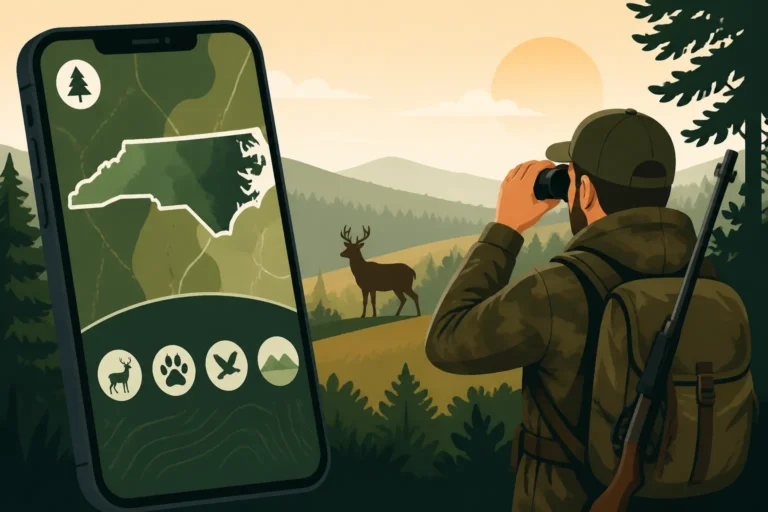
If you’re considering hunting coyotes on public land, your efforts will be limited to legal daylight hours. This means scouting with the NC Wildlife App to understand boundaries and using daytime tactics like calling or still-hunting. Always check the specific regulations for the particular Game Land or National Forest you plan to visit, as there might be very rare exceptions or specific managed hunts, but for general coyote hunting, assume night hunting is off-limits on public ground. Ignoring these rules can lead to severe penalties, including fines, loss of hunting privileges, and even confiscation of equipment. It's simply not worth the risk.
Essential Gear and Safety for Night Operations
Night hunting introduces a whole new set of challenges compared to daytime pursuits. Visibility is obviously the biggest factor, but safety, navigation, and effective execution also require specialized gear and careful planning. You're not just dealing with the darkness; you're dealing with a wary animal that has the advantage of its natural habitat under the cloak of night.
Lights, Optics, and Thermal Devices
The right lighting and optical aids are the backbone of any successful and safe night hunt. Since artificial lights are legal for coyotes on private land, you have several options:
- Weapon-mounted lights: These attach directly to your rifle or shotgun and illuminate your target, often with a beam designed to reach out to typical shooting distances. Many come with green or red LED filters, which some hunters believe are less alarming to coyotes. A powerful, focused beam is key. Brands like Streamlight or Olight offer robust, dependable options that can stand up to the rigors of hunting.
- Headlamps: Essential for hands-free navigation, setting up your stand, or field dressing an animal. Look for models with multiple brightness settings and a red light option, which helps preserve your night vision.
- Spotlights: A separate handheld or vehicle-mounted spotlight can be invaluable for scanning large areas for eye shine before a coyote is in shooting range. They allow you to survey the landscape without necessarily pointing your weapon in every direction.
Beyond simple lights, advanced optics have revolutionized night hunting:
- Night Vision (NV) devices: These amplify ambient light, allowing you to see in near darkness. Monoculars or binoculars with night vision capabilities can be used for scanning and identifying targets. While traditional night vision devices offer a green-tinged view, they are highly effective.
- Thermal Optics: Thermal devices detect heat signatures, creating an image based on temperature differences. This means you can spot a coyote hiding in thick brush or across a field, even when it's completely obscured from conventional light or night vision. A thermal monocular for scanning combined with a thermal scope on your rifle provides the ultimate advantage. The price point for thermal optics has become much more accessible in recent years, making them a serious consideration for dedicated night hunters. However, it's a significant investment, so consider how often you'll be using it. Always check Thermal and Night Vision Rules in North Carolina to ensure you're using these devices within legal parameters.
When combining these tools, imagine a scenario where you're set up on a field edge. You might use a thermal monocular to scan the distant tree line and pick up a heat signature. Once you confirm it’s a coyote, you could then use a red or green filtered spotlight or weapon-mounted light to get a clearer visual for the shot. This layered approach maximizes your ability to detect, identify, and engage the target safely and effectively.
Communication and Planning for Group Hunts
Safety is paramount during any hunt, but even more so when operating in darkness. When hunting coyotes at night, especially in groups, meticulous planning and clear communication are not just advisable – they are absolutely non-negotiable.
Before anyone even sets foot in the field, a thorough plan must be established. This includes:
- Designated Roles: Who is calling? Who is shooting? Who is spotting? In a multi-person setup, designating clear roles prevents confusion and potential accidents. For instance, only the designated shooter should have their weapon ready to fire, while others focus on scanning with lights or optics.
- Clear Shooting Lanes and Zones of Fire: Everyone in the party must know exactly where it is safe to shoot and, more importantly, where it is not safe. This means discussing the terrain, identifying any buildings, roads, or property lines, and agreeing upon specific angles of fire. If hunting from a vehicle, know who is exiting and where they will position themselves relative to the vehicle and other hunters.
- Communication Protocols: Cell service can be spotty in many rural North Carolina hunting areas. Two-way radios are an excellent investment for clear and instant communication. Establish simple, concise commands or code words for "stop," "don't shoot," or "coyote at 10 o'clock." Avoid unnecessary chatter that could spook animals or distract hunters.
- Buddy System: Never hunt alone at night if possible. A partner can help with carrying gear, provide an extra set of eyes, and, most importantly, assist in an emergency.
- Emergency Plan: What happens if someone gets hurt? What if a coyote is wounded and needs to be tracked? Have a first aid kit readily accessible and know the nearest medical facilities. Share your hunting location and estimated return time with someone not on the hunt. For property boundaries, tools like GoHunt provide detailed aerial maps and property line overlays, which are invaluable for ensuring you stay on the land you have permission to hunt. You can clearly mark your hunting boundaries and potential hazards right on the map, sharing this with your hunting partners.
A well-drilled group that communicates effectively and understands their safety zones will not only be safer but also more successful in calling in and harvesting coyotes. The darkness can play tricks on your eyes and perception, so over-communicating and being overly cautious is always the best approach.
Ethical Considerations and Best Practices for Successful Night Hunts
Beyond legal compliance and safety, ethical considerations and best practices ensure that your night hunting efforts are both effective and respectful of the wildlife and surrounding communities. Night hunting coyotes isn't just about reducing numbers; it's about doing so responsibly.
Minimizing Disturbance and Maximizing Effectiveness
When hunting at night, especially with lights and calls, you're introducing elements that can carry over significant distances. It's easy to disturb neighbors, livestock, or even other wildlife if you're not careful.
- Sound Discipline: While electronic calls are your friend for luring coyotes, be mindful of their volume, especially when you're setting up or moving between locations. Blasting a distress call at full volume near a residential area at 2 AM is a surefire way to generate complaints. Start with lower volumes and increase as needed.
- Light Discipline: Use your lights judiciously. Avoid shining bright spotlights directly into homes or across roads where they could momentarily blind drivers. When scanning, try to keep your light beam as low to the horizon as possible until you identify potential eye shine. This also helps reduce light pollution and maintains a lower profile.
- Call Selection and Sequencing: Coyotes are smart, and they learn quickly. Over-calling or using the same call sequence repeatedly in the same spot can educate them, making them harder to call in. Mix up your calls (distress, pup, challenge howls, barks) and vary your sequences. Sometimes, a long, patient wait with minimal calling is more effective than an aggressive, constant barrage. Consider the wind direction carefully; coyotes will almost always circle downwind to scent check the call, so position yourself to intercept them before they bust you.
- Choosing the Right Stands: Just like with deer, selecting a good stand location is crucial. Look for areas that offer good visibility, a clear backdrop for safe shooting, and cover to break up your silhouette. Field edges, clear cuts, and logging roads can be excellent choices. Remember that coyotes will often stick to cover until they're very close, so having visibility into those transition areas is key. GoHunt's satellite imagery can help you identify these types of terrain features and plan your entry and exit routes for stealth.
- Targeting Strategy: Don't just blast away at the first flicker of eye shine. Take a moment to confirm it's a coyote and assess the situation. A clean, ethical kill is always the goal. Knowing Coyote Calling in North Carolina Farm Country tactics can help bring them closer for a more accurate shot, maximizing effectiveness while minimizing the chance of wounding an animal that escapes into the darkness.
Respecting Property Boundaries and Local Ordinances
Even on private land where you have permission to hunt, you still have a responsibility to be a good neighbor and respect the boundaries and tranquility of others. This is particularly important with night hunting, where noise and lights can be more intrusive.
- Know Your Boundaries Cold: Before you ever head out after dark, you must have an absolute, 100% clear understanding of your property lines. This is not just about avoiding trespass; it's about ensuring your shots are always directed away from neighboring properties. Using detailed mapping apps like GoHunt, which can overlay property lines and owner information, is essential. Mark these boundaries on your physical map or GPS device. Nothing sours relations faster than a bullet landing on someone else's property, even accidentally.
- Neighborly Courtesy: If you're hunting near residential areas, it's always a good idea to inform your immediate neighbors of your intentions. A quick, friendly heads-up like, "Hey, just wanted to let you know I might be doing some coyote hunting on my property tonight, so if you hear some calling or a shot, it's just me," can go a long way. This prevents calls to the sheriff's office and keeps everyone comfortable.
- Local Noise Ordinances: While North Carolina law allows night hunting coyotes on private land, some counties or municipalities might have specific noise ordinances that could affect your ability to shoot firearms after certain hours. While hunting is generally exempt from some noise laws, it's wise to be aware of any local rules that could apply, especially in more densely populated rural areas. A quick call to your local sheriff's department (non-emergency line) can clarify any such concerns.
- Tracking and Recovery: Even with the best shot, a coyote might run. Night tracking is significantly more challenging than during the day. Have a powerful light dedicated to blood trailing, and if possible, mark the last spot you saw the animal and the direction it ran. If a wounded animal crosses onto neighboring property where you don't have permission, you cannot legally pursue it without permission. This is a tough pill to swallow, but trespassing laws are clear. This reinforces the need for accurate shots and knowing your boundaries. Just like Night Hunting Hogs With Lights on Private Land, the same courtesy and legal adherence apply to coyote pursuits.
By adhering to these ethical considerations and best practices, you can ensure that your night hunting for North Carolina coyotes is both successful in its objective of population management and respectful of the land, wildlife, and community around you.
Disclaimer
Hunting involves inherent risks, including but not limited to injury or death. Always prioritize safety, follow all applicable laws and regulations, and obtain proper licenses and permits. The information provided in this guide is for informational purposes only and should not be considered legal advice. Consult the North Carolina Wildlife Resources Commission (NCWRC) for the most current and comprehensive regulations before engaging in any hunting activities.