Calling a North Carolina Gobbler Off the Roost
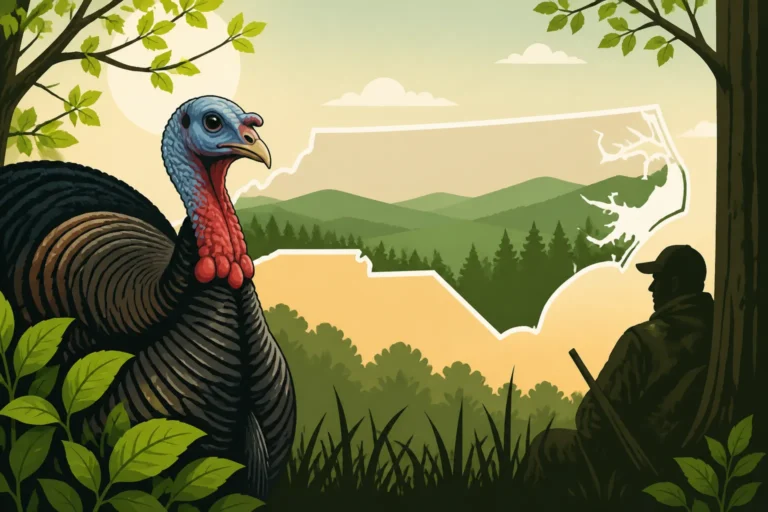
That heart-stopping moment when a North Carolina gobbler erupts with a booming gobble right off the roost, shaking the very air around you, is what we live for as turkey hunters. But it can quickly turn into pure frustration if that bird gobbles his head off, flies down, and then slips away silently, leaving you wondering what went wrong. This guide is all about taking the guesswork out of those crucial first minutes of light, giving you proven strategies to call that North Carolina gobbler right off his limb and into your lap.
Understanding Roosted Gobbler Behavior in North Carolina
Calling a gobbler off the roost isn't just about making turkey sounds; it's about understanding the subtle dance he performs from the limb to the ground each morning. If you know what he's thinking, you've got a much better chance of influencing his decisions.
Why Gobblers Roost Where They Do
Gobblers choose their roosting spots with a few key things in mind: safety, a good vantage point, and often, proximity to a reliable food source or strutting zone. In the mountains of North Carolina, you might find them in tall pines on a ridge top, giving them a clear view of the surrounding valleys and a quick escape route. Down in the Coastal Plain, they might opt for mature hardwoods bordering a pocosin swamp or a large field, where they feel secure from ground predators. The Piedmont often sees them in isolated stands of mature oaks or pines near agricultural fields or creek bottoms, places that offer both protection and a strategic morning advantage. They want to be high enough to avoid coyotes, bobcats, or even a determined feral hog, and they want to survey their domain as the world wakes up. Understanding these preferences can help you predict where they'll be come evening, making your morning setup much easier. For more insights into their habitat choices, check out our piece on North Carolina Turkey Roost Tree Preferences.
The Morning Routine: Gobbles to Fly Down
A gobbler's morning routine is usually a predictable sequence, though individual birds can certainly throw you a curveball. It often starts well before daylight with some soft, almost sleepy tree yelps from the hens. Then, as the sky begins to lighten, the gobblers will start to sound off, often triggered by an owl hoot or a crow call. Their gobbling intensifies as full daylight approaches, a clear announcement of their presence to any hens in the vicinity. This is their moment to establish dominance and attract their mates. Finally, they'll make that characteristic, loud fly-down cackle, followed by the rustle of wings as they drop to the ground. This whole sequence can unfold over twenty minutes or an hour, depending on the bird, weather, and pressure. Your window of opportunity often lies between that first strong gobble and the moment he hits the dirt. The trick is to be in position, sound appealing, and give him every reason to come your way, not somewhere else.
Pre-Dawn Scouting and Setup for Roosted Birds
Success with roosted gobblers often hinges on the work you do before you even step foot in the woods in the dark. It’s about knowing where he is, how to get there silently, and where to position yourself for the best shot.
Locating the Roost the Evening Before
Trust me, trying to stumble around in the pitch black of predawn, guessing where a gobbler might be, is a recipe for disaster and spooked birds. The evening before your hunt is absolutely crucial for locating the roost. As the sun begins to set, head out to areas where you suspect turkeys might roost, like those aforementioned ridge tops, swamp edges, or mature timber stands. Use a loud locator call like an owl hooter or a crow call to get a shock gobble. Once you get a response, pay close attention. Often, you can hear them fly up to the roost, which gives you an even more precise location.
Modern mapping tools, like those found on the GoHunt platform, can be invaluable here. You can use their aerial imagery to identify potential roosting trees, travel corridors, and ideal setup locations. Mark that spot on your GPS, note any obstacles like creeks or thick briar patches, and plan your entry route for the next morning. Knowing exactly where he's going to spend the night eliminates so much guesswork and allows for a confident, silent approach.
Stealthy Approach and Optimal Setup
Once you've located your bird, the next morning requires an almost surgical approach. Your goal is to get as close as possible without being detected, ideally within 100-150 yards, if terrain allows. Move slowly, deliberately, and with as little noise as possible. The leaves on the North Carolina forest floor can be notoriously crunchy, so pick your steps carefully. A good headlamp with a red or green light setting can help navigate without throwing off too much light.
When it comes to setting up, always prioritize a good backdrop. This means a wide tree trunk, a thick brush pile, or even a natural mound that breaks up your outline. Never set up in the open with nothing behind you; a turkey's eyesight is legendary. Consider the gobbler's likely fly-down path and where he'll want to strut and look for hens. If you can anticipate his movements, you can place yourself perfectly. Setting up against a large oak, for instance, offers great cover and a commanding view, as discussed in Setting Up Against a Big Oak. Decoy placement is also key; generally, you want them within your effective shooting range, facing the direction you expect the gobbler to approach, and visible from the roost tree.
The Art of the Roost Call: When and How to Speak
This is where the magic happens, or doesn't. Calling a gobbler off the roost isn't about calling to him; it's about calling with him, creating a scenario he can't resist.
The Initial Greetings: Soft Calls at First Light
When that first hint of gray appears in the eastern sky, resist the urge to hammer him with loud calls. Remember, he's still on the limb, potentially with real hens. Start with soft, subtle tree yelps, clucks, and purrs – just enough to let him know there's a hen in the neighborhood. Think of it as a soft, sleepy greeting. You want to sound like a hen that's just waking up, stretching her wings, and maybe letting out a contented little murmur.
Gauge his reaction. Does he gobble back enthusiastically? Or does he just give a quiet "cluck"? The intensity of his response will tell you a lot about how aggressive you can be with your calling. Often, less is more in these early stages. Too much loud calling can sometimes make him suspicious, especially if he has a history of encountering hunters. You're trying to coax, not demand.
Building Excitement and Drawing Them In
As the light increases and the gobbler's gobbling becomes more frequent and robust, you can gradually increase the volume and intensity of your calls. Mix in some slightly louder yelps and maybe a fly-down cackle if it feels right. You're trying to sound like a hen getting excited about flying down and meeting up with the gang. If he's gobbling like crazy, you can be a bit more aggressive. The goal is to make him believe there's a real, eager hen waiting on the ground for him.
One common frustration is when he flies down, but completely ignores your calls and goes the opposite direction. This is where patience comes in. Don't immediately pack up. Sometimes, a gobbler will fly down to his established strut zone or meet up with real hens before swinging back around. If he does fly down away from you, quickly re-evaluate your situation. Did he have other hens already with him? Was there an obstacle in his path? Don't be afraid to subtly adjust your position or try a different call.
Here's a general sequence you might consider:
| Time Relative to Legal Light | Call Type | Call Volume | Rationale |
|---|---|---|---|
| 20-30 min Before | Owl Hoot / Crow Call | Loud | Locate gobbler, trigger shock gobble, confirm position. |
| 15-20 min Before | Soft Tree Yelps, Clucks | Very Soft | Mimic waking hen, let him know you're there without alarming. |
| 5-10 min Before | Mid-Volume Yelps, Purrs | Medium | Build excitement, sound interested as light increases. |
| At Fly Down | Fly-Down Cackle (optional) | Loud | Mimic real hens dropping, can draw attention. Use sparingly. |
| 5-10 min After | Soft Clucks, Purrs, Yelps | Soft-Medium | Reassure him you're still there, sound approachable. Respond to his intensity. |
Locator Calls and When to Use Them
Locator calls, like an owl hooter or a crow call, aren't just for the evening scout. They can also be a valuable tool in the pre-dawn darkness. If you arrive at your setup and haven't heard the gobbler in a while, or if you want to confirm his exact position without risking a turkey call, a locator call can be perfect. A sharp owl hoot or a realistic crow caw can often elicit a shock gobble without putting the bird on edge. This is especially useful if the bird seems a little quiet or if you're not entirely sure of his exact tree. For a deeper dive into these auditory tools, read our guide on Locator Calls for North Carolina Gobblers. However, use them sparingly. Too many locator calls can become predictable and might signal to the bird that something is off.
Post-Fly Down Tactics and Troubleshooting
The moment a gobbler flies down to the ground is a critical juncture. It can feel like he's either committed to you or completely forgotten about you. Knowing how to react in these moments can make all the difference.
The Crucial Moments After Fly Down
So, he's flown down. Now what? The first thing to do is nothing with your calls for a minute or two. Let the silence hang. He's on the ground, assessing the situation. He expects the hen to come to him. If you've got decoys out, he's likely looking for them. After a short pause, if he hasn't committed or is still gobbling from a distance, try some very soft, contented clucks and purrs. You want to sound like a hen that has landed and is now casually feeding, waiting for the gobbler to come to her. This often provides enough reassurance for him to take those first crucial steps in your direction.
Patience is your absolute best friend here. Don't rush it. Many hunters make the mistake of calling too aggressively right after the fly-down, which can make the gobbler hang up, waiting for the hen to close the distance. Remember, he’s a king looking for his queen, and he expects her to come calling.
When the Gobbler Hangs Up or Moves Away
This is perhaps the most common, and most frustrating, scenario. The gobbler flies down, hits the ground, gobbles a few more times, and then… silence. Or worse, he starts moving away. Don't panic. If he's hung up, meaning he's gobbling but won't come closer, it could be due to terrain, another hen, or simply his inherent wariness. Try to break the silence with a few soft yelps, then go quiet again. Make him want to come investigate. Sometimes, a subtle change in your calling location (even just leaning to the side of your tree) can make a difference, making him think the hen has shifted.
If he truly starts moving away, and you're on public land, this is where the "run-and-gun" tactic might come into play, as detailed in Run-and-Gun on North Carolina Public Land. This involves carefully and quietly repositioning yourself to get ahead of him or to cut him off, using terrain features like creek bottoms or ridges to mask your movement. You need to be incredibly careful not to spook him further. Always try to get ahead of him, rather than chasing him. This scenario is particularly common when hunting on the edges of fields in the Piedmont, where they may fly down and head directly to their preferred strutting grounds, which we explore in Turkey Tactics for Piedmont Field Edges. The key is adaptability and knowing when to stay put and when to make a calculated move.
Decoy Strategies for Roosted Birds
Decoys can be a game-changer when calling a gobbler off the roost, but they need to be used correctly. For early morning setups, a single hen decoy, perhaps in a feeding or breeding posture, can be very effective. It gives the gobbler a visual target, confirming that the "hen" he's hearing is real and approachable. Place it within your comfortable shooting range, typically 15-25 yards.
Consider the layout of your spot. If you're on an open field edge, a more aggressive setup with a jake or strutter decoy might work, challenging the gobbler to come in and fight. However, in thicker timber or on pressured birds, a lone hen is often safer. Always position your decoys so that the gobbler will approach them from a direction that gives you a clear shot. Avoid placing them directly in front of you, as he might focus on the decoy and present a difficult shot angle. For more specific advice on placement, refer to Turkey Decoys That Work on Pressured Birds. Remember, the goal is to enhance the illusion, not overcomplicate it. Especially during the peak of the North Carolina Statewide Turkey Opener, birds can be hot and heavy, making decoys highly effective. For your calling, consider what gear you're using; both Box Calls Versus Mouth Calls have their place, and you might even consider Slate and Glass Calls in Wet Weather for those unpredictable spring showers.
Disclaimer
Hunting is an inherently dangerous activity. Always prioritize safety, follow all local and state regulations, and ensure you have proper training and licensing. This guide is for informational purposes only and does not substitute for professional instruction or adherence to wildlife laws. Conditions in the field can change rapidly, and responsible hunting practices are paramount.