Sabot Versus Conical for Deer
Choosing the right projectile for your muzzleloader can feel like navigating a minefield, especially when you're standing in the aisle staring at boxes of sabots and conicals, wondering which one will truly perform when that big North Carolina buck steps out. It's not just about what fits your gun; it's about accuracy, energy, and confidence in the field. This guide is going to break down the ins and outs of sabots versus conicals, helping you make an informed decision for your next deer hunt.
Understanding the Fundamentals: Sabots vs. Conicals
When you step into the world of muzzleloader hunting, one of the first big decisions you'll face after picking your rifle is what kind of projectile to load into it. It’s not a one-size-fits-all scenario, and the choice between a sabot and a conical can dramatically affect your rifle's performance in the field. Understanding the fundamental differences between these two types of bullets is crucial for any hunter hoping to maximize their chances.
What is a Sabot?
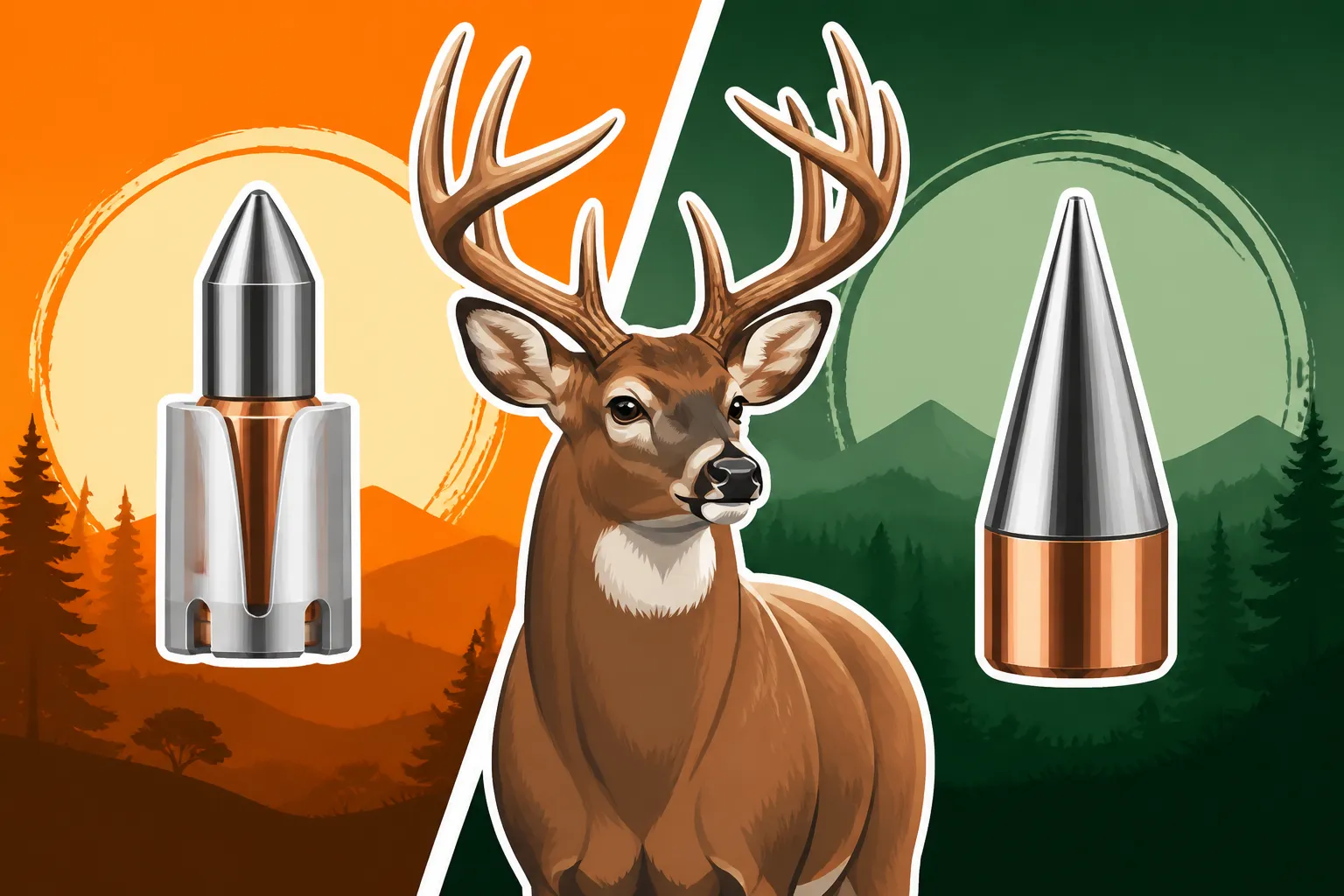
Think of a sabot (pronounced SAY-bow or SA-boe) as a tiny, single-use carrying case for a smaller bullet. It’s typically a plastic sleeve or cup that encases a projectile that is smaller in diameter than the bore of your muzzleloader. When you load a sabot, it fills the rifling of your barrel, creating a tight seal that allows the hot gasses from the black powder charge to push it down the barrel with maximum efficiency. Once the sabot and projectile exit the muzzle, the plastic sabot peels away and falls off, leaving the smaller, aerodynamic bullet to continue its flight toward the target.
This design allows muzzleloaders to shoot modern, rifle-style bullets, often jacketed or with polymer tips, that are designed for superior ballistic performance, flatter trajectories, and controlled expansion. It's a way to bring a bit of contemporary bullet technology to the traditional world of black powder, offering hunters advantages in accuracy and effective range that were once unheard of for muzzleloaders. Many hunters look to these for improved performance, and companies often highlight their superior ballistic coefficients.
What is a Conical Projectile?
On the other side of the spectrum, we have the conical projectile. This is what many might consider the more "traditional" muzzleloader bullet. A conical is a solid, elongated lead projectile that is designed to be the same diameter as your muzzleloader's bore. Unlike a sabot, there's no plastic sleeve involved; the bullet itself engages the rifling of the barrel directly. These bullets are typically made of soft lead or a lead alloy and are often heavier than their sabot-encased counterparts.
Because they are full-bore, conicals rely on their weight and direct contact with the rifling to stabilize and fly true. They tend to be slower out of the barrel compared to sabots, but their sheer mass and soft lead construction can deliver a powerful punch and deep penetration, which can be invaluable when hunting tough game or needing to break through bone. They're a favorite among hunters who appreciate simplicity, tradition, and robust terminal performance, particularly for those close-range encounters in the thick woods of North Carolina.
The Case for Sabots: Speed, Accuracy, and Modern Performance
For many North Carolina deer hunters, the draw of sabot projectiles lies in their ability to bridge the gap between traditional muzzleloader hunting and modern rifle performance. If you've ever felt limited by the trajectory or accuracy of older muzzleloader designs, sabots might just be the answer you're looking for. They truly shine in situations where precision and a flatter shot are paramount.
Higher Ballistic Coefficient and Flatter Trajectory
One of the biggest advantages of sabots is that they allow you to shoot smaller, more aerodynamically efficient bullets. These bullets typically have a higher ballistic coefficient (BC) than the heavier, less streamlined conical bullets. What does that mean for you in the field? It translates directly to a flatter trajectory and better energy retention downrange. Imagine hunting a powerline cut in the Hunting Piedmont Farmland Deer region or sitting on a long field edge where shots might stretch beyond 75 yards. With a sabot, you’ll experience less bullet drop, making it easier to hold on target without guessing Kentucky windage.
This flatter trajectory can dramatically increase your effective range with a muzzleloader. Instead of needing to know the exact distance to the yard, sabots provide a bit more forgiveness in your range estimation, which can be a huge confidence booster when that trophy buck finally steps out. Many modern muzzleloader designs are even specifically optimized for sabot performance, giving you rifle-like accuracy out to ranges that would make a traditionalist blush.
Enhanced Accuracy at Longer Ranges
Beyond the flatter trajectory, sabots often deliver superior accuracy, especially as shot distances increase. The plastic sabot grips the rifling consistently, imparting a stable spin to the projectile. Once the sabot separates, the bullet itself is designed to fly true. This allows for tighter groups on the target range and more precise shot placement in hunting scenarios.
For hunters who spend time Still-Hunting Nantahala Forest Ridges or setting up along wider clearings, the ability to make an ethical shot at 100 or even 150 yards with a muzzleloader is a game-changer. Consistency is key, and with a well-matched sabot and powder charge, you can achieve incredible repeatable accuracy. You can often find reviews and discussions on different bullet performance, which can be super helpful, perhaps even on platforms like GoHunt that aggregate gear info. This precision means you can place your shot right in the vitals, ensuring a clean, quick harvest.
Material Options: Jacket, Lead Core, Polymer Tips
Another compelling aspect of sabots is the vast array of bullet designs available within the plastic sleeve. You're not limited to just a soft lead projectile. Instead, you can choose from bullets with jacketed lead cores, similar to those used in centerfire rifles, which offer controlled expansion and excellent weight retention. Some even feature polymer tips, designed to initiate expansion upon impact, creating a larger wound channel.
This variety means you can tailor your projectile choice to the specific conditions of your hunt or the size of game you're after. For instance, a bonded core bullet might be ideal for deep penetration on a larger bodied North Carolina buck, while a rapidly expanding bullet could be perfect for quick energy transfer on smaller deer. The flexibility in bullet construction gives you more tools in your arsenal, allowing for better terminal performance once the bullet hits its mark.
The Traditional Powerhouse: Conical Projectiles
While sabots certainly have their place in modern muzzleloading, there's a timeless appeal and undeniable effectiveness to conical projectiles. For many, they represent the authentic muzzleloader experience, offering a blend of simplicity, raw power, and proven performance that has stood the test of time. If you're a hunter who values tradition, deep penetration, and a straightforward approach, conicals might be your go-to.
Deep Penetration and Energy Transfer
Conical bullets, by their very nature, are often heavier and made of softer lead or lead alloys. When these solid, substantial projectiles hit a deer, they tend to drive deep, transferring a significant amount of kinetic energy directly into the animal. Their mass helps them maintain momentum, often punching through bone and heavy muscle to reach vital organs. This can be particularly advantageous when you're hunting in thick cover, like the Hunting Coastal Plain Pocosin Swamps, where deer might be angled or shots might present less-than-ideal broadsides.
The sheer weight and construction of a conical mean they often create a robust wound channel, leading to quick and humane harvests. While they might not expand as dramatically as some modern sabot bullets, their ability to plow through tissue and ensure an exit wound (which greatly aids in blood trailing) makes them a highly reliable choice for many seasoned muzzleloader hunters. If you've ever spent time Tracking a Deer Through North Carolina Leaf Litter, you'll appreciate anything that creates a better blood trail.
Simplicity and Reliability
One of the often-overlooked benefits of conicals is their simplicity. There's no plastic sabot to worry about shedding or leaving residue in your barrel. You're loading a single, solid piece of lead. This can translate to easier loading in the field, especially when your hands are cold or you're trying to reload quickly. For hunters who prefer a more minimalist approach or those using more traditional muzzleloader rifles, this straightforward design is a huge plus.
Moreover, the lack of a plastic sabot means there's no potential for plastic fouling in your barrel, which can sometimes impact accuracy after multiple shots without cleaning. While modern sabots have improved, a conical typically offers a cleaner bore for repeated shots, which can be a factor if you're taking more than one shot or doing a lot of target practice. This reliability means less to go wrong when it matters most, giving you peace of mind on your hunt.
Legalities and Bore Specifications
It's also important to consider the legal aspects and specific bore requirements for conicals. While most North Carolina hunting regulations permit both sabots and conicals during Muzzleloader Deer Hunting in North Carolina, some specific state or game land rules might have nuances, or certain historical reenactment hunts might only allow traditional projectiles. A quick check of resources like GoHunt or your state's wildlife regulations can help clarify what's allowed.
Additionally, conical bullets are typically designed for specific bore diameters, requiring a snug fit to engage the rifling properly. While they're generally designed for rifled barrels, their effectiveness is tied to how well they match your specific muzzleloader. Historically, conical bullets were designed for slower twist rates, often found in older or more traditionally styled muzzleloaders, so matching the bullet to your barrel's twist rate is critical for accuracy.
Choosing Your Muzzleloader Projectile for North Carolina Deer
So, how do you decide between a sabot and a conical for your North Carolina deer hunt? It really boils down to several key factors related to your specific muzzleloader, your hunting style, and the conditions you expect to encounter. There's no single "best" answer, but by considering these points, you can make an informed choice that maximizes your effectiveness in the field.
Your Muzzleloader's Twist Rate
This is perhaps the most critical factor. The twist rate of your muzzleloader's barrel (how many inches of barrel it takes for the rifling to make one full rotation) dictates which projectiles will stabilize best and, therefore, shoot most accurately.
- Faster Twist Rates (e.g., 1:28" to 1:32"): Modern muzzleloaders, especially inline models, often have faster twist rates. These are generally designed to stabilize shorter, lighter, and more aerodynamic sabot-encased bullets. If your rifle has a fast twist, a sabot is very likely to be your most accurate option. Trying to shoot heavy, long conicals through a fast-twist barrel can sometimes lead to over-stabilization and decreased accuracy.
- Slower Twist Rates (e.g., 1:48" to 1:60" or slower): Many traditional muzzleloaders and some older inline models feature slower twist rates. These barrels are typically better suited for stabilizing longer, heavier, full-bore conical bullets. While you can sometimes find sabots that will work, conicals often offer superior accuracy in these slower twist barrels. Knowing your specific rifle's twist rate is paramount, and many hunters consult resources like GoHunt to see what others with similar setups are having success with.
Typical Shot Distances in Your Hunting Area
Consider the typical range at which you expect to take a shot. North Carolina offers a diverse range of hunting environments, from the dense mountain forests of Pisgah National Forest to the open agricultural fields of the Piedmont and the thick swamps of the Coastal Plain.
- Longer Shots (75+ yards): If you're hunting more open terrain where shots might stretch out, such as clear-cuts or large food plots, the flatter trajectory and enhanced accuracy of sabots will give you a significant advantage. This can be crucial in areas where a deer might stop just beyond the brush line.
- Shorter Shots (Under 75 yards): For hunting in dense woods, deep bottomlands, or areas where visibility is limited, such as a Hunting a Funnel Between Two Pocosins, your shots are likely to be much closer. In these scenarios, the deep penetration and robust terminal performance of a heavy conical can be ideal. The slight drop in trajectory won't be as significant at these shorter distances, and the increased mass can be a game-changer if you hit brush or bone.
Hunting Regulations
Always, always double-check the current North Carolina Muzzleloader Season Rules. While most general regulations are broad enough to cover both, certain managed hunts, specific game lands, or special seasons might have more restrictive rules regarding projectile type or material. It's rare, but it's better to be safe than sorry. For example, some jurisdictions might have lead-free ammunition requirements that could influence your choice, though this is not typically the case for muzzleloaders in North Carolina.
Practice and Personal Preference
Ultimately, the best projectile for you is the one you can shoot most accurately and confidently. Buy a few different types of both sabots and conicals, and head to the range. Test them rigorously with your specific muzzleloader and powder charge. Pay attention to group size, consistency, and ease of loading.
What feels right in your hands? What gives you the most confidence when you pull the trigger? Sometimes, a hunter just prefers the feel and performance of a particular bullet type, even if another offers slightly better ballistics on paper. And let's be honest, trying out different loads can get pricey, so sometimes looking at community insights on platforms like GoHunt can give you a head start. The time spent at the range is never wasted; it builds proficiency and ensures you're ready when that moment of truth arrives.
Comparison Chart: Sabot vs. Conical Projectiles
To help you visualize the key differences, here's a quick comparison:
| Feature | Sabot Projectiles | Conical Projectiles |
|---|---|---|
| Projectile Type | Smaller, often jacketed/modern bullet in plastic | Full-bore, solid lead or lead alloy |
| Barrel Fit | Plastic sabot engages rifling, bullet is undersize | Bullet itself engages rifling, full bore |
| Velocity | Generally higher due to lighter bullet | Generally lower due to heavier bullet |
| Accuracy | Often better at longer muzzleloader ranges (75+ yd) | Good at shorter ranges, can be less aerodynamic |
| Trajectory | Flatter, less drop | More pronounced drop at longer ranges |
| Penetration | Excellent; modern bullets offer controlled expansion | Excellent; heavy mass aids deep, straight-line penetration |
| Recoil | Generally lighter (for similar powder charges) | Can be heavier due to increased projectile mass |
| Cleaning | May leave plastic fouling | Can leave lead fouling (less common with modern alloys) |
| Typical Use | Open terrain, longer shots, modern inline rifles | Thick woods, close shots, traditional rifles |
| Advantages | Faster, flatter shooting, more bullet options | Simplicity, deep penetration, powerful impact |
Choosing between sabots and conicals for your North Carolina deer hunt is a personal journey that blends modern performance with traditional values. By understanding your rifle, your hunting grounds, and your own shooting preferences, you can make a choice that puts you in the best position for a successful and ethical harvest. Good luck out there!
Disclaimer
This article is for general informational purposes only and does not constitute professional advice. Laws, prices and regulations vary by location and change over time. Consult a qualified professional for guidance on your specific situation.