Choosing a Muzzleloader for December Cold
December in North Carolina brings a whole new level of challenge to deer hunting, especially if you’re planning to use a muzzleloader. The crisp air turns frigid, fingers go numb quickly, and moisture can be the silent killer of a perfect shot, leaving many hunters frustrated with misfires or accuracy issues when it matters most. This guide is dedicated to helping you navigate those late-season conditions, offering insights into selecting a muzzleloader that stands up to the biting cold and damp, and providing practical advice to ensure your hunt is successful and your equipment reliable.
The Unique Challenges of December Muzzleloader Season in North Carolina
Hunting in December in North Carolina is a completely different beast than the early archery days or even the peak of the rifle rut. The woods are stark, the wind cuts right through you, and the deer are wise to every trick in the book after months of pressure. For muzzleloader enthusiasts, these conditions amplify every potential drawback of the primitive weapon. It's not just about finding a deer; it's about making sure your equipment functions flawlessly when a hard-earned opportunity finally presents itself.
Battling the Cold and Moisture
The most obvious adversary during a December muzzleloader hunt is the weather itself. A damp morning with a heavy dew, a sudden drizzle, or even a thick fog can seep into your powder, rendering your shot a dud or, worse, a hangfire that spooks your target. The cold itself makes handling small primers and measuring powder a chore, especially if your fingers are stiff. Imagine sitting on a ridge in the Pisgah National Forest Hunting area, waiting for hours in freezing temperatures. When that buck finally steps out, you need absolute confidence that your rifle will fire immediately, not just click. This is where the reliability of your muzzleloader's ignition system and how well it's sealed against the elements becomes paramount.
It's not just rain or mist that causes problems. Condensation can be a silent killer. Moving from a warm truck or hunting cabin into the biting cold of a December dawn can cause moisture to form inside the barrel and around the breech plug. This internal moisture, even in tiny amounts, can foul your powder charge and lead to an inconsistent burn, affecting accuracy or causing a complete misfire. Understanding how to mitigate these effects through proper rifle selection and preparation is key to ensuring your muzzleloader performs its best when temperatures plummet and humidity is high.
Pressure and Late-Season Deer Behavior
By December, North Carolina's whitetails have been educated. They've dodged archers, side-stepped muzzleloader hunters, and outsmarted rifle hunters for weeks, if not months. This means deer are often more nocturnal, sticking to the thickest cover, and are acutely aware of any unnatural sights, sounds, or smells. They're wary, quick to react, and offer fewer clear, unhurried shots. Your muzzleloader hunt is likely to be a game of patience and precision, often resulting in short, quick opportunities if they arise at all.
This increased deer pressure, especially on public lands or heavily hunted private tracts in the Hunting the Piedmont Farmland Deer region, means you'll probably be aiming for a quick, ethical shot. There's little room for error or fumbling with your weapon. The slower reload time of a muzzleloader is already a disadvantage for follow-up shots, so your first shot needs to count. Choosing a muzzleloader that you can load efficiently, handle comfortably, and shoot accurately under stress and in cold conditions directly impacts your success when those fleeting late-season chances appear. Hunters often spend hours scouting using tools like GoHunt to understand deer movement, only to have their moment thwarted by a sluggish muzzleloader.
Understanding Muzzleloader Types for Cold Weather Performance
When considering a muzzleloader for those chilly December hunts, you essentially have a few main types, each with its own quirks and advantages in the cold. Your choice will significantly impact your experience, reliability, and ultimately, your success. It’s not just about what looks good; it’s about what works when your breath is fogging in front of you.
In-line Muzzleloaders: Modern Reliability
In-line muzzleloaders are the workhorses of modern muzzleloader hunting, and for good reason. They feature a straight-line ignition system where the primer sits directly behind the powder charge. This design significantly improves ignition reliability, especially in damp or cold conditions, because there's less space for moisture to penetrate and degrade the powder. They often utilize 209 shotgun primers, which are robust and powerful, designed for reliable ignition even in less-than-ideal circumstances. This is a huge benefit when you’re out in the Coastal Plain Pocosin Swamps where humidity can be thick even in winter.
Many in-line models come with advanced features like sealed breech plugs and fully enclosed primer systems, which offer superior weather protection. Some even have tool-less breech plug removal, which is a blessing for field cleaning or if you need to clear a misfire quickly with numb fingers. While they might lack the traditional aesthetic, their practical advantages for North Carolina's December hunting season are hard to ignore. They typically offer better accuracy out of the box due to modern manufacturing tolerances and often come drilled and tapped for scopes, allowing for precise shot placement, which is critical for those wary late-season bucks.
Traditional Side-Hammer and Flintlocks: Charm vs. Practicality in Winter
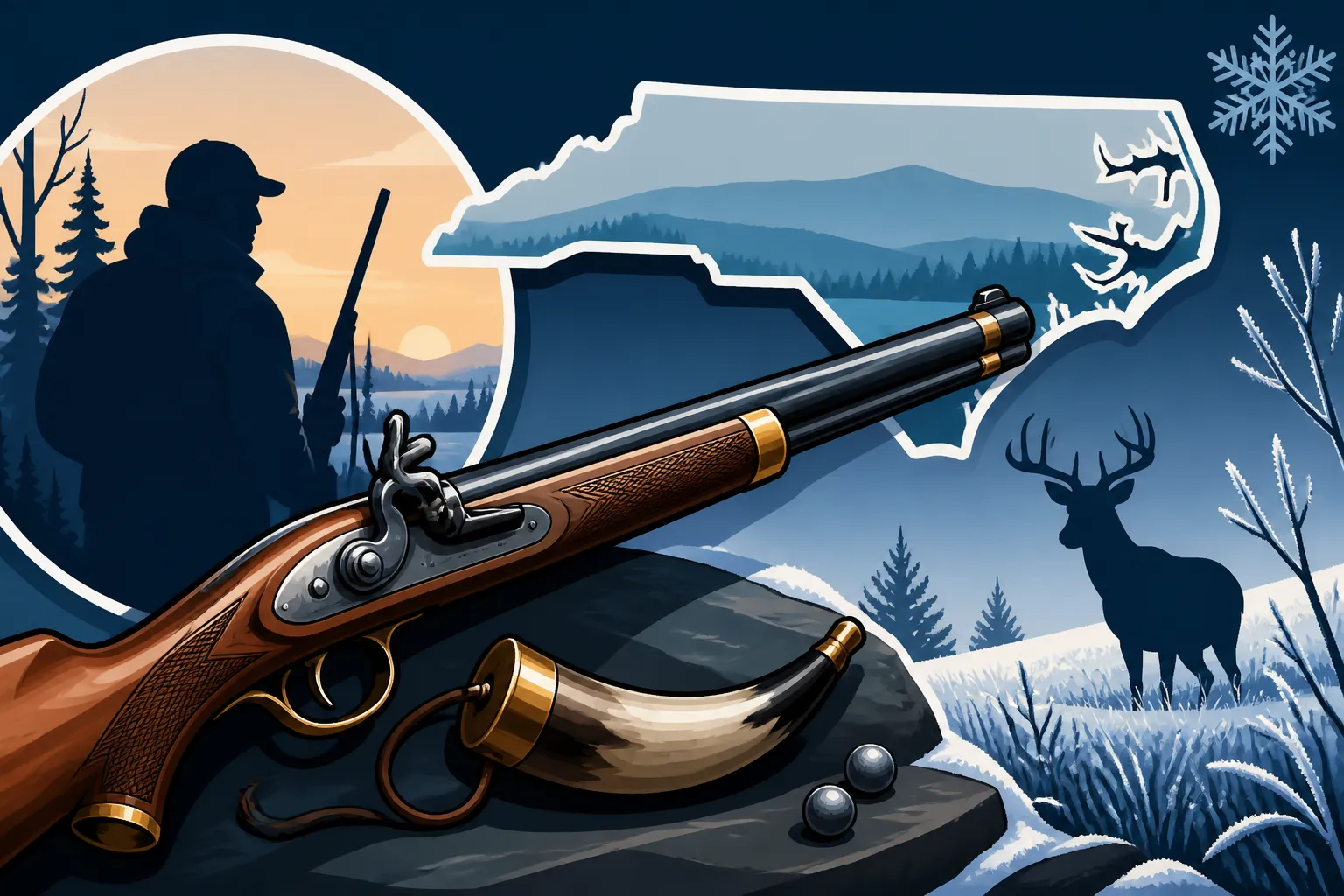
Then you have the traditionalists – the side-hammer percussion rifles and the classic flintlocks. There's an undeniable charm and challenge to hunting with these historical firearms. The smell of black powder, the cloud of smoke, the satisfying thump as the projectile leaves the barrel – it's an experience rooted in tradition. However, when faced with December's cold and damp, their practicality can quickly turn into frustration.
Side-hammer percussion rifles, which use percussion caps, are more susceptible to moisture-related misfires than in-lines. The cap is exposed, and water can easily compromise the primer compound. Flintlocks, with their exposed pan, flash hole, and reliance on a spark from flint striking steel, are even more prone to weather-related issues. A tiny bit of moisture on the prime powder in the pan, or a damp flint, and you're left with a disappointing flash-in-the-pan rather than a shot. While many experienced traditional hunters have their tricks for Keeping Powder Dry in Wet Snow, it adds a layer of complexity that modern in-lines largely bypass. If you're prioritizing reliability in harsh conditions, especially if you're not an experienced traditional muzzleloader hunter, an in-line will likely offer a much more consistent experience in North Carolina's varied December weather.
| Muzzleloader Type | Ignition System | Cold/Moisture Performance | Ease of Use/Maintenance | Typical Accuracy | Best For |
|---|---|---|---|---|---|
| In-line | 209 Shotgun Primer (enclosed) | Excellent; highly reliable | High; often tool-less plug | Very Good to Excellent | Modern hunters, reliability in all weather |
| Side-Hammer Percussion | Percussion Cap (exposed) | Fair to Good; susceptible to moisture | Medium; caps can be fiddly | Good | Traditional feel with decent performance |
| Flintlock | Flint/Frizzen Spark (exposed pan) | Poor; very susceptible to moisture | Low; requires careful priming | Good | Purists, historical reenactment, fair weather |
Key Features to Look for in a Cold-Weather Muzzleloader
When you’re staring at a rack of muzzleloaders, trying to decide which one will perform best on a frosty morning in December, it’s easy to get caught up in aesthetics or brand names. But for cold-weather hunting, certain practical features rise above the rest in importance. You want a rifle that’s built to withstand the elements and function reliably under stress, even when your hands are stiff and visibility is low.
Ignition Systems and Powder Choice
The heart of any muzzleloader's cold-weather performance lies in its ignition system. As mentioned, the 209 shotgun primer used in most in-line muzzleloaders is king here. Look for models that fully enclose the primer, creating a tighter seal against moisture. Some designs have a dedicated primer housing or bolt that completely covers the 209 primer, leaving no gaps for rain or condensation to sneak in. This can be the difference between a clean kill and a frustrating misfire when that trophy buck steps out of a thicket in the Uwharrie Piedmont Hollows.
When it comes to powder, while loose black powder and some substitutes work, many hunters find granular or pelletized propellants like Triple Seven or Blackhorn 209 to be more consistent in cold weather. They ignite more reliably and burn cleaner, reducing residue buildup that can become problematic in low temperatures. However, always match your powder choice to what your muzzleloader is designed for and what performs best in your specific rifle. A little time at the range patterning different loads in cold conditions will tell you everything you need to know. Remember, different primers can also affect how different powders ignite, so some experimentation might be necessary to find your perfect, reliable combination for those chilly December days.
Barrel and Stock Materials for Durability and Handling
The materials your muzzleloader is made from play a significant role in its ability to handle cold and damp conditions. Stainless steel barrels are a huge plus for North Carolina’s varied climate. They are far more resistant to rust and corrosion than blued carbon steel, which is critical when you're moving from wet, cold woods to a warm vehicle. You don’t want to worry about rust blooming on your barrel after a single damp hunt. Synthetic stocks, often made from durable polymers, are also highly recommended. Unlike wood stocks, they won't swell, warp, or crack due to moisture or extreme temperature fluctuations, maintaining consistent accuracy and fit.
Beyond durability, consider the ergonomics. A lighter rifle, perhaps one with a fluted barrel, might be easier to carry through challenging terrain, especially if you're traversing the steep slopes of the Hunting the North Carolina Mountains. However, a slightly heavier rifle can help absorb recoil and provide a steadier platform for shooting. The texture of the stock and forearm is also important; cold, wet hands need a good grip. Look for stocks with overmolded rubber grips or textured surfaces that provide a secure hold, even when your fingers are numb. A solid sling attachment point is also a must for hands-free carrying over long distances.
Accessories and Maintenance for December Success
Having the right muzzleloader is only half the battle. To truly succeed during North Carolina's late-season hunts, you need a full kit of complementary accessories and a rigorous maintenance routine tailored for cold, damp conditions. Neglecting these details can quickly turn a promising hunt into a frustrating failure. This is where attention to detail truly pays off.
Protecting Your Muzzleloader from the Elements
Your muzzleloader is your primary tool, and it needs protection. A good quality, water-resistant soft case or a muzzle cover is non-negotiable for transport and when moving through the woods. Think about the condensation we discussed earlier; a case that breathes somewhat but keeps direct moisture out can be beneficial. Consider a piece of electrical tape or a balloon over the muzzle to prevent moisture and debris from entering the barrel, especially if you're still-hunting through thick brush or walking in rain. While many 209 primer systems are well-sealed, a small piece of tape over the primer pocket can add an extra layer of defense against direct water intrusion.
Beyond external protection, think about internal defenses. Carrying a small, dry cloth in your pocket to wipe down exposed metal parts is a good habit. A quality gun oil or rust preventative should be applied liberally to all external metal surfaces before heading out. And don't forget your optics! A scope cover is essential to keep lenses clear of rain, snow, or fog. A clear sight picture can make all the difference when a buck ghosts through a thicket in dim light. Investing in quality gear is one thing, but maintaining it properly for the conditions is another, and it’s especially vital when facing December’s chill.
Essential Cold Weather Loading and Cleaning Tips
Loading a muzzleloader in cold weather can be a tricky endeavor. Cold fingers struggle with small components. Practice loading your rifle at home with gloves on, so you know what to expect. Carry your powder charges pre-measured in speed loaders or small, waterproof vials. This prevents fumbling with powder measures in the field and keeps your powder dry. Make sure your primers are easily accessible and kept in a waterproof container, separate from anything else.
After the hunt, thorough cleaning is paramount, especially if your rifle has been exposed to moisture. Black powder and its substitutes are corrosive, and this effect can be accelerated by cold and damp. Disassemble your muzzleloader as much as necessary, paying close attention to the breech plug, barrel, and ignition system. Use hot, soapy water (or a dedicated muzzleloader solvent) to clean all powder residue. Ensure every component is completely dry before reassembling and oiling. A desiccant pack in your gun safe can help pull residual moisture from the air, further protecting your investment. For those who hunt the late season regularly, having a dedicated North Carolina Muzzleloader Tactics kit with all the necessary cleaning supplies becomes a ritual. And don't forget to report your harvest promptly using the North Carolina Deer Reporting Requirements system.
Choosing the Right Projectile and Sighting in for Cold Weather
The type of projectile you load into your muzzleloader can have a significant impact on accuracy, energy transfer, and overall performance in cold weather conditions. Beyond that, how you sight in your rifle for colder temperatures is a detail often overlooked but crucial for ethical shot placement on a December buck.
Sabots Versus Conicals in the Cold
When it comes to projectiles for your North Carolina muzzleloader, the primary debate often revolves around sabots versus conicals. Saboted bullets, which are essentially modern rifle bullets encased in a plastic sleeve that falls away after leaving the barrel, are renowned for their accuracy and ballistic performance. They often shoot flatter and retain energy better at longer ranges, which can be an advantage if you’re hunting power lines or open fields. However, the plastic sabot itself can sometimes be affected by extreme cold, potentially becoming brittle, though modern designs have largely mitigated this. For many hunters, especially those using scoped in-line muzzleloaders, sabots are the go-to for their precision. This choice is well-covered in resources like Sabot Versus Conical for Deer.
Conical bullets, on the other hand, are solid lead projectiles that directly engage the rifling. They tend to be heavier and carry more raw kinetic energy, making them excellent for close-range impacts and heavy bone penetration. They are often easier to load in the field, as you don't have a sabot to worry about, and they are generally less sensitive to temperature changes. For hunting dense cover or mountainous regions where shots are typically shorter and more direct, a heavy conical can be a superb choice. Some muzzleloaders simply prefer conicals for their particular barrel twist rate. Regardless of your choice, ensure your projectile is designed for deer-sized game and that it expands reliably at muzzleloader velocities.
Sighting in for December Conditions
Many hunters sight in their rifles during the pleasant days of early fall, then forget that colder temperatures can subtly affect point of impact. Cold air is denser than warm air, which can cause minor ballistic changes. More significantly, the rifle itself, especially the barrel and stock, can contract slightly in extreme cold, which might shift your point of impact by a fraction of an inch at 100 yards. That fraction can mean the difference between a clean lung shot and a less-than-ideal hit.
It is highly advisable to do a final check of your zero in conditions that mimic your hunting days in December. Don’t wait until opening morning to find out your rifle shoots two inches low at 75 yards. Get out to the range on a cold, dreary day, wear the same Layering for a North Carolina Deer Stand you'd wear hunting, and fire a few shots. This practice will build confidence in your setup and confirm your rifle's true zero in real-world hunting conditions. It's a small step that can make a huge difference in ensuring an ethical harvest when those late-season opportunities arise. Using a quality rangefinder, like those mentioned when discussing Rangefinders Under 100 Yards, can help confirm your exact distance to target during practice.
Enhancing Your Muzzleloader Hunting Experience in December
Beyond the rifle itself, several factors can significantly enhance your muzzleloader hunting experience during the biting cold of December. From ensuring your personal comfort and safety to streamlining your field operations, a little planning goes a long way. This is about making the entire hunt more enjoyable and more successful.
Comfort and Safety in the Cold
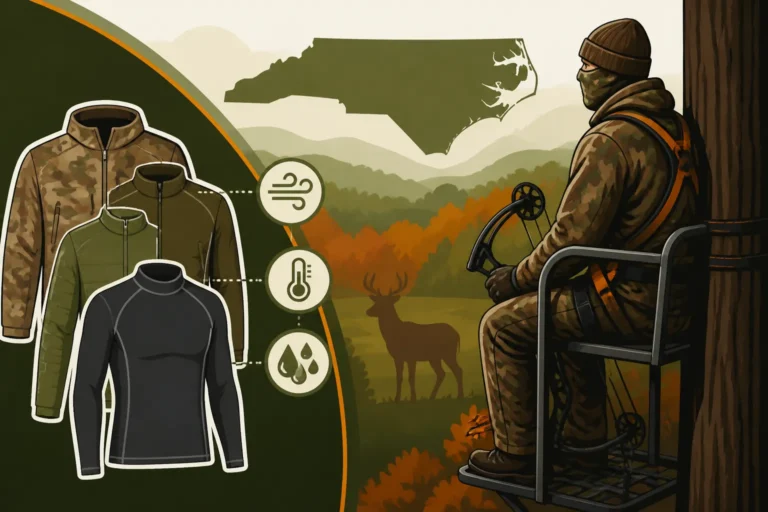
Sitting still for hours in a tree stand or ground blind during a cold North Carolina December requires strategic clothing. Layers are your best friend. Start with a moisture-wicking base layer, add insulating mid-layers like fleece or wool, and top it off with a windproof and waterproof outer shell. Don’t forget about your extremities! A warm hat, insulated gloves (with finger dexterity for loading), and quality, insulated boots are critical. Your feet will thank you after a long sit, especially if you're navigating damp terrain as discussed in Boots for North Carolina Swamps and Ridges. Hand warmers can be a game-changer for keeping fingers nimble enough to manipulate small primers and powder charges.
Safety is always paramount. Wear your blaze orange or blaze pink as required, even if you’re hunting alone. Cold weather can reduce mental acuity and make you more susceptible to errors. Always handle your muzzleloader with care, ensuring the muzzle is pointed in a safe direction, especially when loading and unloading. Carry a small emergency kit with fire starters, a flashlight or headlamp (like those mentioned in Headlamps for Walking Out After Dark), a basic first-aid kit, and extra snacks. Being prepared for the worst ensures you can focus on the hunt. For more on safety, refer to North Carolina Blaze Orange Requirements.
Efficient Field Operations and Shot Recovery
Efficiency in the field is key, particularly with the added complexities of a muzzleloader and cold weather. Practice your loading routine at home until it's second nature. Have all your loading components organized in a compact, waterproof pouch that’s easily accessible. If you take a shot, your immediate focus should be on the deer, but also on quickly reloading if a follow-up is needed. While muzzleloaders aren't known for rapid reloads, practice can make you surprisingly quick.
Shot recovery in December can be challenging. The ground might be frozen, snow might cover tracks, or a light rain could wash away blood trails. Mark your shot location clearly. Wait longer than usual before tracking—at least 30 minutes for a good hit, and several hours for a questionable one. This gives the deer time to bed down. A high-quality flashlight or headlamp is essential for blood trailing, especially as daylight fades quickly in December. If you’re hunting solo, having a communication device like a two-way radio or fully charged cell phone can be vital, especially when you’re deep in the wilderness. Recovering a deer from a coastal swamp or dragging one through dense leaf litter are unique challenges covered in Tracking a Deer Through North Carolina Leaf Litter and Dragging a Deer Out of a Coastal Swamp.
Conclusion: Confidence in the Cold
Hunting North Carolina's December muzzleloader season offers a unique blend of challenge and reward. The crisp air, the quiet woods, and the wary, late-season deer can make for an unforgettable experience. However, success hinges on careful preparation, from choosing the right muzzleloader that can reliably perform in the cold and damp, to mastering your loading technique and ensuring you’re dressed for the conditions.
By focusing on a reliable ignition system, durable materials, and practicing rigorous maintenance, you'll build the confidence needed to make that shot count when it matters most. Don't let the weather dictate your hunt; arm yourself with knowledge, practice, and the right gear, and you'll be well-prepared to make the most of North Carolina's challenging but rewarding December muzzleloader season.
Disclaimer
This article is for general informational purposes only and does not constitute professional advice. Laws, prices and regulations vary by location and change over time. Consult a qualified professional for guidance on your specific situation.