Climber Stands on Straight Trunks
There's nothing quite like the freedom and versatility of a good climber stand when you're deer hunting in North Carolina. But let's be real, many of us have packed that stand for miles, hiked into what we thought was the perfect spot, only to find every single tree in the vicinity was either too limby, too crooked, or just plain too big or small for our setup. It’s a frustrating moment that can derail an entire morning hunt. This guide is all about helping you understand the absolute non-negotiables of using a climber stand, with a laser focus on finding and utilizing those elusive straight trunks that make a climber safe and effective, especially across the diverse landscapes of North Carolina.
The Essential "Straight Trunk" Requirement for Climber Stands
The beauty of a climber stand is its simplicity and portability, allowing you to get up a tree quickly and quietly. However, that genius design hinges entirely on one critical factor: the tree itself. If you've ever struggled with a climber, chances are the tree was the culprit.
Why a Straight Trunk is Non-Negotiable
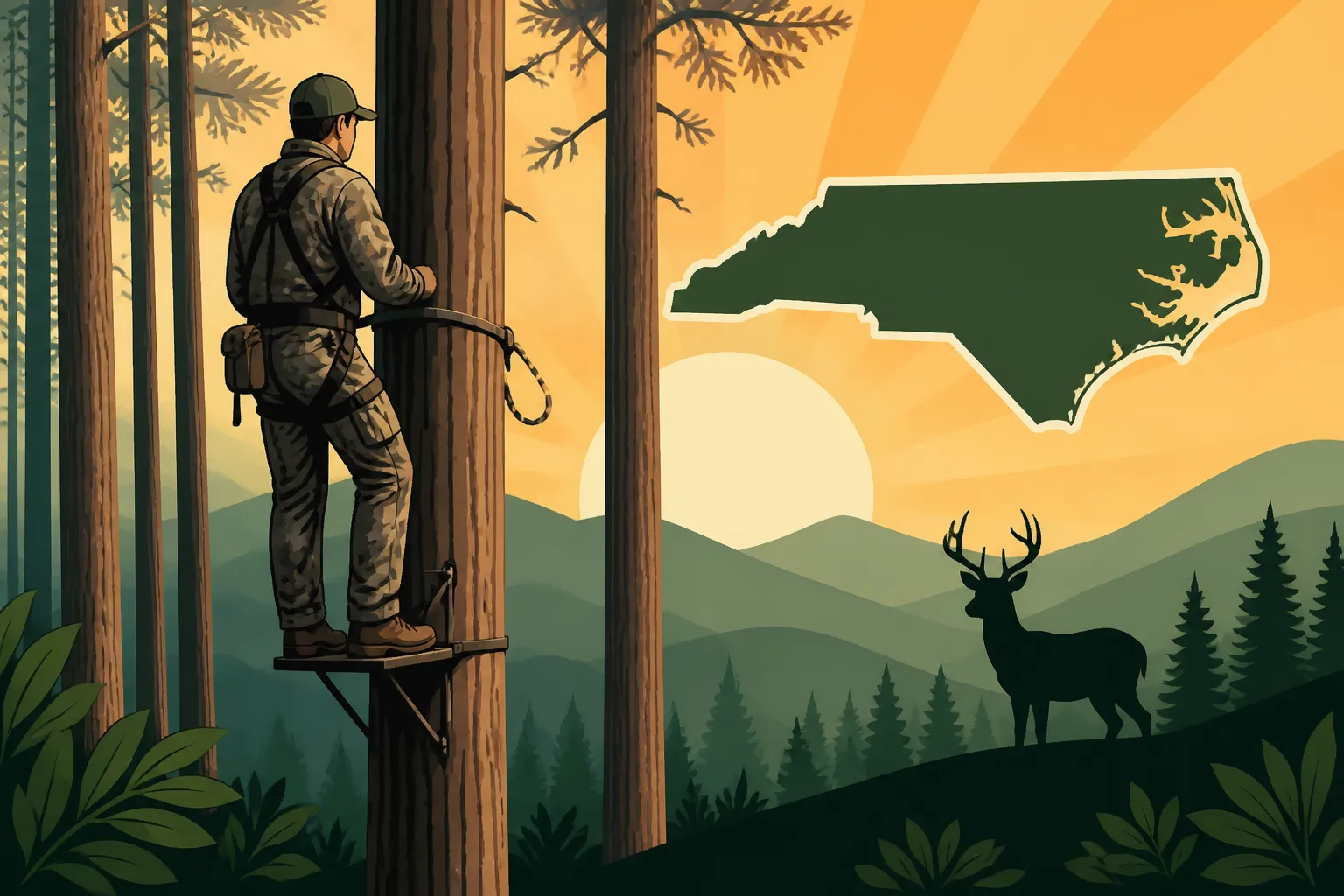
A climber stand operates on a principle of friction and leverage. Both the top (seat) section and the bottom (foot) section grip the tree trunk, and as you alternate moving them, they "walk" up the tree. For this system to work safely and efficiently, the tree trunk absolutely must be straight with minimal taper. Imagine trying to climb a pole that gets significantly wider or narrower as you go up – the stand's jaws, designed for a consistent diameter, would either bind up or lose their grip.
Any significant taper, a crook, a knob, or especially a low-hanging limb, creates a massive safety hazard. If the tree starts getting wider as you climb, the stand's cables or chains will become too tight, making it impossible to move the sections. Conversely, if it narrows too quickly, the stand can lose its bite, leading to a sudden, terrifying slip. Even a subtle irregularity can cause the stand to tilt precariously, making you feel unstable and unsafe. The last thing you want is to be 20 feet up a tree, trying to adjust your stand, only to have it shift or slip. It’s not just about comfort; it's about preventing a fall that could result in serious injury or worse. We’ve all been there, pushing and pulling, grunting our way up a marginal tree, only to realize halfway up that it feels sketchier than a mountain goat on a greased rock. Don't risk it.
Ideal Tree Species and Characteristics in North Carolina
North Carolina offers a huge variety of trees, and thankfully, many of them are excellent candidates for climber stands. However, some species are definitely better than others. In the coastal plain and sandhills, you'll often find an abundance of Loblolly Pines and Longleaf Pines. These are frequently ideal, offering long, straight sections of trunk, especially in younger stands. While some pines can be limby low down, a good section of straight trunk above the initial branches is common. If you’re hunting areas known for Longleaf Pine Savanna for Deer, you’re often in luck for finding good climber trees.
As you move into the Piedmont, Tulip Poplars (also known as Yellow Poplar) are fantastic options. They grow tall and straight with relatively smooth bark that climbers grip well. Red Maples and some younger White Oaks can also offer suitable trunks, though oaks tend to get more limby and gnarled with age. The mountains can be a mixed bag; you'll find more variety, but look for younger hardwood stands or areas with consistent pine growth. The key characteristics to prioritize, regardless of species, are minimal taper (the trunk should maintain a fairly consistent diameter), a lack of large limbs for at least 20-30 feet, and bark that allows your stand's gripping mechanism to get a secure hold without slipping or getting clogged. A healthy tree with firm bark is always preferred over one with loose or shedding bark.
Maximizing Your Chances of Finding a Suitable Tree
Successfully using a climber stand in North Carolina often comes down to preparation and smart scouting. You can't just pick any tree; you have to find the right tree.
Pre-Season Scouting and Digital Reconnaissance
Waiting until opening morning to find a climber tree is a recipe for frustration. The best way to ensure you have a suitable tree is to put in the work during the off-season. Start with digital reconnaissance. Tools like the NC Wildlife App or mapping software, such as what GoHunt provides, are invaluable. Look at aerial imagery to identify timber stands that appear uniform and dense. A dense, consistent canopy often indicates younger, straighter trees that are growing upwards to compete for sunlight, rather than spreading out and getting limby.
Pay close attention to changes in timber type or age. Large, mature timber areas might look appealing, but they often have massive, limby trees that are impossible to climb. Younger, managed timber blocks or areas that have regrown after a clear-cut often offer better opportunities for straight trunks. Once you've identified potential zones on a map, it's time for boots on the ground. Physically walking these areas during Scouting North Carolina Public Land Before Season allows you to inspect trees up close. You can verify trunk straightness, check for low limbs, and confirm diameter. Don't be afraid to poke around and note specific trees or small groves that look promising.
Tools and Techniques for Tree Selection in the Field
Even with the best pre-season scouting, you still need to make a final judgment call in the field. When you approach a potential tree, the first thing to check is its diameter. Every climber stand has a recommended diameter range (e.g., 8-20 inches), so know your stand's limits. While you can eyeball it, carrying a small, flexible measuring tape can eliminate guesswork. Many hunters use their hands as a rough gauge, but nothing beats a concrete measurement.
Next, and perhaps most importantly, step back and visually scan the entire trunk, from the ground up to at least 25-30 feet. Look for any noticeable taper – does it narrow significantly? Are there any hidden crooks or large knots that would interfere? What might look perfectly straight from directly underneath can reveal a subtle lean or curve when viewed from a distance. Also, assess the bark. Some stands excel on smooth bark, while others grip better on slightly rougher textures. Extremely loose or flaky bark (like on a Sycamore) can be problematic, as the stand might not get a secure purchase on the solid wood underneath. If you're unsure, a small, safe test climb of just a few feet can tell you a lot. If the stand binds, slips, or feels wobbly in the first 5-10 feet, it's a clear sign to find a different tree. It's better to spend an extra 10-15 minutes looking for a safer tree than to risk a fall or a miserable hunt perched precariously. GoHunt's detailed satellite imagery layers can even help you pinpoint specific stands of timber that might lend themselves better to climber use, making your field checks more efficient.
Safe and Effective Operation of Your Climber Stand
Once you’ve found that perfect, straight tree, the job isn't quite done. Operating your climber stand safely and effectively is paramount, both for your well-being and for ensuring a successful hunt.
Pre-Climb Checklist and Safety Precautions
Before your foot even touches the stand, a thorough pre-climb checklist is crucial. First and foremost, wear a full body harness, and use it properly. This is non-negotiable. Connect your tether to the tree before you start climbing, and adjust it so you have enough slack to operate the stand but not enough to fall to the ground. As you climb, move your tether up with you. Many stands now come with a safety line that wraps around the tree and allows you to slide your tether up as you ascend, keeping you continuously connected. This simple piece of gear, often overlooked, is your absolute lifeline.
Next, inspect your stand. Check all cables, pins, straps, and bolts for wear, damage, or loose connections. Make sure everything is secure. Clear the immediate area around the base of your chosen tree of any debris, fallen branches, or anything else that could trip you up or make noise when you drop something. This also ensures a clear space if you need to quickly get down. As you begin to climb, remember the rhythm: sit on the seat, push down on the foot platform to release the bite, pull the foot platform up with your feet, stand up on the foot platform, pull the seat section up. It sounds like a lot, but with practice, it becomes fluid. Always maintain three points of contact (two hands and one foot, or two feet and one hand) as you adjust and move sections. If you feel the stand slip a little, stay calm. Keep your weight centered, ensure all cables are properly seated, and try to re-establish a secure grip before continuing. Never make sudden, jerky movements.
Positioning and Adjusting for the Hunt
Once you're at your desired height, take a moment to get comfortable and make any final adjustments. How high is enough? Generally, 15-20 feet provides a good vantage point and helps you get above a deer's primary line of sight and scent cone, especially when considering Wind and Thermals on a Blue Ridge Slope. Going much higher than that can be unnecessarily risky and often doesn't provide significant additional advantage, especially in heavily wooded areas. Too low, and you risk being busted. Adjust the seat and foot platform for maximum comfort while still allowing you to draw your bow or shoulder your rifle smoothly and quietly. You might need to make small adjustments for shooting lanes or to compensate for a tree that isn't perfectly plumb.
While a perfectly straight tree is ideal, sometimes you find one with a slight lean. You can often compensate for this by adjusting the stand's angle slightly on the way up, but this takes practice and experience. A solid, straight tree makes for a far more stable platform, reducing sway and allowing you to focus on the subtle movements of the forest, rather than worrying about your footing. This stability is crucial whether you're Sitting a Field Edge in Late Season waiting for a buck to emerge or trying to get the perfect shot on a Hunting a Ridge-Top Saddle for Rutting Bucks scenario. The less you have to think about your stand, the more you can think about the hunt.
Pros and Cons of Climber Stands on North Carolina Terrain
Climber stands are a fantastic tool, but like any piece of hunting gear, they have their strengths and weaknesses, especially when applied to North Carolina's varied terrain. Understanding these can help you decide when a climber is your best bet and when you should opt for an alternative.
Advantages for the Mobile Hunter
For the hunter who likes to stay mobile, adapt to changing conditions, or who primarily hunts public land, a climber stand offers significant advantages. Their primary benefit is portability. Most climbers are designed to strap together and be carried like a backpack, leaving your hands free for your bow or rifle. This is ideal for hunters who need to hike deep into the woods on public lands, such as those found across North Carolina's Game Lands, where carrying multiple pieces of heavy gear is impractical. You can often find a suitable tree and be set up within 15-20 minutes, allowing you to react quickly to fresh sign or shifting game patterns.
Another huge plus is their versatility, within the constraints of finding the right tree. If you're constantly moving, trying new spots, or chasing the rut, a climber allows you to set up almost anywhere you find a good trunk. This makes them perfect for the "run-and-gun" style of hunting, or for those who don't want to invest in multiple hang-on stands for different locations. Also, because they don't require screw-in steps or permanent modifications to the tree, they align well with regulations often found on North Carolina Public Land Hunting Hours which sometimes restrict such alterations. For hunters who want to explore various areas without leaving expensive gear behind, a climber is often a very cost-effective and secure solution.
Disadvantages and When to Choose Alternatives
Despite their benefits, climber stands aren't a universal solution, and their disadvantages can be significant if you're not in the right environment. The most glaring drawback is their absolute tree-dependency. As we’ve discussed, if you can't find a straight, limb-free tree within the correct diameter range, your climber is useless. This can be a major issue in areas with older growth timber, thick brush, or certain tree species that tend to be crooked or extremely limby (like many oaks or sweetgums). Walking for miles with a climber only to realize every tree is unsuitable is incredibly frustrating and a common experience for hunters not familiar with an area. Sometimes, even with careful Reading Aerial Photos for Piedmont Deer, you just can't predict every tree.
Climber stands can also be noisy if you're not careful. The metal-on-bark friction or accidental bumps can create sounds that carry far in a quiet woods, potentially spooking nearby game, especially in the early morning stillness. They also require a certain level of physical fitness and balance to operate safely and efficiently, which might not be suitable for everyone. For those scenarios where good climber trees are scarce, or if you prefer a more stable, long-term setup, alternatives like hang-on stands with climbing sticks, or even a ground blind, might be more appropriate. Treestand Setups in Pisgah National Forest or Hanging a Stand on a Pisgah Ridge often highlight the need for versatility in stand choices. If you’re hunting thick, coastal pocosins where trees are often small, crooked, and surrounded by dense undergrowth, a climber might be impossible, making a Using a Ground Blind on North Carolina Public Land a far better option. Sometimes, even with the best scouting, you just need to adjust your strategy. GoHunt's detailed mapping can highlight areas with different timber types, helping you decide if a climber is even a viable option before you leave the truck.
| Feature | Ideal Tree for Climber Stand | Non-Ideal Tree for Climber Stand |
|---|---|---|
| Trunk Shape | Straight, minimal taper for 20-30 feet | Significant taper, crooked, many low limbs |
| Diameter | Within manufacturer's specified range (e.g., 8-20 inches) | Too small or too large, irregular shape |
| Bark Type | Consistent texture, not excessively slick or loose | Extremely smooth/slick (e.g., young beech), flaky, or very deep furrows |
| Limb Presence | Clear of limbs for climbing path | Low, large limbs that obstruct climbing |
| Tree Species | Loblolly Pine, Tulip Poplar, some younger Oaks/Maples | Older Oaks, Sycamore, Sweetgum (often limby or irregular) |
| Stability | Firmly rooted, healthy trunk | Dead or unhealthy tree, leaning significantly |
Disclaimer
This article is for general informational purposes only and does not constitute professional advice. Laws, prices and regulations vary by location and change over time. Consult a qualified professional for guidance on your specific situation.