Climbing Sticks for Rough Bark
If you've ever found yourself trying to get your climbing sticks to bite into a gnarled oak or a slick pine on a cool North Carolina morning, you know the frustration. The last thing you want is a wobbly stick jeopardizing your ascent, especially when you're loaded down with gear. This guide will walk you through what makes certain climbing sticks better suited for the diverse, often challenging, bark textures found across our great state, helping you choose and deploy them safely and effectively.
The Unique Challenge of North Carolina's Trees
Hunting across North Carolina means encountering an incredible variety of trees, each with its own bark characteristics. From the ancient, craggy hardwoods of the Appalachians to the smooth, often wet pines and cypress of the Coastal Plain, no two trees are exactly alike. This diversity, while beautiful, presents a real challenge for securing climbing sticks. You can't just use a "one size fits all" approach and expect the same secure bite on every trunk.
Appalachian Hardwoods and Their Grip
When you're deep in the Pisgah National Forest Hunting or scouting a ridge in the Uwharrie, you're often surrounded by massive oaks, hickories, and maples. Their bark is typically rough, deeply furrowed, and can sometimes be flaky. You'd think this rough texture would offer incredible grip, but it's often a double-edged sword. While it provides plenty of purchase for sharp-edged stick designs, the irregularity can also create voids or uneven pressure points, leading to a precarious feeling if the stick isn't designed to flex or conform. A stick that's too narrow might just dig into the deepest furrows on one side, leaving the other side wobbly. And let's not forget the sheer girth of some of these trees – standard straps might not even reach around! It's a frustrating dance trying to find that perfect, stable spot when you're 20 feet up a tree that feels like it's been there since before your grandpappy was born.
Coastal Pines and Swamp Cypress: Different Bark, Similar Problems
Head east, and the landscape changes dramatically, but the climbing stick challenges remain. In the vast Hunting Coastal Plain Pocosin Swamps or near the Sandhills, you're dealing with loblolly pines, longleaf pines, and often cypress in the wetter areas. Pine bark, especially on younger trees, can be deceptively smooth and incredibly slick, particularly after a rain or during a humid morning. The sap can also gum up your stick components over time. Cypress bark, on the other hand, is usually thin, fibrous, and stringy, offering little for a conventional stick to bite into. Trying to get a solid, non-slipping hold on these trees can be nerve-wracking. The straps tend to slide down, or the stick simply doesn't grab, forcing you to constantly readjust and re-tension, wasting precious time and energy when you're trying to Scouting North Carolina Public Land Before Season or set up quickly.
Key Features to Look for in Climbing Sticks for Rough Bark
Choosing the right climbing sticks isn't just about brand loyalty or price; it's about understanding the specific engineering that addresses North Carolina's varied arboreal landscape. You want gear that works with the tree, not against it, providing maximum security and confidence.
Aggressive Bite: Teeth, Grips, and Strapping Systems
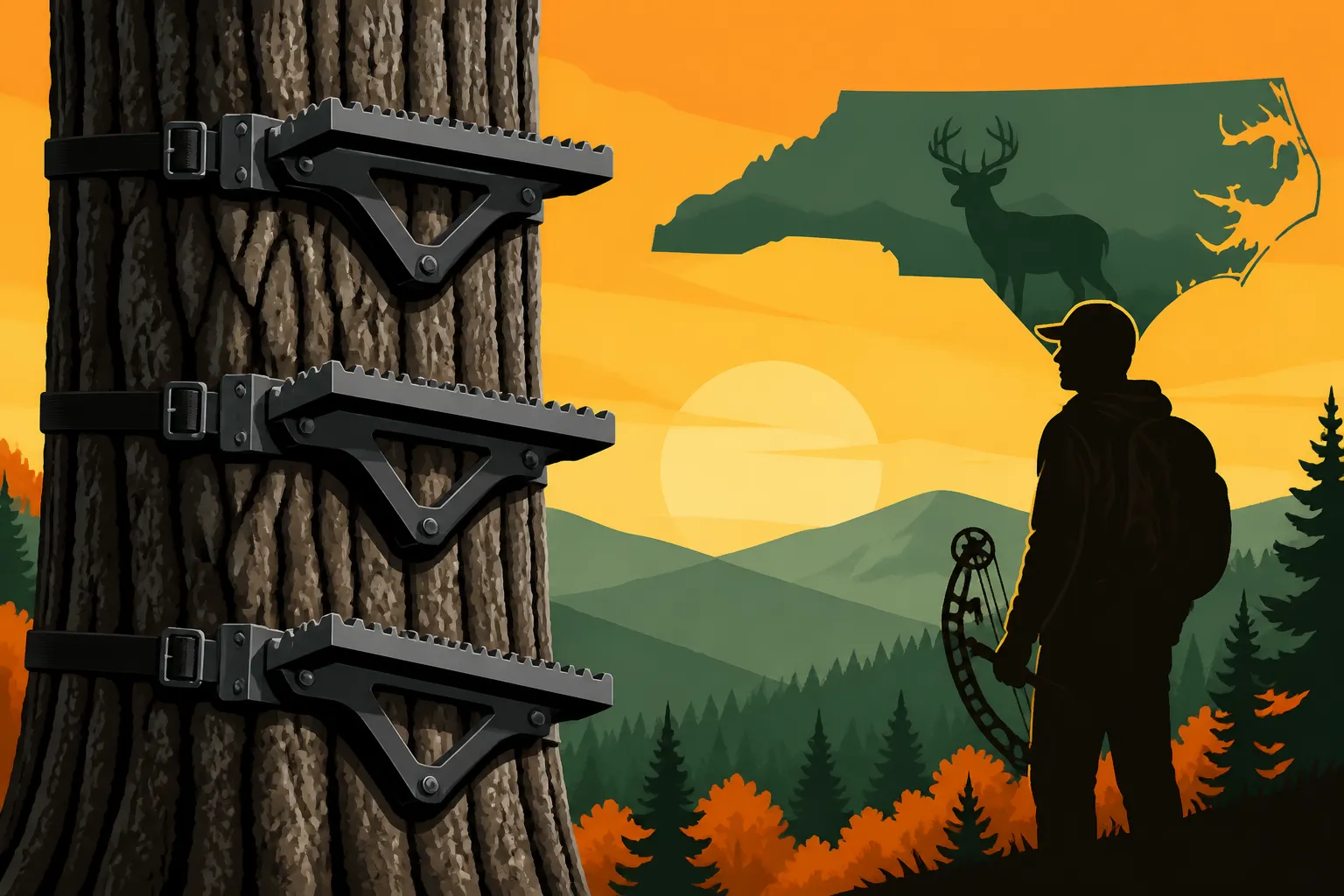
For truly challenging bark, you need sticks that are designed to dig in and hold tight. This isn't about damaging the tree, but about creating secure contact points. Look for features like aggressive, serrated edges on the standoffs that press against the tree. Some manufacturers incorporate small, sharp "teeth" or spikes that really grab onto rough bark without sinking too deep. Others use specially textured rubber pads that increase friction. The strapping system is equally critical. Cam buckles, rather than simple pull-through straps, offer superior tightening power, allowing you to really cinch the stick down. Materials matter too – a strap with a slightly rougher texture can grip better than slick nylon, preventing the dreaded "creeping" down the trunk. When you're researching options, check out resources like GoHunt to see what other hunters are recommending for tenacious bark.
Stability and Anti-Twist Design
Beyond just the bite, how the stick interacts with the tree and your weight is crucial for overall stability. A stick that twists or pivots when you step on it is a major safety concern. Look for designs that prioritize a wide, stable stance against the tree. Some sticks feature an offset or angled step design that naturally pushes your weight into the tree. Others have a double-step configuration that spreads your weight more evenly. The connection points between modular stick sections should also be robust and minimize any lateral play. You want a stick that feels like an extension of the tree itself, not something just loosely strapped to it. This kind of stability is particularly vital when you're ascending a tree with an irregular trunk, where every foot placement might feel slightly different.
Installation Techniques for Maximum Security on Difficult Trees
Even the best climbing sticks can fail if not installed correctly. On rough or slippery bark, technique becomes even more critical. It's not just about getting the sticks up; it's about securing them in a way that provides a stable, predictable climb every single time. A little extra attention to detail on the ground can prevent a lot of anxiety (or worse) in the air.
The Importance of a Solid First Stick
This is where many hunts begin to go wrong. If your first stick isn't absolutely rock-solid, every stick above it will be compromised. When you're putting up that initial stick, take your time. Find the most suitable section of the trunk, ideally without major knots or flaking bark. Position the stick so its aggressive points are in good contact, then apply firm, upward pressure with one hand while you cinch the strap with the other. Pull the strap as tight as humanly possible, using leverage if necessary. Some hunters even lean their shoulder into the tree as they pull the strap, ensuring maximum compression. Don't be afraid to take a few extra seconds here. A wobbly first stick means a wobbly climb, and that's a dangerous proposition, especially if you're trying to quickly get into position for a Hunting a Ridge-Top Saddle for Rutting Bucks.
Strategic Strap Placement and Tensioning
How you wrap and tension the strap significantly impacts stability, especially on rough bark. Instead of just pulling straight, consider wrapping the strap slightly upward around the stick's attachment point before cinching it tight. This can create an "upward pull" that helps prevent slippage down the tree. With cam buckles, make sure the strap is fully seated and the buckle is completely closed, locking it into place. Avoid leaving excess strap dangling loosely, as it can get caught or work its way loose. If your sticks have multiple attachment points, use them all to distribute the pressure. For some particularly challenging trees, you might even consider adding an extra cinch strap (like a cam strap from a ratchet strap set, without the ratchet mechanism for tensioning) as a backup, just for peace of mind. Remember, the goal is to make the stick feel like a part of the tree itself.
Dealing with Irregularities and Limbs
North Carolina's trees aren't perfectly straight poles. You'll encounter knots, bumps, forks, and small limbs. Learning to work around these is key. Sometimes, the best strategy is to embrace a slight angle. If a knot prevents a stick from sitting flush, you might angle the stick slightly to find two solid contact points higher or lower than the knot. For small limbs, you might be able to saw them flush to the trunk before you start climbing, but always check regulations regarding tree alteration on public land; Game Lands often have strict rules against cutting limbs. On GoHunt or similar forums, you'll find discussions about these specific challenges, and many hunters share creative solutions for unique tree formations. Just remember to always prioritize stability and safety over perfect vertical alignment.
Climbing Stick Comparison for Rough Bark
Here's a quick look at some general features you might find in climbing sticks that are well-suited for rough bark, keeping in mind that actual products will vary.
| Feature Category | Benefit for Rough Bark | Example Design Element | Trade-Offs |
|---|---|---|---|
| Aggressive Standoffs | Maximize surface grip on irregular, deeply furrowed bark | Serrated edges, pointed "teeth," textured rubber pads | Can be heavier; may require more careful placement. |
| Robust Strapping | Prevents slippage and maintains tension | Heavy-duty cam buckles, non-slip strap material | Can be bulkier; slightly slower to install/remove. |
| Anti-Twist Design | Enhances stability and user confidence | Wide-stance steps, interlocking sections, dual attachment | Can be heavier or less compact for packing. |
| Adjustable Angle | Accommodates varying tree diameters and irregularities | Pivoting attachment points, adjustable stick length | More moving parts; potentially higher cost. |
Maintenance and Safety Considerations
The investment in quality climbing sticks for rough bark is only as good as the care you put into them and the safety protocols you follow. Even the most rugged gear needs attention, and no piece of equipment can replace smart, disciplined safety practices.
Pre-Season Checks and Post-Hunt Care
Before every season, give your climbing sticks a thorough once-over. Inspect all straps for fraying, cuts, or weak spots. Check buckles for corrosion or deformation. Examine the stick sections themselves for cracks, bent parts, or loose welds, especially where the steps attach. If anything looks compromised, replace it immediately. After each hunt, especially if you've been in wet or muddy conditions, wipe your sticks down. Remove any caked-on mud, sap, or debris. Lubricate any moving parts (like pivoting attachment points) if recommended by the manufacturer. Proper care not only extends the life of your gear but, more importantly, ensures it performs reliably when your life depends on it. You can find detailed gear reviews and maintenance tips on sites like GoHunt that help keep your equipment in top shape.
Always Use a Haul Rope and Safety Harness
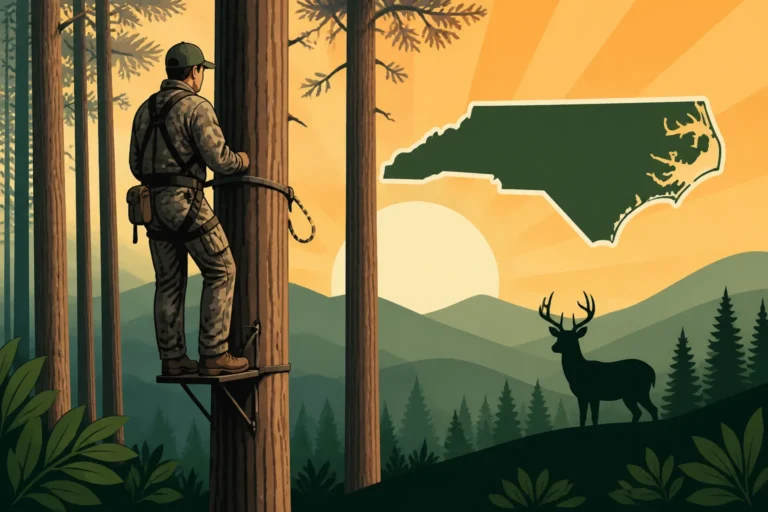
This should go without saying, but it's crucial to reiterate: never climb without a safety harness and a lifeline (or a separate rope and Prusik knot for ascending). This is particularly critical when dealing with rough or unpredictable bark. Even the best sticks can shift, a strap can fail, or you could simply miss a step. A safety harness, properly attached to a tree-rated lifeline that goes up with you, is your absolute last line of defense. Use a haul rope for your bow, backpack, and other heavy gear. Trying to climb with a bow in one hand is a recipe for disaster. Getting your gear up safely is just as important as getting yourself up safely. For more on safety, check out Treestand Safety Gear for Steep Ground. Always practice climbing in your backyard or a safe, controlled environment before heading into the woods, especially when trying new gear or tackling a particularly challenging tree.
Navigating North Carolina's diverse forest environments with climbing sticks requires a thoughtful approach, both in gear selection and technique. By understanding the unique challenges presented by rough, slick, or irregular bark, and by choosing sticks with aggressive bite, stability, and robust strapping systems, you'll be well on your way to safer, more confident climbs. Couple that with diligent maintenance and an unwavering commitment to safety protocols, and you'll be able to access those coveted elevated spots with peace of mind, no matter what kind of tree stands in your way.
Disclaimer
This article is for general informational purposes only and does not constitute professional advice. Laws, prices and regulations vary by location and change over time. Consult a qualified professional for guidance on your specific situation.