.30-30 in Thick Pocosin Cover
Hunting the dense, tangled pocosins of North Carolina's Coastal Plain presents a unique challenge for any deer hunter. The thick, often impenetrable undergrowth, boggy terrain, and limited visibility can make a standard long-range rifle feel completely out of place, even cumbersome. When a big buck busts out of the gallberry thicket at twenty yards, you need a rifle that's quick to shoulder, handles like an extension of your arm, and delivers a knock-down punch in close quarters. This guide is all about why the classic .30-30 Winchester, often overlooked in today's magnum craze, remains an absolute champion for navigating and succeeding in that challenging pocosin environment.
Why the .30-30 Remains a Pocosin Powerhouse
When you talk about hunting thick cover like the pocosins found in eastern North Carolina, the conversation often swings to faster, flatter-shooting cartridges. But for generations of hunters, the .30-30 has been the undisputed king of the brush, and for good reason. Its design, ballistics, and the platforms it's typically chambered in make it incredibly well-suited for the close-range, quick-reaction shots that define pocosin hunting. We're not talking about glassing clear-cuts or long-range powerline shots here; we're talking about whitetails that appear and disappear in a blink amidst the dense foliage.
The .30-30 earned its reputation in dense timber and heavy brush, places where sight lines are measured in tens of yards, not hundreds. Its heavy, blunt-nosed bullets, typically in the 150-grain or 170-grain range, are designed to transfer a significant amount of energy on impact without fragmenting too quickly, creating a substantial wound channel. This is exactly what you need when a deer is crashing through cover and you might only have a brief window for a shot. That consistent energy delivery at close range means less tracking, which is a huge bonus in a swampy pocosin.
Ballistics Tailored for Close Quarters
Forget the ballistic coefficients and wind drift charts for a moment; in a pocosin, those numbers simply don't apply. Most of your shots will be well under 100 yards, with many falling into the 20- to 50-yard range. At these distances, the .30-30's moderate velocity and heavy bullet truly shine. Unlike high-velocity, lightweight projectiles that might deflect unpredictably when encountering even light twigs and leaves, the .30-30's more substantial bullet tends to punch through minor obstructions with greater stability.
While no bullet is immune to deflection, the .30-30's design gives it a distinct advantage in environments where you can't always guarantee a completely clear shot lane. It's about delivering enough energy to put a deer down quickly and humanely within typical woods ranges. You're not trying to win a long-range shooting contest; you're trying to stop a charging hog or drop a deer that just blew out of a Hunting a Funnel Between Two Pocosins before it vanishes into the next impenetrable thicket.
The kinetic energy delivered by a .30-30 round at fifty yards is more than sufficient for deer and even black bears, which frequently inhabit these coastal pocosins. The bullet expands reliably at these velocities, maximizing tissue damage. This translates to quick, decisive kills, reducing the chance of a long, difficult track through knee-deep water and tangled vines. When you're out there, relying on your rifle, it's that kind of dependable performance that really matters.
Handling in Dense, Tangled Cover
One of the greatest advantages of the .30-30 often comes from the platform it's chambered in: the classic lever-action rifle. Brands like Marlin and Winchester have made these rifles iconic for their robust simplicity and excellent handling characteristics. These rifles are typically shorter, lighter, and much more compact than many modern bolt-action rifles, making them incredibly maneuverable in the close confines of a pocosin.
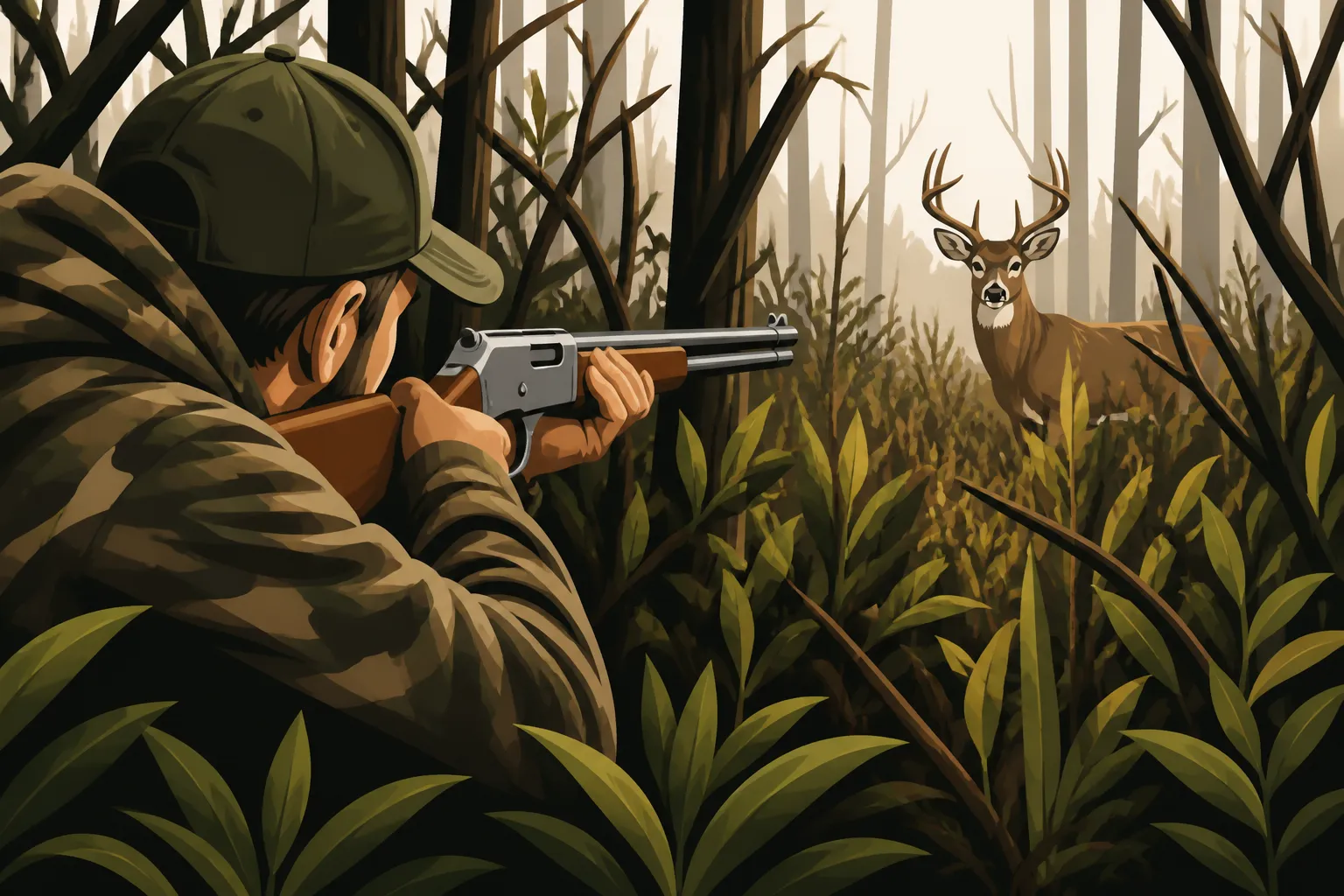
Imagine trying to weave a 24-inch barreled bolt action rifle through a dense stand of titi or bay bushes, where every step is a struggle and every branch snags your rifle. A lever-action .30-30, with its shorter barrel and quick-cycling action, feels like a natural extension of your body. It allows for fast target acquisition and, perhaps more importantly, rapid follow-up shots if needed. This is crucial when deer might be running in groups, or if your first shot wasn't precisely placed through the thick cover.
The balance of a good lever-action .30-30 also contributes significantly to its effectiveness in this environment. They tend to carry well in one hand, leaving the other free to push aside branches or maintain balance on unstable footing. This ease of carry and quick-pointing nature can be the difference between getting a shot off or watching a deer slip away untouched. In an environment where every movement is hard-earned, an easy-handling rifle is your best friend.
Practical Considerations for Pocosin Hunting
Hunting the pocosins is a world apart from hunting open fields or big mountain timber. It demands specific tactics, a certain mindset, and gear that can withstand the abuse while performing when it counts. The .30-30 fits perfectly into this niche, but understanding the unique challenges of these environments will help you maximize your success with this timeless caliber. You'll often find yourself in a constant battle with the terrain, pushing through dense vegetation and over uneven ground.
Whether you're still-hunting slowly through a bay swamp or participating in a deer drive through a vast pocosin, the conditions are relentlessly tough. Visibility might be limited to just a few dozen yards, and sounds are muffled by the thick growth, only to be amplified by water. Deer move through these areas with surprising stealth, seemingly materializing out of nowhere. Your rifle needs to be ready, and you need to be confident in its ability to perform in these extreme conditions.
Navigating the Pocosin Terrain
Moving through pocosin cover is not for the faint of heart. It's often wet, sometimes boggy, and almost always choked with a tangle of gallberry, titi, cypress knees, and various other tough, low-lying plants. Every step requires effort, and being able to move somewhat quietly is paramount, even though it feels impossible at times. This is where the compact nature of a .30-30 lever action really proves its worth. Trying to carry a bulky rifle through this kind of stuff is an exercise in frustration.
Your movements will be slow and deliberate, and you'll constantly be looking for the path of least resistance. The last thing you want is a long, heavy rifle getting hung up on every vine or branch. The .30-30's shorter overall length and typically snag-free profile allow you to push through with greater ease. Having a sturdy pair of Rubber Boots for Swamp Walking is just as important as your rifle choice when it comes to covering ground effectively and quietly in these soggy lowlands.
The terrain also dictates your shooting positions. You're rarely going to have a steady rest. Most shots will be offhand, or perhaps braced quickly against a tree trunk if you're lucky. The natural balance and light weight of a .30-30 make it quicker to bring to your shoulder and easier to hold steady for those snap shots. This isn't long-range precision shooting; it's about speed and effective delivery within a very tight window.
Anticipating Shot Distances and Angles
In a typical North Carolina pocosin, your shot distances are almost universally short. Fifty yards is often a long shot, and many opportunities will present themselves at twenty-five yards or even closer. At these ranges, the .30-30 is devastatingly effective. It doesn't over-penetrate, meaning less risk of richochet or passing through a deer and continuing on into the dense, unseen cover beyond. This is a critical safety consideration, especially if you're hunting with a group or on public land like parts of Croatan National Forest Hunting or Holly Shelter Game Land Access.
You also need to be prepared for unusual shot angles. Deer often come charging through, offering quartering-away or straight-on shots as they try to escape the thickest cover. The .30-30's ability to put a heavy bullet where you need it, combined with its quick handling, helps you capitalize on these fleeting opportunities. Being able to swing the rifle smoothly and acquire the target rapidly is far more important than having a flat trajectory out to 300 yards.
For situations where deer are being driven, having a rifle that can be brought to bear quickly, even from an awkward standing position amidst the muck, is invaluable. Hunters often recount stories of deer breaking cover literally at their feet. The .30-30's design for rapid fire and ease of pointing gives you the edge in these adrenaline-pumping moments. It’s built for close-quarters engagements, making it an ideal choice for the specific demands of pocosin hunting.
Optimizing Your .30-30 Setup for Pocosins
While the .30-30 is a phenomenal "out of the box" performer in thick cover, there are always ways to optimize your setup to make it even more effective for pocosin hunting. This isn't about expensive upgrades, but rather smart choices that enhance its natural strengths and mitigate any potential weaknesses in a challenging environment. Think about what truly matters when you're wading through knee-deep water and thorny thickets – durability, quick target acquisition, and reliable performance.
Many traditional .30-30 lever actions come with open sights, which are perfectly functional for close range. However, some modern enhancements can make a big difference without detracting from the rifle's classic appeal. Considerations like ammunition choice, optics (or lack thereof), and how you carry the rifle all contribute to your overall effectiveness and comfort in the field. Every piece of your gear should be selected with the specific demands of the pocosin in mind.
Ammunition Choices for Dense Cover
For years, the standard 150-grain or 170-grain soft point bullet has been the go-to for .30-30 hunters, and it remains an excellent choice for pocosin hunting. These bullets offer good sectional density and reliable expansion at .30-30 velocities, delivering a solid punch on impact. They are robust enough to deal with minor brush deflection and perform consistently on deer.
However, advancements in ammunition technology have offered even more specialized options. Hornady LEVERevolution ammunition, for example, features a flexible tip that allows for a pointed bullet design, improving its ballistic coefficient without compromising safety in a tube magazine. This can translate to slightly better performance and energy retention at the very outer edge of typical .30-30 ranges, but its core benefit in the pocosin is still excellent terminal performance on game. Whichever brand you choose, prioritize reliable expansion and good energy transfer at close range.
You don't need fancy, expensive match-grade ammunition for pocosin hunting. Consistency and dependable performance on game are what truly matter. I always recommend testing a few different brands and bullet weights through your specific rifle to see what it shoots most accurately. Even at short ranges, knowing your rifle's capabilities with a particular load is crucial for ethical and effective hunting.
Sights and Optics for Fast Target Acquisition
This is perhaps one of the most critical decisions for a .30-30 in the pocosin. Many purists swear by the factory open sights – a simple front post and rear notch or buckhorn sight. And for good reason: they are incredibly fast for close-range snap shooting and are virtually indestructible. In heavy rain, fog, or mud, open sights rarely fail. For true close-quarters hunting, especially if you are driving deer or expecting very sudden encounters, they can be unbeatable.
However, a low-power scope can significantly enhance your ability to pick out a deer in dim light or dense cover. A 1-4x variable power scope or a fixed 2.5x scope is an excellent choice. At 1x or 2.5x, you get a wide field of view and fast target acquisition, almost like open sights but with a clearer picture. When you need to thread a shot through a small opening at 50 yards, a little magnification can make all the difference. Just make sure the scope is rugged, waterproof, and has good light-gathering capabilities for those dark pocosin interiors.
Another increasingly popular option is a red dot sight. These provide an illuminated aiming point that is incredibly fast and intuitive, especially in low light or when a deer is on the move. They are rugged, compact, and offer unlimited eye relief, meaning you can get on target quickly regardless of your head position. For the truly dense stuff, a red dot can give you an edge in speed and visibility. Whichever option you choose, practice extensively to ensure you can get on target quickly and confidently.
| Sight Type | Pros | Cons | Best Use in Pocosin |
|---|---|---|---|
| Open Sights | Fast, simple, indestructible, no batteries | Less precise at longer range, harder in low light | Very close range, fast snap shots, severe weather |
| Low-Power Scope (1-4x) | Improves precision, good in low light, some magnification | Can be slower than open sights at 1x, bulkier, potential fogging | Mid-range shots in dim light, threading shots through brush |
| Red Dot Sight | Extremely fast, excellent in low light, unlimited eye relief | Relies on batteries, can be pricey, less precise for tiny targets | Quick target acquisition on moving game, low light, very close range |
Slings and Weather Protection
A good sling is an absolute must when hunting pocosins. You'll be using both hands to push through brush, cross water, or climb over obstacles. A comfortable, wide sling allows you to carry your rifle securely and relatively comfortably for long periods. I prefer a sling that allows the rifle to ride high and tight to the body to prevent snagging. Materials that are water-resistant and easy to clean are a bonus.
The weather in North Carolina, particularly in the coastal plain, can be unpredictable. Heavy dew, sudden rain showers, and constant moisture are part of the game. Your .30-30, especially if it's a traditional blued steel and wood model, needs protection. Consider a good quality gun oil or a protective coating to prevent rust. A synthetic stock and stainless steel barrel are excellent upgrades if you're buying a new rifle specifically for these conditions, as they are much more forgiving in wet environments. Keep a cloth in your pack to wipe down your rifle regularly.
For electronics like scopes or red dots, lens caps are non-negotiable. Keeping the glass clear of mud, water, and debris is vital. A scope cover or a simple plastic bag can also offer quick protection from an unexpected downpour. This kind of attention to detail ensures your rifle is ready to perform when that trophy buck steps out.
Safety, Ethics, and Recovery in the Pocosin
Hunting in thick cover demands an even higher degree of safety awareness and ethical consideration than hunting in more open terrain. The challenges of limited visibility, difficult tracking, and potential proximity to other hunters mean you need to be extra diligent. Your powerful .30-30 is a formidable tool, and like any tool, it requires responsible use. The satisfaction of a successful hunt in a challenging environment like a pocosin is immense, but it should never come at the expense of safety or ethics.
Always remember that the pocosin is also home to other hunters, whether they're pursuing deer or North Carolina's Black Bear Population. Communicating with your hunting party and knowing where everyone is at all times is paramount, especially during deer drives. The unique characteristics of this habitat mean that sound carries differently, and a hunter might be much closer than you think.
Visibility and Blaze Orange Requirements
In North Carolina, when hunting big game with a firearm, wearing blaze orange is not just a recommendation; it's a legal requirement. In the dense, low-visibility conditions of a pocosin, this rule becomes even more critical for your safety. You need to be seen by other hunters, and they need to be seen by you. A hunter wearing proper blaze orange stands out vividly against the natural greens and browns of the environment, even in dim light or through light brush.
Consider wearing as much blaze orange as practical. A vest is the minimum, but a full blaze orange hat and even a jacket, like those discussed in Blaze Orange Jackets Versus Vests, can significantly increase your profile. If you're hunting with dogs or participating in a drive, this becomes absolutely vital. Assume there are other people out there, even if you don't see or hear them. Your visibility is your first line of defense against an accidental shooting.
Before taking any shot, always, always identify your target clearly and be absolutely certain of what is beyond it. In thick cover, a deer can blend in surprisingly well, and it's easy to mistake movement or a patch of brown for an animal. Never shoot at sound or movement alone. Use your binoculars, even low-power ones, to confirm your target before shouldering your .30-30.
Shot Placement and Thorough Tracking
Even with the impressive knockdown power of the .30-30, shot placement is paramount. Aim for the vitals (heart-lungs) to ensure a quick, ethical kill. In thick cover, you often get a quick, fleeting glimpse, so quick and accurate shot placement is crucial. Practice shooting offhand and from awkward positions to simulate real-world scenarios in the pocosin. Knowing your rifle and your own limitations will save you a lot of grief.
After the shot, patience is a virtue, especially in a pocosin. A deer might not drop immediately, even with a solid hit, and rushing in can push a wounded animal deeper into the impenetrable swamp. Give the deer time to expire. Then, begin your tracking slowly and methodically. Look for blood, broken branches, disturbed leaves, and tracks. Even a well-hit deer can be difficult to find in this challenging environment.
Having good tracking skills and perhaps even a tracking dog can be invaluable when Blood Trailing After Dark in North Carolina or through dense, wet cover. Mark your last known blood trail spot clearly before continuing, as it's incredibly easy to lose your way or the trail in the tangled pocosin. Using a GPS on your phone or a dedicated unit, like those offered by GoHunt when scouting access points, can help you keep track of your location and the deer's last known position, ensuring you can eventually recover your game.
Disclaimer
This article is for general informational purposes only and does not constitute professional advice. Laws, prices and regulations vary by location and change over time. Consult a qualified professional for guidance on your specific situation.