Slings for a Long Pisgah Forest Walk
Those long, winding trails deep in Pisgah National Forest, where the elevation changes dramatically and the ground is rarely flat, can be absolutely brutal on your shoulders and back if you're not properly set up. You've got your rifle or shotgun, your pack, maybe some calls, and every extra ounce feels like a ton after a few miles. This guide is all about finding the right sling to make those challenging treks through the North Carolina mountains a whole lot more manageable, ensuring you stay comfortable and focused on the hunt, not the ache in your traps.
Why a Quality Sling is Non-Negotiable in Pisgah's Rugged Terrain
Let's be real, Pisgah isn't your flat, easy-going piedmont hunting. We're talking about serious mountains, with steep ascents, rocky descents, and cover so thick you're practically swimming through it. A cheap, ill-fitting sling isn't just uncomfortable; it can genuinely compromise your safety and effectiveness out there. It's an essential piece of gear that often gets overlooked, but it makes all the difference when you're deep in the wilderness trying to get to that secluded ridge or creek bottom.
The Grueling Terrain and Distances
Imagine you're hiking for miles up a steep rhododendron thicket, trying to reach a high elevation bench you scouted on your Packs for a Pisgah Forest Day Hunt research. Your rifle, if not secured properly, is constantly sliding off your shoulder, forcing you to adjust it, or worse, carry it by hand. This burns precious energy, distracts you, and makes navigating fallen timber or slippery creek crossings even harder. Pisgah's sprawling landscape demands a sling that can handle continuous movement over varied and often unforgiving ground, keeping your firearm snug against your body so you can focus on your footing and listening for those subtle sounds of the forest. The sheer physical demand of covering ground here means every piece of gear needs to pull its weight, and a good sling lightens your literal load by distributing it better.
Safety and Balance on Uneven Ground
Hunting in the mountains means constantly watching your step. You're traversing loose rock, slippery leaves, exposed roots, and crossing countless small streams. Good balance is critical to prevent a fall, which could not only injure you but also damage your firearm or other essential gear. A poorly designed sling lets your firearm swing freely, shifting your center of gravity unexpectedly and increasing your risk of tripping. A well-adjusted sling, however, keeps your rifle or shotgun secure and tight to your body, almost becoming an extension of you. This allows you to use both hands for balance, grab a sapling, or break a fall, all while keeping your weapon from slamming into a rock or mud puddle. Safety on these steep slopes should always be your number one priority, and your sling plays a bigger role than you might think in maintaining it.
The Comfort Factor on All-Day Hunts
There's nothing worse than an ache that starts in your shoulder and radiates down your back by midday, just because your sling is cutting into you or letting your gun bounce around. When you're spending hours still-hunting along Nantahala Forest ridges or setting up for an afternoon sit, comfort is king. Discomfort leads to fatigue, and fatigue leads to mistakes, whether it's spooking game, making a poor shot, or even getting lost because you're too tired to pay attention to your surroundings. A good sling alleviates pressure points, distributes weight evenly, and simply makes carrying your firearm feel less like a chore and more like a natural part of your hunting kit. It allows you to focus on the hunt itself, not on constantly shifting your gun to find a more comfortable position.
Understanding Different Sling Types for Mountain Hunting
When you're sifting through options, you'll quickly notice there's more to slings than just a strap. Each type has its own advantages and disadvantages, especially when you're considering the unique demands of a Pisgah National Forest Hunting expedition. The best choice for you will depend on your personal preferences, your specific firearm, and how you prefer to carry it through the dense cover and steep inclines.
Traditional Two-Point Slings
The most common and arguably the simplest, the traditional two-point sling attaches to your firearm at two points: typically near the buttstock and closer to the muzzle. This design is fantastic for carrying your rifle across your back or over one shoulder. Many hunters prefer this for its simplicity and robustness. When adjusted correctly, it keeps the firearm relatively stable. However, if not snug, it can still allow some swing, especially if you're scrambling over downed trees or making a quick ascent. For long walks, especially when climbing, you might find yourself needing to constantly reposition it if you don't have it cinched down tight enough. This type of sling is generally straightforward to use and incredibly durable, making it a solid choice for many, especially if you prioritize a traditional carry style.
Tactical One-Point and Two-Point Convertible Slings
Moving into the realm of tactical-inspired designs, you'll find one-point slings and versatile two-point slings that can convert to a one-point. A one-point sling attaches to a single point, usually on the receiver, allowing the firearm to hang freely in front of you. This offers incredible maneuverability for quick target acquisition, which isn't always a primary concern for mountain deer hunting but can be useful in thick, close-quarters cover. The downside? The firearm can swing a lot more when hiking, potentially bumping into your legs or other gear, which isn't ideal for those long, uneven walks.
Convertible two-point slings, on the other hand, offer the best of both worlds. They typically attach at two points but have a quick-detach mechanism that allows them to be reconfigured into a one-point sling on the fly. This could be beneficial if you need to quickly transition from a long trek to a tight shooting lane where rapid presentation is key. For a deep woods hunter navigating Pisgah, the two-point configuration will likely be your go-to for walking, offering better stability and comfort over distances. Many brands, including those found when browsing options on a platform like GoHunt, offer convertible systems that provide this flexibility.
Specialized Backpack-Style Slings
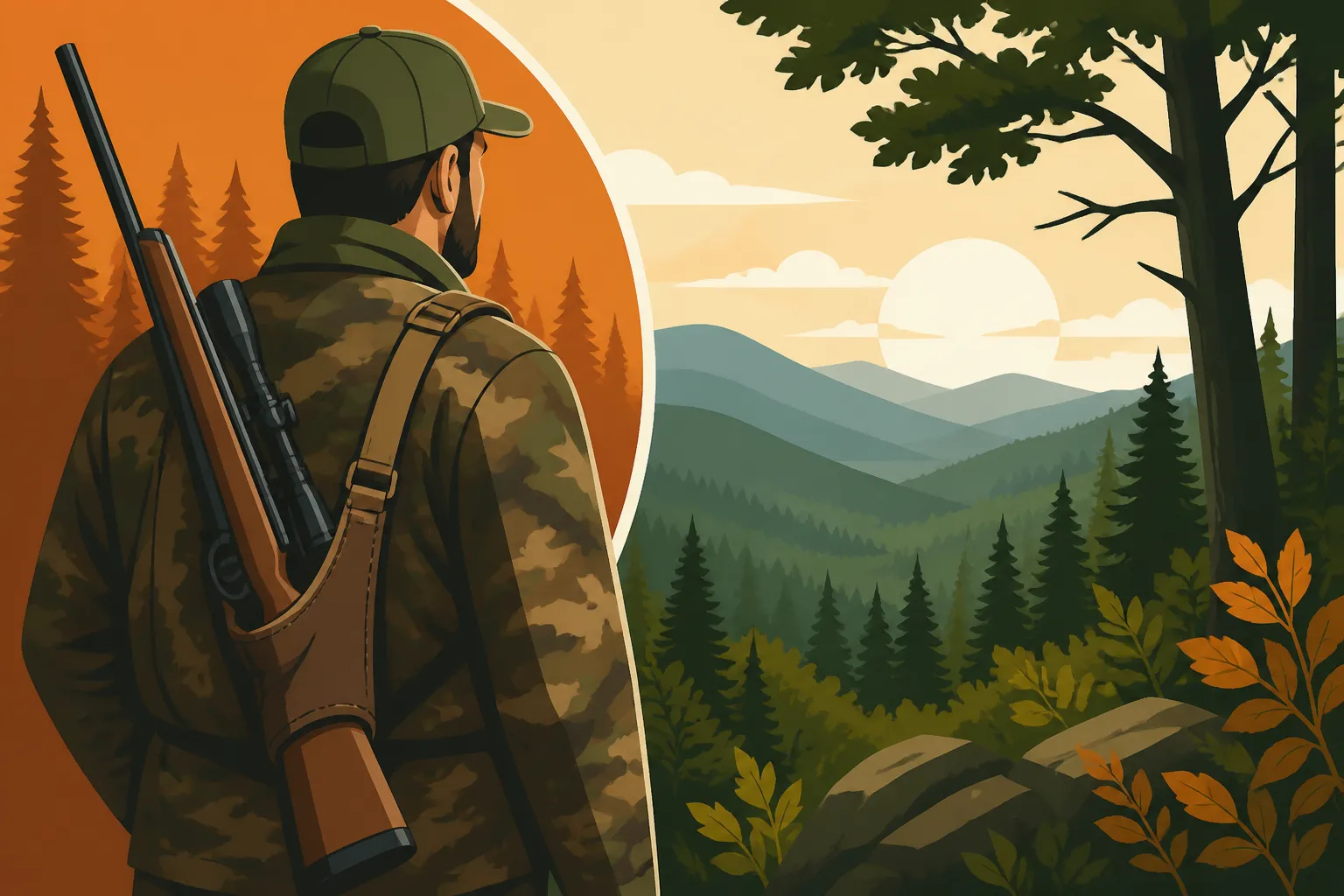
These slings are designed with ultimate comfort and load distribution in mind, often resembling miniature backpack harnesses. Instead of a single strap, they feature two padded shoulder straps that distribute the weight of your firearm across both shoulders, much like a backpack. This is a game-changer for really long hauls or heavier rifles, as it significantly reduces fatigue and pressure points. The firearm typically rests vertically on your back, keeping it out of the way of your arms and legs, and preventing it from swinging.
While they offer superior comfort for extended treks through areas like Hunting the North Carolina Mountains, they can sometimes be slower to deploy your firearm quickly, as you might need to unclip a buckle or two. However, for sheer walking comfort in rugged areas like Pisgah, where getting to your destination is half the battle, these slings are hard to beat. If you plan on covering serious mileage, especially with a heavier rifle, this style is definitely worth considering for its ergonomic advantages.
Key Features to Look For in a Pisgah-Ready Sling
Choosing a sling isn't just about the type; it's about the details. For the challenges of Pisgah, specific features can elevate a good sling to a great one, ensuring it stands up to the environment and enhances your hunt.
Material Durability and Weather Resistance
The Pisgah National Forest, like much of North Carolina, can throw all kinds of weather at you. From bone-chilling rain to humid, sweat-inducing climbs, your gear needs to handle it. Look for slings made from robust, synthetic materials like nylon or neoprene. These materials are not only tough against snags from briars and abrasion from rocks, but they also resist water absorption, which means they won't get heavy and soggy in a downpour or when you're pushing through wet undergrowth. Leather, while classic and durable, can stretch, stiffen, and retain water, making it less ideal for truly wet conditions. A sling that dries quickly and doesn't hold moisture is critical for comfort and preventing mildew when stored. Think about the rough and tumble nature of the mountains – your sling needs to be as resilient as you are.
Adjustability and Custom Fit
No two hunters are exactly alike, and neither are their firearms or preferred carrying methods. An adjustable sling is crucial for achieving a custom fit that balances comfort and security. You should be able to quickly lengthen or shorten the sling to go from carrying it over your shoulder to cinching it tight across your back for a steep climb. Look for slings with easy-to-use, robust adjustment buckles that won't slip under load. A sling that's too long will let your rifle bounce around, while one that's too short will dig into your shoulder or restrict movement. Being able to fine-tune the length allows you to carry your firearm in various positions (front, back, over shoulder) depending on the terrain and situation, giving you flexibility while you're navigating through dense cover or wide-open clearings.
Padding and Ergonomics
This is perhaps the biggest factor for comfort on those grueling Pisgah walks. A thin, unpadded strap will quickly become a painful knife-edge digging into your shoulder, especially with a heavier rifle. Look for slings with substantial, closed-cell foam padding that's wide enough to distribute weight effectively. Neoprene pads are often a good choice as they offer cushioning and some stretch, molding to your shoulder. The padding should be long enough to cover the contact point on your shoulder, even when shifting positions. Ergonomic design means the sling is shaped to naturally fit the contours of your body, reducing hot spots and improving overall comfort. Some slings even feature a non-slip backing on the pad to prevent it from sliding off your shoulder when worn over slick rain gear or a heavy jacket. This small detail can make a massive difference after a few hours on the trail.
Quick-Detach Hardware and Versatility
Having the ability to quickly remove or attach your sling is incredibly useful. Quick-detach (QD) swivels or clips allow you to take the sling off if you're hunting from a blind or a Hanging a Stand on a Pisgah Ridge setup where a sling might get in the way. It also makes cleaning your firearm easier. Look for robust, metal QD hardware that won't accidentally release. Polymer might be lighter, but metal generally offers superior reliability in harsh conditions. Beyond just detachability, consider the overall versatility. Can it be configured for different carry styles? Can you easily transfer it between different firearms if needed? The more adaptable your sling, the more valuable it will be in your mountain hunting kit. For example, some sling designs allow for easy connection to a backpack, integrating your firearm carry even more seamlessly with your primary pack for maximum comfort on long treks.
| Sling Type | Pros | Cons | Best Use Case in Pisgah |
|---|---|---|---|
| Traditional Two-Point | Simple, durable, reliable. Good for over-shoulder or back carry. | Can swing if not tight. Less comfortable than padded options over time. | General purpose, carrying for moderate distances, quick transitions. |
| Convertible Two-Point | Versatile for different carry/deployment needs. Stable for walking. | Can have more hardware to potentially snag. May be heavier. | Hunters needing flexibility for both long walks and quick shots. |
| Backpack-Style | Superior comfort for long distances. Excellent weight distribution. | Slower deployment. Can be bulky with a pack. | Extended deep-woods treks, carrying heavy firearms, all-day hunts. |
My Top Tips for Sling Use and Maintenance in the Mountains
A great sling is only great if you use it correctly and take care of it. These tips will help you get the most out of your sling and keep it performing season after season in the demanding environment of Pisgah.
Proper Adjustment for Optimal Carry
This is where many hunters miss out on the benefits of a good sling. Don't just slap it on and go. Take the time to adjust it while wearing your typical hunting clothing and pack. For long walks, especially up or down hills, you want your firearm cinched relatively tight against your back or chest to prevent it from swinging. This keeps the weight close to your body, improving balance and reducing fatigue. When still-hunting or expecting a shot, you might loosen it slightly for easier presentation. Practice adjusting it quickly so you can adapt to changing situations. For instance, when you're Reading a Ridge for Mountain Zone Deer, you might want it snug; but when you're closing in on a bedded buck, a slightly looser carry might facilitate a faster shot. Platforms like GoHunt often feature gear reviews that can provide insights into how adjustable specific sling models truly are.
Carrying Positions for Different Scenarios
The beauty of a versatile sling is the options it gives you.
- Across the Back: This is often the most comfortable for long, arduous hikes, especially through thick brush or when you need both hands free. Keep the muzzle pointed safely up or down.
- Over One Shoulder (muzzle down): Ideal for moderate walks on clearer trails, offering quicker access to your firearm. Be mindful of it slipping, especially with heavy packs or slick material.
- Across the Chest (muzzle down or to the side): Great for still-hunting when you want to keep your firearm ready for a fast shot but still have it supported by the sling. It's also good for traversing tricky terrain where you need to see your feet and keep your gun close.
Experiment with these positions while you're out scouting or even just walking around your property. What feels right for an uphill climb will be different from what's comfortable for a slow, silent stalk. The goal is to find what works for you to maximize comfort and readiness in the varied conditions of Pisgah.
Cleaning and Care for Longevity
After a long season of hunting in North Carolina's diverse habitats, your sling is going to be dirty, sweaty, and probably a bit muddy. Just like your rifle or your Boots for North Carolina Swamps and Ridges, your sling needs some TLC to last.
- Wipe Down: After each hunt, wipe down your sling with a damp cloth to remove dirt, sweat, and debris.
- Deep Clean: Periodically, give it a more thorough wash. For synthetic slings, a mild soap and water solution works well. Scrub with a soft brush, rinse thoroughly, and hang to air dry completely. Never put it in a dryer, as high heat can damage synthetic materials and padding.
- Check Hardware: Inspect all buckles, swivels, and attachment points for wear, rust, or damage. Replace any compromised hardware immediately. The last thing you want is a sling failing when you're miles deep in the backcountry.
- Storage: Store your sling in a cool, dry place, out of direct sunlight. Avoid storing it compressed, which can degrade padding over time.
By treating your sling like the essential piece of gear it is, it will serve you faithfully on countless future adventures through the rugged beauty of Pisgah and beyond.
Disclaimer
This article is for general informational purposes only and does not constitute professional advice. Laws, prices and regulations vary by location and change over time. Consult a qualified professional for guidance on your specific situation.