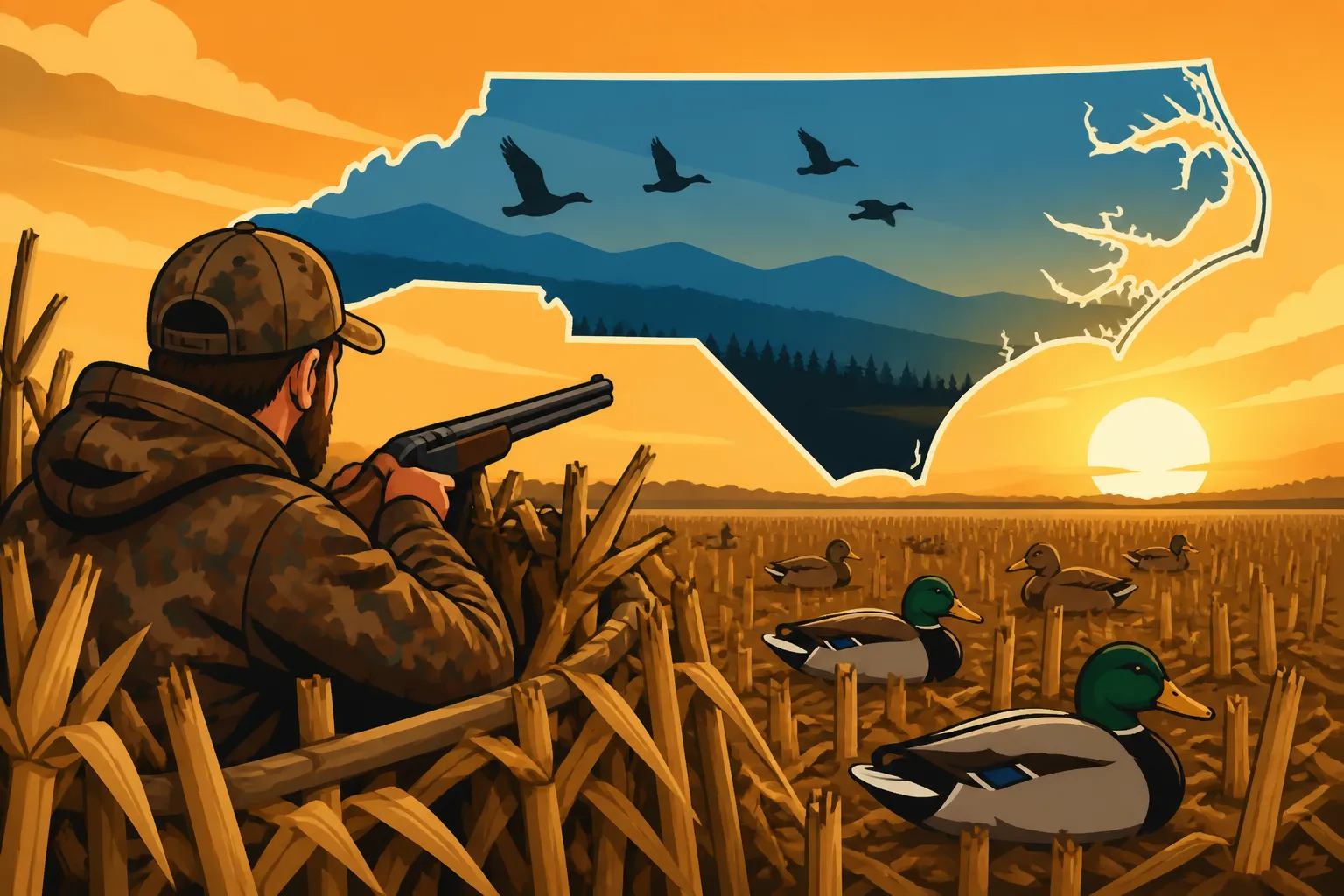
Layout Blinds for North Carolina Cut Corn
Few things are as frustrating as having ducks and geese pour into your favorite cut cornfield, only for them to flare off before they get anywhere near your traditional blind or make-shift hide. North Carolina's agricultural lands, especially in the eastern and central parts of the state, are waterfowl magnets, but these birds get educated fast. If you've been struggling to get those wary honkers and mallards to commit, this guide will walk you through exactly how layout blinds can transform your success in those wide-open fields.
Why Layout Blinds Are Essential for North Carolina Cut Cornfields
Hunting waterfowl in North Carolina's expansive cut cornfields presents a unique set of challenges that traditional hunting methods often fail to overcome. Birds, especially by mid-season, become incredibly wary of anything that looks out of place. This is where the specialized design of a layout blind truly shines, offering a level of concealment that's simply unmatched in such open environments.
The Challenge of Open Field Hunting
Think about it: most ducks and geese spend their days soaring high above, with incredible eyesight, constantly scanning for threats. When they decide to pitch into a cut cornfield to feed, they're looking for safety and an easy meal. A traditional A-frame blind or a makeshift hide built from sparse corn stalks just screams "danger" to them. These vertical structures, no matter how well brushed in, break the natural horizon and create a distinct silhouette that stands out against the low stubble. You've probably seen birds bank hard or change their flight path from hundreds of yards away, all because something looked a little "off." The wide-open nature of many North Carolina farmlands, with their flat topography and often minimal natural cover, exacerbates this issue, leaving hunters exposed and frustrated.
The Stealth Advantage of Layout Blinds
This is precisely where layout blinds become your secret weapon. Instead of trying to hide above the landscape, you become a part of it. A good layout blind is designed to hug the ground, presenting an incredibly low profile that mimics a natural bump or small rise in the field. When properly grassed with local vegetation, your blind practically disappears. The genius lies in eliminating that telltale human silhouette. You're lying down, covered from all sides, and only pop up at the very last second. This level of stealth is crucial for outsmarting birds that have seen every trick in the book. It's the difference between birds circling warily and confidently committing to your decoy spread, cup-ping their wings for a perfect landing.
Adapting to North Carolina's Waterfowl Species
North Carolina's agricultural fields, particularly cut corn, are major draws for several key waterfowl species, each with its own behavior patterns that layout blinds exploit perfectly. Canada geese are prime candidates; they love to feed in open fields, and their keen eyesight makes them incredibly difficult to approach without perfect concealment. Snow geese, when they decide to descend from their massive flocks, are also extremely wary, and a well-hidden spread with layout blinds can be the key to breaking them off the main group. Even mallards and pintails, which are often associated with water, will readily hit dry fields for waste grain, especially if they feel secure. Layout blinds offer the necessary confidence these educated birds need to finish their flight path right into your lap, whether you're targeting large flocks of honkers or small groups of greenheads. You'll find success with a variety of species that frequent these food-rich areas. For a broader understanding of waterfowl movement, check out North Carolina Waterfowl Migration Timing.
Choosing the Right Layout Blind for North Carolina Conditions
Selecting the right layout blind is crucial for comfort, concealment, and overall hunting success in North Carolina's diverse cut cornfields. It's not just about picking the first one you see; you need a blind that can withstand the elements, keep you comfortable during long waits, and blend seamlessly into the environment.
Key Features to Look For
When you're out there, often before dawn, you want your blind to work with you, not against you. Durability is paramount. North Carolina fields can be muddy, rocky, or covered in sharp stubble, so look for heavy-duty materials and robust frames that can take a beating season after season. Comfort is another non-negotiable. You'll be lying down for hours, sometimes in cold, damp conditions, so good padding and a comfortable backrest are essential. Nobody wants a sore back after a long morning of hunting. Portability is also key. You might need to move your spread around the field as bird patterns change, or even pack it in and out of distant sections. A blind that's too heavy or cumbersome will quickly become a burden. Finally, pay close attention to stubble straps and pockets. These are vital for attaching natural vegetation to break up the blind's outline. The more attachment points, the better you can blend in.
Camouflage and Blending
The effectiveness of any layout blind hinges on how well it disappears into its surroundings. Look for camouflage patterns that specifically mimic corn stubble, dried grasses, or general agricultural fields. A blind with a pattern designed for green marsh grass simply won't cut it in a golden-brown cornfield. But even the best factory camo is just a starting point. The real magic happens with natural vegetation. Ensure your chosen blind has ample stubble straps, loops, and pockets where you can weave in actual corn stalks, dried weeds, and other plant matter from the exact field you're hunting. Many hunters also use "grassing kits" or pre-cut bundles of synthetic raffia grass to supplement natural cover, especially if the field is sparse. Remember, the goal is to break up the blind's hard lines and make it look like just another piece of the field, not a big, rectangular lump. Don't forget to break up your own face and hands, too, as these can give away your position faster than anything else.
Different Blind Styles and Their Pros/Cons
Layout blinds come in a few main styles, each with its own advantages and disadvantages.
- Pop-Up Blinds: These are often very lightweight and quick to set up, usually using flexible poles that spring into shape. They're excellent for hunters who need to be highly mobile or are walking into distant fields. The downside is they might offer less rigid structure and slightly less comfort for extended sits, and their lower profile might mean less internal space.
- Full-Frame Blinds: These are typically more robust, with a solid aluminum or steel frame that provides excellent structure and durability. They often boast superior padding and more internal space, making them incredibly comfortable for long waits, especially in cold weather. However, they tend to be heavier and bulkier, making transport a bit more of a chore.
- Back-Rest Only Blinds: These are the ultra-minimalist option. Essentially, they're a padded backrest and seat on a low frame, often with a small flap for leg concealment. They offer minimal full-body concealment but are incredibly light and portable. They're best suited for situations where you can rely heavily on natural contours or very thick stubble for most of your cover, or when you prioritize extreme mobility.
Consider the typical conditions you hunt in North Carolina, your transport options, and your comfort preferences when making your choice.
| Blind Style | Pros | Cons | Ideal North Carolina Use Case |
|---|---|---|---|
| Pop-Up Blinds | Lightweight, quick setup, good portability. | Less rigid, potentially less comfortable for long sits, less internal space. | Highly mobile hunters, walking into distant fields, milder weather. |
| Full-Frame Blinds | Very comfortable, durable, ample internal space, rigid structure. | Heavier, bulkier to transport, longer setup/takedown. | Cold weather, long hunts, situations where comfort is paramount. |
| Back-Rest Only | Ultra-light, maximum portability, minimal footprint. | Minimal concealment, relies heavily on natural cover, less protection from elements. | Sparse fields with good natural depressions, quick "run-and-gun" scenarios. |
Setting Up Your Layout Blind for Maximum Success in North Carolina Cut Corn
Once you have your blind, knowing how and where to deploy it is critical. It's an art form, really, blending scientific observation with a hunter's intuition, especially when you're looking to consistently pull down ducks and geese from the skies over North Carolina's farmlands.
Scouting and Placement Strategy
This is arguably the most important step. Before you even think about setting up, you need to scout. Watch where the birds are flying and, more importantly, where they are landing and feeding. Pay attention to their flight lines and patterns into and out of the field. Are they favoring a particular corner, a rise in the middle, or a low spot? The wind direction is paramount; birds almost always land and take off into the wind. Position your blinds so that birds will approach your decoy spread, and thus your blinds, from into the wind. This means they will be facing away from you as they come in, giving you precious seconds to set up for the shot. Consider the sun's position throughout the morning; you don't want the sun in your eyes, nor do you want it glaring off your blind directly into the birds' flight path. Looking at aerial imagery on your GoHunt app can give you a great head start in identifying natural rises, low spots, and potential approach lanes. These subtle topographical features, even in seemingly flat fields, can make all the difference in where birds feel comfortable landing.
The Art of Grassing Your Blind
Grassing your blind is where you truly become invisible. Don't just toss a few stalks on top; take your time. Gather plenty of actual corn stubble, dried weeds, and whatever other natural vegetation is dominant in the immediate area. Start by weaving smaller pieces into the stubble straps and pockets, ensuring they break up the blind's hard lines. Pay particular attention to the edges and corners, as these are the most obvious giveaways. Overlap pieces, making them stick out at different angles, to create a natural, unkempt appearance. Don't forget your head area; many blinds have a mesh face screen, but you'll still need to cover the top of the blind itself. This often involves creating a "hat" of stubble that effectively hides the opening. When you're done, step back about 20-30 yards and look at your blind from a bird's-eye perspective (or as close as you can get). Does it blend? Does it look like a natural clump of vegetation or a subtle variation in the field? If not, keep adding more, breaking up any unnatural shapes. For effective scouting before you commit to a spot, remember that the principles of observation can be adapted, much like when you're Reading a Sound-Side Marsh for a Morning Flight.
Decoy Spreads Around Layout Blinds
Your decoy spread is the magnet that pulls birds into range, and how you integrate your layout blinds into it is vital. The number of decoys you use can vary; a small, realistic spread of a dozen full-body Canada goose decoys can be incredibly effective on pressured birds, while larger spreads of several dozen or even hundreds of shells and full-bodies might be needed for snow geese or to attract distant flocks.
Placement is critical. Create a distinct landing zone within your spread, often in the downwind side, directly in front of your blinds. This is where you want the birds to commit. Arrange your decoys in family groups or loose feeding patterns, leaving an inviting open pocket. You can place a few "sentinels" or upright decoys on the edges of the spread to look like birds on watch. Don't put decoys directly on top of your blinds, as this can look unnatural. Instead, place them immediately around and in front of your blinds, drawing the birds' focus away from you. Feeder decoys, with their heads down, convey a sense of security and draw birds in closer. Consider full-body decoys for a more realistic look, but shells can offer bulk when you need a large spread. For more detailed insights on decoy strategies, even if for a different species, Decoy Spreads for Currituck Sound Divers offers great foundational principles that can be adapted to field hunting.
Hunting Tactics and Considerations from a Layout Blind
Successfully hunting from a layout blind in North Carolina's cut corn is about more than just setting up; it's about discipline, awareness, and knowing how to respond when birds are overhead.
Staying Concealed and Patient
The biggest challenge for most hunters in a layout blind is staying absolutely still. Movement is the enemy of concealment. As birds approach, even the slightest twitch of a hand or turn of a head can send them flaring. Resist the urge to peek over the top too early. Utilize the mesh face screen on your blind, or simply wait until you hear the birds' wingbeats getting closer and closer. Patience is a virtue here. Sometimes birds will circle several times, trying to pick out any anomaly. Don't rush your shot; let them commit. When using calls, less is often more. Soft clucks and moans for geese, or subtle quacks for ducks, can finish birds, but over-calling can make them suspicious, especially on heavily hunted public land.
Field Safety and Communication
Safety is paramount, especially when hunting with multiple people from layout blinds. Establish clear shooting lanes beforehand. Know exactly where your hunting partners are positioned and communicate clearly. Many hunters use small, brightly colored flags or markers on their blinds for easy identification when setting up or retrieving downed birds, then remove them during the hunt. When a flock is coming in, the hunter who is calling the shot should be the only one speaking. A simple "Take 'em!" is sufficient. Everyone should be aware of their firearm's muzzle direction at all times, especially when sitting up quickly from a prone position. Before the season, it's wise to review the North Carolina Blaze Orange Requirements, even though it may not be strictly required while in a blind, wearing it when walking to and from your setup is always a smart choice to ensure visibility to other hunters in the area.
Weathering the Elements in a Layout Blind
North Carolina weather can be unpredictable, especially during waterfowl season. You might start a morning hunt in crisp, cold temperatures and end it in a drizzling rain, or with a biting wind. Your layout blind provides some protection, but it's crucial to layer your clothing appropriately. Wool or synthetic base layers are key for wicking moisture and retaining warmth. A good waterproof and windproof outer shell is non-negotiable. Many blinds have waterproof bottoms, but mud and standing water can still be an issue. Consider bringing a small tarp or extra ground cloth to lay under your blind for added insulation and dryness. Pack a thermos with a hot drink, and don't forget hand warmers and toe warmers; staying comfortable means you can stay focused and patient longer. While your primary target is cut corn, understanding how to manage gear for different conditions is broadly applicable, like equipping yourself with Waders for Cattail Marsh Hunting for different hunting scenarios.
Disclaimer
This article is for general informational purposes only and does not constitute professional advice. Laws, prices and regulations vary by location and change over time. Consult a qualified professional for guidance on your specific situation.