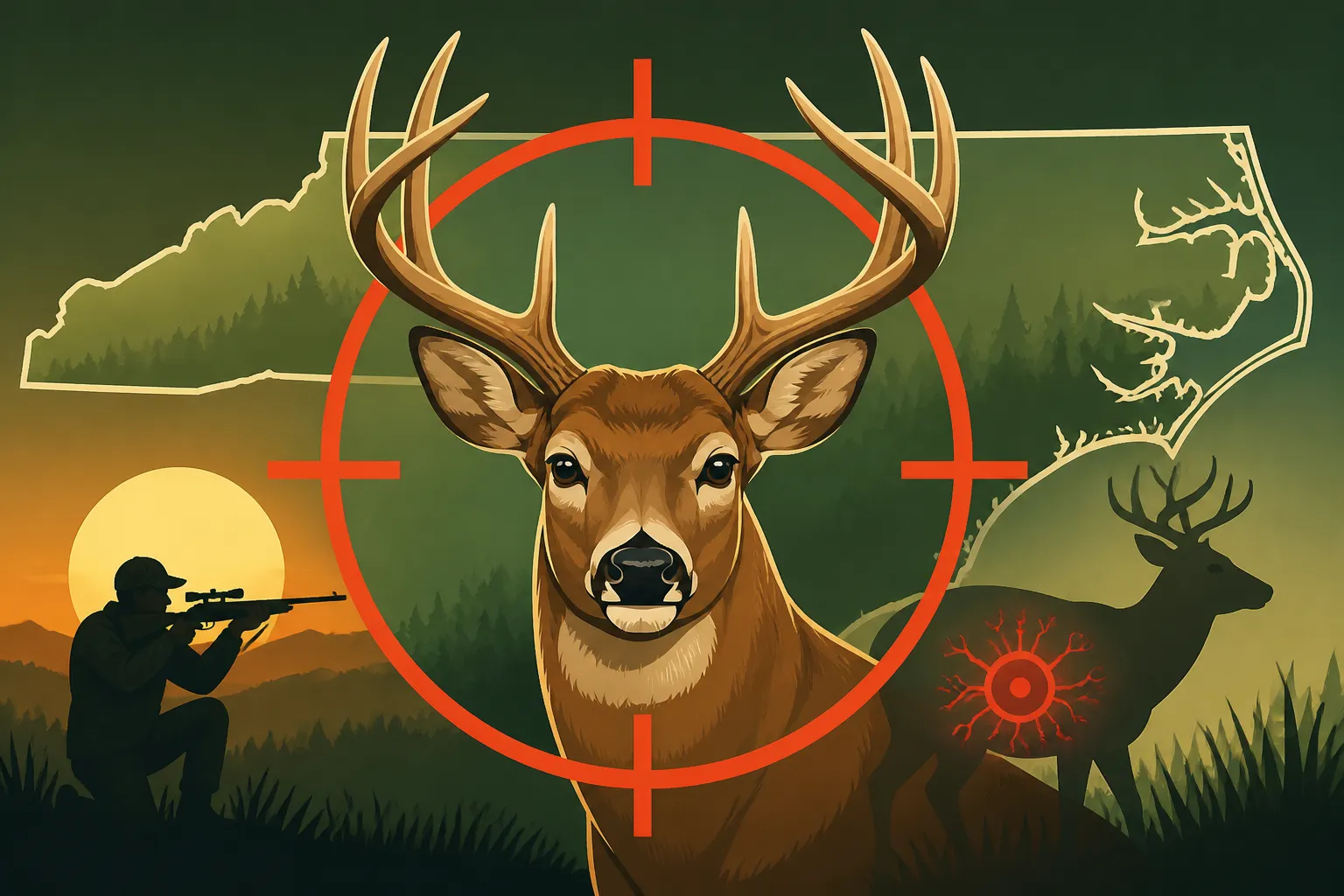
Why the Early CWD Season Targets Antlered Deer
It’s a fair question many North Carolina hunters are asking: why does the early Chronic Wasting Disease (CWD) season seem to focus so heavily on antlered deer? You might be scratching your head, wondering if it's just another layer of complexity to an already intricate set of hunting regulations. This specialized season isn't just about getting more deer harvested; it's a carefully considered strategy designed to combat the spread of CWD by specifically targeting the animals most likely to be spreading it. This guide will walk you through the science and the strategy behind this targeted approach.
Understanding North Carolina's CWD Challenge
Chronic Wasting Disease is a nasty, always-fatal neurological disease that affects deer, elk, and moose. It's a real game-changer for wildlife management, and honestly, for anyone who loves hunting in our state. When it shows up, it throws a wrench into everything we thought we knew about deer management. North Carolina has been vigilant, but CWD is here, and we've got to deal with it head-on.
The Threat of Chronic Wasting Disease
Imagine a disease that slowly, inexorably, wastes away the body of a deer, leaving it emaciated, stumbling, and eventually, dead. That's CWD. It's caused by abnormal proteins called prions, not bacteria or viruses, which makes it particularly insidious. These prions can be shed by infected animals through saliva, urine, and feces, and they can persist in the environment for years, even decades. This means that a deer doesn't even need to touch an infected animal to contract the disease; it can pick up prions from contaminated soil, plants, or water sources where an infected deer once stood.
The real kicker is that there's no cure, no vaccine, and once an animal contracts it, it's a death sentence. For hunters, this is deeply concerning, not just for the health of our deer herds but also for the future of hunting itself. North Carolina confirmed its first case in 2022 in Yadkin County, and since then, the disease has popped up in other areas, notably Surry County, leading to the designation of special CWD Management Areas. The fear is that if left unchecked, CWD could significantly reduce deer populations and impact the quality of hunting across the state. It's a silent threat, but one that demands immediate and strategic action from wildlife agencies and hunters alike. To delve deeper into the overall risk, check out our guide on Chronic Wasting Disease Risk in North Carolina.
North Carolina's CWD Management Areas
In response to confirmed CWD cases, the North Carolina Wildlife Resources Commission (NCWRC) has established CWD Management Areas (CMAs). These aren't just lines on a map; they are zones where specific, often stricter, regulations are put in place to monitor and control the spread of the disease. Currently, the CMAs primarily encompass Surry, Yadkin, Wilkes, Alleghany, Ashe, Forsyth, and Stokes counties, but these boundaries can shift as new information comes in. You can learn more about these specific locations in North Carolina's Seven-County CWD Footprint.
Within these CMAs, hunters often face unique rules. These can include mandatory CWD testing for harvested deer, restrictions on moving deer carcasses out of the area, and sometimes, specialized hunting seasons designed to increase harvest pressure and collect more samples for surveillance. The goal is to get a clearer picture of the disease's prevalence and distribution, and to actively reduce the number of potential carriers in the affected zones. This proactive approach is critical because the more deer harvested and tested, the better the NCWRC can understand the extent of the problem and refine their management strategies. It requires hunters to be more aware of their surroundings and the specific regulations in play, often using resources like the GoHunt app or the NCWRC website to stay updated on the latest county-specific rules.
The Logic Behind Targeting Antlered Deer in Early Seasons
It might seem counterintuitive to specifically target antlered deer, especially when overall population reduction is a goal. However, there's sound biological and strategic reasoning behind this approach in the context of CWD management. Bucks, with their distinct behaviors and larger home ranges, play a unique role in the transmission dynamics of the disease.
Antlered Deer Movement and CWD Spread
Think about a mature buck during the early fall. He's not just sitting around; he's on the move, establishing dominance, rubbing his antlers on trees, and making scrapes. These behaviors, while natural, are also prime opportunities for CWD prions to be deposited into the environment. When a buck rubs a tree, he's leaving behind not just scent, but potentially saliva and other bodily fluids that could contain prions if he's infected. Similarly, creating a scrape involves urinating and pawing the ground, again, a potential pathway for environmental contamination.
Furthermore, bucks, especially older, larger ones, tend to have much larger home ranges than does. During the pre-rut and rut phases, they can travel significant distances, crossing property lines, moving between different habitats, and potentially carrying CWD prions over a wider geographical area. This increased movement means an infected buck is more likely to encounter and interact with more deer, and to contaminate more ground, accelerating the spread of the disease. By targeting these antlered deer early, before the most intense period of their movement and rut-related behaviors, wildlife managers hope to remove these potential super-spreaders from the population, thereby slowing the environmental contamination and transmission rate.
Maximizing Early Season Hunter Participation
Getting enough samples for CWD testing is a monumental task, and the NCWRC relies heavily on hunters to achieve this. Instituting special early seasons that target antlered deer in CWD Management Areas serves as a powerful incentive for hunter participation. Imagine it: a chance to chase a mature buck weeks before the general gun season kicks off for everyone else. For many hunters, myself included, that’s a hard offer to pass up!
This early access translates directly into more boots on the ground and more deer harvested in the critical CWD zones. Each harvested deer, particularly an antlered one, provides a crucial sample for testing. This helps biologists track the disease's prevalence and geographical spread, providing data that guides future management decisions. Without hunter cooperation, the scale of testing needed to truly monitor CWD would be impossible. These special seasons are a win-win: hunters get an exciting opportunity, and wildlife agencies get invaluable data and a vital management tool. Websites and apps like GoHunt can be particularly useful here, helping hunters easily locate these special seasons and understand the specific regulations for participation.
Here’s a quick overview of how buck behavior plays a distinct role in CWD spread compared to does:
| Behavior Aspect | Antlered Deer (Bucks) | Antlerless Deer (Does) | Implication for CWD Spread |
|---|---|---|---|
| Home Range | Larger, especially during rut | Smaller, more localized | Bucks can spread CWD over wider geographic areas. |
| Social Structure | More transient, interact with diverse groups of deer | Stable, often matriarchal family groups (doe, fawns) | Bucks contact more deer, increasing transmission opportunities. |
| Rubbing Behavior | Extensive rubbing of antlers on trees, leaving saliva/prions | Minimal or no rubbing behavior | Bucks directly contaminate vegetation and soil with prions. |
| Scraping Behavior | Frequent pawing and urinating in scrapes, depositing prions | Generally do not create scrapes | Bucks contaminate communal scent markers with prions. |
| Fighting/Sparring | High frequency, direct bodily fluid exchange | Low frequency, minimal direct fluid exchange | Direct transmission through blood/saliva more likely in bucks. |
| Travel Patterns | More likely to disperse, cross large distances | Less likely to disperse far from birth area | Bucks can introduce CWD to new areas more readily. |
Strategies and Implications for Hunters in CWD Zones
Hunting in a CWD Management Area requires a bit more thought and planning than your typical hunt. It's not just about what you harvest, but how you handle it, and how you contribute to the larger effort to manage this disease. Being prepared and informed is your best defense and your most valuable contribution.
Adapting Your Hunting Approach
When an early CWD season for antlered deer opens up, your usual scouting and hunting strategies might need a tweak. Bucks in the early season, especially before the full swing of the rut, can be a different animal. They're often still in bachelor groups, focused on food sources, and less on seeking does. This is where your pre-season scouting really shines. Instead of looking for rut sign, you'll want to concentrate on patterns related to feeding and bedding. Identifying early-season food sources like acorns, persimmons, or agricultural fields will be key.
Consider adjusting your stand locations or still-hunting routes to intercept these bucks as they move between bedding areas and food. This means spending extra time on reconnaissance, looking for fresh droppings, tracks, and travel corridors leading to those prime food sources. Using mapping tools, like those found on the GoHunt platform or the NCWRC’s own mapping resource, can help you identify potential pinch points and funnels that bucks might use. Remember, the goal is to ethically and effectively harvest antlered deer to aid in the CWD management effort, so understanding their early season movements is paramount. For more detailed tips on locating deer before the season, check out Scouting North Carolina Public Land Before Season.
And it's not just about where you hunt, but when. These early seasons are often brief, sometimes just a weekend or a few days. Knowing the exact dates and times for your specific CWD Management Area is non-negotiable. Don't rely on general season dates; check the NCWRC regulations explicitly for the CWD zones you plan to hunt. Every hunter's participation, and every deer harvested, contributes to the critical data collection needed for managing CWD. If you want more specifics on these dates, refer to Hunting the Special Early CWD-Zone Season.
Mandatory Testing and Carcass Management
One of the most significant changes for hunters in CWD Management Areas is the mandatory testing requirement for harvested deer. If you're fortunate enough to tag an antlered deer in one of these special early seasons, or any deer within a designated CMA, prepare to have it tested. This isn't just a suggestion; it's a critical part of the disease surveillance effort. You'll need to report your harvest, usually through the NCWRC website or app, and then take the deer, or at least its head, to a designated CWD sampling station. You can find detailed instructions and locations for these stations by visiting North Carolina CWD Testing for Hunters.
Proper carcass management is equally vital. Because CWD prions can persist in the environment, moving an infected carcass out of a CWD zone can inadvertently spread the disease to new areas. This means strict rules apply to how you transport a deer you've harvested in a CMA. Generally, you can only move certain parts, like deboned meat, antlers, hides, and cleaned skull plates, out of the zone. The brain, spinal cord, and lymphoid tissues – which contain the highest concentration of prions – must remain within the CMA for proper disposal. This can be a hassle, especially for hunters traveling long distances, but it's a necessary step to protect our statewide deer herd. Being aware of and adhering to these regulations is crucial, and you can get detailed information on this topic in North Carolina Carcass Movement Restrictions. Always remember to check North Carolina Deer Reporting Requirements to ensure you're following all the necessary post-harvest protocols.
Disclaimer
This information is for general guidance only and should not be considered legal advice. Hunting regulations, CWD Management Area boundaries, and testing protocols are subject to change. Always consult the official North Carolina Wildlife Resources Commission (NCWRC) regulations and local ordinances before engaging in any hunting activities. It is the hunter's responsibility to know and follow all applicable laws.