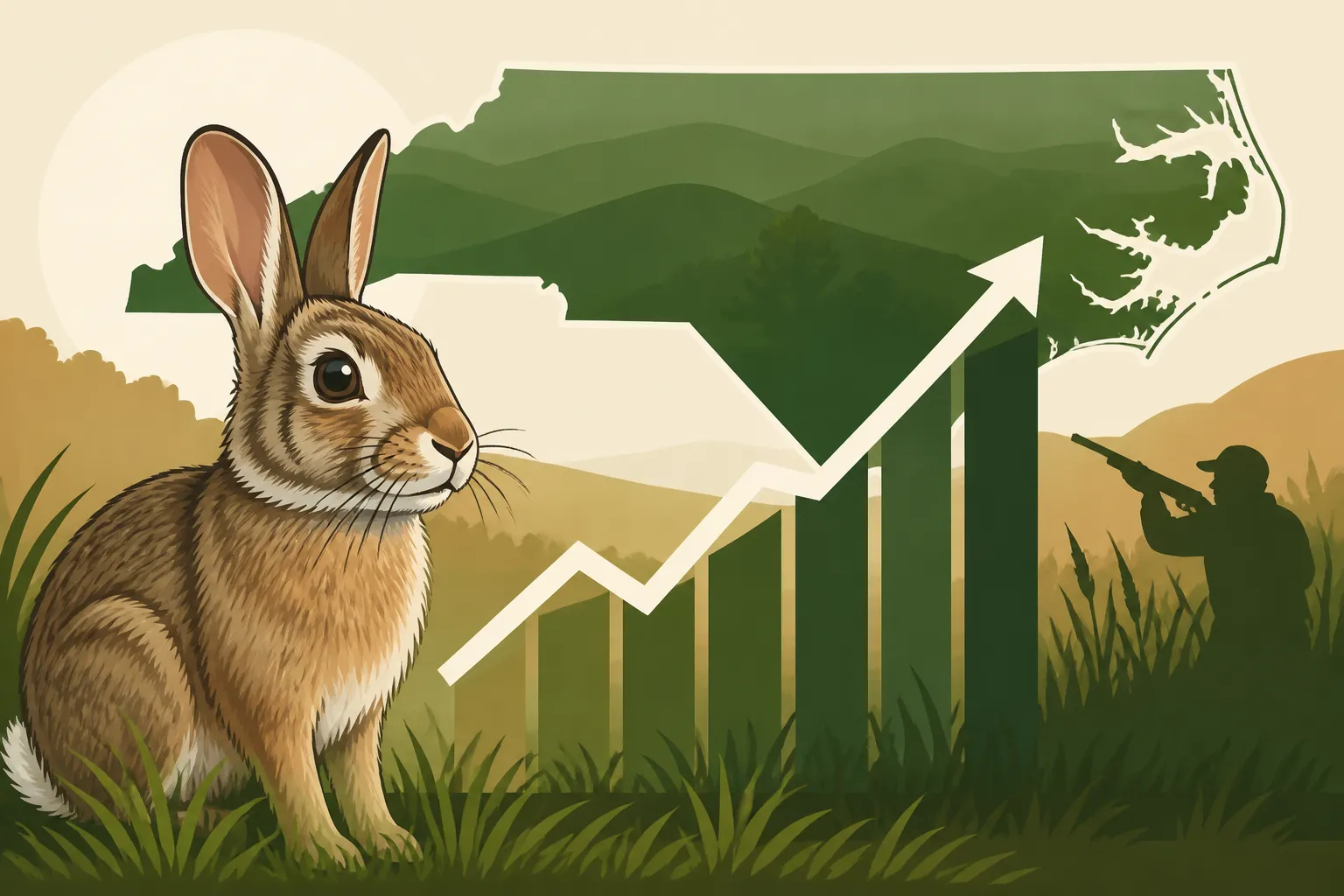
North Carolina Cottontail Population Trend
It can be incredibly disheartening to remember a time when every old field edge and overgrown fencerow seemed to hold a rabbit or three, only to walk those same spots today and find them eerily quiet. Many of us who grew up hunting small game in North Carolina have noticed a significant shift, and it’s not just in our memories. This guide is going to dig deep into the real trends behind North Carolina's cottontail rabbit population, exploring the challenges these beloved critters face and what it means for those of us who cherish the tradition of rabbit hunting.
The Echoes of the Past: North Carolina's Cottontail Heyday
For many, the mention of rabbit hunting in North Carolina conjures up images of crisp fall mornings, the baying of beagles, and the excitement of a rabbit bolting from a thick briar patch. It felt like they were everywhere, a common sight even from the kitchen window. But those memories, while sweet, often highlight a stark contrast to today's reality, leaving many to wonder what exactly changed.
The "Good Old Days" – Nostalgia Versus Reality
When we talk about the "good old days," it's easy to romanticize the past. However, for cottontail rabbits, those days truly were different. Back in the mid-20th century, North Carolina's landscape was far more fragmented with small, diverse farms. Think about it: a little corn field here, a tobacco patch there, a pasture for a few cows, all crisscrossed by hedgerows, old fencerows choked with multiflora rose and honeysuckle, and small woodlots. This patchwork created an absolute haven for rabbits. They had ample food from crop spillage and natural browse, and crucially, they had an incredible amount of escape cover. Every brush pile, every tangle of vines, every ditch bank offered sanctuary from predators and the elements.
This wasn't just anecdotal. Biologists confirm that cottontail populations were robust across the state, especially in the agricultural Piedmont and Coastal Plain. Kids could spend an afternoon jumping rabbits behind the barn, and it felt like an endless supply. The sheer abundance meant that despite predation and hunting pressure, their prolific breeding habits kept numbers high. It's not just nostalgia talking; the landscape genuinely supported a much higher density of rabbits.
Agricultural Shifts and Habitat Loss
The biggest driver of this change, by far, has been the dramatic shift in agricultural practices and overall land use. Small family farms, which were essentially habitat machines for rabbits, began to disappear. They were either consolidated into much larger operations or sold off for development. When you drive through the Piedmont today, you see vast tracts of monoculture – huge fields of soybeans, corn, or wheat – often bordered by clean-cut timber lines or housing developments.
What does this mean for a rabbit? It means no more diverse forage, no more thick fencerows acting as superhighways and escape routes, and certainly no more scattered brush piles. Modern farming emphasizes efficiency, which often means removing any "non-productive" areas like overgrown field borders. These changes, while economically driven, have systematically stripped away the very specific type of dense, low-level cover and diverse food sources that cottontails absolutely depend on. A rabbit isn't going to live in the middle of a 100-acre cornfield with nowhere to hide; they need those messy, edge habitats that are increasingly rare.
Current Population Trends and Factors Affecting Them
The decline isn't just a feeling; it's a measurable trend in many parts of North Carolina. While some localized populations might be stable or even improving with specific management, the general statewide picture suggests a downward trajectory for cottontails. It's a complex issue, influenced by multiple environmental pressures working in concert.
Habitat Fragmentation and Development Pressure
Even where agricultural practices haven't completely taken over, encroaching development has fragmented the remaining pockets of suitable rabbit habitat. Think about a subdivision popping up next to a mature woodlot. While the woods themselves might provide some cover, the new lawns and roads create barriers. Rabbits are reluctant to cross large open spaces, making it harder for them to move between food sources and cover, or to find mates. This isolation can lead to smaller, less genetically diverse populations that are more vulnerable to local extinction events.
Imagine a critical briar patch suddenly cut off from a food plot by a new road or a series of manicured yards. What was once a thriving rabbit neighborhood becomes an isolated island. Furthermore, as human populations expand, the pressure on land intensifies. Forested areas are cleared for houses, wetlands are drained for shopping centers, and what little remaining edge habitat there is gets mowed, sprayed, or "cleaned up" in the name of aesthetics or property value. This constant attrition means fewer places for rabbits to live, hide, and breed successfully. It's a slow, steady erosion of their world.
Predation and Disease Challenges
Nature is a balancing act, but when one side of the scale gets too heavy, things get out of whack. With less escape cover available, cottontails become much more vulnerable to predators. North Carolina has a healthy and widespread population of coyotes, foxes, bobcats, and even raptors like hawks and owls. While these predators are a natural part of the ecosystem, their impact on rabbit populations is amplified when rabbits have nowhere safe to hide. It's a simple equation: less cover equals more successful predators.
Beyond predation, diseases can also sweep through populations, particularly when rabbits are stressed or living in less than ideal conditions. Diseases like tularemia or fibromatosis (often seen as warts or tumors) can weaken or kill rabbits. While natural disease cycles are normal, a population already struggling with habitat loss and predation can be hit much harder, slowing recovery rates. It's a compounding effect where a diminished habitat leaves rabbits more exposed to every other challenge out there. North Carolina Coyote Range and Density is a good read to understand just how widespread some of these predators are.
Weather Patterns and Reproduction Cycles
Rabbits are famously prolific breeders, known for having multiple litters a year. This high reproductive rate is their primary defense against predation and other environmental challenges. However, extreme weather events can significantly impact their success. Very wet springs, for example, can lead to higher mortality rates for young kits, as nests in shallow depressions can flood. Prolonged droughts can reduce the availability of succulent forage, stressing does and potentially leading to smaller litters or less robust offspring.
Conversely, a mild winter followed by a favorable spring can see a localized boom in numbers. But these natural fluctuations are now occurring on a baseline of reduced overall habitat. So, while rabbits can bounce back quickly under ideal conditions, those "ideal conditions" are harder to come by and often more geographically limited than they once were. It means that while you might see a good year in one particular field, it might not reflect a broader positive trend across the county or state. This variability makes it hard to predict year-to-year hunting prospects, and it means we really have to look for those resilient pockets.
Where to Find North Carolina Cottontails Today
Despite the overall trends, rabbits are still out there, thriving in specific areas. The key for hunters and wildlife enthusiasts is to understand where to focus your efforts. It's no longer about hitting just any old field edge; it's about identifying and targeting prime, rabbit-friendly real estate.
Focusing on Remaining Quality Habitat
Finding rabbits today means actively seeking out those precious pockets of dense, diverse cover. Think "edge habitat on steroids." Look for areas where multiple types of cover converge:
- Power Line Cuts: Often maintained with brushy regrowth and early successional plants, these can be rabbit magnets, especially where they intersect with woods.
- Creek Bottoms and Drainages: These areas tend to hold moisture, supporting thicker vegetation, briar patches, and often have fallen logs or brush piles. Working a Creek Bottom for Late-Season Deer can give you an idea of these prime travel corridors, which rabbits also use.
- Young Clear-cuts or Timber Thinnings: While mature timber isn't great rabbit habitat, clear-cuts that are 3-10 years old with dense sapling growth, briars, and weeds can be fantastic. They offer both food and incredible cover.
- Old Logging Decks and Landings: These spots, especially if left to grow up, can become mini-habitat hot spots, often with brush piles left over from logging.
- Abandoned Farmsteads: These are goldmines. Old barn foundations, fallen sheds, overgrown orchards, and a mix of field and brush are exactly what rabbits crave.
- Thick Fencerows and Hedgerows: If you can still find them, especially those that border diverse fields or woodlots, they are excellent places to check. Rabbit Hunting North Carolina Fencerows delves into this.
Scouting is paramount. You need to look for fresh droppings, clipped vegetation, and well-used runs through thick cover. A good pair of binoculars and an app like GoHunt can help you identify these transition zones and habitat types on aerial maps before you even step foot in the woods. Look for that distinct "messy" appearance on the satellite imagery – that's often where the rabbits are hiding.
The Role of Public and Private Land Management
While much of the landscape has changed, there are concerted efforts to improve small game habitat. On public lands, the North Carolina Wildlife Resources Commission (NCWRC) often conducts habitat management practices like prescribed burns, timber thinnings, and disking that can benefit rabbits by promoting early successional growth. However, small game often takes a backseat to deer and turkey management, so you'll need to do your homework. Check individual game land descriptions and recent management activity. North Carolina Game Lands are extensive, but quality small game habitat within them can be localized.
On private land, the story is more varied. Some landowners are actively managing for small game, recognizing the ecological and recreational value. These efforts might include leaving crop stubble, creating brush piles, planting native grasses, or managing hedgerows. If you have access to private land, discussing habitat improvement with the landowner can be a win-win. Supporting organizations that promote habitat diversity can also help. Finding these private tracts can be challenging, but networking and even some online mapping tools offered by services like GoHunt can help you identify areas with good habitat characteristics.
What Hunters Can Do to Help (and Find Success)
It's easy to feel a bit discouraged by declining numbers, but as hunters and conservationists, we actually have a vital role to play. Our interest, our license fees, and our direct actions can contribute to the health of cottontail populations in North Carolina.
Habitat Improvement on Small Tracts
If you own land, even a small parcel, you can make a huge difference for rabbits. Every little bit of suitable habitat helps to connect the dots across the landscape.
- Create Brush Piles: This is perhaps the easiest and most effective method. Simply stack cut limbs, logs, and other woody debris into dense piles. Make sure they are sturdy and offer internal escape routes. A good brush pile provides immediate cover from predators and harsh weather.
- Leave "Messy" Areas: Resist the urge to clean up every fence line, field edge, or ditch bank. Allow native grasses, briars, and shrubs to grow. These provide critical food and cover.
- Plant Native Species: Consider planting native warm-season grasses, blackberry, or other thorny shrubs that provide both food and excellent protective cover.
- Manage Field Edges: If you have fields, consider leaving a buffer strip of uncut vegetation around the edges. This creates soft edges that rabbits love.
- Control Invasive Species: Aggressive invasives like privet or autumn olive can create dense cover, but they often outcompete native plants that provide better food sources for rabbits. Strategic removal can benefit the overall habitat.
Even if you don't own land, you can advocate for these practices in your community or support local conservation groups that focus on habitat restoration.
Responsible Hunting Practices and Data Collection
Hunting itself, when managed responsibly, does not typically drive population declines. In fact, regulated hunting seasons can help manage healthy populations. The key is to be a responsible and informed hunter. Always know and follow the North Carolina Small Game Season Rules and ensure you have all the necessary North Carolina Hunting Licenses and What They Cost.
- Report Your Harvest: While not always mandatory for small game, providing accurate harvest data to the NCWRC is incredibly valuable. It helps biologists track trends and make informed management decisions.
- Support Conservation Efforts: A portion of every hunting license fee goes directly to wildlife management and habitat conservation. By participating, you're directly funding efforts that benefit all game species, including rabbits.
- Ethical Hunting: Practice good sportsmanship and ethical hunting techniques. Know your limits and aim for clean kills. This preserves the respect for the animal and the tradition.
- Mentoring New Hunters: Introduce new individuals to small game hunting. A larger, engaged community of small game hunters means a stronger voice for small game conservation efforts. The North Carolina Hunter Education Requirements are a great first step for new hunters.
Rabbit hunting is a cherished tradition in North Carolina, and while the landscape has changed, the passion for these swift little animals endures. By understanding the challenges they face and actively contributing to habitat improvements and responsible hunting, we can all help ensure that the cottontail's tracks remain a part of our wild landscape for generations to come. So grab your dog, or just your walking boots, and go explore those hidden pockets where the rabbits still thrive. Don't forget to check North Carolina Rabbit Season Opening Day before you head out!
Disclaimer
This article is for general informational purposes only and does not constitute professional advice. Laws, prices and regulations vary by location and change over time. Consult a qualified professional for guidance on your specific situation.