Which County Confirmed North Carolina’s First CWD Case
It's a moment no hunter or wildlife enthusiast in North Carolina ever wanted to face: the day Chronic Wasting Disease (CWD) officially landed in our state. The discovery brought with it a mix of dread, uncertainty, and a lot of questions about what it meant for our deer herds and our hunting traditions. This guide aims to shed light on exactly where and how North Carolina's first CWD case was confirmed, and what that pivotal moment has meant for hunters and wildlife management ever since.
The Initial Discovery: A Wake-Up Call for North Carolina
The news hit like a cold front sweeping through the mountains and coastal plains, putting every deer hunter on edge. While wildlife agencies had been preparing for years, anticipating CWD's inevitable arrival, the confirmation of the first positive case brought the threat home in a very real way. It signaled a new era for deer management in North Carolina, one defined by increased vigilance and changing hunter practices.
Surry County: The First Confirmation
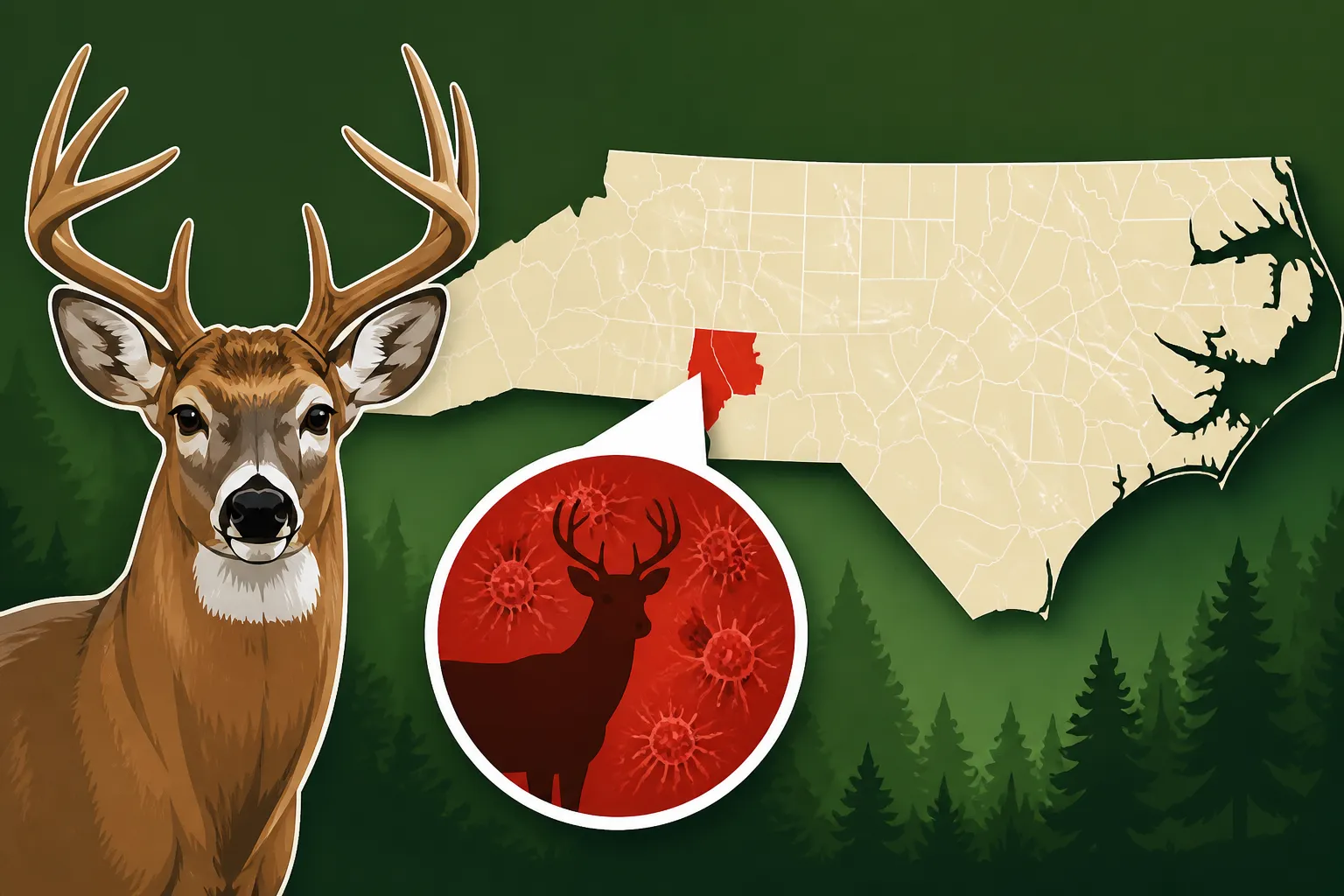
North Carolina's first confirmed case of Chronic Wasting Disease was identified in Surry County. This wasn't just a random find; it was the result of diligent, proactive surveillance by the North Carolina Wildlife Resources Commission (NCWRC) and cooperative efforts from hunters. The specific deer was a white-tailed buck harvested by a hunter during the 2021-2022 deer season. The hunter voluntarily submitted the deer's head for testing, a crucial step that ultimately led to the detection.
The confirmation in Surry County was a significant moment, not just for the wildlife agency, but for the entire hunting community. It underscored the critical role hunters play in the health and management of our deer population. Without that voluntary submission, the disease might have gone undetected for longer, potentially spreading further before measures could be implemented. This initial case served as a stark reminder that CWD is not just a problem "out west" or "up north" – it's here, in our own backyard, and demands our collective attention.
The Surveillance that Led to It
The identification of the first CWD case wasn't a fluke; it was the culmination of years of strategic planning and a robust surveillance program. The NCWRC had established a comprehensive CWD surveillance plan long before the first positive detection. This plan involved collecting samples from hunter-harvested deer, road-killed deer, and deer exhibiting neurological symptoms across different regions of the state. These samples were then sent to specialized diagnostic labs for testing.
Prior to the Surry County discovery, North Carolina had tested thousands of deer across all 100 counties over many years, consistently returning negative results. This ongoing surveillance was designed to detect CWD as early as possible once it arrived. The program intensified in areas bordering states where CWD was already established, focusing sampling efforts where the risk of introduction was deemed higher. It's a testament to these persistent efforts that the disease was detected relatively quickly after its assumed introduction, allowing for a rapid initial response. This proactive approach, while sometimes feeling like a bureaucratic hurdle to hunters, proved invaluable in pinpointing the disease's entry point and allowing managers to begin their containment strategies.
The Ripple Effect: Immediate Aftermath and Response
Once CWD was confirmed in Surry County, the NCWRC moved swiftly to implement a series of measures designed to contain the disease and prevent its further spread. This immediate response involved establishing special zones, enacting new regulations, and ramping up communication with hunters and the public. It changed the landscape of deer hunting for many in the affected regions overnight.
Establishing the CWD Management Area
Following the positive test result, the NCWRC declared a CWD Management Area (CWDMAs) to focus intensive monitoring and management efforts. This designation is crucial for controlling the disease's spread. Initially, this area encompassed Surry County and several adjacent counties that were deemed at high risk for CWD transmission due to deer movement patterns. Understanding North Carolina's Seven CWD Counties is vital for any hunter operating in the region. These zones are dynamically managed, meaning they can expand or contract based on new detections and surveillance data.
The goal of establishing these CWDMAs is multi-faceted: to prevent further spread by limiting carcass movement, to increase surveillance within the high-risk areas, and to reduce deer densities in specific locations if necessary. This might involve special hunt seasons or increased bag limits to help manage the population. Hunters in these areas have had to quickly adapt to a new set of rules that, while inconvenient at times, are absolutely critical for the long-term health of the deer herd.
New Regulations and Hunter Responsibilities
The establishment of the CWD Management Area brought with it a host of new regulations that hunters needed to understand and follow immediately. These rules primarily focused on mandatory testing and restrictions on carcass movement. For instance, any deer harvested within the CWD Management Area typically requires mandatory testing, often during specific periods or at designated sampling stations. Hunters are often asked to leave the head of their harvested deer at these sites for sampling.
Beyond testing, strict rules were put in place regarding the movement of deer carcasses out of the CWD Management Area. This is because CWD prions can persist in certain parts of the deer, particularly the brain and spinal cord, and can contaminate new areas if moved. Hunters typically cannot transport whole deer or certain high-risk parts outside the CWDMA. This means learning to bone out deer in the field or at processing facilities within the zone. Staying informed about these regulations is paramount, and resources like the NCWRC website or digital tools from companies like GoHunt can be invaluable for checking the latest rules before heading afield. It’s also important to be aware of North Carolina CWD Testing for Hunters and North Carolina Carcass Movement Restrictions.
Understanding Chronic Wasting Disease: The Science Behind the Scourge
To truly grasp the significance of CWD's presence in North Carolina, it's essential to understand what the disease is, how it functions, and why it poses such a grave threat to deer populations. It's not like a typical bacterial or viral infection; it's a unique and persistent challenge.
What is CWD and How Does it Spread?
Chronic Wasting Disease is a fatal, neurological disease that affects cervids, which include deer, elk, and moose. It belongs to a group of diseases called Transmissible Spongiform Encephalopathies (TSEs), similar to "mad cow disease" in cattle. CWD is caused by abnormal proteins called prions, which slowly accumulate in the brain and spinal cord, leading to progressive degeneration of the nervous system. These prions are incredibly resilient, resisting conventional disinfectants, heat, and freezing.
The disease spreads through direct contact between infected and healthy animals, such as through saliva, urine, and feces. It can also spread indirectly through environmental contamination. Infected deer shed prions into the soil and vegetation, where they can persist for years, acting as a long-term source of infection for other deer. This environmental persistence is what makes CWD so difficult to eradicate once it takes hold in an area. The incubation period can be long, often taking months or even years for symptoms to appear, making early detection in live animals challenging. This silent spread is part of Why Surry County Drives North Carolina's CWD Count is a topic of ongoing study.
Impact on Deer Populations and Hunting
The long-term impact of CWD on deer populations can be devastating. As the disease becomes more prevalent in a herd, it can lead to population declines, especially in older age classes of deer. Affected deer gradually lose weight, exhibit behavioral changes, become lethargic, drool excessively, and lose their fear of humans. These symptoms eventually lead to emaciation and death. While CWD isn't known to transmit to humans, it's generally advised that no one consume meat from a CWD-positive animal.
For hunters, CWD creates layers of complexity. It introduces health concerns, new regulations, and the potential for reduced deer numbers in heavily infected areas. It can also affect the social aspects of hunting, from concerns about sharing game processing facilities to the extra steps required for testing and carcass disposal. Wildlife agencies like the NCWRC are continually working to monitor the disease, understand its prevalence, and implement management strategies to mitigate its impact, ensuring the future of our White-Tailed Deer Across North Carolina. Hunters need to recognize that their actions, from submitting samples to following carcass rules, are critical in this ongoing fight.
Implications for Hunters: Navigating Hunting in a CWD Landscape
For hunters in North Carolina, the arrival of CWD means a fundamental shift in how we approach our passion. It's no longer just about scouting, calling, and making a good shot; it's also about being a responsible steward of the herd in the face of a serious disease. This requires staying informed and adapting our practices.
Mandatory Testing and Sampling Stations
One of the most immediate and significant changes for hunters in CWD Management Areas is the requirement for mandatory testing of harvested deer. This often occurs during specific periods, like opening weekends or the peak of the rut, when hunter participation and harvest rates are highest. Sampling stations are set up at various locations, including check stations, wildlife depots, and participating private processors. These stations are critical for the NCWRC to collect the data needed to understand the prevalence and geographic spread of CWD. Finding a North Carolina CWD Sampling Location is essential, and information is usually available on the NCWRC website or through popular hunting apps.
Participating in mandatory testing isn't just a regulatory obligation; it's a vital contribution to wildlife management. Each sample submitted helps biologists map the disease and determine the effectiveness of management strategies. It's a way for individual hunters to be part of the solution, helping to protect our deer herds for future generations. While it adds an extra step to an already busy hunting day, it's a small price to pay for the long-term health of the resource.
Carcass Movement and Disposal Rules
The rules regarding carcass movement and disposal are perhaps the most challenging for hunters to navigate, especially for those who travel long distances or hunt across CWD zone boundaries. The core principle is simple: prevent the movement of high-risk parts that could spread prions to uninfected areas. This means that typically, only boned-out meat, cleaned skull plates (antlers attached), hides, and clean teeth can be transported out of a CWD Management Area. Parts like the brain, spinal cord, lymph nodes, and internal organs must be left within the CWD zone or disposed of in approved landfills.
This often necessitates field dressing and even butchering a deer in the field or at a local processor within the CWD zone before heading home. For many, this is a new skill to learn, requiring specialized field dressing knives and game bags. Companies like GoHunt can provide useful resources and maps to help hunters understand these boundaries and identify local processing options. Proper disposal, often meaning double-bagging and placing high-risk parts in municipal waste landfills that accept animal remains, is equally important to minimize environmental contamination. Neglecting these rules, even unknowingly, can have severe consequences for other deer populations.
Adapting Your Hunting Strategy
Hunting in a CWD landscape requires hunters to be more strategic and informed than ever before. Beyond understanding the regulations, it involves thinking about the bigger picture of herd health. Hunters might consider focusing harvest efforts on antlerless deer or taking advantage of special seasons designed to manage deer populations within CWD zones, such as The New Special Early CWD-Zone Season which sometimes targets antlered deer to remove high-risk individuals. This doesn't mean giving up on the hunt for a trophy, but it does mean balancing personal goals with responsible wildlife management.
Another aspect of adapting is incorporating CWD information into your scouting and planning. Using tools like the NC Wildlife App or GoHunt's mapping features to identify CWD zones, sampling stations, and public land boundaries becomes even more critical. Understanding North Carolina Deer Season Structure Explained is also vital. This era calls for a commitment to being an educated and ethical hunter, one who not only enjoys the outdoors but actively works to preserve it. While CWD presents a significant challenge, with informed participation and adherence to guidelines, hunters can play a crucial role in managing its impact on North Carolina's treasured deer herd.
Key CWD Information for North Carolina Hunters
| Category | Description | Hunter Action Required |
|---|---|---|
| First Case Confirmed | Surry County, 2021-2022 deer season, a hunter-harvested buck. This initiated North Carolina's formal CWD response. | Stay updated on CWD zones. |
| Disease Agent | Prions (abnormal proteins) that cause a fatal neurological disease in cervids (deer, elk, moose). Not a virus or bacteria. Highly resistant and can persist in the environment. | Understand symptoms, avoid consuming CWD-positive meat. |
| Transmission | Direct (animal-to-animal contact through bodily fluids) and Indirect (environmental contamination via infected soil, plants, feed stations). | Avoid artificial congregation of deer (e.g., baiting where legal) in CWD zones to reduce transmission risk. Check regulations on North Carolina Feral Hog Regulations or Bear Hunting North Carolina's Coast and Mountains as baiting rules differ for other species. |
| CWD Management Areas | Designated zones (e.g., Surry and surrounding counties) with intensified surveillance and specific regulations to contain and manage the disease. These areas can change. | Identify if your hunting area is within a CWDMA. Adhere to all specific rules for that zone. |
| Carcass Movement Restrictions | Prohibits moving high-risk parts (brain, spinal cord, lymph nodes) out of CWD Management Areas. Only boned-out meat, cleaned skull plates, hides, and teeth are typically allowed to leave. | Learn to field-quarter or bone out your deer in the field. Utilize local processors within the CWD zone. Properly dispose of high-risk parts in approved landfills. |
| Mandatory Testing | Required for harvested deer in designated CWD Management Areas during specific periods to monitor disease prevalence and spread. | Submit deer heads for testing at designated sampling stations. Support surveillance efforts. |
| Impact on Deer | Progressive weight loss, behavioral changes, lethargy, drooling, eventual death. Can lead to population declines in affected herds over time. | Participate in responsible harvest strategies, including antlerless deer, to help manage herd health in affected areas. Consider the Hunting the Rut in the Eastern Zones and Hunting the Rut in the Western Zone when planning harvest strategy. |
| Human Health | No confirmed cases of CWD transmitted to humans. However, public health agencies recommend not consuming meat from CWD-positive animals. | Get harvested deer tested if hunting in a CWDMA. Do not consume meat from CWD-positive animals. |
Disclaimer
This article is for general informational purposes only and does not constitute professional advice. Laws, prices and regulations vary by location and change over time. Consult a qualified professional for guidance on your specific situation.