Which North Carolina County Kills the Most Deer
Every North Carolina deer hunter dreams of finding that sweet spot, the county where the deer population is booming and success rates are high. It's a common frustration to spend countless hours scouting and hunting in an area that just doesn't seem to produce. This guide will dive deep into which North Carolina counties consistently lead the pack in deer harvest, exploring the underlying reasons and how you can leverage this knowledge for a more successful season.
Unpacking North Carolina's Top Deer Harvest Counties
Let's face it, we all want to know where the action is. While deer are found in all 100 counties of North Carolina, some regions, and specific counties within them, consistently report higher deer harvest numbers year after year. This isn't just about luck; it's a testament to prime habitat, robust deer populations, and effective management strategies. Understanding these trends can be a game-changer for your hunting plans, whether you're a seasoned local or looking to explore new territory.
The Usual Suspects: Consistently High-Performing Counties
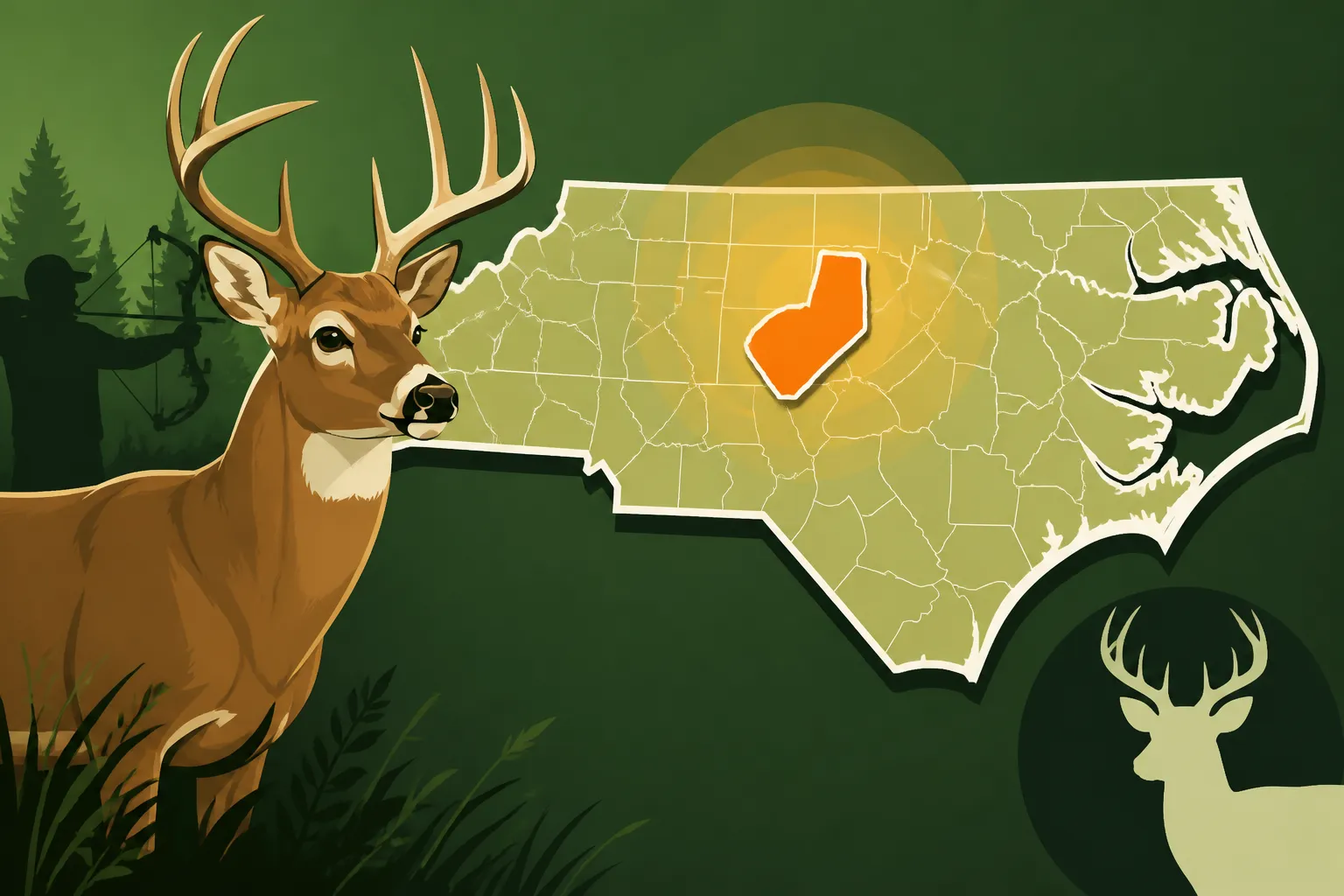
When you look at the historical data for North Carolina's deer harvest, certain counties repeatedly float to the top. These aren't necessarily the counties with the largest deer, but often the ones where hunters take the most deer overall. For years, counties like Sampson, Bladen, and Duplin in the Coastal Plain have been powerhouses. These are vast, rural counties with immense tracts of agricultural land interspersed with timber and swampy bottoms.
Move into the Eastern Piedmont, and counties such as Halifax, Northampton, and Franklin often show impressive numbers. These areas represent a blend of row crops, hardwood forests, and pine plantations, creating a diverse landscape that whitetails absolutely thrive in. It's not uncommon to hear tales of consistent success coming out of these regions, and the harvest data backs it up. These counties tend to have stable deer populations that rebound well each year, even with significant hunting pressure.
What makes these counties stand out isn't a secret, but rather a combination of factors that create ideal conditions for deer to flourish. It's the kind of place where a deer can easily find food, cover, and water without having to travel far, leading to healthier, more numerous herds.
Why These Counties Excel: Habitat and Land Use
The primary driver behind high deer harvests in these counties is, without a doubt, superior habitat coupled with land-use practices that inadvertently (or intentionally) benefit deer. Many of the top-performing counties are characterized by expansive agricultural operations. Think vast fields of corn, soybeans, peanuts, and cotton that provide a never-ending buffet for deer through much of the year. This rich diet translates directly into healthier does, higher fawn survival rates, and more robust antler development in bucks.
Beyond the agricultural bounty, these areas also typically feature extensive timberlands, ranging from mature hardwoods along river drainages to dense pine plantations. These timber stands provide crucial bedding cover, thermal protection in colder months, and security zones where deer can escape hunter pressure. The mosaic of food plots, agricultural fields, and thick cover creates an optimal environment. Private land ownership, often by individuals or clubs focused on wildlife management, also plays a significant role, allowing for controlled harvests and habitat improvements that further boost deer numbers.
It’s this perfect storm of abundant food, diverse cover, and often less fragmented landscapes than more developed areas that allows these counties to consistently produce high deer harvest totals. When deer have everything they need, their numbers soar, creating more opportunities for hunters.
The Science Behind High Deer Populations and Harvests
It's easy to point to a map and say "there's more deer here," but understanding why that is requires a look at the ecological underpinnings. Deer populations, and consequently harvest numbers, aren't random. They're a direct reflection of a complex interplay between habitat quality, food availability, cover, water sources, and human factors like hunting pressure and management. When these elements align, a county becomes a whitetail haven.
The Role of Agriculture and Food Availability
North Carolina's agricultural heartland is, by extension, its deer hunting heartland. Row crops like corn, soybeans, and peanuts are deer magnets. These crops provide a high-energy, protein-rich diet that's crucial for deer health, especially for does nursing fawns and bucks growing antlers. During late summer and fall, deer literally live in these fields, feeding heavily to put on weight for the colder months and the rigors of the rut. A county with thousands of acres dedicated to these crops will almost always support a denser and healthier deer herd than one dominated by less palatable vegetation or dense urban sprawl.
Consider a county like Sampson, with its massive tracts of farmland. A deer there doesn't have to work hard to find sustenance. This constant access to high-quality forage not only increases the sheer number of deer but also contributes to better overall herd health, leading to more fawns reaching maturity and bucks with greater antler potential. When hunters leverage tools like GoHunt's mapping features, they can often identify these prime agricultural areas, even before stepping foot on the ground, by looking for concentrations of active farmlands.
Optimal Cover and Security
Food alone isn't enough; deer need a safe place to rest, breed, and escape danger. The top deer-producing counties invariably offer a rich mix of cover types. Dense pine plantations, especially those in their early to mid-growth stages, provide impenetrable bedding areas. Mature hardwood bottoms along creeks and rivers offer thermal cover, especially important during colder periods, and a bounty of acorns in the fall. Coastal Plain pocosins, those dense, often swampy evergreen shrub thickets, are virtually sanctuaries for deer, making them incredibly difficult for hunters to access but providing unparalleled security.
The ideal scenario for deer is a patchwork of these cover types interspersed with abundant food sources. This allows deer to move easily between feeding and bedding areas without expending excessive energy or exposing themselves to predators for long. Hunters who understand this interplay often focus on the edges and transition zones where these different habitat types meet, as deer frequently travel and stage in these areas. This strategy can be particularly effective when considering Hunting Coastal Plain Pocosin Swamps or Hunting Piedmont Farmland Deer.
Hunter Density and Management Practices
While good habitat is paramount, how humans interact with the deer herd also significantly impacts harvest numbers. Counties with high deer populations often attract more hunters, leading to higher harvest totals. However, it's also about how those hunters manage the resource. In many high-performing counties, especially those with a strong tradition of private land hunting, landowners and hunting clubs engage in forms of quality deer management. This might include strategically harvesting antlerless deer to balance buck-to-doe ratios, planting food plots, or passing on younger bucks to allow them to mature.
Effective deer management, whether by individual landowners or through broader regulations, ensures that the deer herd remains healthy and productive. The North Carolina Wildlife Resources Commission (NCWRC) sets North Carolina Deer Bag Limit Rules and season structures that are designed to manage the herd at a healthy level. Counties with a lot of private land where hunters are actively engaged in these practices often see higher average success rates and robust deer populations. Conversely, areas with extremely high hunting pressure and less strategic management might see fluctuations in herd quality, even if the raw numbers remain high due to sheer volume.
Strategizing Your Hunt in High-Yield Areas
Knowing which counties lead the deer harvest is just the first step. The real challenge, and the real reward, comes from translating that knowledge into a successful hunt. These high-yield areas often come with their own unique set of opportunities and challenges. Whether you're targeting public lands or seeking private access, a thoughtful approach to scouting and tactics is essential.
Public vs. Private Land Opportunities
It's a common reality that many of the top deer-producing counties are dominated by private land, often large tracts of agricultural or timber company property. Gaining Getting Private Land Permission in North Carolina can be the golden ticket here. This might involve knocking on doors, offering to help with chores, or leasing hunting rights. Building relationships with landowners in these areas is often the most direct path to consistent success. These properties often have less hunting pressure than public lands and benefit from dedicated habitat management, creating phenomenal hunting opportunities.
However, don't write off public lands entirely, even in these private-land-heavy counties. North Carolina has a surprising amount of Public Hunting Land in North Carolina scattered across the state, including some game lands within or near these top-tier counties. The key is to find the overlooked spots. Look for public parcels that are difficult to access, perhaps requiring a long walk, a boat, or navigating dense, wet terrain. These less-pressured pockets can hold mature deer that have learned to avoid easy access points. Using detailed mapping tools, like those found on GoHunt, can help you identify these hidden gems and plan your approach.
Targeted Scouting and Intelligence Gathering
Regardless of whether you're on public or private ground, effective scouting is paramount, especially in areas with high deer populations. Don't just show up on opening day. Spend time in the off-season and leading up to the season Scouting North Carolina Public Land Before Season. Use aerial maps to identify key features: field edges, pinch points, funnels between woodlots, dense bedding cover, and water sources. Look for subtle terrain changes that might direct deer movement.
When you're on the ground, look for fresh sign—tracks, rubs, scrapes, and droppings. Pay attention to what food sources are available and being utilized. If it's early season, look for acorn trees and browse. Later in the season, focus on Late-Season Food Sources for North Carolina Whitetails like standing crops or planted food plots. Understanding North Carolina Deer Harvest Records can give you an idea of past success in specific areas, helping you narrow down your search. Tools like GoHunt can layer property boundaries, topo maps, and satellite imagery, making it incredibly efficient to analyze potential hunting spots and entry routes. Reading Aerial Photos for Piedmont Deer can reveal travel corridors and bedding areas that are invisible from the ground.
Adapting Tactics to the Terrain
The best counties for deer harvest often encompass a variety of terrain and habitat types, requiring hunters to be versatile in their tactics. In agricultural heavy areas, Setting Up on a Piedmont Field Edge or Hunting a Standing Cornfield in Farm Country will be crucial. This might mean using ground blinds or well-placed treestands overlooking feeding areas, especially during the early and late seasons. As the rut approaches, focusing on travel corridors and pinch points between bedding and feeding areas becomes more effective. Understanding Hunting the Rut in the Eastern Zones or other specific zones is vital.
In areas with vast timber or dense cover, still-hunting or carefully placed ambush points might be more productive. If you're hunting river bottomlands or swamps, learning Recovering a Deer From a Coastal Swamp isn't just a skill, it's a necessity. Deer drives, done safely and strategically with a group, can also be effective in moving deer out of thick cover on public or Deer Drives on North Carolina Public Land. The key is to observe deer movement patterns specific to your chosen spot and adjust your strategy accordingly. No single tactic works everywhere, so flexibility is your friend.
Beyond the Numbers: Understanding Deer Harvest Data
It's natural to be drawn to the counties that kill the most deer, but simply chasing the highest number can sometimes be misleading. To truly maximize your potential, it's important to look beyond just raw harvest totals and consider other factors that influence a successful hunt. Understanding deer population dynamics and management objectives provides a much richer picture of what makes a county a great place to hunt.
Harvest Totals Versus Deer Density
A county might report an incredibly high total deer harvest, but that doesn't always mean it has the densest deer population per square mile. Large counties, simply by virtue of their size, can have higher overall harvest numbers even if their deer density is moderate. Conversely, a smaller, incredibly productive county might have a slightly lower total harvest but a much higher concentration of deer, potentially offering more consistent encounters for hunters.
For example, a vast county in the Coastal Plain with a mix of agriculture and sprawling timberlands might lead in total deer harvested due to its sheer size and abundant habitat. But a smaller, intensely farmed Piedmont county with perfect pockets of cover might have an equally high, if not higher, deer-per-acre count. Hunters should consider both metrics. If you have limited time or a smaller property to hunt, a high-density area might offer more opportunities, even if it doesn't boast the absolute highest county-wide total harvest. Checking tools like GoHunt for harvest data analysis or North Carolina Deer Population Estimate by region can give you a better idea.
Buck-to-Doe Ratios and Herd Health
Beyond just the quantity of deer, the quality and health of the herd are crucial. Harvest data can offer clues about the buck-to-doe ratio and the overall health of the deer population. In counties where management efforts are strong, hunters might see a more balanced ratio, meaning bucks have a better chance to mature, potentially leading to larger antlers. A heavily skewed ratio towards does, often seen in areas with less antlerless harvest, can lead to overpopulation, reduced deer health, and lower quality bucks.
The North Carolina Deer Harvest Records often provide data broken down by antlered and antlerless deer, as well as age classes. Analyzing this can tell you if a county's herd is healthy, if bucks are living long enough to reach their potential, and if the overall population is in balance with the habitat. This deeper understanding can guide your own harvest decisions, contributing to the long-term health of the deer herd in your hunting area. After all, a healthy herd today means better hunting for everyone tomorrow.
Leveraging Data for Personal Success
While hunting in a top-harvest county increases your odds, success isn't guaranteed. It's about combining that knowledge with diligent scouting, understanding local deer behavior, and adapting your tactics. Use the county harvest data as a starting point, but don't let it be your only guide. Focus on Finding Ground Others Walk Past within those productive counties.
Think about specific locations within these top-performing counties that might be overlooked. Is there a small woodlot bordering a major agricultural field that’s too small for most hunters to bother with? Are there sections of public land that require a longer hike or boat ride? By applying detailed mapping resources (like those available through GoHunt) and putting in the boots-on-the-ground work, you can often find unpressured deer even in heavily hunted areas. Ultimately, the county with the most deer killed is less about where you hunt, and more about how you hunt in that location.
Disclaimer
This article is for general informational purposes only and does not constitute professional advice. Laws, prices and regulations vary by location and change over time. Consult a qualified professional for guidance on your specific situation.