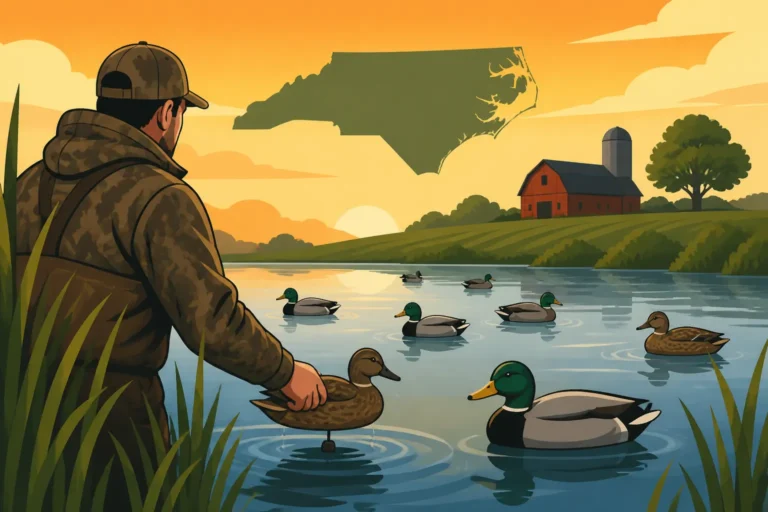
Jump-Shooting North Carolina Creeks for Wood Ducks
There's a unique thrill that comes with jump-shooting North Carolina creeks for wood ducks, but it also presents a specific set of challenges. These birds are notoriously quick, agile, and masters of concealment, often flushing unexpectedly from tight cover, leaving many hunters frustrated and empty-handed. This guide is designed to equip you with the knowledge and tactics needed to navigate these winding waterways successfully, offering actionable advice to increase your chances of connecting with these beautiful and delicious birds.
Understanding the Elusive Wood Duck and Its Habitat
Jump-shooting for wood ducks is less about elaborate decoy spreads and more about intimate knowledge of their habits and preferred hideouts. These aren't your open-water divers or field-feeding dabblers; woodies are birds of the timber and the winding, shadowed creeks.
Wood Duck Biology and Behavior on North Carolina Waterways
North Carolina's landscape, particularly the Coastal Plain and Piedmont, is crisscrossed with a labyrinth of small creeks, sloughs, and beaver ponds—perfect habitat for wood ducks. Unlike mallards or pintails that might frequent larger impoundments, wood ducks have a particular affinity for slow-moving or stagnant water surrounded by mature hardwood forests, especially those with oak trees providing a valuable food source. They are cavity nesters, relying on old growth trees for their broods, which further ties them to heavily wooded areas.
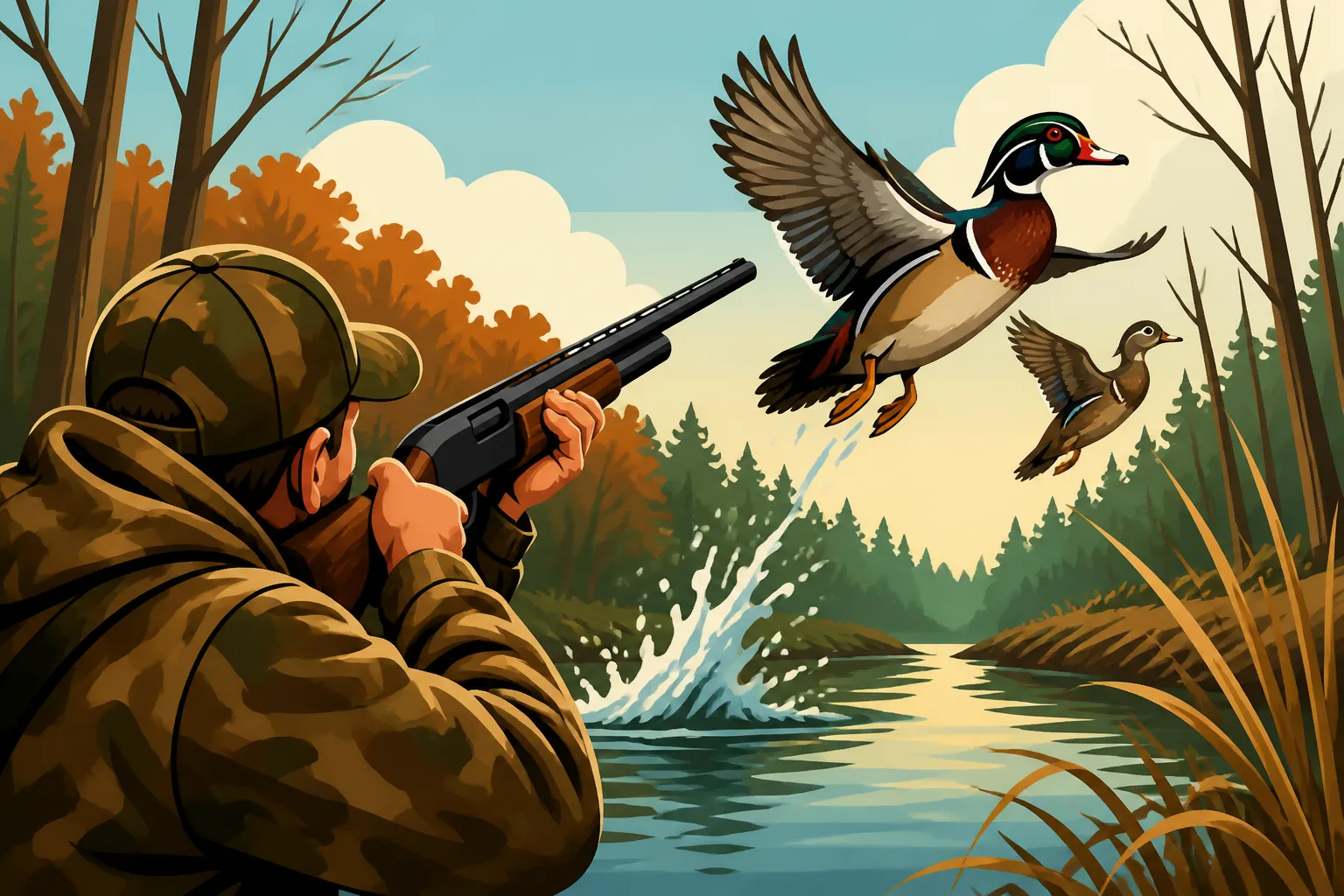
Their flight is nothing short of spectacular, often described as a blur of color and speed. When flushed, a wood duck will erupt vertically with surprising velocity, quickly weaving through overhead branches with unmatched agility. This makes for incredibly challenging shots, demanding quick reflexes and precise gun handling. They are also quite vocal, especially when alarmed or communicating within a flock, emitting a distinctive "whoo-eek" call that can sometimes give away their presence before they flush. You might hear them chattering away in the pre-dawn hours as they fly to their feeding grounds or quietly as they loaf in hidden pockets of water. Understanding these behaviors is crucial for anticipating their movements and positioning yourself for a shot.
Identifying Prime Creek Habitat for Jump-Shooting
Finding the right creek is paramount to success when jump-shooting wood ducks. You're looking for waterways that offer a combination of food, cover, and loafing areas. Start by looking for creeks that are bordered by mature bottomland hardwoods, particularly those rich in oak trees that drop acorns into the water. These acorns are a primary food source for wood ducks, especially during the fall. Slow-moving or stagnant sections of a creek, often found in oxbows, sloughs, or areas where fallen trees create quiet pools, are prime spots. Beaver activity is a huge indicator of good wood duck habitat; their dams create backwater ponds and flooded timber that woodies adore. These areas often provide natural clearings within dense cover, creating ideal feeding and resting spots.
When scouting, whether physically walking a creek before the season or using satellite imagery on mapping apps like GoHunt, pay close attention to tight bends, areas of flooded timber, and sections where the creek narrows and deepens, creating a secluded pocket. Don't overlook the smaller, seemingly insignificant tributaries; wood ducks often prefer these quieter, less disturbed areas. A good strategy is to look for areas where the creek widens slightly into a marshy section or where small islands of thick vegetation provide refuge. These are the places where wood ducks feel secure. When using a mapping app, look for those tell-tale green patches indicating dense timber right along the water's edge, and search for the tell-tale signs of beaver dams or old logging cuts that create ideal conditions. Effective scouting is critical to finding productive water. If you're looking for more general scouting tips, check out our guide on Scouting North Carolina Public Land Before Season.
Essential Gear and Setup for Creek Jump-Shooting
Jump-shooting wood ducks isn't like sitting in a blind over a large impoundment. Your gear needs to be suited for mobility, stealth, and quick, close-range shooting.
Shotguns, Loads, and Chokes for Close-Quarters Action
Given the sudden, close-range flushes and the erratic flight patterns of wood ducks in tight cover, your shotgun choice matters. A fast-swinging, reliable shotgun is key. Many hunters prefer a 20-gauge for its lighter weight and quicker handling, though a 12-gauge is certainly effective. The most important factor is what you shoot comfortably and accurately. For detailed information on various shotgun options, you might find our article on Shotgun Gauge Choice helpful.
When it comes to ammunition, you absolutely must use non-toxic shot for waterfowl hunting in North Carolina. Steel shot is the most common and affordable option, but alternatives like bismuth or tungsten-matrix offer better energy retention and denser patterns, though they come at a higher cost. For jump-shooting wood ducks, 2 ¾-inch shells with #6 or #7 steel shot are generally excellent choices. These sizes provide a good pellet count for patterning in close quarters and sufficient energy for wood ducks, which aren't particularly large birds. However, if you anticipate slightly longer shots or hunt mixed bags, #4 steel shot can also be effective. You can find more specific rules regarding ammunition in our article on Where Nontoxic Shot Is Required in North Carolina.
Choke selection is equally important. Since most shots will be at relatively close ranges (15-30 yards) and often in dense cover, an open choke is highly recommended. An Improved Cylinder (IC) or even a Skeet choke will provide a wide, forgiving pattern that increases your chances of hitting these acrobatic birds. A Light Modified (LM) choke can also work, especially if you anticipate some slightly longer shots. The goal is a pattern that opens quickly but still puts enough pellets on target for a clean kill.
Waders, Stealth, and Navigation on Small Creeks
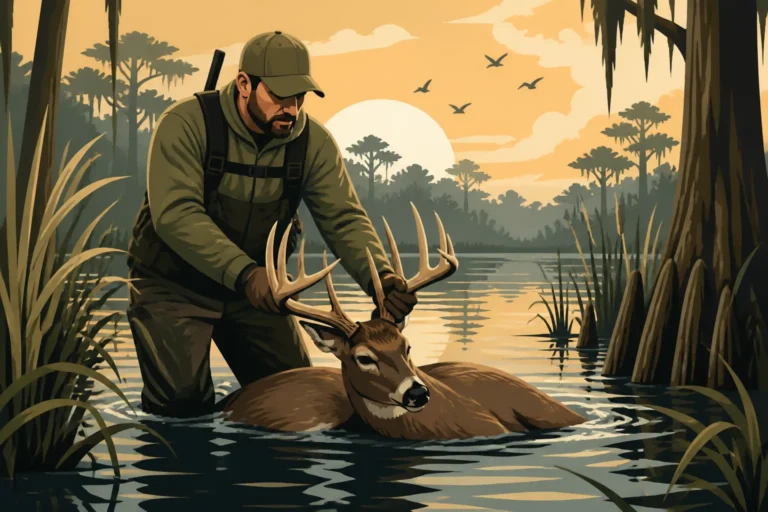
Your attire and footwear are just as critical as your firearm when jump-shooting creeks. Good quality chest waders are non-negotiable. North Carolina creeks can be deceptively deep, and you'll encounter everything from ankle-deep muck to chest-high water. Neoprene waders offer excellent insulation for colder days and are generally tougher against punctures from submerged sticks, while breathable waders are more comfortable for warmer early-season hunts. Ensure your waders fit well and allow for comfortable, unrestricted movement. For more on selecting appropriate footwear for wet environments, consider reading our article on Waders for Cattail Marsh Hunting.
Stealth is paramount. Wood ducks are incredibly wary, and any sudden movement or loud splash will send them skyward. Wear camouflage that blends in with the riparian environment – patterns featuring mossy oak, reeds, or natural timber are ideal. Avoid bright colors or anything that stands out against the natural backdrop. Move slowly and deliberately. Shuffle your feet through the water instead of taking large, splashing steps. Use natural cover like tall grass, brush, and overhanging branches to break up your silhouette. Stay low, especially when rounding bends or approaching promising areas.
Navigating these creeks can be challenging. You'll encounter fallen logs, thick brush, and varying currents. A walking stick or wading staff can be invaluable for maintaining balance, probing water depth, and pushing aside obstacles quietly. Always be aware of your footing to avoid trips and falls, which can be dangerous in slick, uneven creek beds. Some hunters prefer to wade upstream, as the current will naturally dampen sounds as you move. Others prefer to go downstream, letting the current aid their movement, but this requires even greater attention to stealth. The key is to move with intention, constantly scanning ahead and anticipating potential flushes.
Tactical Approaches for Successful Jump-Shooting
Jump-shooting wood ducks is a dynamic hunt that rewards patience, keen observation, and disciplined gun handling. It's an active pursuit where you are constantly moving and reacting to the environment.
Reading the Water and Approaching Bends
The art of jump-shooting truly lies in your ability to "read the water" and anticipate where birds might be holding. As you navigate the creek, visualize where a wood duck would feel safe and comfortable. Look for calm, secluded pools tucked away behind a bend, areas of submerged vegetation, or shallow banks protected by overhanging branches. These are prime loafing and feeding spots. Don't forget about flooded timber adjacent to the main creek channel; wood ducks will often paddle into these areas if they offer good cover and food. Our guide on Hunting Flooded Timber for Wood Ducks provides more insights into these specific habitats.
Approaching bends in the creek is perhaps the most critical tactical maneuver. Always assume there are birds on the other side. As you get close to a bend, slow your pace to a near crawl, keeping your shotgun ready. Use the bankside vegetation or the curve of the creek itself to conceal your approach. Instead of peering directly around the bend, try to use your peripheral vision or take a quick, low peek. Often, the best approach is to angle your body so you can quickly pivot and swing if a bird flushes. Many hunters like to ease their way around the corner, ready to shoot, knowing that the birds will typically flush upstream or downstream, allowing for a fleeting shot opportunity. Pay attention to wind direction; approaching with the wind in your face can help mask your sounds and scent, increasing the element of surprise.
Group Tactics and Safety Considerations
While jump-shooting can be a solitary pursuit, it can also be incredibly effective and enjoyable with a small group of trusted hunting partners. If hunting with a partner or two, establish clear communication signals beforehand. One common tactic is for one hunter to be the "point man" slowly wading upstream, while the other hunter(s) walk a little behind or along the bank, slightly to the side, to cover different angles. This can help prevent birds from flushing unseen or escaping through gaps in coverage. In wider creeks or flooded areas, a "pincer" movement where hunters approach from both sides of a narrow section can be very productive.
However, hunting in a group necessitates an even greater emphasis on safety. Clear shooting lanes and angles must be established verbally and visually. Always know where your hunting partners are. Maintain strict muzzle control, ensuring your barrel is always pointed in a safe direction, typically down or slightly up into clear sky. Never swing your gun toward another hunter, even when a bird flushes. The dense cover and often slippery terrain of North Carolina creeks demand constant vigilance. Communicate frequently, especially when encountering obstacles or changes in terrain. Agree upon maximum shooting distances and ensure everyone is aware of their safe zone of fire. Safety should always be the top priority to ensure everyone enjoys the hunt and returns home safely.
Post-Hunt Care and Regulatory Considerations
Harvesting wood ducks is a rewarding experience, but the hunt isn't over once the bird is down. Proper care of your birds and adherence to regulations are crucial.
Retrieving Birds and Meat Care in the Field
Wood ducks, like many waterfowl, can be surprisingly difficult to retrieve, especially in dense creek environments. Their dark plumage can blend seamlessly with dark water, submerged logs, or thick vegetation. If you have a well-trained retriever, this is where they truly shine. A good dog can often locate downed birds much faster and more efficiently than a human, reducing the chance of lost game.
If hunting without a dog, mark the exact spot where the bird fell with extreme prejudice. Use natural landmarks on the bank or note the angle and distance. Paddle or wade directly to that spot as quickly as possible. Wood ducks can sometimes "dive" or swim under the surface for a short distance after being hit, so search the area thoroughly. Don't give up quickly; sometimes a bird will be hidden under a log or in a patch of reeds that seems impenetrable.
Once retrieved, proper meat care begins immediately. Wood ducks are renowned for their delicious flavor, and prompt cooling is key to preserving their quality. On colder days, hanging birds in the shade or placing them on ice in a cooler will suffice. On warmer days, especially during the early season, field dressing (removing the entrails) as soon as possible is highly recommended to dissipate body heat and prevent spoilage. You can carry a small game bag or mesh bag to transport your birds, allowing for airflow. Once home, clean your birds promptly and either cook them fresh or prepare them for freezing.
North Carolina Regulations and Ethical Hunting
Before you even step foot in a North Carolina creek, it's imperative to be intimately familiar with the state's waterfowl hunting regulations. These rules are put in place by the North Carolina Wildlife Resources Commission (NCWRC) and federal agencies to manage waterfowl populations and ensure sustainable hunting.
Key regulations to remember include:
- Hunting License: You'll need a valid North Carolina hunting license with the appropriate game land and big game privileges if hunting on public lands.
- Federal Duck Stamp: Anyone 16 years of age or older must purchase and possess a valid federal duck stamp. Our article on the North Carolina Federal Duck Stamp Requirement has more details.
- HIP Certification: All migratory bird hunters must register for the Harvest Information Program (HIP) annually. Learn more about the North Carolina Migratory Bird Certification.
- Non-Toxic Shot: As mentioned, only non-toxic shot is allowed for hunting waterfowl.
- Bag Limits: Wood ducks have specific daily and possession bag limits. Make sure you know the current North Carolina Duck Daily Bag Limit to avoid violations. For example, during some seasons, the daily bag limit for wood ducks might be three, but this can change, so always check the most current regulations.
- Shooting Hours: Waterfowl hunting hours typically run from one-half hour before sunrise until sunset.
- Possession Limits: This refers to the maximum number of migratory game birds that can be transported or stored.
Ethical hunting goes beyond simply following the rules. It means making a positive identification of your target before you shoot. Wood ducks have distinct plumage, but in low light or quick flushes, it can be easy to misidentify. Only shoot when you're confident of your target and have a clear, safe shot. Respect private property boundaries, even if a creek runs through it. Always retrieve every bird you shoot, making every effort to recover downed game. By understanding and adhering to these regulations and ethical principles, you contribute to the conservation of North Carolina's waterfowl resources and ensure a positive hunting experience for everyone.
| Shotgun Gauge | Recommended Choke | Shot Size (Steel) | Ideal Range | Notes |
|---|---|---|---|---|
| 12 Gauge | Improved Cylinder | #6, #4 | 15-30 Yards | Versatile, good pellet count for dense patterns. |
| 20 Gauge | Improved Cylinder | #6, #7 | 10-25 Yards | Lighter, faster swinging, excellent for quick shots in tight cover. |
| 28 Gauge | Skeet / Improved Cylinder | #7 | 10-20 Yards | Very light, requires excellent gun handling, limited range. |
| .410 Bore | Modified | #7 | 10-15 Yards | Advanced choice, very challenging due to limited pellet count. |
Disclaimer
Hunting is an inherently dangerous activity. This guide provides general information and recommendations. It is your responsibility to understand and comply with all federal, state, and local hunting laws and regulations. Always prioritize safety, practice ethical hunting methods, and consult with the North Carolina Wildlife Resources Commission (NCWRC) for the most current rules and season dates. The author and publisher are not responsible for any accidents, injuries, or legal issues that may arise from using this information.