Hanging a Stand on a Pisgah Ridge
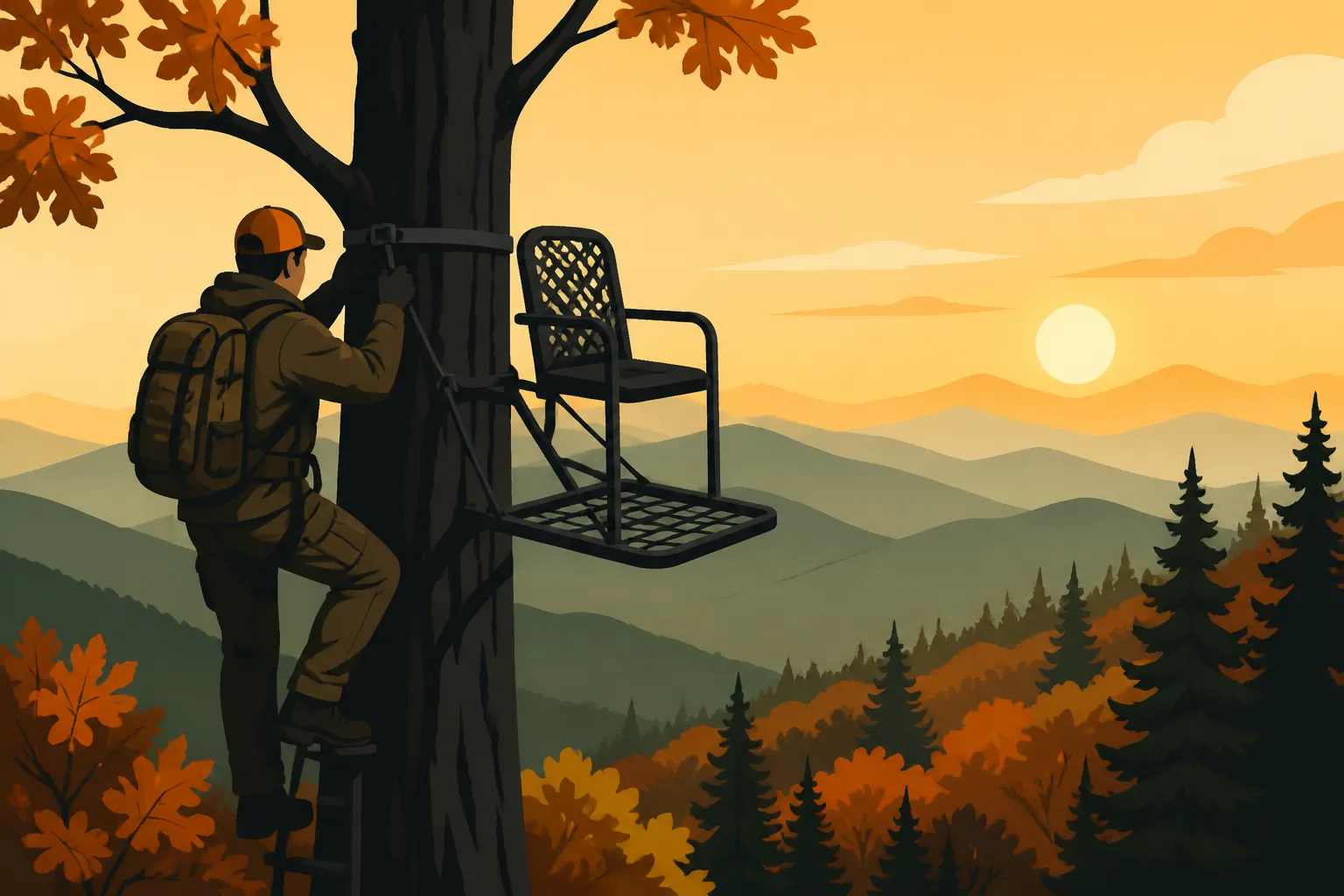
Hunting the steep, rugged terrain of Pisgah National Forest can feel like a daunting task, especially when you're trying to figure out the best spot to set up for a whitetail deer. It's not like the flat woods of the Coastal Plain or the rolling hills of the Piedmont; the mountains demand a different approach, and getting a stand hung in the right location is absolutely crucial for success. This guide will walk you through everything you need to know about effectively hanging a stand on a Pisgah ridge, transforming those challenging slopes into your hunting advantage.
Understanding Pisgah's Unique Mountain Terrain
Before you even think about hauling your climbing sticks and stand up a mountain, you've got to understand the ground you're working with. Pisgah National Forest is a beast, with its dramatic elevation changes, thick rhododendron hells, and vast expanses of mature timber. Deer here are often spread out, and their movements are heavily dictated by topography, food sources, and hunting pressure. The frustration of endless hiking only to see no sign or deer is real, but a keen understanding of the terrain can cut down on those wasted efforts significantly.
Reading Topographic Maps and Aerial Imagery
Your scouting begins long before your boots hit the dirt, and this is where tools like GoHunt truly shine. Forget just looking for green blobs on a map; you need to become a master of contour lines. Each line represents an elevation change, and the closer they are together, the steeper the terrain. What you're looking for are breaks in these patterns.
- Saddles: These are dips in a ridge line, often appearing as an hourglass shape in contour lines where two draws or drainages converge near the top. Deer, especially bucks during the rut, love to cross saddles because it's the path of least resistance when traveling between two drainages or high points. Imagine a buck scent-checking downwind as he crosses from one basin to another – a perfect ambush point if you can catch him.
- Benches: These are flat or gently sloping sections that break up an otherwise steep slope. They often occur just below a major ridge line or on a side hill. Deer will frequently use these benches as travel corridors, bedding areas, or feeding spots because they offer easier walking and often hold better browse or mast. On an aerial map, benches might appear as subtle color changes or slight widening of the contours. A deer might work a bench slowly, browsing, offering a shot opportunity that wouldn't exist on a steeper, faster-moving trail.
- Ridge Points: Where a ridge extends out from the main mountain, creating a nose or finger. Deer will often circle these points when moving along a ridge, especially if there's heavy cover on the downwind side. These can be great ambush spots, especially if you can identify a natural funnel where deer are forced closer to the point due to thick brush or rock formations.
Using a mapping application like GoHunt, you can layer topographical data with satellite imagery, seeing the terrain in a whole new light. You can virtually walk the ridge, identifying potential pinch points, benches, and saddles without burning boot leather. This is also where you can look for key habitat features like old logging roads, which often act as highways for deer, or changes in timber type that might indicate a specific food source or bedding cover. Combining this digital reconnaissance with ground verification is the key to finding those high-percentage spots.
Identifying Deer Sign in Mountain Forests
Once you've narrowed down some potential areas on your map, it's time to hit the ground. Pisgah's deer sign can be more subtle than in agricultural areas, largely because deer density is generally lower, and the expansive forests offer countless travel routes. You're not looking for heavily worn trails like those in a Piedmont farmland, but rather more dispersed, yet consistent, indicators.
- Scrapes and Rubs: While scrapes might not be as numerous or as large as those found in richer soils, discovering a cluster of rubs, especially on smaller trees or saplings along a ridge line, is a huge indicator. These often mark travel routes or areas where bucks are feeling comfortable and scent-marking. Look for older rubs too; deer often revisit established routes year after year. A fresh rub line along a bench or leading into a saddle is a prime location.
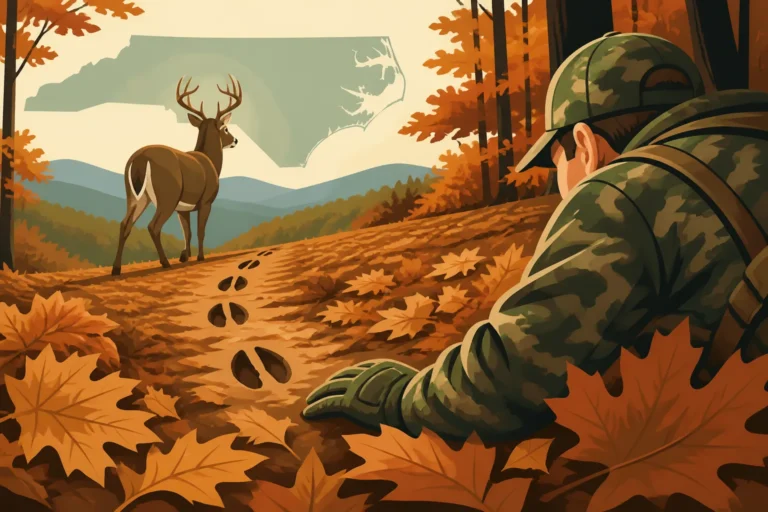
- Tracks: In Pisgah, finding clear tracks can be tough due to the rocky ground and thick leaf litter. Focus on muddy seeps, creek crossings, or softer soil along old logging roads. Pay attention to the size and direction of the tracks. Are they consistently moving along a certain contour? Are they deep, indicating a heavier deer? Fresh tracks near a potential stand location are golden. You might find tracks along a logging road leading to a potential Scrape Lines Along a Logging Road, for instance.
- Foraging Areas: Acorns, especially white oaks, are king in Pisgah. During the fall, finding areas with abundant mast, indicated by scattered caps or chewed nuts, is like striking gold. Deer will travel significant distances to feed on prime acorn crops. Observe where the deer are concentrating their feeding efforts, as this will heavily influence their travel patterns. If you're Hunting After a Poor Acorn Year, you might need to focus on different food sources like rhododendron thickets or natural browse. Deer droppings can also tell you what they’re eating and how recently they’ve been in an area.
Remember, the goal isn't just to find any sign, but to find consistent sign that indicates regular deer movement, particularly mature buck movement. Small, isolated rubs aren't as telling as a fresh rub line leading into a saddle or along a well-used bench. Take your time, walk slowly, and let the deer tell you where they're going. This pre-season Scouting North Carolina Public Land Before Season is invaluable.
Strategic Stand Placement on a Ridge
Once you've done your homework and found those promising spots, it's time to think about where exactly you're going to put that stand. This isn't just about finding a good tree; it's about putting yourself in the absolute best position, considering everything from deer travel to prevailing winds.
Funnels, Saddles, and Benches as Key Locations
These topographical features aren't just good for identifying deer movement; they're ideal for stand placement. When you're Reading a Ridge for Mountain Zone Deer, understanding how deer use these features is paramount.
- Saddles: If you’ve located a saddle, you've likely found a major travel corridor. The best stand placement in a saddle is typically on the downwind side of the prevailing wind, allowing you to catch deer as they come over or through the dip. However, mountain winds can be fickle. Consider placing your stand slightly off to the side, perhaps on a small bench or knoll overlooking the saddle, rather than directly in it. This gives you a better view and helps mitigate swirling winds. Aim to position your stand to cover the most likely travel routes through the saddle, often a distinct trail or two. For example, if you're trying to hunt Hunting the Rut in the Western Zone, a saddle could be a high-traffic area for cruising bucks.
- Benches: Hunting a bench can be incredibly effective, especially if it leads to a bedding area or a consistent food source. Position your stand to overlook the length of the bench, allowing you to see deer as they slowly work their way along it. Consider the terrain above and below the bench as well. Deer might drop down from higher ground onto the bench or climb up to it from below. A stand placed just off the edge of a bench, slightly above or below, can offer a better vantage point and keep you from being skylined.
- Ridge Points: Deer often circle these points rather than crossing directly over the top, especially if they are trying to stay out of sight or scent check downwind. Your stand should be placed to intercept deer moving around the point. Look for thick cover that might force deer into a narrower path. Setting up on the inside corner of a point can give you shots at deer traveling both directions.
When placing your stand, always think about the deer's perspective. Where are they coming from? Where are they going? What will their natural path be? Try to anticipate their movements and set up accordingly. This might mean having two or three stand locations to cover different wind directions or travel patterns.
Wind Direction and Thermal Currents
This is perhaps the single most critical factor when hunting in the mountains, and often the most frustrating. Unlike flat ground where a steady wind is predictable, Pisgah’s steep slopes create complex air currents known as thermals. Understanding Wind and Thermals on a Blue Ridge Slope is vital.
- Morning Thermals: As the sun rises and warms the mountain slopes, the air begins to rise. This creates an upward thermal current. So, in the morning, your scent will be carried up the mountain. This means if you're hunting a saddle or bench low on a ridge, your scent will be carried over the ridge crest. To counteract this, consider positioning your stand higher up, or on a cross-wind side, allowing your scent to rise harmlessly above the deer's likely travel path.
- Evening Thermals: As the sun sets and the air cools, the air density increases, causing it to flow down the mountain. This means your evening hunt scent will be carried downhill. For an evening hunt, setting your stand higher on the ridge, or on the downwind side of the ridge, can allow your scent to flow away from the deer moving up from bedding areas or feeding in draws.
- Mid-day and Swirling Winds: Between the rising and falling thermals, especially during mid-day or on cloudy, still days, winds can become incredibly unpredictable and swirl. This is when a strategic stand placement, perhaps slightly off the direct line of a saddle or bench, can give you a buffer zone. Always keep a wind checker handy, like a small bottle of powder or milkweed seeds, to constantly monitor the slightest air movement. Sometimes, the only way to beat a swirling wind is to adjust your hunt location or even sit it out until conditions improve. GoHunt's mapping often includes wind direction tools that can help predict these complex patterns.
Always check the forecast not just for wind direction, but for temperature changes that will influence thermal shifts. Plan your entry and exit routes carefully to avoid blowing your scent into areas you intend to hunt later.
Practical Aspects of Hanging a Stand
Now for the physical work. Hanging a stand on a steep Pisgah ridge is no small feat. Safety, stealth, and efficiency are your watchwords.
Choosing the Right Tree and Entry/Exit Routes
Selecting the perfect tree for your stand is more than just finding one that's sturdy.
- Tree Selection: Look for a healthy, straight tree with good cover around it – ideally a cluster of pines, thick rhododendron, or a mature hardwood with dense branches. You want to blend in, not stick out like a sore thumb. Avoid isolated trees or those that are dead or dying. Consider the tree's bark texture if you're using climbing sticks; rougher bark can provide better grip. Also, think about the future; will this tree provide good cover throughout the entire season as leaves fall?
- Concealment and Backdrop: The best tree offers a busy backdrop that breaks up your outline. Don't set up against a clear sky unless absolutely necessary. Evergreen trees like pines or cedars can offer excellent year-round cover. If using a hardwood, ensure there are enough branches to camouflage your silhouette.
- Entry and Exit Routes: This is often overlooked but is paramount in public land hunting, especially in Pisgah where deer are pressured. You need a route to your stand that keeps you undetected and your scent out of the hunting area. This might mean taking a longer, winding path, using draws or creek beds, or hiking in well before daylight. Ideally, your route should utilize the terrain to mask your approach and keep the wind in your favor. For example, if you are Hanging a Stand on a Pisgah Ridge and planning to hunt an evening thermal that drops downhill, your entry should be from above, keeping your scent from flowing into your hunting area prematurely. Similarly, your exit should be quiet and also mindful of where your scent might go.
Think about how you'll get in and out of your stand with minimal disturbance. This might mean packing lighter, wearing quiet clothing, and practicing your approach. Sometimes, the best stand location is one you can get to and from without alerting every deer in the county.
Stand Safety and Gear Considerations
Hunting from a treestand, especially in rugged terrain, comes with inherent risks. Safety is paramount.
- Full-Body Harness: This is non-negotiable. Always wear a full-body harness and be connected to the tree from the moment your feet leave the ground until they touch it again. Use a lineman's belt when climbing and installing sticks, and a lifeline for when you're in the stand. Never cut corners on safety, especially when you're deep in Pisgah.
- Climbing Sticks or Ladder Sections: For reaching height on larger trees or those with low branches, Climbing Sticks for North Carolina Hardwoods are essential. Ensure they are securely fastened and rated for your weight. Practice using them at ground level before you're trying to hang them on a steep slope in the dark. If you're using a hang-on stand, make sure it's properly attached and stable.
- Pack and Haul System: You’ll be carrying your stand, sticks, and gear up steep terrain. A comfortable pack that distributes weight evenly is crucial. Many hunters use a rope system to haul up their bow or firearm once they are safely in the stand. This keeps your hands free for climbing and reduces the risk of accidental discharge or dropping your weapon.
- Comfort and Warmth: Mountain hunting can be brutally cold, especially on an all-day sit. Layering your clothing is key. Invest in good insulated boots and hand warmers. You might be sitting still for hours, and discomfort can lead to distraction or cutting your hunt short. For a detailed discussion on Clothing for a North Carolina Late Season, look for specific advice on cold-weather layering.
- Emergency Gear: Always carry a small first-aid kit, a whistle, a charged cell phone (though service is spotty in Pisgah), and a headlamp for walking out after dark. Let someone know where you're going and when you expect to return. Being prepared for the unexpected is part of being a responsible hunter, especially in remote public land like Pisgah. A quality GPS unit or a reliable app like GoHunt on your phone with downloaded offline maps can literally be a lifesaver for navigating out of dense timber.
Hunting the Stand: Tactics and Patience
So, your stand is hung, your gear is ready, and you've accounted for the wind. Now comes the moment of truth: the hunt itself. Simply being in a stand isn't enough; you need tactics and unwavering patience.
Timing Your Hunts
When you choose to be in your Pisgah stand can make all the difference. Deer movement in the mountains is often subtle and dictated by different factors than in other regions.
- Early Mornings: Getting into your stand well before daylight is crucial. Deer are often on the move during the first hour or two of light, either heading back to bed after a night of feeding or searching for a quick bite. Being settled and quiet as the woods come alive increases your chances of encountering them. This is also when thermals are transitioning, so be extra mindful of your scent.
- Late Evenings: The last hour or two of daylight can be incredibly productive, especially if your stand overlooks a known feeding area or a travel corridor leading to one. Deer will begin moving from their bedding areas towards food as dusk approaches. Again, thermals will be dropping, so positioning yourself to have your scent flow away from likely deer routes is critical.
- During the Rut: The few weeks of the Hunting the Rut in the Western Zone are often the most exciting. Bucks are on the prowl, cruising for does, and their movements become less predictable and more wide-ranging. This is when those saddles and benches really shine, as bucks will often use them to cover ground efficiently while scent-checking. All-day sits can be productive during the peak of the rut, as bucks might be moving at any time.
- After a Cold Front: A sharp drop in temperature can invigorate deer, prompting increased movement as they seek to feed more actively. A cold, crisp morning after a front can be an excellent time to be in your stand. Deer will also often move before or after a rain event, so don't let a little drizzle deter you. For more insights on Hunting Deer After a Cold Front, consider how deer behavior changes with the weather.
Patience is your best friend. Deer in Pisgah often move slowly and cautiously. They might take their time working a ridge, browsing as they go. Don't expect to see a parade of deer; rather, be ready for that one opportune moment.
Calling and Scent Control on Mountain Ridges
These two elements are vital for any deer hunter, but they take on a unique importance in the vastness of Pisgah.
- Calling: Light, subtle calling can be effective in the mountains, especially during the rut. Grunts, bleats, and soft rattling can pique a deer's curiosity without overdoing it. Remember, sound travels far in the open woods of a ridge, so start soft and increase volume only if needed. Sometimes, a simple doe bleat can stop a moving deer just long enough for a shot. For a deeper dive into Rattling and Grunting in North Carolina, learn the nuances of mountain calling.
- Scent Control: Given the unpredictable winds and thermals, rigorous scent control is paramount. This goes beyond just spraying down with scent eliminator. It starts with showering with scent-free soap, washing your hunting clothes in scent-free detergent, and storing them in an airtight container or bag. Consider wearing rubber boots to minimize ground scent. Always try to hunt with the wind in your favor, but understand that in the mountains, this isn't always possible. If you anticipate swirling winds, try to pick a stand location that offers multiple shooting lanes and a quick exit strategy if your scent gets busted. Even with the best scent control, a deer downwind will likely detect you, so stack the odds in your favor by constantly monitoring the wind and making smart placement choices.
Remember, every ridge, every saddle, and every bench in Pisgah has its own personality. The more time you spend in the woods, the more you'll learn to read the subtle clues the deer leave behind and the nuances of the mountain winds. Hanging a stand on a Pisgah ridge is an investment in time and effort, but when that hard work pays off, there’s nothing quite like it.
Pisgah Ridge Stand Placement Summary Table
Here's a quick reference for optimal stand placement strategies on Pisgah's unique terrain features:
| Terrain Feature | Deer Movement Pattern | Ideal Stand Placement Considerations | Wind/Thermal Strategy | Key Benefits |
|---|---|---|---|---|
| Saddle | Major travel corridor, buck cruising during rut. | Slightly off to the side, overlooking likely trails, 20-25 ft height. | Downwind of prevailing, mindful of rising/falling thermals. | Intercepts deer using path of least resistance. |
| Bench | Travel corridor, feeding, bedding. | Overlooking length of bench, often 15-20 ft height. | Position to catch deer moving parallel; thermals can carry scent up/down. | Catches deer moving slower, browsing. |
| Ridge Point | Deer often circle the point, especially with cover. | Inside corner, where movement is funneled, 15-20 ft height. | Downwind of likely travel, scent blowing away from point. | Intercepts deer forced into narrower path around point. |
| Draw/Drainage | Deer move up/down to feed/bed/water. | Above the main trail, allowing scent to rise or fall away. | Position for rising morning thermals or falling evening thermals. | Catches deer transitioning between higher and lower ground. |
Disclaimer
Hunting is an inherently dangerous activity. Always prioritize safety, understand and follow all North Carolina Wildlife Resources Commission regulations, and obtain proper licenses and permits before heading into the field. This guide provides general information and recommendations; specific conditions and individual skill levels may vary.