Predator Calling North Carolina Pine Plantations
Hunting North Carolina's vast pine plantations for predators can feel like looking for a needle in a haystack, especially when those pines are thick enough to swallow a tractor. The sheer density of these areas often leaves hunters feeling frustrated, wondering how they're ever going to spot a coyote or fox, let alone get a shot off, in such claustrophobic conditions. This guide is dedicated to cutting through that frustration, offering a comprehensive look at how to effectively call and hunt predators within North Carolina's unique pine plantation landscapes, turning those dense thickets into productive hunting grounds.
Understanding Pine Plantations as Predator Habitat
Pine plantations across North Carolina aren't just rows of trees; they're dynamic ecosystems that offer incredibly diverse habitat for predators like coyotes and foxes. Understanding the different stages of these plantations and the specific features they offer is the first step toward effective calling. These aren't your grandfather's open hardwoods, and approaching them with a different mindset is crucial.
The Life Cycle of a Pine Plantation and Its Predator Appeal
From freshly clear-cut land to towering mature pines, each phase of a plantation's growth offers distinct advantages for coyotes and foxes. It’s a constantly changing buffet and hiding spot for them.
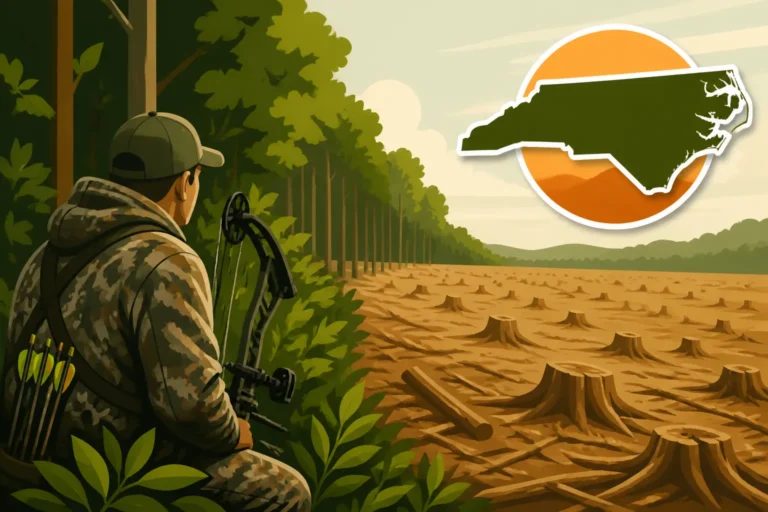
When a section of pines is first clear-cut, it might look desolate, but it quickly becomes a haven. Sunlight hits the forest floor for the first time in years, igniting a flush of new growth – briars, saplings, and weeds. This dense, low-level vegetation provides incredible cover for rabbits, voles, and mice, which are primary food sources for predators. Coyotes and foxes will patrol the edges of these clear-cuts, often using the thicker adjacent timber as bedding areas or escape routes. A few years later, as the planted pines begin to grow tall enough to shade out some of the understory but are still too small to be thinned, they create an impenetrable tangle of waist-high to head-high cover. This mid-stage growth is arguably the most challenging for hunters due to limited visibility but offers ultimate security for predators, making them feel incredibly safe. They can move silently and unseen through these areas, ambushing prey or evading detection with ease.
As the pines mature and are typically thinned one or more times, the canopy closes overhead, and the ground beneath becomes more open. While this might seem less appealing for small prey, these mature stands still offer excellent thermal cover in winter and shade in summer. The thinning process also leaves behind logging roads and skid trails, creating open travel corridors for predators. More importantly, these older stands often border natural hardwoods or agricultural fields, forming critical transition zones where deer, turkeys, and other game species move, providing ample hunting opportunities for coyotes and foxes. Understanding which stage a particular stand is in will help you predict predator behavior and choose your calling strategy.
Key Terrain Features and Sign to Look For
Navigating a pine plantation effectively requires you to identify the subtle nuances that predators rely on. It’s not just a sea of trees; it's a network of hidden highways and feeding zones.
Logging roads and fire breaks are perhaps the most obvious and critical features. These open lanes act as superhighways for coyotes and foxes, allowing them to travel quickly and efficiently through otherwise dense timber. Predators will often use these paths to scent-check for prey, mark territory, and move between bedding and feeding areas. Setting up your call near a junction or bend in one of these roads can be highly effective. Creek bottoms, even if dry, also serve as natural travel corridors, often featuring slightly different vegetation (hardwoods, thicker undergrowth) that provides additional food sources or cooler bedding areas. These natural funnels concentrate animal movement, making them prime locations for a stand. Look for where these creek bottoms intersect or run parallel to pine stands.
Beyond these linear features, pay close attention to any breaks in the uniform pine cover. These might be small hardwood inclusions, a section of mixed timber, or even just a subtle change in elevation. These "edges" are where two habitat types meet, and they are always hotspots for wildlife activity. When scouting, keep an eye out for fresh tracks, especially after a rain or light snow. Coyote and fox scat along logging roads or at trail intersections are also clear indicators of their presence. You might even find kill sites – a scattering of feathers or tufts of fur – which confirm that predators are actively hunting in the area. Utilizing mapping tools, like those available on the GoHunt platform, can be incredibly helpful for identifying these terrain features before you even step foot in the woods, giving you a serious advantage.
Predator Behavior in Pine Plantation Environments
Understanding how coyotes and foxes use these specific habitats is paramount to predicting their movements and getting them into your kill zone. They aren't just wandering aimlessly.
In the dense, younger pine plantations, coyotes and foxes often exhibit more cautious behavior. The limited visibility means they rely heavily on their sense of smell and hearing. They might circle downwind extensively before committing to a call, trying to pinpoint the source without exposing themselves. They’ll use every bit of available cover to their advantage, moving silently through the thick undergrowth, making them incredibly difficult to spot until they are very close. This behavior necessitates careful stand placement and an understanding of wind currents, as they will almost certainly try to get your scent. For more general insights into how these animals operate, consider reading our comprehensive guide on Predator Hunting in North Carolina.
Conversely, in more mature, thinned pine stands where the understory is sparser, predators might be a bit bolder in their approach. They still use cover, but the increased visibility allows them to assess a situation from a greater distance. Here, you might see them respond more directly to calls, especially if they believe they are investigating another predator or an easy meal. During the breeding season (typically late winter into spring), coyotes become very territorial and are often more responsive to howls and barks, seeing any intrusion as a challenge. Foxes, on the other hand, are often solitary hunters and may respond more readily to distress calls year-round, especially when food sources are abundant due to small game thriving in the dense undergrowth. Understanding these subtle behavioral differences, and adapting your calling and setup accordingly, is key to success in the varying stages of pine plantations.
Essential Gear for Calling Pine Plantations
Calling predators in North Carolina's pine plantations demands specific gear choices. The dense cover, often limited visibility, and the quick, close-range encounters common in these environments mean your setup needs to be optimized for efficiency and stealth. Don't just grab your deer rifle and hope for the best; thoughtful gear selection makes a huge difference.
Firearm and Caliber Selection for Dense Cover
Choosing the right firearm and caliber is paramount when hunting in the tight confines of a pine plantation, where shots are typically close and fast. You need something that’s quick to shoulder and accurate.
For most North Carolina predator hunters in pine plantations, a fast-handling rifle in a flat-shooting, small-caliber cartridge is the go-to. The .223 Remington is a perennial favorite, offering a great balance of minimal recoil, excellent accuracy, and readily available, affordable ammunition. It’s more than enough for coyotes and foxes, even at close ranges. Other excellent choices include the .22-250 Remington or the .204 Ruger, both known for their blistering velocities and flat trajectories, which are beneficial for quick target acquisition. An AR-platform rifle can be particularly effective in these environments due to its maneuverability, adjustable stock, and high capacity if follow-up shots are needed. The pistol grip and ability to mount accessories easily also lend themselves well to quick, fluid movements.
Bolt-action rifles are also perfectly suitable, especially if equipped with a shorter barrel (e.g., 18-20 inches) for easier maneuvering through thick brush. The key is to prioritize a rifle that you can swing quickly and get on target without snagging on every branch. While shotguns loaded with buckshot or predator-specific loads (like TSS) can be incredibly effective at very close range, especially for wary foxes or coyotes that hang up in the thick stuff, the limited range can be a disadvantage in more open sections of a plantation. For more general information on suitable firearms, check out our guide on North Carolina Legal Firearms for Deer Hunting – many of those principles apply here, too, especially regarding handling and accuracy.
Optics for Close-Quarters and Low Light
The challenging light conditions and close-range encounters in pine plantations make proper optics a non-negotiable part of your gear list. You need to see them before they see you, and often in dim light.
When it comes to rifle scopes, a low-magnification variable scope is ideal. Something in the 1-4x, 2-7x, or 3-9x range offers the versatility you need. At 1x or 2x, you get a wide field of view, making it easy to track a fast-moving coyote or acquire a target that appears suddenly at 20 yards. You can then crank up the magnification a bit if a coyote hangs up at 100 yards in a firebreak. Look for scopes with good light-gathering capabilities, especially those with illuminated reticles, which can make a huge difference during those crucial twilight hours or in the deep shadows of thick pines. Brands like Leupold, Vortex, and Bushnell offer excellent options in this category.
Beyond the rifle scope, a good pair of binoculars is indispensable for scanning the edges of clear-cuts, the shadows under mature pines, and for spotting incoming predators before they get too close. An 8×42 or 10×42 binocular provides a good balance of magnification and field of view, allowing you to pick apart the cover without being overly shaky. They also help you quickly confirm whether that patch of brown is a stump or a coyote trying to sneak in. Consider a binocular harness to keep them secure and readily accessible, preventing them from swinging around as you move. For insights into other optical needs, you might find our article on Rifle Scopes for Low-Light Mountain Coves helpful, as low-light performance is often critical even outside the mountains.
Calling Devices and Decoys for Pine Plantations
Having the right tools to simulate distress or territorial sounds is at the core of predator calling, and in pine plantations, the choice of device can significantly impact your success.
Electronic callers are often the king in these dense environments. Their ability to project realistic sounds at high volume, combined with remote control operation, is a game-changer. You can place the caller 30-50 yards away from your setup, drawing the predator's attention away from your position. This allows you to position yourself for a better shot while the coyote or fox is focused on the sound. Look for models from companies like Foxpro, Primos, or ICOtec, which offer a wide array of realistic sounds – rabbit distress, fawn distress, pup distress, and various howls. Some advanced models even feature sequencing capabilities, allowing you to program a series of calls for hands-free operation.
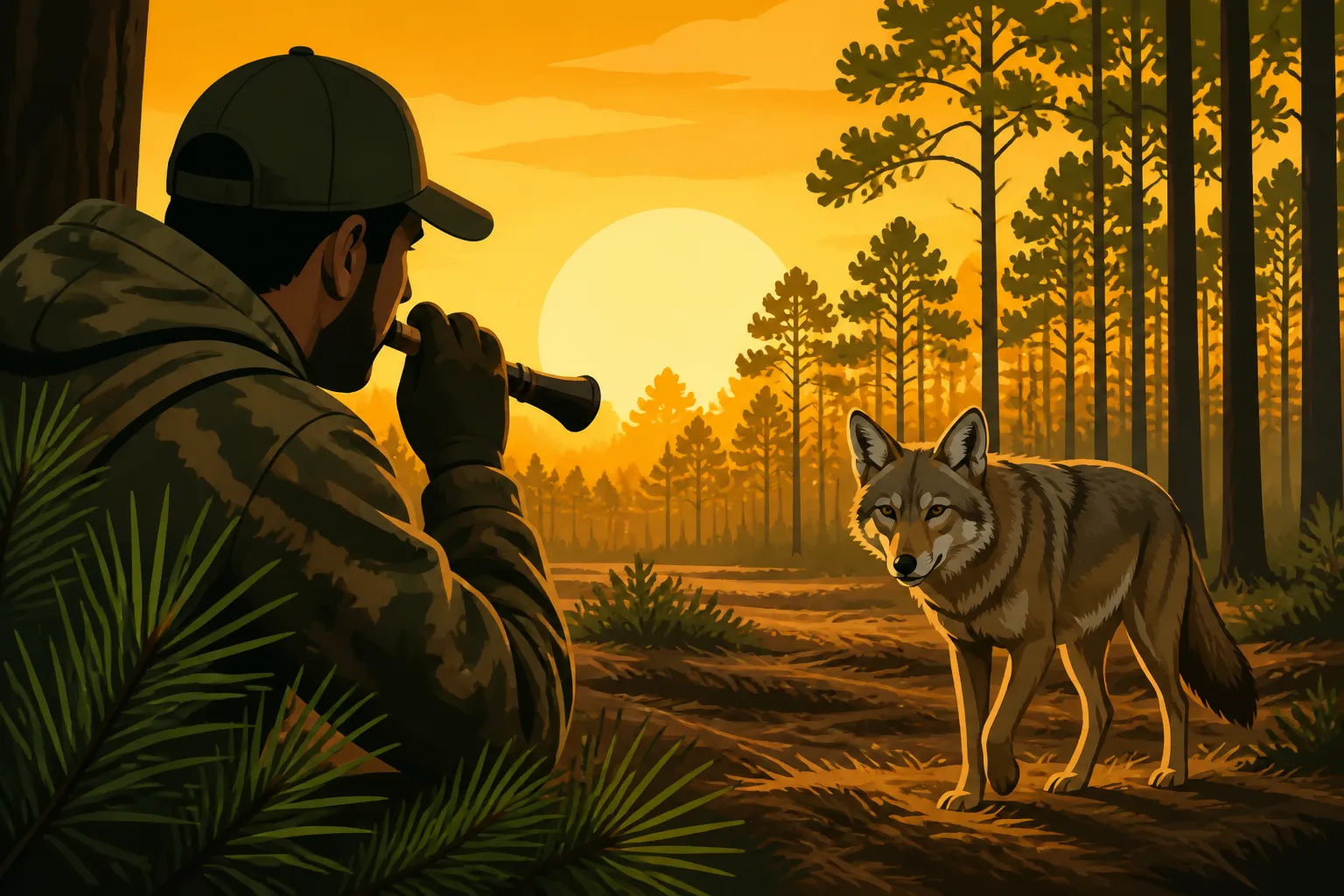
Don't overlook the power of mouth calls. Hand calls (open reed, closed reed) and diaphragm calls offer incredible versatility and realism, allowing you to instantly change sounds, volume, and cadence based on predator response. They also provide a silent, battery-free backup. For visual attraction, a motion decoy can be highly effective, especially with an electronic caller. A simple spinning-tail decoy or a small rabbit-mimicking decoy placed near the e-caller can provide that visual cue that often convinces a wary predator to commit. The movement distracts the animal, drawing its eyes away from your position and often buying you precious seconds for a shot. When you're researching new gear or looking for user reviews, platforms like GoHunt can be invaluable resources for comparing different callers and decoys, helping you make an informed decision for your North Carolina hunts.
Mastering Calling Techniques in Dense Pines
Calling predators in a thick North Carolina pine plantation isn't like calling across open prairie. You're dealing with limited visibility, acoustic challenges, and animals that prioritize stealth. Therefore, your calling techniques need to be precise, adaptable, and executed with an understanding of the environment.
Effective Call Sequences for Coyotes and Foxes
The sounds you choose and how you deliver them can mean the difference between drawing in a curious predator and scaring it away. Tailoring your sequence to the situation is key.
For general situations, especially when you're uncertain of predator presence, starting with a series of soft, inquisitive howls can be a good locator call. This might be a lone howl or a greeting howl, gauging any response from nearby coyotes. Once you've established their presence, or if you're confident they're in the area, switching to a distress call is often the most effective. Rabbit distress calls are universally recognized and work year-round. Start with moderate volume, increasing intensity every 30-60 seconds. Imagine a rabbit truly in terror – intermittent screams, then pauses, then screams again. Mimicking a young fawn in distress is another incredibly potent call, particularly during late spring, summer, and early fall when fawns are present. This call often triggers a strong predatory response from coyotes looking for an easy meal.
For foxes, and sometimes for coyotes in thick cover, pup distress calls (coyote or fox) can be highly effective. The sound of a young, vulnerable animal can evoke a protective or territorial response from adults. Consider varying your sequence with a few short, sharp barks, especially if you think a coyote is hanging up or needs a little extra coaxing to commit. The key is realism and varying the pace and volume. You don't want to blast the call at maximum volume right out of the gate in a dense area, as it can sound unnatural and overwhelm the animal. Start softer and build. Remember, it's a performance, not just pushing a button.
Adapting to Different Scenarios and Wind Conditions
North Carolina's variable weather and diverse pine plantation stages demand flexibility in your calling approach. What works in one stand on a calm morning might fail miserably in another on a windy afternoon.
Wind is perhaps the most critical factor. In a pine plantation, even a light breeze can swirl unpredictably within the dense rows of trees. Always set up with the wind in your face or quartering. Predators will circle downwind to get your scent. If the wind is gusty, you might need to increase your call volume slightly to ensure the sound penetrates the cover, but be mindful not to overdo it. On calm days, a softer approach with less aggressive calling can be more effective, as sounds carry further and are less likely to spook wary animals. Pay attention to how the sound travels; dense pines can deaden calls, requiring higher volumes than you might use in open country.
Consider the time of day and year. Early morning and late afternoon are generally prime calling times, but in thick pine cover, predators might move more during midday because they feel secure. During the rut (breeding season), howls and challenge barks become more effective for coyotes, as they are actively seeking mates and defending territory. During pup-rearing season (spring/early summer), pup distress calls can draw in protective adults. If you're hunting recently thinned stands with more open understory, you might get away with slightly longer pauses between call sequences, allowing animals to travel further. Conversely, in ultra-dense, unthinned pines, shorter, more frequent bursts of calling can be more effective, as visibility is so limited that you need to grab their attention quickly. This constant adaptation is what makes successful predator calling such an art.
Reading Predator Response and Adjusting Your Strategy
The moment a predator responds, whether visually or audibly, is when the real hunt begins. Your ability to interpret their behavior and adjust your calling is crucial for sealing the deal.
When a coyote or fox appears, even briefly, pay close attention to its body language. Is it trotting confidently, or sneaking slowly, head low? Is it looking directly at your decoy or scanning for the source of the sound? If it appears to be committed and coming directly in, you might reduce your calling volume or even go silent, letting the visual decoy do the work. Over-calling a committed animal can sometimes make them wary or convince them something is amiss. However, if a predator hangs up at a distance, perhaps standing at the edge of a firebreak, or starts to circle downwind, that's your cue to adjust. A few soft, inquisitive howls might pique its curiosity, or a subtle change in the distress call’s cadence can sometimes be enough to draw it closer.
If a coyote starts to circle hard downwind, it's often a sign that it's wary and trying to get your scent. At this point, a sharp bark or a quick burst of a more aggressive call might stop it in its tracks, giving you a shot opportunity. For more elusive animals, a pup distress call can sometimes override their caution, as the maternal or protective instinct kicks in. The trick is to maintain patience and be ready to shoot. Don't stare at your phone's GoHunt app, analyzing maps; keep your eyes glued to the cover. If a predator has responded but you lose sight of it, maintain your calling sequence for a few more minutes, then consider a "cold" wait of 10-15 minutes before moving. They might be trying to circle you or approach from an unexpected angle. Learning to read these subtle cues is a skill that only comes with practice and keen observation.
Strategic Setups for Pine Plantation Success
The best calling in the world won't matter if your setup isn't right. In pine plantations, where cover is king and visibility is often limited, strategic positioning is everything. You need to maximize your visibility, minimize your footprint, and control for the wind.
Approaching and Selecting a Stand Location
Your approach to the stand can be just as critical as the stand itself. Every snap of a twig or flash of movement can tip off a keen-sensed predator.
When approaching your chosen calling location, stealth is paramount. Move slowly, deliberately, and quietly, keeping the wind in your favor. Avoid walking through open areas if possible; instead, hug the edge of the pines or use existing logging roads until you are close to your setup. Once you're within sight of your intended stand, slow down even further, scanning for any animals that might already be in the area. A good strategy is to use mapping tools, which many hunters find indispensable, including the features available on platforms like GoHunt, to pre-plan your entry and exit routes, ensuring you approach from a downwind or crosswind direction. This minimizes the chance of blowing your scent into the area before you even set up.
When selecting the actual spot for your stand, look for locations that offer a balance of concealment and visibility. This might seem contradictory in thick pines, but it's crucial. An ideal spot might be where two logging roads intersect, providing multiple lanes of sight. Another excellent choice is the edge of a clear-cut or a transition zone between young and mature pines, where you can see into the denser cover as well as more open areas. A slight rise in elevation can give you a better vantage point over the undulating terrain and low-growing vegetation. Always prioritize having a clear shooting lane or two in the direction you expect the predator to approach. Sometimes, a strategically placed tree or a pile of logging debris can serve as a perfect backrest and provide natural camouflage.
Concealment and Maximizing Your View
The dense nature of pine plantations often means close encounters. Excellent concealment isn't just about hiding; it's about blending in so completely that a predator looks right past you.
Once you’ve chosen your spot, immediate attention should turn to making yourself disappear. Utilize any natural cover available – the base of a large pine, a dense clump of palmettos, or a pile of downed logs left from a logging operation. The goal is to break up your outline and blend into the surroundings. If possible, sitting with your back to a thicket or against a large tree helps prevent you from being silhouetted. Sometimes, especially in younger, more open pine stands, a portable ground blind can be incredibly effective. It provides excellent concealment, cuts down on your profile, and helps contain movement. For tips on effective blind use, refer to our article on Using a Ground Blind on North Carolina Public Land.
While concealment is vital, you also need to ensure you have a clear, unobstructed view of the kill zone and your anticipated approach lanes. This often means carefully trimming a few small branches or clearing some undergrowth before you start calling. Identify your primary shooting lanes and make sure you can swing your rifle without interference. Remember, predators in pine plantations often appear silently and quickly, so having a clear sightline is paramount. Don’t get so focused on hiding that you can’t get a shot off. It's a fine balance, and sometimes sacrificing a tiny bit of concealment for a better view is the smarter move.
Decoy Placement and Scent Control
Decoys and diligent scent control work hand-in-hand to manipulate a predator's senses, drawing their attention away from you and preventing them from pinpointing your location by smell.
When using a motion decoy, placement is critical. It should be positioned far enough from your actual hiding spot (20-40 yards is often ideal) to draw the predator’s focus away from you, but close enough for them to clearly see and be drawn to it. Place it in an area with good visibility – perhaps at the edge of a firebreak, in a small clearing, or on a slight rise. The decoy should simulate distress or vulnerability, like a flapping bird or a twitching rabbit, to grab the predator's visual attention. Ensure your electronic caller is placed near the decoy to further cement the illusion. If you’re hunting in a very dense area, you might need to adjust these distances to ensure the decoy is still visible.
Scent control is absolutely non-negotiable in any predator hunting scenario, but it becomes even more critical in the still, often humid air of North Carolina's pine plantations. Coyotes and foxes have an incredible sense of smell, and they will try to get downwind of your call. Employ a multi-faceted approach: wash your hunting clothes in scent-free detergent, shower with scent-free soap, use scent-eliminating sprays on your clothes and gear, and store your hunting clothes in airtight containers. If you use a ground blind, spray it down thoroughly. While no method completely eliminates human odor, minimizing it as much as possible, combined with setting up strictly downwind of your expected approach, gives you the best chance. Remember, even a slight shift in wind can betray your position, so always remain vigilant.
Overcoming Challenges and Advanced Tactics
Hunting predators in North Carolina's pine plantations presents unique challenges that require creative solutions. The thick cover, combined with sometimes high hunting pressure, means you need to go beyond basic calling techniques.
Navigating Thick Cover and Limited Visibility
The dense nature of pine plantations is a double-edged sword: it offers excellent cover for predators, but also significantly limits your visibility, making detection and shot placement tricky.
In areas of extremely dense, unthinned young pines, your calling strategy needs to adapt. Instead of long, drawn-out sequences, try shorter, more intense bursts of calling, followed by longer silent periods (up to 5-10 minutes). The idea is to grab a predator's attention quickly and then allow them to work their way through the thick stuff, assuming the "prey" is injured and unable to move. Since visibility is so limited, shots will likely be close – often within 50 yards or even closer. This makes an accurate, fast-handling firearm even more critical. You might consider using a shotgun with tight-patterning buckshot or specialized predator loads in these ultra-thick areas, as it offers a wider pattern at close range.
Another effective tactic in dense cover is to make more frequent stands. Instead of sitting for 30-45 minutes in one spot, try calling for 15-20 minutes, then silently moving 200-300 yards to a new stand. This "run-and-gun" approach covers more ground and increases your chances of encountering an animal that might not have heard your first stand or was simply out of range. Focus on hunting the edges of these thickets, where they meet logging roads, clear-cuts, or slightly more open timber. Predators will often use these transitions, providing you with a better chance for a clean shot. The key is patience, discipline, and understanding that you might only get a fleeting glimpse of your target.
Hunting Pressured Predators in North Carolina
North Carolina has a growing population of predator hunters, which means many coyotes and foxes, especially on public land or heavily hunted private tracts, have heard calls before. These "call-shy" animals require a different approach.
When dealing with pressured predators, aggressive, high-volume calling often backfires. Instead, opt for softer, more subtle calls. Instead of blasting a rabbit distress, try a whimpering pup distress or a soft mouse squeak. These less threatening sounds can often pique the curiosity of wary animals without immediately putting them on high alert. Lengthen your silent periods between call sequences; instead of 30-second pauses, try 2-3 minutes. This gives the predator more time to investigate cautiously, building confidence rather than suspicion. Patience becomes an even greater virtue here; be prepared to sit for an hour or more on a stand if you suspect pressured animals are in the area.
Another tactic for pressured predators is to hunt overlooked areas. This might mean walking further off the main logging roads, delving into parts of a pine plantation that other hunters shy away from due to density or difficulty of access. These areas often hold older, wiser animals that have learned to avoid the easier-to-access spots. Hunting during odd hours, such as midday, or even experimenting with night hunting where regulations allow and it's legal for predators, can also yield results on pressured animals. For a broader understanding of how hunting pressure impacts game and strategies to counteract it, you might find our article on Hunting Pressure on North Carolina Public Land beneficial.
Integrating Other Predator Management Strategies
Calling is a powerful tool, but it's not the only one. For comprehensive predator management, especially on private land, integrating other strategies can significantly increase your effectiveness.
Trapping is an incredibly efficient method for reducing predator populations and can be highly effective in pine plantations. Foothold traps and snares, set legally and ethically, can remove multiple animals, particularly those that are call-shy or primarily nocturnal. Trapping can also target specific individuals that are causing issues with livestock or game populations. It requires a different skill set, knowledge of regulations, and commitment, but the results can be substantial. If you're interested in learning more, our guide on Running a Trapline in Rural North Carolina offers a deeper dive into this important aspect of predator control.
For severe depredation issues or high populations, especially of feral hogs which are also predators, night hunting can be an option on private land where legal. Thermal and night vision optics have revolutionized this approach, allowing hunters to detect and target animals in complete darkness. While the regulations for night hunting vary and often differ for coyotes versus other species, this can be a highly effective way to target animals that are primarily active after dark or have become completely nocturnal due to hunting pressure. Remember to always check the latest North Carolina regulations from the NC Wildlife Resources Commission before engaging in any night hunting activities. For a related approach, you might look at Night Hunting Hogs With Lights on Private Land. Combining calling with these other methods creates a multi-pronged approach that can yield far greater results in managing predator populations across North Carolina's diverse landscapes.
| Call Type | Primary Target | Optimal Use Scenario | Typical Response Time (Pine Plantations) | Notes |
|---|---|---|---|---|
| Rabbit Distress | Coyote, Fox | All seasons, general purpose | 2-10 minutes | Most reliable, universally recognized distress sound. |
| Fawn Distress | Coyote | Late Spring to Early Fall | 3-15 minutes | Highly effective, mimics vulnerable prey. Use with caution during deer season. |
| Pup Distress | Coyote, Fox | Spring, Summer | 5-20 minutes | Can draw protective adults or curious juveniles. |
| Howls (Lone/Group) | Coyote | Locating, territorial | 5-30 minutes | Use to take inventory or challenge dominant coyotes. |
| Vixen Distress | Fox | All seasons, breeding season | 2-10 minutes | Specific to red and gray foxes, particularly effective in breeding season. |
| Mouse Squeak | Fox, Young Coy | Close range, wary animals | 1-5 minutes | Soft, subtle call for close-in work or when visual confirmation is needed. |
Disclaimer
Please be aware that hunting regulations, seasons, and licensing requirements in North Carolina can change. Always consult the latest rules and regulations published by the North Carolina Wildlife Resources Commission (NCWRC) before planning any hunting trip. The information provided in this guide is for informational purposes only and should not be considered legal advice. It is your responsibility to understand and adhere to all applicable laws.