Coyote Calling in North Carolina Farm Country
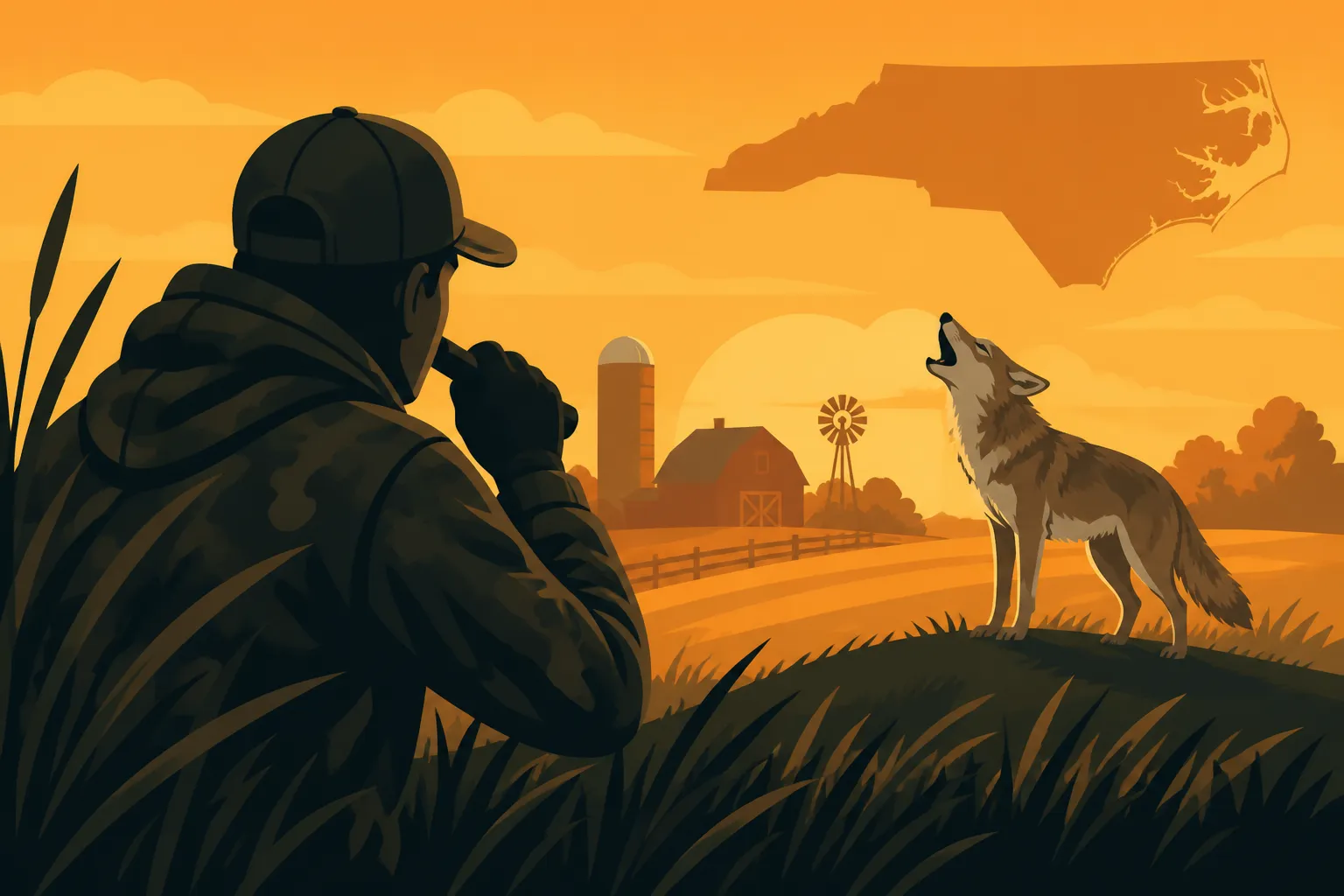
The distinct bark and howl of a coyote carrying across the fields and woodlots of North Carolina farm country is a sound many landowners and deer hunters know all too well. These adaptable predators can be a real nuisance, preying on livestock, small game, and even having an impact on deer fawn survival. If you're looking to gain an edge and manage these wily canines on your property or local hunting grounds, understanding the art of coyote calling in North Carolina farm country is absolutely essential. This guide will walk you through the strategies, gear, and tactics to help you become a more effective coyote hunter.
Understanding Coyote Behavior in Farm Country
Before you can successfully call in a coyote, you need to understand what makes them tick in our unique North Carolina agricultural landscapes. They’re not just random wanderers; they have routines, preferred habitats, and specific ways they interact with their environment and each other.
Diet and Prey Preference
Coyotes in North Carolina farm country are opportunistic eaters, but they definitely have their favorites, and it often revolves around what's easiest to catch and most abundant. Their diet is incredibly varied, ranging from small rodents like voles, mice, and rabbits to larger prey like deer fawns and even adult deer, especially those weakened by disease or injury. You'll also find them scavenging on carrion, which is why a road-killed deer can often draw them in. They'll also happily feast on insects, fruits, and berries when available, especially during lean times. This broad palate is what makes them so successful, but it also gives us clues about what kind of calls might pique their interest. Knowing their preferred menu items means you can mimic those distressed creatures and draw them into range. For instance, a rabbit-in-distress call is almost universally effective because rabbits are a staple prey item for coyotes across the state, from the mountains to the coast.
Beyond natural prey, coyotes aren't shy about targeting livestock. Farmers in eastern North Carolina's Sampson County, for example, often report losses of young calves or lambs to coyotes, a frustration that drives many to seek predator control. Even domestic cats and small dogs can become targets, especially if left unsupervised near known coyote haunts. Understanding these dietary habits helps you anticipate why a coyote might respond to a certain call – they're not just curious; they're often looking for an easy meal or defending a territory from perceived intruders.
Habitat Use and Travel Corridors
Coyotes thrive in the mosaic of habitats found in North Carolina's farm country. They love the edges where agricultural fields meet dense timber, brushy fencerows, or creek bottoms. These transition zones offer them everything they need: cover for bedding and raising pups, open areas for hunting, and reliable travel routes. A thick fencerow bordering a cornfield offers superb concealment and a highway for coyotes moving between feeding areas and bedding cover. Creek bottoms, even small ones, provide reliable water sources and dense undergrowth that serves as excellent cover, making them prime locations to set up a stand.
When you're scouting for a calling setup, pay close attention to these natural travel corridors. Look for fresh tracks along field edges, scat on old logging roads, or trails cutting through tall grass. A good starting point might be a powerline cut that runs between two woodlots or a hedgerow separating two large fields. These features allow coyotes to move undetected, observe their surroundings, and approach a sound source with confidence. Using mapping tools like the GoHunt app or even the NC Wildlife App can be invaluable here, letting you pinpoint these crucial habitat interfaces and potential ambush points right from your phone. Understanding their preferred routes minimizes the chances of you busting them before you even get a chance to call.
Seasonal Activity Patterns
Coyote behavior can shift quite a bit throughout the year, influenced by breeding cycles, pup rearing, and food availability. In late winter and early spring (January through March), coyotes are typically in their breeding season. During this time, male coyotes are often more aggressive and territorial, making howling and challenge howls particularly effective. They're also actively seeking mates, so female invitation howls can sometimes draw them in. This is a great time to target dominant males.
As spring progresses into summer, coyotes are focused on raising their pups. The demand for food is high, as a breeding pair and their litter can consume a significant amount of prey. Distress calls, especially those mimicking a lost or injured pup or a fawn, can be incredibly effective during this period. The parent coyotes are protective and desperate to provide for their young. In the fall and winter, as pups begin to disperse and become more independent, coyotes are often on the move, searching for new territories or food sources. This can lead to increased activity and responsiveness to a variety of calls, as they might be more curious or hungry. You might even find them overlapping with deer hunters, as you would when Hunting the North Carolina Rut by Zone in late fall. Understanding these seasonal shifts helps you choose the right calls and tactics for maximum success.
Essential Gear for North Carolina Coyote Calling
Successfully calling coyotes isn't just about making the right sounds; it's also about having the right tools to bring them in close and effectively take a shot. The gear you choose will directly impact your success rate in North Carolina's diverse farm country environments.
Calls: Electronic vs. Mouth Calls
When it comes to calls, you generally have two main categories: electronic and mouth calls. Both have their place, and many serious coyote hunters carry a combination of the two.
Electronic Calls: These are incredibly versatile. Companies like FoxPro, ICOtec, and Lucky Duck offer a huge library of realistic sounds, from various distress calls (rabbit, bird, rodent, fawn) to coyote howls, barks, and pup distress calls. The biggest advantage of an e-caller is its ability to place the sound source away from your position, drawing the coyote's attention away from you and often presenting a better shot opportunity. Many also come with a remote, allowing you to change calls, adjust volume, and even add movement with an attached decoy without disturbing your setup. This is particularly useful in wide-open farm fields where coyotes have excellent visibility. You can put the speaker out 50-75 yards from your blind or concealed position, forcing the coyote to focus on that spot while you remain hidden.
Mouth Calls: These are traditional and highly effective, especially for hunters who prefer a minimalist approach or need quiet, subtle calling. Mouth calls, including open reeds, closed reeds, and howler calls, require practice to master, but they offer unparalleled realism and nuance. They also work great as a backup if your e-caller battery dies or fails. In thicker cover, where coyotes might get hung up trying to pinpoint an electronic call, a soft mouth call can sometimes seal the deal. Many hunters start with a simple rabbit distress mouth call, like a good Primos or Crit'R Call, and learn to vary its intensity. Combining a distant howl from an e-caller with some soft, close-range distress sounds from a mouth call can be a killer combination, drawing in curious coyotes who might be wary of a single, repetitive sound.
Optics and Spotting Tools
Coyotes are incredibly wary, and spotting them before they spot you is half the battle. Good optics are non-negotiable.
Binoculars: A quality pair of binoculars, usually 8x or 10x magnification, is essential for scanning distant field edges, wood lines, and thickets. You need to be able to pick out the subtle movements of a coyote approaching, often long before you can see it clearly with the naked eye. Look for models with good low-light performance, as coyotes are often most active during dawn, dusk, and even at night where legal on private land. Many hunters find that 8×42 Versus 10×42 in the Woods can make a significant difference, with 10x offering a bit more reach for open agricultural land. Companies like Vortex, Bushnell, or Leupold offer excellent options that won't break the bank.
Rangefinders: In farm country, shots can sometimes be longer than in dense woods. A rangefinder is crucial for accurately determining distances to approaching coyotes and to landmarks around your setup. Knowing the exact distance to that stump at 150 yards or the far side of a soybean field at 275 yards allows you to make precise shot placements and avoid misses due to incorrect range estimation.
Thermal/Night Vision: If you're hunting coyotes at night, which is legal on private land in North Carolina year-round (often with lights), thermal or night vision optics become indispensable. Coyotes are naturally more active after dark, and these tools allow you to detect them far beyond the capabilities of traditional lights. While a significant investment, they can dramatically increase your success, especially for mitigating issues like North Carolina Coyote Attacks on Livestock that often occur under the cover of darkness. Remember to check local ordinances and state regulations regarding the use of lights and night vision devices for hunting, as rules can vary.
Firearms and Ammunition Choices
Selecting the right firearm and ammunition is critical for dispatching coyotes cleanly and humanely.
Rifles: For farm country, a flat-shooting rifle in a caliber like .223 Remington, .204 Ruger, 6mm ARC, or even a .22-250 Remington is often ideal. These calibers offer excellent velocity, minimal bullet drop, and sufficient energy for coyotes out to several hundred yards, which is sometimes necessary across open fields. A good scope with 3-9x or 4-12x magnification is a versatile choice for mixed ranges. For closer shots in brushy areas, a shotgun loaded with buckshot can also be effective, especially when coyotes come charging in. Consider the Best Rifle Caliber for North Carolina Deer if you're looking for a crossover gun, though specific coyote rounds are often lighter and faster.
Ammunition: When hunting coyotes, you want bullets designed for rapid expansion to ensure a quick, clean kill while minimizing the risk of ricochet in populated areas. Varmint-specific bullets, such as those with polymer tips or hollow points, are excellent choices. They typically fragment violently upon impact, delivering maximum energy to the target. Avoid full metal jacket (FMJ) ammunition, which is designed for penetration and may not provide a humane kill on a coyote. Always carry enough ammunition for follow-up shots, as coyotes can be tough and require precise placement.
Strategic Setups for Farm Country Calling
Setting up your stand correctly is paramount to successful coyote calling. It's not just about hiding; it's about controlling the engagement, maximizing your visibility, and minimizing the chances of a wary coyote detecting you.
Locating Productive Stands
Finding the perfect spot isn't always easy, but there are key elements to look for in North Carolina farm country. The ideal stand offers excellent visibility, allows you to play the wind, and provides a clear backdrop for concealing your silhouette.
Edges and Funnels: Think about those transition zones we discussed earlier. A field edge where row crops meet a dense wood line is a classic ambush point. Coyotes use the cover of the woods to approach and then slip out into the field. Look for corners of fields, bends in a creek, or where a fencerow creates a natural bottleneck – these are prime funnels where coyotes are likely to travel. If you're using a mapping system like GoHunt, you can really dive into aerial imagery to identify these distinct edges and natural funnels, saving you countless hours of on-the-ground scouting. You might also want to consult resources on Reading Aerial Photos for Piedmont Deer, as many of the principles for finding deer travel also apply to coyotes in similar terrain.
Elevated Positions: Often, getting a little higher can dramatically improve your visibility. A small knoll, a gentle rise in the terrain, or even a treestand (where allowed and safe) can give you a better vantage point to scan for approaching coyotes, especially when they're coming through tall grass or uneven terrain. This elevation also helps your sound carry further and can give you an advantage in seeing a coyote before it sees you. However, always be mindful of your skyline; you don't want to be silhouetted against a bright sky. A good backdrop of trees or a dark hillside helps you disappear.
Understanding Access: How you get to and from your stand without spooking animals is critical. Plan your entry and exit routes carefully. Walk with the wind in your face to prevent your scent from blowing into the area you plan to call. Use existing trails, ditches, or natural depressions to minimize your footprint and avoid being seen. This stealthy approach is vital for not educating the local coyotes before you even begin to call.
Wind Direction and Scent Control
Coyotes have an incredible sense of smell, far superior to their eyesight. Ignoring the wind is perhaps the single biggest mistake a coyote hunter can make.
Always Play the Wind: The golden rule of coyote hunting is to have the wind blowing from the direction you expect the coyote to approach from, into your face. This sounds counterintuitive to some, but it means your scent is being carried behind you, away from the area you're calling towards. Coyotes will almost always circle downwind of a call to scent-check for danger before committing. Therefore, you need to set up so that you have a clear shot at the area downwind of your call, before they get your scent. A classic setup involves placing your electronic call 50-75 yards upwind of your position, with you positioned to shoot downwind. This forces the coyote to expose itself as it tries to get your scent.
Scent Control Measures: While playing the wind is primary, practicing good scent control certainly helps. Wear clean clothes, use scent-eliminating sprays, and store your hunting gear in scent-free containers. Even if you play the wind perfectly, a sudden gust or swirling air can betray you. Keeping your scent as minimal as possible provides a small but important buffer. Think about how much deer rely on their nose; coyotes are no different, and perhaps even more attuned to human scent in areas with hunting pressure.
Environmental Factors: In North Carolina, wind can be notoriously shifty, especially in rolling Piedmont terrain or around creek bottoms where thermals can play a role. Pay attention to how the wind behaves as you walk in. Carrying a small bottle of powder or a milkweed stem to check the wind currents frequently is a good habit. Understanding factors like Wind and Thermals on a Blue Ridge Slope can also provide insight, even if you're not in the mountains, as similar microclimates exist in our varied farm country.
Decoy Use and Placement
Decoys can be a game-changer, especially for drawing in wary coyotes or keeping their attention fixed on something other than you.
Types of Decoys: The most common types of decoys for coyotes mimic small, distressed prey animals. Rabbit decoys, bird decoys (especially a flapping crow or magpie), or even small fawn decoys can be incredibly effective. Movement is key. Many electronic calls come with a motorized spinning or flapping decoy that attaches to the unit, creating a visual distraction that perfectly complements the auditory distress calls. This visual stimulus often provides the final piece of the puzzle, convincing a hesitant coyote that the sounds are real and there's a vulnerable meal to be had.
Decoy Placement: Always place your decoy out in front of your position, usually near your electronic call if you're using one, and downwind of where you expect the coyote to make its final approach. The goal is to draw the coyote's attention directly to the decoy, allowing you to remain undetected as it focuses on the "prey." Ideally, the decoy should be visible but not so far that it's out of effective shooting range. A general rule of thumb is to place it 30-70 yards from your hidden position. If you're hunting in an open field, ensure the decoy isn't silhouetted against the skyline, which can make it look unnatural.
Combining with Calls: Decoys work best in conjunction with calling. Start your calling sequence, let it play for a minute or two, then activate your moving decoy. The combination of sound and movement creates a highly realistic scenario that few coyotes can resist investigating. Remember that the coyote will likely circle downwind of the decoy first, so ensure your shooting lanes are clear in that direction.
Effective Calling Sequences and Tactics
The sounds you choose and how you deliver them are critical to enticing a coyote into shooting range. It's about telling a convincing story with sound.
Distress Calls: Rabbit, Fawn, Bird
Distress calls are arguably the most effective and widely used type of coyote call. They tap into a coyote's innate predatory instinct: the sound of a struggling meal.
Rabbit Distress: A rabbit-in-distress call is often the go-to for many hunters because rabbits are a common prey item for coyotes across North Carolina. The sound is typically a high-pitched, frantic squeal or cry. Start with a series of loud, frantic bursts for about 30 seconds, then taper it down to softer, intermittent whimpers. Pause for a minute or two, scanning constantly, before repeating the sequence. The initial loud bursts are designed to grab attention from a distance, while the softer sounds encourage closer investigation. Vary the intensity and duration; a consistent, unchanging call can sound unnatural.
Fawn Distress: Especially effective during late spring and early summer when deer fawns are vulnerable, a fawn distress call can mimic a lost or injured young deer. These calls are usually a bleating or bawling sound. This can be a particularly powerful call, as coyotes are significant predators of fawns, impacting North Carolina Fawn Survival Rates. Coyotes, especially a breeding pair with pups to feed, are highly attuned to these sounds. Just like with rabbit distress, start loud and aggressive, then soften and pause, giving any approaching coyote time to commit.
Bird Distress: Crow, magpie, or even songbird distress calls can also be very effective, especially in areas where coyotes might be accustomed to other distress calls. These sounds can sometimes draw in more curious or less pressured coyotes. A bird in distress often indicates easy prey, and coyotes are quick to investigate. An interesting tactic is to pair a bird distress call with a visual decoy of a flapping bird, really selling the illusion of a struggling meal. GoHunt maps and aerial views can help you identify areas with high bird populations or typical coyote travel paths that would make bird distress calls more believable.
Howling and Pup Distress
While distress calls appeal to a coyote's hunger, howling and pup distress calls tap into their social and territorial instincts.
Locator Howls: These are typically lone howls or short series of howls designed to get a coyote to respond and reveal its position without necessarily drawing it in. They're great for confirming if coyotes are in the area before you commit to a full stand. Listen intently for a response; sometimes it's a full howl, other times just a soft bark or yip. Once you get a response, you can then move to set up downwind and begin a distress sequence. You're trying to figure out "where North Carolina gobblers roost" might be, but for coyotes.
Challenge Howls: A more aggressive type of howl, these are typically long, drawn-out howls with some barks, mimicking an intruding coyote. These are most effective during the breeding season or when trying to draw in dominant males who are protective of their territory. Be prepared for an aggressive, fast approach when using challenge howls. A dominant coyote might come in quickly, looking for a fight.
Pup Distress: The sound of a lost or injured coyote pup is a powerful call that can bring in adult coyotes (both males and females) who are protective of their young. This call often evokes a strong emotional response and can draw in coyotes that might be wary of traditional prey distress calls. Use pup distress calls intermittently, often after a period of silence or following a howling sequence, to mimic a confused or hurt youngster. The effectiveness of pup distress calls can vary, but they are a fantastic tool to have in your calling arsenal, especially during late spring and early summer when pups are most active.
Incorporating Volume and Duration
Varying the volume and duration of your calls is critical to sounding realistic and adaptable. You don't want to just press a button and let the same sound play for 20 minutes straight.
Dynamic Volume Control: When you start a calling sequence, particularly with an electronic call, you might begin with a higher volume to reach distant coyotes. After a few minutes, reduce the volume to simulate a prey animal that is weakening or an intruder that is moving closer. If a coyote responds or starts to approach, you might go silent for a minute or two, letting curiosity draw them in, then hit them with a few soft whimpers to keep their interest. The GoHunt app's features, when used for scouting, can sometimes help you visualize the acoustics of a specific farm field, showing how sound might carry or be muffled by terrain features or windbreaks.
Strategic Pauses: Pauses are just as important as the calls themselves. After each calling burst, remain absolutely motionless and scan your surroundings 360 degrees. Coyotes are masters of stealth and often approach silently. A minimum of one to two minutes of silence between calling sequences is a good rule of thumb. This allows a coyote time to move in and gives you time to spot it. Don't be afraid to sit on a stand for 20-30 minutes, especially if you think there are coyotes in the area. Patience is a virtue in coyote calling. A well-executed stand involves calling for a few minutes, pausing, scanning, then repeating, sometimes for extended periods.
Challenges and Adaptations in North Carolina Farm Country
Coyote hunting in North Carolina's agricultural areas comes with its own set of unique challenges that require hunters to be adaptable and strategic. These aren't pristine wilderness areas; they're working landscapes with their own dynamics.
Hunting Pressure and Educated Coyotes
Just like deer on public land that have seen it all, coyotes, especially near populated areas or heavily hunted farms, can become incredibly "educated." They learn quickly to associate certain sounds or visual cues with danger.
Varying Your Approach: If you're hunting a property that gets a lot of coyote pressure, sticking to the same old rabbit distress call and setup every time will likely lead to frustration. Instead, try to be unpredictable. Rotate through different call types – maybe use a bird distress call one day, then switch to a fawn distress or a series of howls the next. Change your stand locations, even if it's just by a hundred yards. Coyotes learn patterns, so break them. Consider less common calls like woodpecker or mouse squeaks, or even combine sounds, like a crow and rabbit together, to create a unique and intriguing scenario. This is where having a diverse library on an electronic call can really shine.
Silent Approaches and Observation: For educated coyotes, sometimes the best calling sequence starts with no calling at all. Slip into a prime location well before first light or during the evening, remain completely silent for 15-20 minutes, and just observe. Watch field edges, creek bottoms, and fencerows. You might spot a coyote moving naturally before you even make a sound. Then, if you see one, you can initiate a very soft, subtle call to try and draw it closer, rather than broadcasting loud, attention-grabbing sounds that might make it wary. This passive approach often works well when coyotes are aware of human presence.
Using Terrain to Your Advantage: Educated coyotes are masters of using cover to their advantage. They will often approach from behind terrain features, trying to get downwind undetected. As a hunter, you need to anticipate this. Position yourself so that you have clear shooting lanes downwind, and choose a setup that gives you a good view of potential approach routes without exposing yourself. Using a ground blind, especially one that blends seamlessly into a field edge or hedgerow, can be a huge asset when dealing with pressured animals that have learned to spot human silhouettes. A resource like Using a Ground Blind on North Carolina Public Land might offer valuable tips adaptable to farm country.
Navigating Private Land and Permission
Most of North Carolina's prime farm country is private land, which means obtaining permission is non-negotiable. This can be one of the biggest hurdles for coyote hunters.
Respectful and Professional Approach: When seeking permission, always be respectful, polite, and professional. Dress neatly, introduce yourself, and clearly explain your intentions: you're trying to help manage coyotes on their property, which often translates to protecting livestock or increasing deer fawn survival. Offer to share any game cameras you might deploy to show them what's on their land. Many farmers are dealing with coyote depredation, and your offer to help might be welcomed. Be clear about your hunting methods (calling, shooting, no trapping unless permitted) and your commitment to safety.
Building Relationships: Don't just show up on opening day. Build relationships with landowners throughout the year. Offer to help with chores, drop off a batch of venison sausage, or simply check in. This goodwill goes a long way. Make sure to understand Do You Need Written Permission in North Carolina? before you head out. In North Carolina, while verbal permission is legal, written permission is always a good idea to avoid misunderstandings, especially if you're hunting on land that's not your own. Always leave gates as you found them, avoid damaging crops, and clean up any spent casings or trash. Leave the property better than you found it.
Leveraging GoHunt and Other Tools: The GoHunt platform or similar mapping tools often have property line overlays and landowner information, which can be a valuable starting point for identifying potential properties. While it won't give you permission, it helps you identify who to talk to. Also, be aware of any specific rules the landowner might have, such as restrictions on hunting hours, vehicle access, or what types of firearms you can use. Always prioritize the landowner's wishes.
Dealing with Non-Target Species
In North Carolina farm country, you're not just calling coyotes. There's a good chance you might call in other animals.
Identifying Your Target: Before you pull the trigger, always identify your target positively. A fox can come running into a distress call just like a coyote, and you don't want to mistakenly shoot a non-target species. Learn the differences in appearance, size, and movement between coyotes, foxes, and even domestic dogs. Foxes are generally smaller and often have more reddish fur. Coyotes are typically larger, more grayish-brown, and can be quite muscular.
Deer and Other Game Animals: Distress calls, especially fawn distress, can sometimes attract deer. It's not uncommon to have a curious deer come investigate a call, especially if it sounds like a struggling fawn. Small game like raccoons, bobcats, or even birds of prey might also respond to distress calls. Be prepared for these encounters and maintain good trigger discipline. Remember, your primary target is the coyote, and you need to avoid any accidental takes of other species, especially regulated game animals. Even Squirrel Hunting North Carolina Bottomland Hardwoods can lead to coyote sightings, but the calling strategy is very different.
Safety First: In farm country, you're often near homes, outbuildings, and livestock. Always be aware of your backdrop and what's beyond your target. Never take a shot unless you have a safe and clear shooting lane. Use a rangefinder to know distances to potential hazards. This is especially critical when North Carolina's Gun Deer Season by Zone is open, as other hunters may be in the vicinity. Being vigilant and responsible protects yourself, others, and ensures continued access to private land.
| Call Type | Primary Target Instinct | Best Time of Year | Recommended Use | Notes |
|---|---|---|---|---|
| Rabbit Distress | Predatory/Hunger | Year-round, especially fall/winter | Start loud, vary intensity, long pauses | Most versatile, universally effective. |
| Fawn Distress | Predatory/Hunger | Late Spring/Early Summer | Aggressive initial bursts, then soft bleats | Powerful for breeding pairs feeding pups. |
| Bird Distress | Predatory/Curiosity | Year-round | Intermittent, combine with movement if possible | Good for educated coyotes, can draw bobcats. |
| Howls (Locator) | Social/Territorial | Year-round | Short bursts, listen for response, move if needed | Best for locating coyotes before setting up. |
| Howls (Challenge) | Territorial/Aggression | Late Winter/Early Spring | Long, aggressive howls with barks | Excites dominant males, be ready for fast approach. |
| Pup Distress | Social/Protective | Spring/Early Summer | Soft whimpers, intermittent calls | Taps into parental instincts, good for wary adults. |
Disclaimer
Hunting is an inherently dangerous activity. Always prioritize safety by adhering to all local, state, and federal hunting regulations. Ensure proper firearm handling, wear appropriate safety gear, and maintain a thorough understanding of your surroundings. The information provided in this guide is for informational purposes only and should not replace professional instruction or local wildlife agency guidelines.