Frame Packs for Boning Out a Deer
Anyone who's ever tried to drag a full-bodied deer out of a steep ravine in the Pisgah National Forest, or through a tangle of briars in a coastal pocosin, knows the brutal reality of North Carolina hunting. It's tough, rewarding work, but getting your game from the kill site to the truck can be the hardest part of the entire hunt. This guide is all about making that Herculean task manageable by breaking down the benefits of boning out your deer and carrying it out in a purpose-built frame pack.
The North Carolina Reality: Why Boning Out Makes Sense
Let's be honest, North Carolina offers some fantastic deer hunting, but it's not always easy country to navigate, especially once you've got a downed animal on the ground. The thought of dragging a hundred-plus-pound deer for a mile or two can quickly turn a celebratory moment into a dread-filled ordeal. This is where the strategy of boning out your deer and packing it out really shines.
Challenging Terrain and Long Hauls
Think about some of the places we love to hunt here. You've got the rugged, unforgiving mountains of the western part of the state, with their steep climbs, deep hollows, and thick rhododendron. If you tag a buck halfway down a mountain face in Nantahala, the idea of hauling that entire animal up to a ridge line, let alone back to a road, is just exhausting to contemplate. Your muscles ache just thinking about it, and you haven't even started yet!
Then there's the Coastal Plain, with its seemingly endless swamps, thick pocosin cover, and muddy creek bottoms. Dragging a Deer Out of a Coastal Swamp is an experience that can break even the toughest hunter. Every step is a struggle against the muck, the water, and the dense vegetation. Boning out your deer allows you to navigate these difficult landscapes with much greater agility and significantly less physical strain, reducing the overall weight you have to contend with.
Protecting Your Meat in Warmer Weather
North Carolina's deer seasons kick off with archery in early September, and even our gun seasons can see unseasonably warm days, especially in the Piedmont and Coastal Plain. When temperatures hover in the 70s or even 80s, the clock starts ticking the moment that deer hits the ground. A whole carcass retains a tremendous amount of body heat, and spoilage can set in alarmingly fast. Nobody wants to see their hard-earned venison go to waste.
Boning out your deer in the field allows you to get the hide off and the meat separated into manageable, cooling pieces almost immediately. This exposes the meat to air, letting it cool down much faster than if it were still on the bone, encased in hide. Using quality game bags and getting that meat into a pack and on ice as quickly as possible is paramount, particularly when dealing with our sometimes-balmy early season temperatures. Bowhunting North Carolina's Statewide Archery Season often means dealing with these conditions.
Accessing Remote Public Land
For those of us who prefer to hunt public land, especially the sprawling national forests and game lands, getting away from the crowds is often key to finding success. The deeper you venture into areas like the Croatan National Forest or the less-traveled corners of a Game Land, the less hunting pressure you're likely to encounter. This often means better chances at mature deer and less competition.
However, that advantage comes with a significant drawback: the further you go, the further you have to bring your animal back. Trying to drag a whole deer two or three miles from a remote clear-cut or a secluded bottomland is not only incredibly difficult but can also lead to meat degradation if it takes too long. Boning out your deer and carrying it out in a frame pack transforms these remote areas from logistical nightmares into accessible hunting grounds, allowing you to confidently pursue game miles from the nearest road. It's how many of us Finding Ground That Sees Fewer Hunters manage to do it.
Understanding the Frame Pack Advantage
When it comes to hauling substantial weight, especially something as unwieldy as deer quarters, not all packs are created equal. A dedicated frame pack offers a distinct advantage over a standard daypack or a minimalist hunting backpack, designed specifically to carry heavy, awkward loads efficiently and relatively comfortably.
Anatomy of a Good Frame Pack for Hunting
A quality frame pack, often an external or a hybrid external/internal frame design, is built around a robust structure that distributes weight effectively. Unlike internal frame packs that conform closely to your back, external frames usually keep the load slightly off your body, allowing for better ventilation – a huge plus on a warm North Carolina day. The rigid frame provides excellent support and prevents the pack from sagging under heavy weight.
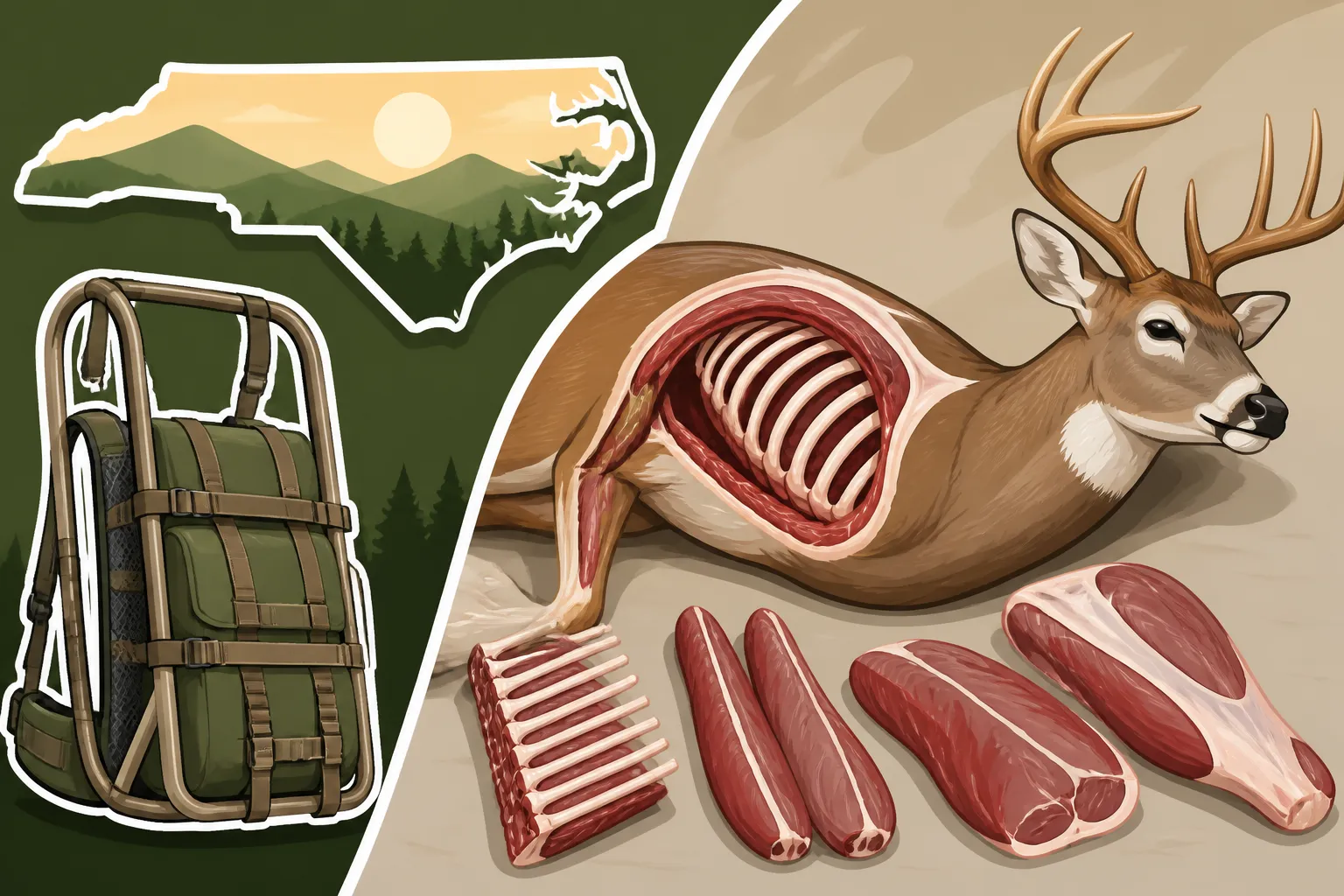
A critical feature is the load shelf, or meat shelf, which is essentially a sturdy platform or sling that extends from the bottom of the frame. This is where you strap your game quarters, camp gear, or other heavy items directly to the frame, close to your center of gravity. Good frame packs will also feature highly adjustable suspension systems, including padded hip belts and shoulder straps that can be customized to your torso length, ensuring the bulk of the weight rests on your hips, not your shoulders. Durable, abrasion-resistant materials are also non-negotiable for pushing through thick NC undergrowth. Many hunters find GoHunt brand packs offer the kind of robust construction and intelligent design needed for these demanding tasks.
Distributing Weight for Comfort and Efficiency
The primary benefit of a frame pack is its superior weight distribution. Instead of having all the weight concentrated on your shoulders, a properly fitted frame pack transfers the load to your hips and legs – the strongest parts of your body. This makes an immense difference when you're packing out 50 to 100 pounds of meat. Imagine carrying a half-deer on your back versus dragging it on the ground; the difference in effort and discomfort is night and day.
The rigid frame keeps the load stable, preventing it from shifting and throwing you off balance as you navigate uneven terrain, climb over logs, or cross creeks. This stability is invaluable, reducing fatigue and the risk of injury, allowing you to cover more ground safely and with greater endurance. It's the difference between limping back to the truck utterly exhausted and feeling tired but capable after a long pack-out.
Packing Out More Than Just Meat
While the primary use for many hunters is packing out boned-out game, a good frame pack offers incredible versatility. Many modern frame packs are designed with a detachable bag system, meaning you can use just the frame with a load shelf for a short, intense meat haul, or attach a full expedition bag for multi-day backcountry hunts. This adaptability makes it a truly valuable piece of gear.
Beyond game, these packs can haul treestands, climbing sticks, blinds, or heavy camping gear deep into the woods, freeing up your hands for walking sticks or your rifle. If you're planning an overnight stay on public land to get into a prime area, a frame pack can easily carry your tent, sleeping bag, food, water, and all your hunting essentials. Packs for a Pisgah Forest Day Hunt might focus on smaller daypacks, but for serious hauling or multi-day excursions, a frame pack is often the superior choice.
The Boning Out Process: A Step-by-Step Overview
The idea of field butchering might sound daunting at first, but with a little practice and the right tools, it's a skill that will profoundly change your hunting experience for the better. It's all about being efficient and maintaining the quality of your hard-earned venison.
Essential Gear for Field Butchering
Before you head into the woods, make sure you have the right tools for the job. You don't need a butcher shop in your pack, but a few key items will make the process smooth and clean. First and foremost, a sharp knife is non-negotiable. Many hunters prefer a fixed-blade knife with a sturdy handle, while others swear by replaceable-blade knives like those offered by companies often mentioned by GoHunt, ensuring a razor-sharp edge for every cut. Having a spare blade or a small sharpening steel is always a good idea.
Next, you'll need game bags. These are breathable cloth bags designed to protect your meat from dirt, leaves, and insects while allowing it to cool. Avoid plastic bags, which trap heat and moisture, promoting bacterial growth. Carry several different sizes to accommodate quarters, backstraps, and tenderloins. Lastly, pack a pair of disposable gloves to keep things sanitary, and perhaps some wet wipes for quick clean-up. Coolers and Game Bags for Early Archery provides more in-depth advice on these critical items.
Breaking Down the Deer in the Field
Once your deer is down, the clock starts. Position the animal on its back or side, on a relatively clean surface if possible. The first step, typically, is to field dress the animal to remove the entrails and begin the cooling process. After that, you can choose to skin the animal entirely or skin as you go. For boning out, most hunters will skin the parts they are working on.
The general process involves removing each of the four quarters (front and hind legs), then carefully separating the backstraps (loins) that run along either side of the spine. Don't forget the tenderloins, often called the "filets," which are inside the body cavity, tucked against the spine. Each piece of meat should then be placed into its own game bag, making sure to keep it as clean as possible. Trim away any heavily blood-shot or damaged meat at this stage. Your goal is clean, cool, protected meat ready for transport.
Loading the Frame Pack Correctly
With your meat safely bagged, it's time to load your frame pack. Proper loading is crucial for comfort and balance. Start by securing the heaviest items – usually the hindquarters – onto the load shelf, as close to your back as possible and as low as you can get them. Use the pack's compression straps to cinch them tightly to the frame. You don't want any movement or shifting during your hike out.
Next, layer in the front quarters, followed by the backstraps and tenderloins. If your pack has a main compartment, you can place lighter items like your jacket, water, and emergency gear on top. The key is to keep the weight centered and low, aiming for a balanced load that won't pull you to one side or sag in an uncomfortable way. Before you set off, put the pack on and adjust all the straps – shoulder, hip, and load lifters – to ensure a snug, comfortable fit. After you get your meat home, be sure to check out tips for Butchering a Deer at Camp to finish the job.
Choosing the Right Frame Pack for North Carolina
Investing in a good frame pack is a significant decision, and it's one that will pay dividends in comfort, efficiency, and the overall enjoyment of your hunting trips for years to come. Consider your typical hunting scenarios and the type of game you pursue.
Capacity Considerations for Deer and Bear
When looking at frame packs, one of the first things to consider is capacity. How much meat do you realistically expect to carry? For a typical North Carolina whitetail, you're looking at roughly 50-80 pounds of boned-out meat, depending on the size of the deer. Most frame packs designed for hunting can handle this with ease. However, if you're venturing into areas where you might have the opportunity for a larger animal, like a black bear in the mountains or coastal pocosins, you'll need a pack with even greater capacity and robust construction.
A full-grown North Carolina black bear can yield hundreds of pounds of meat and hide, often requiring multiple trips or a very large, sturdy pack. If Bear Hunting North Carolina's Coast and Mountains is on your agenda, opt for a pack with a higher weight rating and a generously sized load shelf. Always err on the side of slightly more capacity than you think you'll need; it's better to have too much space than not enough when you've got an animal on the ground.
Fit and Adjustability: Your Back Will Thank You
I cannot stress this enough: the fit of your pack is paramount. A poorly fitting pack, no matter how expensive or feature-rich, will make a heavy load feel exponentially worse. Look for packs with highly adjustable suspension systems that can be tailored to your specific torso length and body shape. Most quality frame packs will offer sizing guides based on torso measurements.
Once you have a pack, spend time adjusting it. Load it up with some weight (dumbbells, sandbags, whatever you have handy) and walk around. Experiment with the shoulder straps, hip belt, and load lifter straps until the pack feels like an extension of your body, with the majority of the weight riding comfortably on your hips. Manufacturers like GoHunt often provide excellent fitting guides and videos to help you get it just right, which is key for those long, strenuous hikes back to the truck.
Durability and Features for Tough Environments
North Carolina hunting conditions can be brutal on gear. We deal with humidity, sudden downpours, thick briar patches, and abrasive terrain. Your frame pack needs to be built to withstand all of it. Look for packs made from tough, high-denier fabrics that can resist punctures and tears from sharp branches and rocks. Water-resistant materials and robust zippers are also crucial for keeping your gear (and meat) dry during unexpected rain.
Consider features like ample compression straps to cinch down your load securely, external pockets for quick access to essentials like water or a knife, and attachment points for specialized gear. A strong, padded hip belt with pockets for calls or snacks is a huge bonus. Remember, you're relying on this pack to get hundreds of dollars worth of meat out of the woods, so investing in a durable, well-designed pack is a wise decision that will serve you well for many seasons. Paired with proper Boots for North Carolina Swamps and Ridges, your setup will be ready for anything.
Frame Pack Considerations
Here’s a quick overview of features to consider when choosing a frame pack for North Carolina hunting:
| Feature/Type | Description | Pros | Cons | Ideal NC Use Case |
|---|---|---|---|---|
| External Frame | Rigid frame keeps load off your back, often with a dedicated meat shelf. | Excellent ventilation, superior weight distribution for heavy, awkward loads. | Can feel bulky, less flexible for bushwhacking in dense cover. | Long, heavy hauls from remote mountain or coastal areas. |
| Internal Frame | Frame is integrated within the pack, conforming closely to your body. | More stable for scrambling, sleeker profile for thick brush. | Less ventilation, can feel hot, less ideal for extremely heavy, awkward loads. | Day hunts with moderate meat loads, less extreme terrain. |
| Hybrid Frame | Combines internal frame support with an external load shelf. | Best of both worlds, good balance of support and mobility. | Often higher cost, may still be warm. | Versatile for most NC hunting, especially if varied terrain is involved. |
| Load Shelf/Meat Shelf | A separate platform/sling to attach meat directly to the frame. | Keeps meat cool, protects pack contents from blood, handles heavy, odd shapes. | Can make the pack wider, might require separate bag attachment. | Essential for boning out and keeping meat separate from other gear. |
| Capacity (liters) | Refers to the volume of the main pack bag. | More volume for gear, longer trips, or multiple animals. | Larger capacity can encourage overpacking, adds bulk. | 50-80L for deer, 80L+ for bear or multi-day excursions. |
| Adjustability | Torso length, hip belt, shoulder straps can be customized. | Crucial for comfort and proper weight transfer. | Takes time to fit correctly, cheaper packs have less adjustability. | Absolutely vital for any serious hunting pack in diverse terrain. |
Disclaimer
This article is for general informational purposes only and does not constitute professional advice. Laws, prices and regulations vary by location and change over time. Consult a qualified professional for guidance on your specific situation.