Roost Hunting North Carolina Gobblers
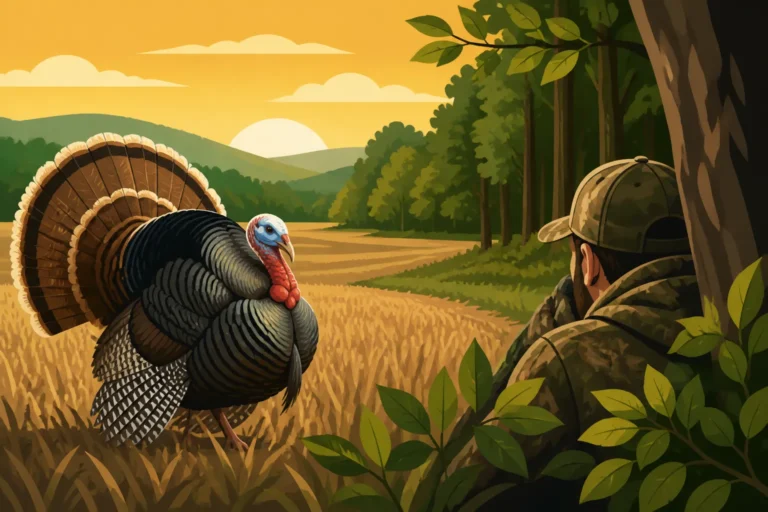
There’s almost nothing more frustrating for a turkey hunter than putting in hours of scouting, only to hear that booming gobble from a distance, just to have the bird shut up as soon as you get close. Or worse, you hear him, set up, and he pitches down heading the opposite direction. Roost hunting, when done right, gives you a significant edge in North Carolina by putting you exactly where the gobbler wants to be first thing in the morning. This guide will walk you through everything you need to know to locate and successfully hunt gobblers right off the roost, saving you endless hours of chasing silent birds.
Understanding North Carolina Turkey Roosting Behavior
To successfully roost hunt, you first have to understand why a gobbler chooses a particular tree or area to spend the night. It's not arbitrary; there's a method to their madness, driven by instinct and survival. North Carolina’s diverse landscape, from the eastern swamps to the western mountains, offers a variety of roosting options, and understanding these nuances is crucial for pinpointing where those birds will be.
Why Gobblers Roost Where They Do
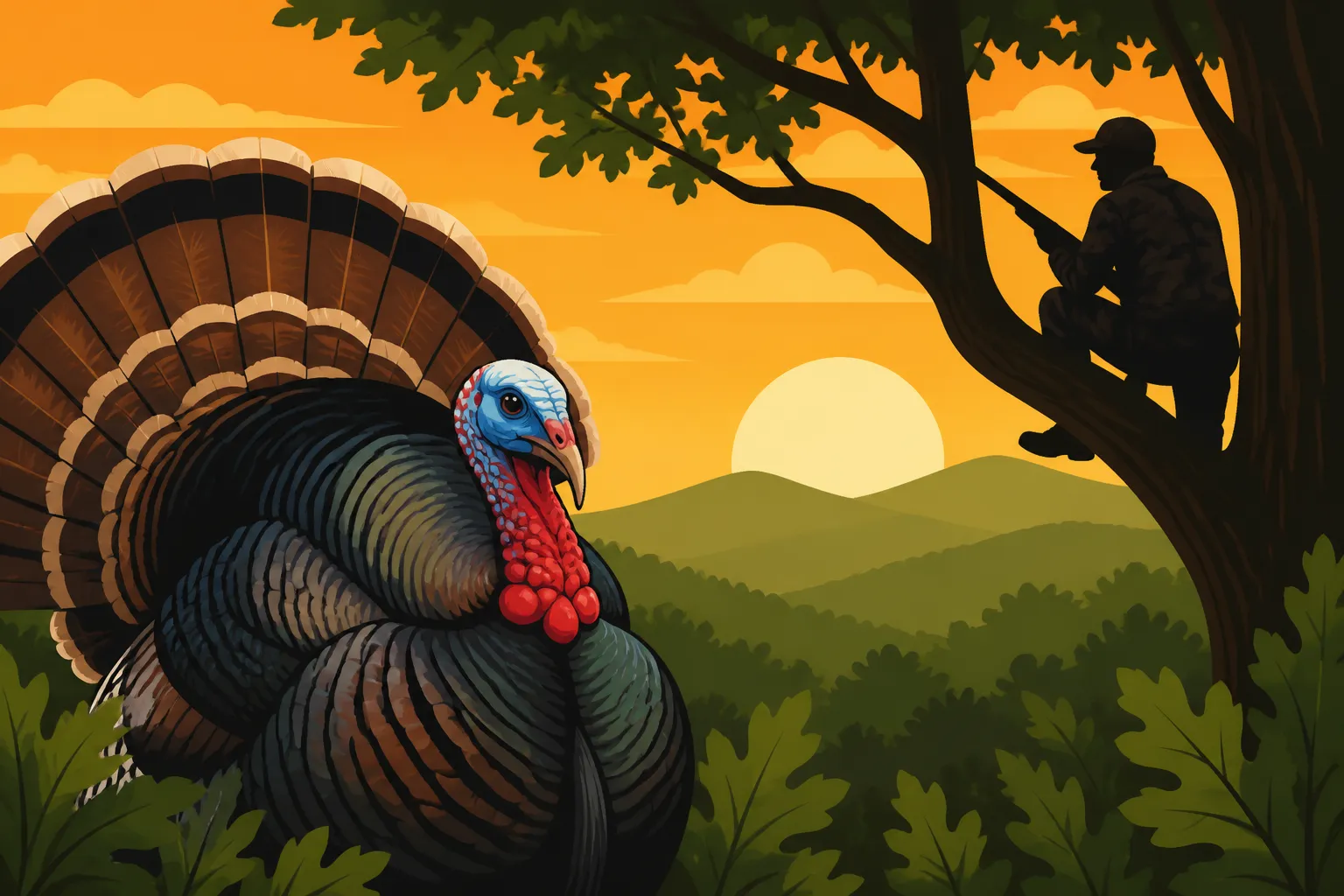
Gobblers are vulnerable when they’re on the ground at night. Predators like coyotes, bobcats, and even owls pose a significant threat. So, their choice of roost tree is all about safety and efficiency. They want an elevated position that offers a clear view or hearing advantage, away from ground-level threats. In North Carolina, you’ll often find them favoring tall, mature trees. This could be a towering loblolly pine on the Coastal Plain, its branches providing dense cover and height, or a massive oak or sycamore along a creek bottom in the Piedmont or Mountains. These trees offer sturdy, high branches that give them a sense of security.
Beyond just the tree itself, the surrounding terrain plays a huge role. Gobblers often roost near water sources, like a river, creek, or pond, which they might visit first thing in the morning. They also tend to roost on ridges or along breaks in topography that give them a commanding view of the area below. Think about a mature pine stand at the edge of a field, or a prominent ridge finger overlooking a hollow in Pisgah National Forest. These spots offer easy fly-up access and a safe vantage point for surveying their territory before hitting the ground. They're also strategic locations for them to gobble in the morning and listen for hens, allowing their calls to carry a good distance.
Seasonal and Regional Roosting Differences
Turkey roosting habits aren't static; they shift throughout the spring season and vary significantly across North Carolina's different regions. Early in the Spring Turkey Hunting in North Carolina season, especially during those colder mornings in April, gobblers might stick to more sheltered areas, like dense pine thickets or protected creek bottoms that offer some windbreak. As the season progresses into May and the foliage thickens, they might become more comfortable with less dense cover, moving to hardwoods as the leaves emerge. You'll notice they often roost near established food sources they plan to hit first thing in the morning – perhaps a freshly planted food plot on private land, or a natural mast crop area on public game lands.
Regionally, the differences are stark. On the Coastal Plain, especially in areas like Holly Shelter Game Land or along the Neuse River, turkeys often choose the tallest pines or cypress trees that emerge from the pocosin swamps. These offer maximum elevation above the dense undergrowth and watery terrain. In the rolling hills of the Piedmont, such as Uwharrie National Forest or state game lands, you'll frequently find gobblers in mature hardwoods – large oaks, poplars, or hickories – often along ridge lines or creek drainages that separate agricultural fields. Their calls can carry for miles across these open valleys. In the mountains, like in Nantahala National Forest, they'll favor towering oaks and hemlocks on steep slopes or along prominent benches and ridges, where they can fly up from lower elevations and survey vast expanses of forest. Understanding these regional tendencies is key to narrowing down your search before you ever step foot in the woods.
Reading Sign Under Roost Trees
Once you've identified a potential roosting area, getting on the ground to confirm active use is paramount. You're looking for subtle clues that tell you a bird, specifically a gobbler, has been using that tree repeatedly. The most obvious sign is turkey droppings. Gobbler droppings are typically J-shaped or elongated, while hen droppings are more spiral or blob-like. Finding multiple gobbler droppings under a particular tree, especially fresh ones (darker and moist), is a strong indicator of an active roost. Look for them on leaves, fallen logs, or exposed dirt.
Beyond droppings, you might find feathers. While finding a single feather doesn't guarantee a roost, finding several large primary or secondary wing feathers, or body feathers, can be a good sign. Especially look for "caked" feathers, where droppings have dried onto them, indicating they've been there for a while. Another subtle but important sign is disturbed ground. Turkeys often scratch the ground around the base of their roost tree, especially just after flying down or before flying up, as they forage for insects or simply stretch and mill about. This might look like small, fresh scratch marks in the leaf litter. Pay attention to the size of the droppings and the overall accumulation of sign – the more, the better. A well-used roost site will have a noticeable amount of sign directly under the chosen tree, not just scattered randomly in the woods. This is an excellent way to confirm a spot before committing to an early morning hunt.
Scouting for Roosted Gobblers Before the Hunt
You can’t just walk into the woods on opening morning hoping to stumble upon a gobbler on the roost. Successful roost hunting begins long before the season with dedicated scouting. This is where you leverage modern technology and old-fashioned legwork to gain a crucial advantage.
Pre-Season E-Scouting and Map Work
Before you even lace up your boots, fire up your mapping apps. Tools like GoHunt (and others like onX Hunt or Basemaps) are invaluable for identifying potential roosting habitat. You're looking for key features that turkeys love. Start by identifying large blocks of mature timber, especially pines or mixed pine-hardwood stands, or mature hardwoods near water sources. Look for areas with diverse topography: ridge lines, saddles, creek bottoms, and points that drop off into hollows. Turkeys often prefer to roost where they can survey their surroundings from an elevated position.
Focus on the edges of agricultural fields or clear-cuts that border mature timber, as birds frequently roost on the timber side and fly down into the open to feed. Don’t forget to check for old logging roads or trails that run through potential roosting areas, as these can be travel corridors and also offer easier, quieter access for you. Pay close attention to any areas marked as "thicker cover" or "bottomland" on your maps, as these often hold the largest trees and offer the most seclusion. By identifying these features digitally, you can eliminate a lot of unproductive ground and focus your on-the-ground scouting efforts on high-probability areas. This systematic approach saves time and greatly increases your chances of locating an active roost.
On-the-Ground Reconnaissance
E-scouting only gets you so far; there's no substitute for getting your boots dirty. The best time for on-the-ground reconnaissance for roosting turkeys is either late in the evening, just before dark, or first thing in the morning, before sunrise. These are the "fly-up" and "fly-down" periods. Head into your identified target areas quietly. You want to listen for distinct sounds: the unmistakable "tree yelp" of a hen before she flies up, the heavy whump-whump-whump of wings as birds pitch up or down, and of course, those glorious gobblers.
Position yourself strategically, ideally on a ridge or high point that allows sound to carry. Use a locator call (we’ll discuss these next) sparingly. Listen not only for the sound of gobblers but also for the direction from which the sound travels. This helps you triangulate potential roost locations. Take note of prevailing wind directions and how sound carries. If you hear a distant gobble at dusk, mark that spot on your GPS immediately. Even if you can't get a visual, hearing a bird fly up or gobble from a specific area at night or first light is a golden ticket. Remember, being stealthy is key; you don't want to spook the birds you're trying to locate. This might mean taking longer, more circuitous routes to get to your listening posts, and moving slowly through the woods. Sometimes, just sitting quietly for 30 minutes in a promising spot at dawn or dusk will reveal more than an hour of aggressive walking. This kind of Scouting North Carolina Public Land Before Season is invaluable.
Using Locator Calls to Pinpoint Roosts
Locator calls are one of the most effective tools for pinpointing roosted gobblers, but they need to be used judiciously. The goal is to elicit a "shock gobble" – a reflexive gobble from a tom in response to a sudden, loud noise. Owl hoots and crow calls are the most common and effective choices in North Carolina. A Barred Owl hooter, mimicking the classic "Who cooks for you? Who cooks for you all?" call, is fantastic to use just before fly-up or just after fly-down. It's a natural sound that doesn't typically alarm turkeys. The same goes for a sharp, piercing crow call.
When to use them? Early in the morning, before official shooting light, as the woods are still waking up. Or in the evening, right at dark, to get a gobbler to sound off before he settles in for the night. The key is sparing use. Don’t hammer a gobbler with a locator call over and over. A few hoots or caws, then listen intently for a response. If he gobbles, you've located him. Then, back out quietly. You don't want him to associate that sound with danger or your presence. The less you interact with him at the roost, the better. Knowing a gobbler's exact tree allows you to plan your morning approach with surgical precision, dramatically increasing your chances of success without having to rely on the bird to gobble on his own. This technique is often used in conjunction with "putting birds to bed," which we'll cover later.
Executing the Roost Hunt: Morning Tactics
This is where all your hard work and scouting come together. The moments just before dawn and during fly-down are arguably the most exciting and critical in turkey hunting. Precision, stealth, and proper calling are paramount to converting a roosted gobbler into a success story.
Approaching the Roost Quietly in the Dark
The alarm clock goes off, usually around 3:30 AM for those public land hunts, and the adrenaline starts pumping. Your mission: get to your pre-selected setup spot near the roosted gobbler before he has any idea you're there. This means moving in complete darkness, ideally guided by GPS, a faint headlamp set on a red light (which is less disruptive to wildlife and your night vision), and an acute awareness of the terrain. The wind direction is absolutely critical; always approach with the wind in your face or quartering, so your scent isn't carried directly to the roost tree. Turkeys have an incredible sense of smell, and you do not want to give them any reason to be suspicious.
Stealth is your best friend. Every twig snap, every rustle of leaves, every loud breath can blow your hunt before it even begins. Walk slowly, deliberately, lifting your feet rather than dragging them. If you’re hunting steep terrain in the mountains, this can be extra challenging. Consider wearing soft, quiet clothing. Ideally, you want to set up 100 to 150 yards from the roost tree, perhaps a bit closer if the cover is incredibly dense, or a bit further if it's very open. This distance provides a buffer – close enough for him to hear your soft calls, but far enough that he won't spot your movement when he flies down, giving you room to maneuver if needed. Don’t rush the approach; better to be a few minutes late and quiet than on time and noisy.
Setting Up for the Fly-Down
Once you've reached your desired setup location, the clock is ticking. You need to quickly and quietly find a good spot that offers cover, a clear shot lane, and an advantageous position for anticipating the bird's fly-down. Always prioritize a setup where you can conceal your movements and break up your outline against a tree wider than your shoulders. Setting Up Against a Big Oak or a large pine is ideal. Make sure you can see the expected fly-down path – often towards a field, an open timber flat, or a known strutting zone. If you have a decoy, now is the time to quietly deploy it, positioning it where it can be seen by the gobbler but won't hinder your shot. A single hen decoy or a jake/hen combination can be incredibly effective, especially if you expect him to fly down into an open area.
Consider the sun’s position. If possible, set up so the rising sun is at your back, shining into the gobbler’s eyes. This makes it harder for him to spot you. Also, think about obstacles between you and the roost. A creek, a fence line, or a thick patch of briars can be a great natural funnel, but also a potential hang-up if the gobbler decides not to cross it. Your setup should anticipate his most likely movements after he hits the ground. Many times, they’ll pitch down, survey the area, and then move towards your calling. Having clear shooting lanes in multiple directions, while remaining concealed, is the ultimate goal.
Calling Strategies on the Roost
With your setup complete and the woods beginning to lighten, it's time to communicate. The key to calling a roosted gobbler is often subtlety initially, then adapting as he reveals his intentions. As soon as you hear that first tree gobble, respond with a soft, confident tree yelp or two. Not loud, not aggressive – just enough to let him know a hen is nearby. You want to sound like a hen waking up on the roost herself, ready to hit the ground. A soft cluck or purr can also be effective. The goal is to entice him to fly down in your direction, believing a willing hen is waiting.
As the light increases and he continues to gobble, you might increase the volume slightly, but still keep it conversational. Avoid aggressive cutting or excited yelping until he’s on the ground and clearly committed. If he’s gobbling his head off on the roost, sounding like he's going to burst, he often has hens with him or he's waiting for them. In this scenario, being patient and subtle is often the best approach. If he flies down and still won't commit, perhaps a bit more aggressive calling, or even repositioning, might be in order, but the initial strategy should be to lure him in with calm, convincing hen sounds. Remember, you've located him; now it's about convincing him that you're the most attractive hen in the area. Learning to use various calls effectively is crucial for Calling a North Carolina Gobbler Off the Roost.
Executing the Roost Hunt: Evening Tactics
While morning roost hunts are the classic approach, evening roosting is an equally effective tactic, especially for planning the next day's hunt. "Putting birds to bed," as it's often called, allows you to pinpoint their exact location for a precise morning setup.
Locating Birds Before Fly-Up
Evening scouting is a different beast than the pre-dawn scramble. In the afternoon, particularly a couple of hours before sunset, gobblers are typically moving from their mid-day loafing areas towards their evening roosting spots. They might be feeding in fields, strutting in open timber, or simply moseying along creek bottoms. This is your chance to intercept them and get a bead on their general direction of travel before they go to roost.
You're not necessarily trying to call them in for a shot at this point (though if the opportunity arises, take it!). Instead, you're trying to locate where they might be heading. Drive or walk quietly along backroads or trails that border good turkey habitat. Stop frequently, listen intently, and occasionally let out a soft series of yelps or even a light gobble call to try and elicit a response. Birds are often more vocal in the late afternoon. Watch for birds crossing roads, strutting in fields, or silhouetted against the skyline on ridges. This reconnaissance helps narrow down the specific areas you'll focus on for putting them to bed, rather than blindly walking into the woods at dark. This pre-roost movement can be especially noticeable in areas like the Piedmont, where birds might cross open Turkey Tactics for Piedmont Field Edges before heading to the timber.
Intercepting Birds on Their Way to Roost
Once you have a general idea of where birds are moving, you can try to set up along their likely travel corridors. Think of funnels – narrow strips of timber between fields, creek bottoms, saddles between ridges, or pinch points where heavy cover gives way to more open woods. Turkeys often use these same travel routes repeatedly. Position yourself quietly, camouflaged, with a good view of the expected travel path. You're trying to catch them before they actually fly up to roost.
As they get closer, use soft, enticing hen calls to try and pull them a bit closer or to confirm their presence. You might even hear them gobble on their own as they mill about before flying up. If you manage to call one in and get a shot, fantastic! But the primary goal here is intelligence gathering. If they walk past you and you get a visual on their path, you now have critical information for where they're likely to roost. This is an excellent tactic if you're trying to avoid the intense pressure that can sometimes be found on opening morning. Observing their path to roost without alerting them can provide an unmatched advantage for the following day.
Putting Birds to Bed with Locator Calls
This is the ultimate evening roost hunting tactic for the next day's morning hunt. As legal shooting light fades and darkness begins to creep into the woods, gobblers will start to fly up into their roost trees. This is the prime time to "put them to bed." Find a vantage point, preferably an elevated one, where sound travels well. Wait until it's almost completely dark, or just after the last vestiges of daylight are gone. Then, let out a loud, aggressive locator call. An owl hoot is excellent here, but a sharp crow call, hawk scream, or even a coyote howl can work wonders.
The goal is to get a "shock gobble" from a bird as he's settled onto his branch. This gobble will tell you exactly where he is. Once he gobbles, you immediately mark that spot on your GPS and back out quietly, making as little noise as possible. Do not call again. You don’t want him to associate that sound with your presence or a threat. You just needed to know his precise location. Now you have a specific tree, or a cluster of trees, where a gobbler is sleeping. This information is invaluable for planning your pre-dawn approach and setup for the next morning. It takes the guesswork out of finding a bird and allows you to execute a precise, stealthy hunt plan. This is particularly effective in large public land areas where birds might not gobble much on their own, or where you're trying to find North Carolina Turkey Population Estimate and their nightly locations.
Here's a quick comparison of morning vs. evening roost hunting tactics:
| Feature | Morning Roost Hunt | Evening Roost Hunt (Putting to Bed) |
|---|---|---|
| Primary Goal | Kill a gobbler as he flies down or shortly after. | Locate a gobbler's exact roost for the next morning's hunt. |
| Time of Day | Pre-dawn to an hour or two after fly-down. | Late afternoon to just after dark. |
| Approach | Extremely quiet, stealthy, in darkness. | Quiet observation, strategic listening, may involve driving. |
| Calling | Soft tree yelps/clucks, then adjust; moderate volume. | Sparingly used locator calls (owl, crow) at dark. |
| Movement | Minimal, set up early and stay put. | More movement, positioning for listening posts or intercepts. |
| Advantages | High success rate if executed well; immediate action. | Excellent for intel gathering; reduces morning uncertainty. |
| Risks | Spooking birds during approach; bad setup. | Spooking birds with aggressive calling if not careful. |
| Decoy Use | Common, especially in open areas. | Rare, as focus is on location, not attraction. |
Common Roost Hunting Challenges and Solutions
Even the best-laid plans can go awry when dealing with wild turkeys. Roost hunting, while effective, isn't without its challenges. Understanding these common hurdles and having strategies to overcome them is what separates consistently successful hunters from those who go home empty-handed.
Dealing with Hang-Ups and Hencampered Gobblers
Perhaps the most frustrating scenario in turkey hunting is the "hang-up" – a gobbler that comes to within 100 yards, sometimes even closer, but just won't commit. He might strut and gobble his head off, but he simply won't close the distance. This often happens because he expects the "hen" (you) to come to him. This is especially true of older, more experienced birds. When this happens, patience is your first line of defense. Stay put, remain quiet, and only offer very soft, subtle calls occasionally. Sometimes, a full half-hour of silence from you will drive him crazy enough to take those last few steps.
If patience doesn't work, and you're certain he's hung up, consider a stealthy repositioning. This is tricky, as any movement can spook him. Try to circle wide, using terrain and thick cover to your advantage, to get ahead of him or to flank him. The goal is to set up in a new spot, perhaps 50-70 yards closer, and immediately hit him with some soft calls again. Another common issue is the "hencampered" gobbler – a tom that's already surrounded by real hens. He has no reason to come to your calling because he's already got a harem. In this case, your best bet is often to mimic the real hens. Use light, passive clucks and purrs, almost like you’re not even trying to get his attention, but rather like a hen going about her business. Sometimes, this can draw a real hen, and if she comes in, the gobbler will often follow. If all else fails, especially in the late morning, and he’s still with hens, consider a Run-and-Gun Turkey Tactics on Public Land approach, where you quickly relocate to find another bird or try to intercept them later in the day.
Public Land Pressure and Competing Hunters
North Carolina's public lands, while vast and beautiful, can see significant pressure, especially during the opening weeks of turkey season. You might be perfectly set up on a roosted gobbler, only to hear another hunter's calls, or worse, see them walk right into your setup. This is a common frustration and requires both strategy and courtesy. To mitigate competition, focus your scouting on less accessible areas. Look for public land spots that require a longer walk, a creek crossing, or navigation through dense thickets. Most hunters won't put in the extra effort, leaving these birds relatively unpressured. Understanding Hunting Pressure on North Carolina Public Land is key.
Get to your roost spot earlier than you think you need to. If shooting light is 6:30 AM, aim to be set up by 5:30 AM, giving you ample time to approach quietly and find your spot before others might be on the move. When you hear other hunters, gauge their location. If they are far off, you might still have a chance. If they are close and calling aggressively, your best bet might be to silently back out and move to a completely different area. Don't engage in a calling duel; it rarely ends well for anyone. Sometimes, a silent exit and a move to a secondary scouted roost location is the smartest play. Remember, North Carolina has strict rules about hunting interference, so always be respectful of other hunters' space and safety. Consider looking at different hunting methods or areas for Hunting Small Private Tracts in North Carolina if public land pressure becomes too overwhelming.
Navigating Difficult Terrain and Cover
North Carolina offers incredibly diverse hunting landscapes, from the steep, rocky slopes of the Blue Ridge to the dense, often swampy pocosins of the Coastal Plain. Navigating these terrains silently in the dark is a significant challenge when roost hunting. In the mountains, you're contending with uneven ground, loose rocks, rhododendron thickets, and steep inclines. The key here is good footwear – solid, ankle-supporting boots with aggressive tread. Use a trekking pole for balance and to silently test the ground ahead. Take slow, deliberate steps, always looking down to avoid stumbling or snapping branches. Climbing sticks can also be useful for Hanging a Stand on a Pisgah Ridge if you find a suitable tree.
In coastal areas, you might be slogging through knee-deep water, thick mud, or dense briar patches. Rubber boots or chest waders are essential. Learn to walk through the muck and water as quietly as possible, often lifting your feet straight up and placing them down rather than dragging. Consider using established game trails or logging roads if they exist, even if they add a bit of distance, as they offer much quieter travel. For dense vegetation, wearing tough, briar-proof pants can prevent frustrating snags and noise. Always carry a reliable GPS or a mapping app on your phone, like GoHunt, because getting turned around in unfamiliar, thick cover in the dark is a real possibility. Having a well-charged power bank for your phone is also a good idea. Remember, the tougher the terrain, the less likely other hunters are to venture there, which can often lead to unpressured birds.
Disclaimer
Please note that hunting regulations, seasons, and licensing requirements can change. Always consult the most current North Carolina Wildlife Resources Commission (NCWRC) regulations before planning any hunting trip. This guide is for informational purposes only and should not replace official state resources. Safety should always be your top priority in the field.