Marsh Boats and Push Poles
For many waterfowlers in North Carolina, the dream of calling in ducks over open water quickly turns into the frustrating reality of getting stuck in knee-deep mud, tangled in thick marsh grass, or navigating incredibly shallow creeks where an outboard motor is just a nuisance. This guide is dedicated to helping you overcome those common access headaches by mastering the use of marsh boats and push poles, ensuring you can reach those hidden honey holes and focus on the hunt, not the struggle.
Why Marsh Boats and Push Poles Are Essential for North Carolina Waterfowling
North Carolina's diverse waterfowl habitats are both a blessing and a challenge. From the expansive, shallow flats of Currituck Sound to the cypress-filled pocosins of the Coastal Plain and the maze of tidal creeks along the Outer Banks, traditional boats often fall short. You might think your flat-bottomed jon boat is sufficient, but try poling it through dense cattails in six inches of water over a foot of sticky gumbo mud, and you’ll quickly realize its limitations. This is precisely where a purpose-built marsh boat paired with a sturdy push pole becomes not just helpful, but absolutely indispensable.
Think about those mornings when the ducks are just pouring into a secluded pocket of water that's unreachable by foot or by a prop-driven boat. That little hidden cove behind a stretch of spartina grass or the shallow backwater that only fills on a high tide – those are the places where a stealthy, shallow-draft marsh boat allows you to slip in unnoticed. It's about access, yes, but it’s also about silence and control, crucial elements for successful waterfowl hunting in these delicate ecosystems. Without these tools, many of North Carolina's prime waterfowl spots would remain forever out of reach for the average hunter, leaving prime feeding areas undisturbed and those birds unpressured.
Navigating North Carolina's Unique Waterfowl Habitats
Our state boasts an incredible variety of waterfowl hunting environments, each with its own set of challenges. On the coast, you'll encounter everything from vast, open sounds that are barely a foot deep for miles, to intricate networks of smaller marshes and impoundments. In the eastern part of the state, especially areas like the Great Dismal Swamp or the Croatan National Forest, you’re looking at flooded timber, shallow sloughs, and dense pocosin swamps. Trying to paddle a canoe or kayak through thick vegetation or dense submerged roots is a recipe for exhaustion and frustration.
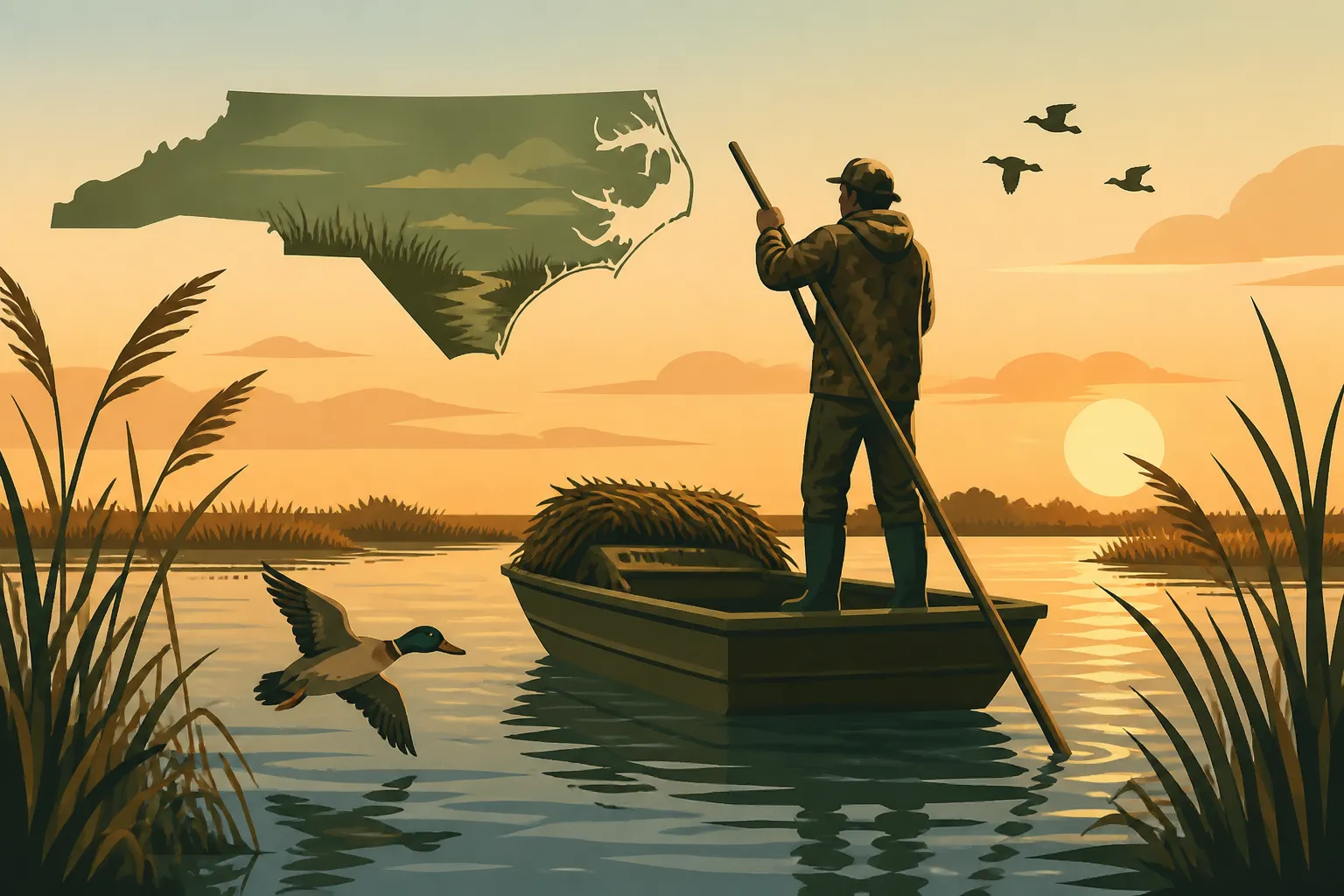
A specialized marsh boat, often designed with a very flat bottom and low profile, glides over this shallow water and vegetation with minimal resistance. This design keeps the boat from digging into the mud or getting hung up on submerged obstacles. When the water gets too shallow to float, even a few inches, that's when the push pole truly shines. It allows you to leverage your weight against the bottom, pushing your boat silently and steadily forward. This combination provides unparalleled access to areas that motorized craft or simple waders can't touch, giving you a distinct advantage. If you're looking to consistently hunt these challenging areas, understanding Waterfowl Hunting Currituck Sound and the Coast or even Hunting Flooded Timber for Wood Ducks means understanding the gear that gets you there.
The Stealth and Efficiency Advantage
Beyond just access, marsh boats and push poles offer a significant advantage in stealth and efficiency. Imagine trying to start an outboard motor in a quiet marsh just before legal shooting light. The roar of the engine sends ducks scattering for miles. With a marsh boat and push pole, your approach is almost completely silent. The soft "thud" of the pole hitting the bottom and the gentle ripple of water as you glide forward are far less alarming to wary birds. This quiet approach often allows you to get much closer to feeding or resting birds without flushing them, setting up for a more effective hunt.
Furthermore, these tools provide an incredible degree of control, which is essential when trying to position yourself perfectly in a blind or among natural cover. You can adjust your position by inches, subtly shifting to get a better shooting lane or to take advantage of changing wind direction. When you’re trying to set decoys in a particular spread or retrieve a downed bird from a dense patch of reeds, the maneuverability of a marsh boat guided by a push pole is second to none. It allows you to work the water with precision, making the entire hunting process smoother and more productive, particularly when navigating the intricate channels detailed in guides like Hunting the Outer Banks Marsh.
Choosing the Right Marsh Boat for North Carolina Conditions
Selecting the ideal marsh boat isn't a one-size-fits-all decision for North Carolina hunters. Our varied terrain demands different attributes. What works beautifully in a vast, shallow sound might be cumbersome in a tight, cypress-filled creek. Your choice should hinge on where you plan to hunt most frequently, the number of hunters you typically go with, and the amount of gear you need to carry.
There are a few distinct types of marsh boats, each with its own strengths and weaknesses when faced with North Carolina's unique environment. Understanding these differences will help you make an informed decision that saves you headaches down the line. Remember, the goal is to make your marsh access as effortless as possible, so picking the right vessel is paramount.
Types of Marsh Boats and Their Construction
When we talk about marsh boats, we're generally looking at designs optimized for shallow water and silent propulsion.
- Pirogues: These are traditional, flat-bottomed boats, often long and narrow, with pointed ends. Historically made of wood, many modern versions are fiberglass or rotomolded plastic. They are incredibly stable and glide exceptionally well through very shallow water and light vegetation. They excel in bayous, sloughs, and smaller creeks. Their low profile makes them great for hiding in natural cover. However, they typically have limited capacity for gear and can be less stable in choppy, open water compared to wider skiffs.
- Specialized Sneak Boats: These are often wider and more stable than pirogues, designed specifically to be poled or paddled into position and then act as a hidden blind. Many feature internal storage, built-in camouflage, and very low freeboard. They are heavier than pirogues but offer more comfort, capacity, and better stability in slightly choppier conditions, making them a good choice for larger marsh areas or calmer sections of the sounds. They are excellent for hunters who want to disappear into the environment.
- Hybrid Skiffs/Jon Boats: While many standard jon boats aren't ideal, some manufacturers produce ultra-shallow draft jon boats or modified skiffs specifically for marsh work. These usually have a very flat, wide bottom and often incorporate features like reinforced transoms for mud motors or trolling motors. They offer more capacity than a pirogue or sneak boat and can handle slightly rougher water, but they are generally heavier and require more effort to pole. These might be a good compromise if you also want the option for a small motor in certain situations.
Material-wise, you'll find boats made from:
- Fiberglass: Lightweight, rigid, easily repaired, but can be susceptible to spider cracks from repeated impacts with submerged stumps or rocks.
- Rotomolded Plastic: Extremely durable, impact-resistant, often heavier than fiberglass, but almost indestructible. Great for rough treatment.
- Aluminum: Durable, lightweight, but can be noisy if gear shifts around, and repeated scraping on rocks or oyster beds can cause wear over time.
For most North Carolina marsh hunting, a fiberglass or rotomolded pirogue or a dedicated sneak boat offers the best balance of shallow-water performance, stealth, and ease of use.
Features to Look For in a Marsh Boat
When you're evaluating different marsh boats, keep the following features in mind, tailored to the demands of North Carolina hunting:
- Shallow Draft: This is king. The less water a boat needs to float, the more places you can access. Look for boats explicitly designed for minimal draft.
- Stability: You'll be standing to pole, perhaps shooting from the boat, and definitely moving around to set decoys or retrieve birds. A stable platform is crucial for safety and effectiveness. Wider boats generally offer more stability.
- Camouflage/Color: A dull, natural color or a pre-applied camouflage pattern is a huge plus. You want your boat to blend seamlessly into the marsh vegetation.
- Internal Storage: Being able to stow away calls, extra shells, snacks, and gear keeps your boat uncluttered and prevents items from falling overboard in shallow water.
- Low Profile: A low side profile makes the boat less visible to incoming birds and easier to hide in reeds or along marsh edges. This is key for effective concealment, especially when you can't rely on a permanent blind.
- Reinforced Transom/Bow: Even if you plan to primarily pole, a reinforced area for a small trolling motor or shallow-drive mud motor can be a useful option for covering longer distances on larger bodies of water like parts of Currituck Sound or when scouting, which can be immensely simplified by using tools like GoHunt to identify those larger areas.
Sizing Your Marsh Boat for Your Hunting Needs
Consider these factors when determining the right size:
- Solo Hunter vs. Buddy System: If you always hunt alone, a smaller, lighter pirogue or solo sneak boat is perfect. If you frequently hunt with a partner, a larger, wider boat designed for two hunters and their gear will be necessary. Don't underestimate how much space two hunters, two guns, a dozen decoys, and a blind bag take up.
- Gear Capacity: How many decoys do you typically set? Do you carry a large blind bag, a cooler for drinks, or specialized camera gear? Ensure the boat has enough usable space and a sufficient weight capacity to handle all your essentials without being overloaded or compromising stability.
- Transport and Storage: A larger boat might be great on the water, but can you easily load it onto your truck or trailer? Do you have space to store it at home? Consider the logistics of getting the boat to and from your hunting grounds. Sometimes, a slightly smaller, more manageable boat that you can easily transport and launch is more valuable than a larger one that's a struggle to move. When scouting new areas, mapping applications like GoHunt can help you assess access points and determine if a smaller, more portable craft is advantageous for navigating difficult terrain.
Selecting and Using Push Poles Effectively
A marsh boat is only half the equation; the push pole is its silent, powerful partner. Without a good push pole, your specialized marsh boat is just a very wide, flat canoe that's incredibly difficult to move when it hits the mud. The right push pole allows you to glide effortlessly, maintain control, and even act as a critical stability aid in tricky situations. It's more than just a stick; it's an extension of your body, designed for precision and power in the shallowest of waters.
Many hunters underestimate the importance of a quality push pole, often grabbing whatever old paddle or stick is handy. But in North Carolina's challenging marshes, a flimsy pole can break, get stuck, or simply not provide the leverage you need when you're deeply mired in mud. Investing in a proper push pole is investing in your hunting success and safety.
Push Pole Materials and Design
Push poles come in various materials, each offering different characteristics in terms of weight, durability, and cost.
- Fiberglass: A popular choice, offering a good balance of strength, stiffness, and reasonable weight. They are generally durable but can splinter over time if abused or if the outer coating is compromised. They usually don't float unless specified.
- Aluminum: Very strong and durable, often the most affordable option. However, aluminum poles are typically heavier and can be noisy if they hit the side of the boat. They also tend to sink if dropped.
- Carbon Fiber: The premium choice. Carbon fiber poles are incredibly lightweight, stiff, and strong, offering maximum efficiency with minimal effort. Their lighter weight reduces fatigue during long poling sessions. The downside is their higher cost, and while strong, they can be brittle and crack if subjected to sharp impacts or bending beyond their limits.
- Wood: Traditional, aesthetically pleasing, but generally heavy, less stiff, and requires more maintenance to prevent rotting or warping. Not typically recommended for serious marsh hunting due to practical limitations.
Length and End Design:
- Length: Longer is almost always better in a push pole, especially in North Carolina's frequently deep mud and water fluctuating with tides. A pole that's 12 to 18 feet long allows you to reach the bottom without leaning precariously out of the boat, providing maximum leverage and preventing you from getting stuck in deeper muck. It also gives you more range to push from, reducing the frequency of pulling the pole out and repositioning.
- Foot/Tip Design: The business end of your push pole, called the foot or tip, is critical.
- "Duck Foot" or Flared Tip: This design spreads the pressure over a wider area, preventing the pole from sinking too deep into soft mud. It's excellent for soft, mucky bottoms common in many coastal marshes and pocosin swamps.
- Pointed Tip: Better for rocky or hard bottoms, or for piercing through dense submerged vegetation. Less effective in soft mud where it can sink too easily.
- Combination Tips: Some poles offer interchangeable tips or a design that blends both, offering versatility. Consider where you hunt most often and choose a tip that suits those conditions.
Here’s a quick comparison of common push pole materials:
| Feature | Fiberglass Push Pole | Aluminum Push Pole | Carbon Fiber Push Pole |
|---|---|---|---|
| Weight | Moderate | Heavy | Very Light |
| Durability | Good, can splinter | Very Good, can bend | Excellent, stiff |
| Stiffness | Moderate | High | Very High |
| Cost | Mid-range | Lower | Higher |
| Pros | Good balance of features | Affordable, very strong | Lightweight, powerful, responsive |
| Cons | Can splinter, absorb water | Heavy, can be noisy, sinks | Expensive, can crack on sharp impact |
Push Pole Technique and Safety
Effective poling is an art form that comes with practice. It’s not just about pushing hard; it's about rhythm, balance, and understanding the bottom beneath you.
- Stance: Stand comfortably in your boat, facing the bow. Keep your feet spread for stability, and maintain a slight bend in your knees to absorb movement. Your weight should be centered.
- The Push: Place the foot of the pole firmly on the bottom, as close to the bow as you can comfortably reach. Lean into the pole, using your body weight to drive the boat forward. Push the pole away from you, letting it slide through your hands as the boat moves.
- Recovery: Once you’ve extended your push, pull the pole out of the water cleanly and quickly, bringing it forward to repeat the stroke. Avoid dragging the pole through the water, as this creates resistance and noise.
- Steering: You steer by manipulating the angle of your push. Pushing slightly off-center to the left will turn the boat right, and vice-versa. A long pole gives you better steering control.
- Navigating Obstacles: When you encounter dense grass or submerged stumps, use the pole to probe ahead. If the bottom is too soft or too snaggy, consider an alternate route. Sometimes, a little patience and a slight detour are better than getting hopelessly stuck.
- Wind and Current: These are your biggest allies or enemies. Learn to use them. If you're poling into a strong headwind or current, it will be much harder. If you can, plan your route to use these forces to your advantage, especially when entering or exiting a blind.
- Safety First: Always maintain three points of contact if moving around in your boat. If standing, keep a good grip on your pole. If you feel unstable, drop to a seated position. The push pole can also be used as a stabilizer if you feel your boat rocking unexpectedly. Falling out of a boat in frigid marsh water is a serious hazard. Always wear appropriate layers, including your waders, and have a PFD handy. Scouting with tools like GoHunt can also help you identify areas with stronger currents or potential hazards before you launch. Don't forget to check out Waders for Sound-Side Marsh Hunting for tips on staying dry and warm.
Remember, practice makes perfect. Spend some time in your boat with your push pole in varied shallow conditions before opening day. You’ll develop a feel for your boat, the pole, and the bottom, which will make your actual hunts far more enjoyable and successful.
Maintenance and Care for Your Marsh Boat and Push Pole
After a successful day of battling North Carolina's mud, reeds, and saltwater, the last thing you want to think about is boat maintenance. However, a little care after each outing, and some dedicated attention between seasons, will significantly extend the life of your marsh boat and push pole, ensuring they’re ready for many more hunts. Neglecting these essential pieces of gear can lead to costly repairs, reduced performance, or even total replacement, which is a frustration no hunter needs.
Think of your marsh boat and push pole as investments in your hunting access. Protecting that investment with proper care is just smart hunting. From rinsing off saltwater to patching minor dings, these simple steps will keep your gear in prime condition, allowing you to focus on North Carolina Waterfowl Zones and Seasons and North Carolina Duck and Goose Bag Limits rather than equipment failures.
Post-Hunt Cleaning and Inspection
Immediately after each hunt, especially if you’ve been in brackish or saltwater, give your boat and pole some attention.
- Rinse Thoroughly: Use fresh water to rinse off all mud, salt, and vegetation. Saltwater is corrosive and can damage fiberglass, aluminum, and even push pole materials over time. Mud and plant matter, if left to dry, can become incredibly difficult to remove and can trap moisture, promoting corrosion or mildew. Pay close attention to any drain plugs, internal compartments, and the textured surfaces of your boat.
- Remove Debris: Carefully inspect your boat for any lodged sticks, shells, or other debris that might have been picked up from the marsh. These can cause scratches or more significant damage if left in place.
- Wipe Down: For fiberglass boats, a quick wipe-down can prevent water spots. For rotomolded plastic, ensure crevices are clean.
- Inspect for Damage: This is the critical step. Look for any new scratches, gouges, cracks, or loose fittings. Check the tip of your push pole for wear, cracks, or damage. Early detection of minor issues can prevent them from becoming major, expensive repairs. If you notice any wear or damage on your boat, make a note to address it promptly.
Proper Storage Techniques
How you store your marsh boat and push pole can greatly impact their longevity.
- Out of Direct Sunlight: UV rays from the sun are brutal on fiberglass and plastic. They can cause materials to degrade, become brittle, fade, and crack over time. If possible, store your boat in a garage, shed, or under a tarp or boat cover when not in use.
- Off the Ground: Elevate your boat off the ground to prevent moisture from accumulating underneath, which can lead to mildew, rot (if wooden parts are present), or attract rodents. A simple rack or sawhorses can do the trick.
- Ventilation: Ensure there's good airflow around your boat to prevent moisture buildup, especially if it's covered. Trapped moisture can lead to mold and mildew, particularly in humid North Carolina climates.
- Secure Storage: Protect your investment from theft. Secure your boat and pole in a locked area if possible, or use chains and locks if storing outdoors.
- Push Pole Storage: Store your push pole flat or hanging vertically. Avoid leaning it against a wall in a way that could cause it to warp or bend over time. Some hunters prefer to store their push pole inside the boat to keep it protected.
Addressing Minor Repairs
Don’t let small issues fester; tackle them proactively.
- Fiberglass Repairs: Small chips or scratches in fiberglass can often be repaired with a simple gel coat repair kit. Larger cracks might require a fiberglass repair kit. Learning basic fiberglass repair is a valuable skill for any boat owner.
- Plastic Repairs: Rotomolded plastic boats are tougher to repair traditionally, but many small holes can be fixed with plastic welding kits designed for polyethylene. Sometimes, a strong marine-grade epoxy can also seal small punctures.
- Push Pole Tips: The foot of your push pole takes a beating. Inspect it regularly for wear. Many push poles have replaceable tips, so keep a spare on hand. If your pole develops splinters (common with fiberglass), you can usually sand them down and apply a new layer of epoxy or marine varnish to seal them.
- Hardware: Check all bolts, screws, and rivets on your boat. Tighten anything that's loose and replace any corroded fasteners with marine-grade stainless steel hardware.
By dedicating a little time to proper cleaning, smart storage, and timely repairs, your marsh boat and push pole will serve you faithfully for many seasons to come, allowing you to access those untouched corners of North Carolina's waterfowl paradise. This diligence means you'll spend more time hunting and less time troubleshooting, a critical factor when exploring hidden areas that might only be visible on a detailed mapping application like GoHunt.
Disclaimer
This article is for general informational purposes only and does not constitute professional advice. Laws, prices and regulations vary by location and change over time. Consult a qualified professional for guidance on your specific situation.