Red Dots on a Turkey Shotgun
There’s nothing quite like the heart-stopping moment a gobbler suddenly appears in your spread, or perhaps he hung up just out of range, then decides to make a move, popping into view in an unexpected place. In those split seconds, getting your shotgun bead precisely on his head and neck can feel like a clumsy, impossible task, often leading to missed opportunities or, worse, a wounded bird. This guide dives deep into how equipping your turkey shotgun with a red dot sight can transform these high-pressure situations, offering a clear, fast, and precise aiming solution for North Carolina’s wariest longbeards.
Why Red Dots for Turkey Hunting? The Precision Edge
For generations, turkey hunters relied solely on a single bead sight, or maybe a set of rifle-style sights, to aim their shotgun. And for many, that still works just fine. But let’s be honest, those methods come with their fair share of frustrations, especially when a massive gobbler is strutting and drumming, making your heart pound out of your chest. The beauty of a red dot sight is how it simplifies your aiming process, giving you a distinct advantage in those critical moments that define a successful hunt.
The Limitations of Traditional Bead Sights
Think about it: you’re hunkered down, camouflaged, with a big tom closing in. He's behind a sapling, then steps out at 30 yards. Your eye tries to align that tiny front bead with the turkey's head, usually against a busy woodland background. Is the bead perfectly centered? Is your cheek weld consistent enough to ensure the pattern is going where you think it is? It’s a lot to ask in a stressful situation. In low light, during those crucial first and last hours of legal shooting, that bead can virtually disappear, forcing you to guess or lose precious seconds trying to find it. And if the bird moves its head, even slightly, it becomes an even more challenging scenario to get that precise shot on a small, vital area.
Speed and Precision in Critical Moments
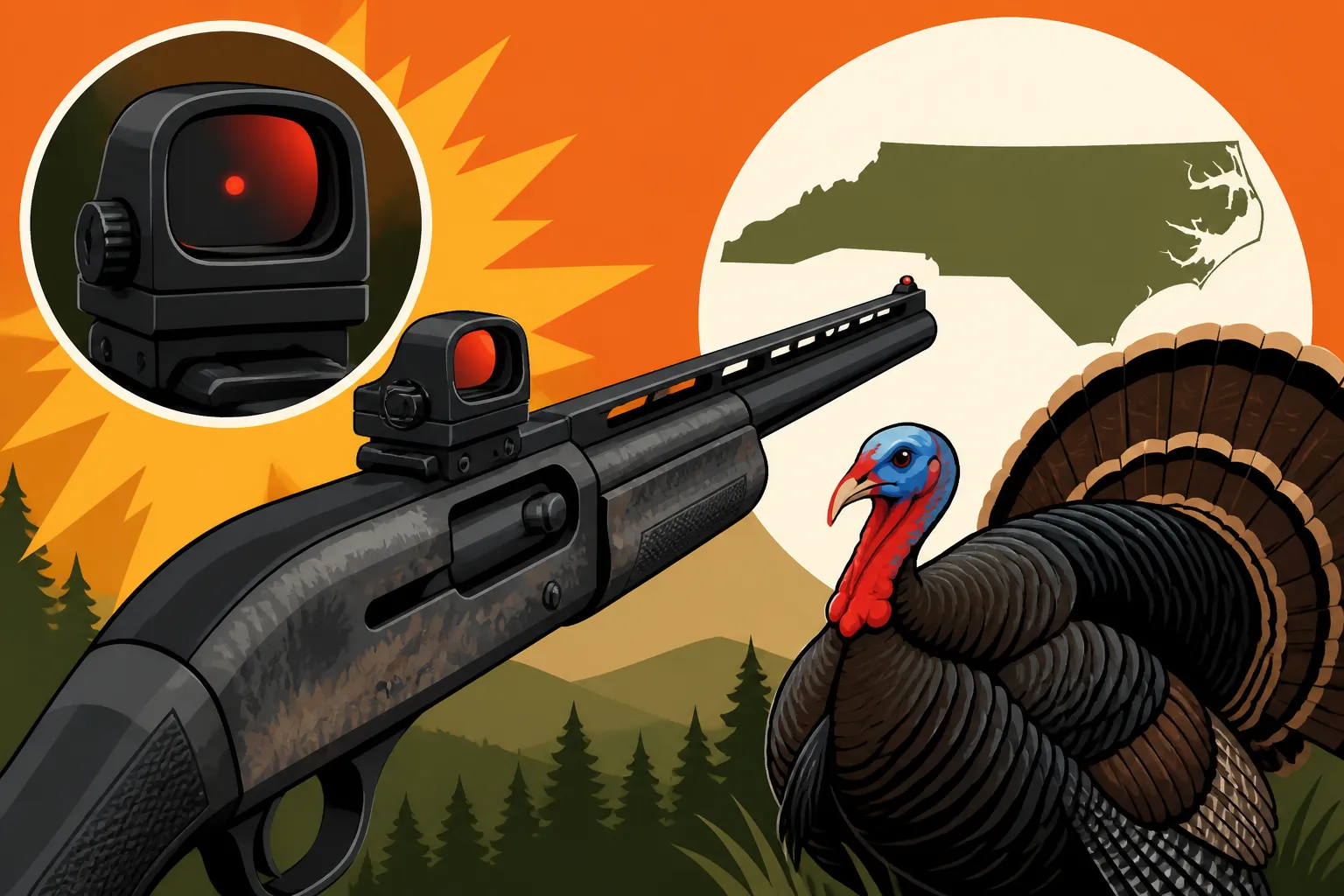
This is where a red dot truly shines. Instead of aligning a front and rear sight, or trying to float a single bead, you simply place the bright red dot directly on the turkey's head or neck. It's an intuitive, point-and-shoot system that dramatically reduces the time it takes to acquire your target. Because you can shoot with both eyes open, you maintain full situational awareness, watching the bird's body language and the surrounding woods, which is absolutely vital when a bird might be coming in with hens or another gobbler. That crisp, illuminated dot provides a clear, unmistakable point of aim, removing all the guesswork and allowing for rapid, confident shots when those chances finally present themselves in the spring woods. The quicker you can settle that dot, the better your chances are of making a clean, ethical kill.
Overcoming Environmental Challenges
North Carolina turkey season brings all sorts of weather and light conditions. Early mornings can be foggy and dim, mid-day can be bright with harsh shadows, and late afternoons can quickly fade into twilight. A traditional bead is at its worst in these conditions. A good red dot, however, offers adjustable brightness settings, allowing you to tailor the reticle intensity to the ambient light. That means your aiming point remains highly visible whether you’re sitting in the deep shadows of a Reading a Ridge for Mountain Zone Deer or squinting through the morning haze of a coastal swamp. Rain can make a traditional bead slippery and hard to see, but a quality red dot is typically waterproof and fog-proof, maintaining its clarity even when the skies open up, ensuring your aim stays true no matter what Mother Nature throws at you.
Types of Red Dot Sights for Turkey Shotguns
When you start looking at red dots, you'll quickly realize there are a few main styles on the market, each with its own advantages for turkey hunting. Choosing the right one for your setup, your hunting style, and even the terrain you typically hunt in North Carolina can make a big difference in your overall experience and success.
Tube-Style Red Dots
These sights look a lot like miniature rifle scopes, typically with a 1x (no magnification) objective. They have an enclosed tube that protects the emitter and lenses from the elements, making them incredibly durable for rough-and-tumble hunting conditions. Brands like Aimpoint and Vortex offer robust tube-style red dots that can withstand recoil and abuse. Their enclosed design means less chance of rain, snow, or debris obscuring the emitter. The downside can be a slightly more restricted field of view compared to open reflex sights, and sometimes they feel a bit bulkier on a sleek turkey gun. However, for many hunters who prioritize ruggedness and reliability in the North Carolina backcountry, a tube-style red dot is an excellent choice.
Open Reflex RMR-Style Sights
On the other end of the spectrum are the open reflex sights, often referred to as "RMR-style" (after the Trijicon RMR, a popular model). These are incredibly compact and lightweight, essentially just a small glass lens with an emitter projecting the dot onto it. Their biggest advantage is an almost completely unobstructed field of view. There’s no tube to look through, just a floating red dot over your target. This makes target acquisition lightning-fast, which is fantastic when a gobbler bursts out of cover unexpectedly. Brands like Holosun, Leupold, and Trijicon make excellent open reflex sights. While they are usually quite durable, the open emitter can sometimes be susceptible to rain or mud if not cleaned quickly. However, their minimal footprint and exceptional peripheral vision make them incredibly popular for turkey guns, especially if you're Run-and-Gun Turkey Tactics on Public Land.
What to Look for in a Turkey-Specific Red Dot
When you’re eyeing a red dot for your turkey shotgun, there are a few key features that really matter. First, consider the dot size, measured in MOA (Minute of Angle). A 2-3 MOA dot is fine for rifles, but for a turkey's head at 30-40 yards, a 5-8 MOA dot is often preferred. This larger dot is easier to pick up quickly, covers more of the target, and provides a clear aiming point that’s still precise enough for the vital zone. Next, durability is paramount. Your turkey gun is going to get bumped, jostled, and exposed to the elements, so look for a sight that's waterproof, fog-proof, and shock-resistant. Nobody wants a sight that fails after a sudden downpour or a tumble in the woods.
Battery life is another critical factor. You don't want your dot to die in the middle of a hunt. Many modern red dots boast impressive battery life, often thousands of hours, and some even have "shake awake" features to conserve power. Always carry a spare battery, just in case! Finally, consider the mounting system. Does it come with a mount that fits your shotgun's receiver, or will you need to purchase a Picatinny rail adapter? A secure, low-profile mount is essential for consistent performance. For comprehensive comparisons and reviews, many hunters turn to independent gear tests found on platforms like GoHunt, which can help narrow down the options for specific Turkey Shotguns and Chokes.
| Feature | Tube-Style Red Dot | Open Reflex (RMR-Style) Red Dot |
|---|---|---|
| Appearance | Resembles a small, 1x rifle scope | Small, open window with a projected dot |
| Field of View | Slightly more restricted due to tube enclosure | Very wide, unobstructed field of view |
| Durability | Emitter and lenses fully enclosed, very robust | Generally robust, but open emitter can collect debris |
| Size/Weight | Typically a bit larger and heavier | Very compact and lightweight |
| Target Acq. | Fast, but requires looking "through" a tube | Extremely fast, intuitive, "dot on target" |
| Mounting | Often uses standard scope rings or integrated mounts | Requires specific RMR footprints or adapter plates |
| Best For | Hunters prioritizing maximum ruggedness and protection | Hunters prioritizing minimal bulk, wide FOV, and speed |
Mounting and Zeroing Your Red Dot
Getting your red dot sight properly mounted and zeroed is just as important as choosing the right one. A poorly mounted sight won't hold zero, and a sight that isn't accurately zeroed is just a fancy paperweight. This isn't a "slap it on and go" kind of deal; it requires careful attention to detail to ensure that every pellet in your pattern hits its mark when that gobbler finally commits.
Secure Mounting is Key
A turkey shotgun, especially when loaded with heavy magnum turkey loads, generates significant recoil. Your red dot needs to be absolutely rock-solid to withstand this punishment and maintain its point of impact. Most shotguns either come pre-drilled and tapped for a Weaver or Picatinny rail, or you can have a gunsmith do it. Many red dots come with their own integrated mounts that attach directly to these rails. When installing, use a high-quality thread locker on all screws (the blue kind, not the red!), and torque them to the manufacturer's specifications. Don't overtighten, but definitely don't undertighten. A loose mount is a recipe for frustration and missed birds. Sometimes, receiver-specific mounts are available that replace your rear sight or attach directly to the receiver, providing an even lower profile and more integrated feel. Whatever method you choose, double-check all screws after your first shooting session, as recoil can sometimes loosen things up.
The Zeroing Process for Turkey Loads
Zeroing a red dot on a turkey shotgun isn't like zeroing a rifle. You're not aiming for a single bullet hole; you're aiming for the densest part of your shot pattern to hit precisely where your dot is. This process is crucial and requires patience. First, you'll need the exact turkey loads you plan to hunt with – don't skimp and use cheap target loads for patterning, as they will pattern differently. At 20 yards, fire a shot at a large paper target (like a 3-foot by 3-foot sheet of butcher paper). Adjust your red dot's windage and elevation so the center of your shot pattern aligns with where your red dot was when you pulled the trigger. Repeat this at 30 yards and then 40 yards, fine-tuning until the densest part of your pattern consistently hits the turkey's head/neck area on your target. Remember, turkey chokes are designed to constrict the pattern significantly, so understanding Turkey Shotguns and Chokes and how your specific choke interacts with your chosen load is vital. Resources like GoHunt often provide excellent guides and ballistics data to help hunters optimize their shotgun patterning for various loads, helping you ensure that Patterning a Turkey Gun at 40 Yards is done effectively.
Common Zeroing Mistakes to Avoid
There are a few pitfalls hunters often encounter when zeroing a red dot on a turkey shotgun. One common mistake is not using the exact ammunition you plan to hunt with. As mentioned, different loads, shot sizes, and even brands can pattern wildly differently. Another error is rushing the process or not shooting enough patterns. It’s not just about one good pattern; it's about consistency. Shoot several patterns at each distance to ensure your adjustments are correct and repeatable. Don't forget to maintain a consistent cheek weld and shooting position, just as you would in the field. Any variation in how you hold the gun can shift the point of impact. Lastly, always recheck your mount and optic after each shooting session. Recoil can, over time, loosen mounting screws, leading to frustrating shifts in your point of aim when you're finally face-to-face with a strutting gobbler.
Field Use and Considerations
Having a red dot on your turkey shotgun can be a game-changer, but like any piece of gear, it performs best when you understand its nuances and prepare for real-world scenarios. The woods of North Carolina are full of variables, from unexpected rain to battery failures, and being ready for them will ensure your red dot is an asset, not a liability.
Practice Makes Perfect
Mounting and zeroing are just the first steps. The real key to making a red dot work for you in the turkey woods is practice, practice, practice. Don't wait until the North Carolina Statewide Turkey Opener to get familiar with it. Set up targets in various scenarios you might encounter – shooting from a ground blind, from behind a tree, or in a seated position. Practice acquiring the dot quickly on the target’s head and neck. Simulate quick, close-range shots as well as longer, more deliberate shots. This muscle memory will be invaluable when that gobbler gobbles right in your face at 20 yards, or hangs up at the edge of your effective range. The more comfortable you are with placing that dot exactly where it needs to be under simulated pressure, the more confident you'll be when it counts. Consider practicing with Turkey Decoys That Work on Pressured Birds to get a real feel for how your aiming point interacts with the decoy's head.
Battery Life and Backup Plans
While modern red dots boast impressive battery life, they are still electronic devices. Batteries can fail, especially in extreme cold or after prolonged use. Always, and I mean always, carry a spare battery in your turkey vest. Even better, check your red dot before every hunt to ensure it's functioning. Some hunters opt for red dots that offer a "co-witness" feature, meaning if the red dot fails, you can still use your shotgun’s traditional bead sight through the optic as a backup. This provides peace of mind that you won't be left without an aiming solution if technology decides to glitch. Learning Setting Up Against a Big Oak and placing your backup plan within reach is smart thinking.
Weather and Environmental Concerns
North Carolina's spring weather can be unpredictable. A clear, sunny morning can quickly turn into a torrential downpour. While most quality red dots are waterproof, heavy rain can still bead up on the lens, obscuring your view. Keep a small lens cloth handy in a waterproof bag to wipe off any moisture. Fogging can also be an issue, especially when moving from a cold vehicle into warmer, humid air. Good optics are fog-proof, but external condensation can still occur. A small amount of anti-fog treatment can help. Remember, while the red dot itself may be waterproof, keeping your hands dry for adjustments and ensuring proper lens care is part of the game. For tips on how weather patterns impact game, many hunters utilize resources like GoHunt, which can help track conditions that might affect your gear in the field.
Legality and Regulations
Thankfully, for turkey hunting in North Carolina, using a red dot sight is generally perfectly legal. Our state wildlife regulations focus more on methods of take (shotgun, bow, muzzleloader) and season dates rather than specific optic types. However, it's always good practice to double-check the most current regulations from the North Carolina Wildlife Resources Commission, just to ensure there haven't been any changes. As long as it's not a night vision or thermal optic (which typically have specific rules), you should be good to go. Focus your efforts on mastering your Turkey Calls Worth Carrying in North Carolina and practicing your setup, knowing your aiming system is legally sound.
Disclaimer
This article is for general informational purposes only and does not constitute professional advice. Laws, prices and regulations vary by location and change over time. Consult a qualified professional for guidance on your specific situation.