Deer Drives on North Carolina Public Land
Hunting deer on public land in North Carolina can often feel like a solo mission against impossible odds. You're out there, still-hunting through acres of woods, only to find old sign or spook deer that have been pressured relentlessly. It's frustrating to know there are deer around but struggle to get one to cooperate. This guide is all about how to leverage the power of a well-executed deer drive to increase your odds and put venison in the freezer, specifically on our beautiful but challenging public lands.
Understanding Deer Drives on North Carolina Public Land
Deer drives are a classic hunting tactic, often misunderstood or underestimated, especially on public land. It's not about carelessly pushing deer, but rather about using a small team to strategically encourage deer to move towards waiting hunters. On highly pressured public lands, where deer are already masters of evasion, a smart drive can be the key to success.
Why Deer Drives Work in Pressure Cookers
Deer on North Carolina public lands are typically much warier than their private land counterparts. They learn quickly where hunting pressure is heaviest and adapt their movements, often bedding in the thickest, nastiest cover imaginable during daylight hours. Still-hunting these areas alone can feel like trying to find a needle in a haystack, and oftentimes, you'll jump deer without ever getting a shot, leaving you wondering if you'll ever connect. This is where a deer drive shines. By putting one or two hunters (the "pushers") through these dense bedding areas, you're disrupting the deer's comfort zone just enough to make them get up and move.
The genius of a public land drive isn't necessarily to send deer into a full-blown panic, but to get them to quietly sneak out of cover and try to skirt around the pressure. These deer, often moving cautiously, can be intercepted by standers positioned strategically along known escape routes, pinch points, or transition areas. It's about outsmarting their natural inclination to evade danger, using their own instincts against them by directing their escape. This tactic helps you capitalize on the deer's natural evasion rather than hoping they'll just walk by your stand.
The Legalities and Ethics of Public Land Drives
Before you even think about organizing a deer drive, you need to be crystal clear on North Carolina's hunting regulations and safety protocols, especially on public land. Safety is paramount, and a deer drive inherently involves more moving parts and potential hazards than a solo hunt. All hunters participating must adhere to blaze orange requirements; in North Carolina, this typically means wearing an outer garment of blaze orange or blaze pink visible from all sides. Make sure everyone knows the rules regarding North Carolina Legal Firearms for Deer Hunting and any caliber restrictions for the area you're hunting.
Ethically, a drive on public land demands extra consideration for other hunters who might be in the area. You're sharing the space, and while you have every right to hunt, being mindful of others' experiences is crucial. It's also vital to ensure that your drive is a calculated hunting effort, not just a chaotic stomp through the woods. Standers must have clear, safe shooting lanes, and pushers should maintain awareness of where standers are located. Understanding land boundaries, especially when public land abuts private property, is also essential. Remember, deer drives are about creating a safe, controlled movement of deer for harvest, not about driving them off the land or into danger.
Planning Your North Carolina Public Land Drive
A successful deer drive on public land doesn't happen spontaneously. It requires careful planning, good communication, and a solid understanding of the terrain and deer movement patterns. Think of it less like a casual walk and more like a tactical operation.
Scouting for Success on Game Lands
The foundation of any effective deer drive begins long before opening day: scouting. You can't just show up on a random block of public land and expect to push deer efficiently. You need to know the lay of the land, where deer bed, and, crucially, their most likely escape routes when pressured. Start by identifying promising patches of dense cover—thickets, overgrown clear-cuts, creek bottoms, or heavy pine plantations on your chosen North Carolina Game Lands. Look for fresh tracks, rub lines, and scat to confirm current deer activity. Pay close attention to trails leading out of these bedding areas, especially those that funnel into saddles, across ridge lines, or along the edges of swamps.
Tools like the NC Wildlife Map Tool are invaluable for this pre-season work, allowing you to identify public land boundaries, terrain features, and potential travel corridors from the comfort of your home. You can also utilize mapping applications like GoHunt to study topographical maps, aerial imagery, and property lines. These digital tools allow you to pinpoint strategic locations for standers and optimal routes for pushers. A thorough scouting trip should also involve putting boots on the ground to confirm what you see on the map. Walk the potential drive routes, identify natural funnels, and note any obstacles like thick briar patches or fallen timber. This detailed Scouting North Carolina Public Land Before Season is what transforms a random push into a well-executed deer drive.
Team Composition and Roles
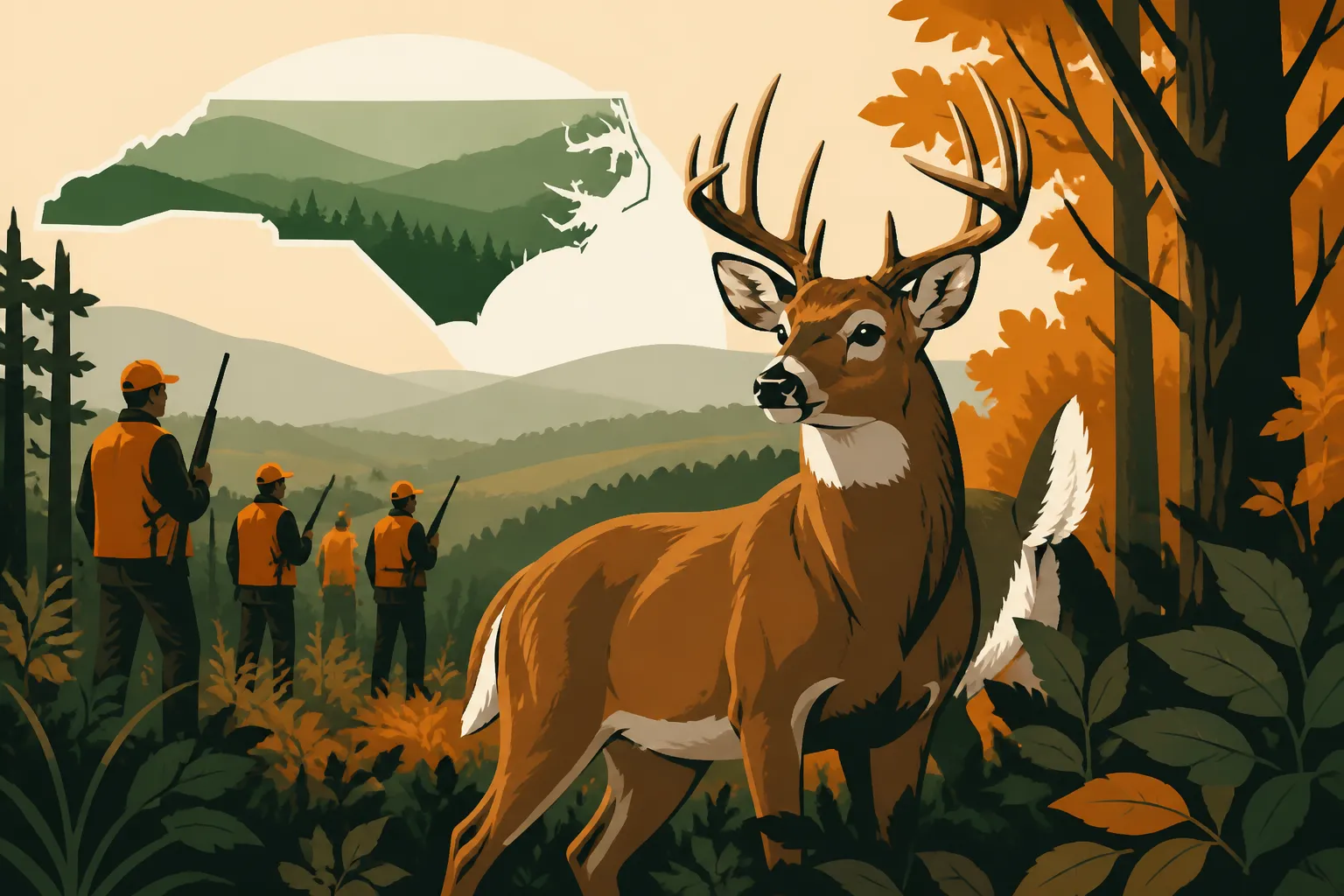
The size and makeup of your deer drive team can vary, but generally, a group of three to five hunters is ideal for most public land scenarios, striking a balance between effectiveness and manageability. You'll need at least one, and ideally two, "pushers" to actively walk through the cover and one to three "standers" (sometimes called "blockers") strategically positioned to intercept the deer. Communication is absolutely critical. Everyone on the team needs to know their role, their starting position, their route, and their final destination.
Before you even step foot in the woods, gather your team and review the plan on a map. Designate clear starting and ending points for the drive, as well as specific positions for each stander. Discuss how much noise the pushers should make—sometimes a quiet walk is more effective than a loud charge, especially for getting deer to sneak past standers rather than blowing out the sides. Equip everyone with two-way radios so that pushers can communicate their progress and standers can report deer sightings or movement. This constant communication, as detailed in guides like Two-Way Radios on a Deer Drive, ensures everyone is aware and safe throughout the drive.
Here's a simple breakdown of roles:
| Role | Primary Responsibility | Key Actions |
|---|---|---|
| Pushers | To move through dense cover and encourage deer movement. | Walk a predetermined path, maintain spacing, make appropriate noise, communicate progress. |
| Standers | To position themselves to intercept deer escaping the drive. | Get to position quietly, remain still and alert, identify safe shooting lanes, communicate deer sightings. |
| Coordinator | (Optional, often a pusher or lead stander) Oversees the entire drive. | Manages communication, ensures safety protocols are followed, adjusts plans if needed. |
This table clearly outlines the different responsibilities and helps ensure everyone understands their part in the operation, minimizing confusion and maximizing safety.
Executing a Safe and Effective Deer Drive
Once the planning is done and everyone understands their role, it's time to put the plan into action. Execution is where theory meets reality, and careful attention to detail makes all the difference.
Setting Up Standers Strategically
The standers' positions are perhaps the most critical component of a successful drive. These hunters aren't just standing around; they are strategically placed to cover known escape routes, natural funnels, and areas where deer are likely to pause before committing to a wide-open escape. After scouting, you should have identified several key points. Place standers downwind of where you expect deer to approach, if possible, but also consider prevailing winds and thermals. In the mountains, for instance, understanding Wind and Thermals on a Blue Ridge Slope is crucial, as deer will often use these to their advantage.
Safety is paramount when placing standers. Each stander must have a clear field of fire that does not overlap with other standers, pushers, or known public access points. This means identifying clear shooting lanes where a shot can be taken safely. Before the push begins, confirm that each stander is in position and has a full understanding of their shooting zones. It's also vital to be aware of property lines, especially if the public land you're hunting borders private tracts. Always verify where you are in relation to boundaries, paying attention to Reading North Carolina Public Land Boundary Signs to avoid any trespass issues or accidental shots onto private land.
Techniques for the Pushers
The pushers are the engine of the drive, but their technique can vary depending on the terrain and the desired outcome. The goal is to get deer moving without sending them into a full-blown panic that causes them to break quickly in an unpredictable direction. On public land, a slow, methodical, and relatively quiet push is often more effective than a chaotic, loud one. Deer that are gently nudged tend to sneak out, offering standers a better, more deliberate shot opportunity. Maintain a steady pace, ensuring that the pushers stay abreast of each other to cover the designated area thoroughly.
Communication among pushers is essential. Use radios to confirm positions and adjust the line if someone falls behind or encounters an unexpected obstacle. The terrain will dictate much of your approach; pushing through dense pine thickets or Hunting Coastal Plain Pocosin Swamps requires a different pace and noise level than walking through open hardwoods. In thick cover, more noise might be needed to stir deer, while in more open areas, a quieter approach might work best. Be mindful of your surroundings, constantly looking for fresh tracks or sign that indicates where deer might be holding up, and adjust your route slightly to cover these areas.
Post-Drive Considerations and Recovery
The drive doesn't end when the shot is fired. Successful recovery and responsible hunting practices extend well beyond the immediate action, especially on public lands where you might be navigating challenging terrain and sharing space with others.
Tracking and Recovery After the Shot
Once a shot is taken, the immediate aftermath is crucial. If a deer is hit, everyone involved needs to know to pause and assess. If the deer is down immediately, fantastic. If not, resist the urge to rush in. Give the deer time, often 30-60 minutes, to lie down and expire, especially if it was a marginal hit. Mark the spot where the deer was standing when shot and where you last saw it. This is where meticulous tracking begins. Look for blood, hair, bone fragments, and disturbed ground. Guides like Tracking a Deer Through North Carolina Leaf Litter offer invaluable tips for piecing together a blood trail, which can often be sparse in thick woods.
As daylight fades, the challenge intensifies. Having powerful headlamps is non-negotiable for recovery efforts that extend past sunset. Blood Trailing After Dark in North Carolina presents its own set of difficulties, but with a good light, a patient attitude, and perhaps a tracking dog (where legal and available), success is still very possible. Ensure you have a plan for getting the deer out of the woods, whether it's by dragging, using a deer cart, or quartering the animal for transport, particularly if you're deep in public land.
Handling Public Land Logistics and Etiquette
Hunting on public land means sharing the resource, and practicing good etiquette is key to a positive experience for everyone. After a drive, gather your team, account for all hunters, and consolidate your gear. Be mindful of others in the woods. If you encounter other hunters, be respectful, offer a friendly nod, and avoid loud discussions about your success or failures that might disturb their hunt. Avoid popular access points or parking areas on busy weekends, such as those that attract Opening Weekend Crowds on North Carolina Public Land, as these areas are often over-pressured and can create conflicts.
Field dressing your deer efficiently and away from main trails or parking lots is also a sign of respect. Pack out all your trash, including spent shell casings, and leave no trace behind. Remember that public lands are a privilege, and our actions as hunters reflect on the entire hunting community. A successful deer drive is not just about harvesting a deer, but about executing a safe, ethical, and responsible hunt that respects both the land and fellow outdoors enthusiasts.
Regional Considerations for North Carolina Deer Drives
North Carolina is a state of incredible diversity, from the towering peaks of the Appalachians to the vast, flat coastal plains. This varied landscape means that while the core principles of deer drives remain the same, your tactics will need to adapt to the specific region you're hunting.
Mountain Zone Strategies
Hunting the Mountain Zone presents unique challenges and opportunities for deer drives. The terrain is often steep, rugged, and covered in dense rhododendron thickets, mountain laurel, and mature hardwoods. Deer in these areas are often adept at navigating the elevation changes and thick cover. Drives in the mountains typically need to be smaller, tighter, and more deliberate, often focusing on pushing deer off high benches, through saddles, or along ridge lines. A drive might involve pushing a small ravine or a finger ridge where deer are known to bed.
When planning drives in areas like Pisgah National Forest Hunting or Nantahala National Forest Hunting, consider the direction of the push in relation to the terrain. Pushing deer downhill can make them move faster, but standers need to be positioned carefully to account for downhill shooting angles. Uphill pushes can be slower, but deer might try to skirt around the push on a contour rather than going straight up. Utilize natural features like rock outcroppings, steep cliffs, or changes in timber type to funnel deer toward your standers. Scouting for natural pinch points created by the topography is paramount here.
Piedmont Farmland and Woodlots
The North Carolina Piedmont is a mosaic of agricultural fields, suburban development, and fragmented woodlots. Deer in this region often live in smaller, isolated patches of cover, making them more predictable for drives, but also requiring more precise execution. Drives here are often shorter, focusing on a single woodlot or a thick fencerow. The challenge can be navigating irregular property lines and ensuring your drive stays strictly on public land or land where you have explicit permission. For example, if you're Hunting Piedmont Farmland Deer, you'll often be dealing with smaller, more defined blocks of cover.
Standers on Piedmont drives might be placed along field edges, pinch points between two woodlots, or where a creek bottom meets a powerline cut. Pushers need to be acutely aware of their surroundings, including roads, houses, and potential non-hunting traffic. A quiet, stealthy push can work wonders in these areas, as deer are often trying to slip from one piece of cover to the next unnoticed. Using mapping applications with property line overlays is non-negotiable to avoid any accidental trespass.
Coastal Plain Pocosins and Swamps
The Coastal Plain offers some of the densest, most challenging, but also most rewarding, drive opportunities. Vast pocosins, cypress swamps, and thick pine plantations characterize the landscape. Deer in these areas can be incredibly elusive, bedding deep in the impenetrable cover. Drives here often require more pushers, or at least pushers who are prepared for truly arduous wading and bushwhacking. Areas like Croatan National Forest Hunting are prime examples of this challenging terrain.
Successful Coastal Plain drives often utilize natural barriers like deep water, roads, or agricultural fields to funnel deer. Standers might be positioned on the edges of swamps, along old logging roads, or where a pocosin narrows into a more manageable bottleneck. The noise level of the push can be higher in these areas, as the dense cover often muffles sound. Be prepared for wet feet, thick vegetation, and deer that are more likely to burst out of cover rather than sneaking. Understanding how deer navigate these watery, brushy environments is key to anticipating their movements and placing your standers effectively.
Disclaimer
The information provided in this guide is for general informational purposes only and does not constitute legal advice. Hunting regulations, laws, and safety protocols can change frequently. Always consult the most current North Carolina Wildlife Resources Commission regulations before engaging in any hunting activities. Adherence to all local, state, and federal laws is the responsibility of the hunter.