Practical Range in North Carolina Mountain Coves
One of the biggest head-scratchers for us hunters in North Carolina's rugged mountain coves is figuring out just how far we can ethically and practically make a shot. The steep angles, dense timber, and unpredictable thermals can play serious tricks on your eyes and your ballistics, often leaving you questioning if that deer across the hollow is 150 yards or pushing 300. This guide is all about helping you cut through that confusion, understand the unique challenges of mountain hunting, and truly define your effective shooting limits for a successful and ethical hunt.
Understanding the Mountain Terrain and Its Impact on Shots
Hunting the North Carolina mountains, particularly within those deep, shaded coves, is a completely different ballgame than sitting on a Piedmont field edge or patrolling a coastal pocosin. The terrain itself dictates so much about what's a "practical range" for you. It's not just about what your rifle can do, but what you can do with your rifle in these specific conditions.
The Deceptive Nature of Mountain Coves
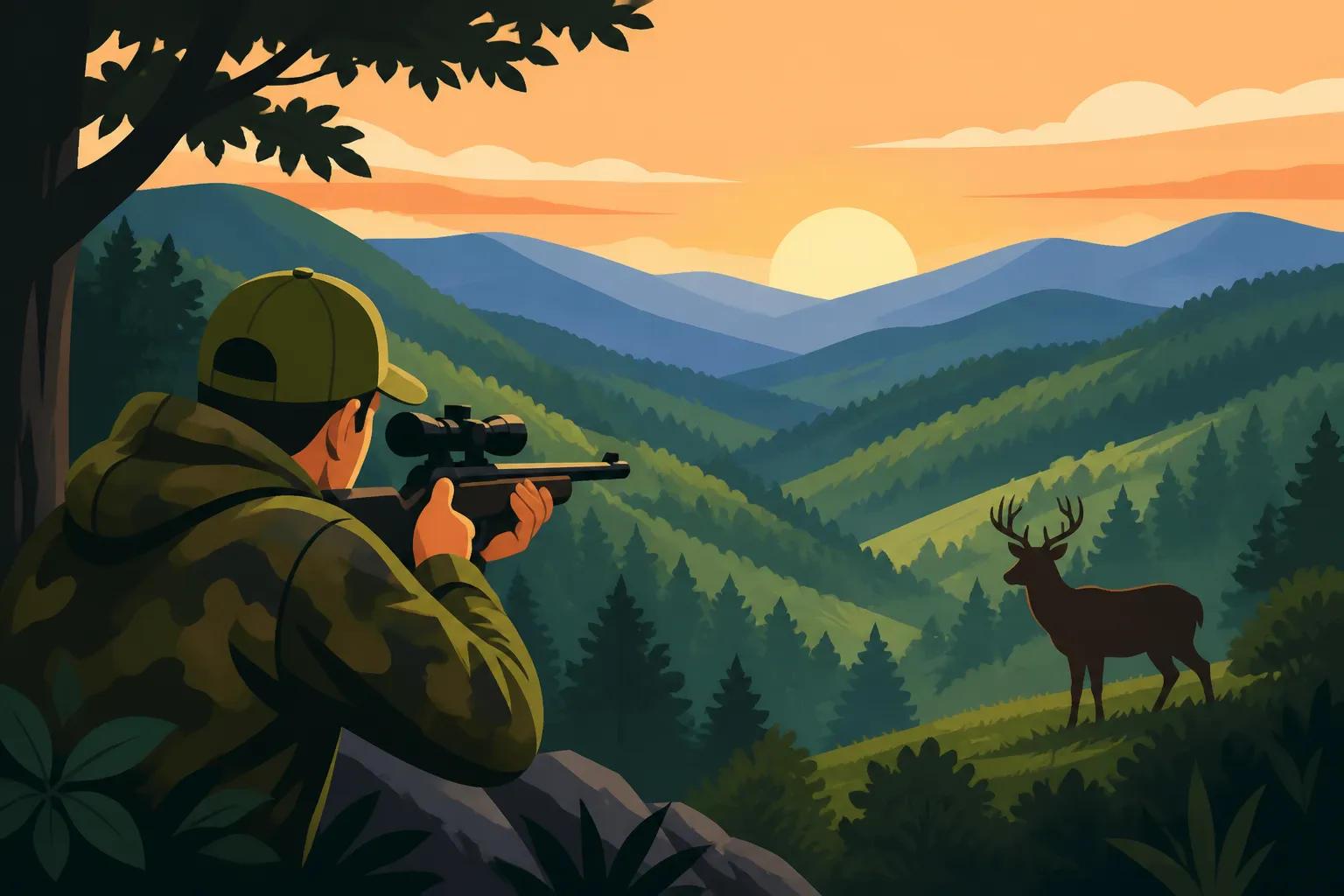
When you're perched on a steep mountainside, looking across a deep ravine or down into a hollow, distances can become incredibly deceptive. What looks like a chip shot across a relatively narrow gap might actually be a much longer distance than you perceive, or vice versa. The angle itself messes with your brain. A deer on a parallel ridge might appear closer due to the vertical drop, but the horizontal distance is what truly matters for bullet drop. Conversely, a deer directly below you at a steep angle might seem far, but the actual horizontal distance (the "shoot-to" distance) could be much less than the line-of-sight distance. This optical illusion is a consistent frustration for mountain hunters, leading to either overestimating shots or, worse, underestimating them and risking a poor hit.
These steep angles also profoundly affect bullet trajectory. Gravity still works, of course, but the effective gravitational pull on a bullet traveling at an angle is different than on a flat plane. A bullet shot uphill or downhill will generally strike higher than it would at the same horizontal distance on flat ground. While modern angle-compensating rangefinders have made this easier, trusting your rangefinder and understanding its output is paramount. Without it, you're essentially guessing, and guessing is not part of ethical hunting.
Vegetation and Cover Challenges
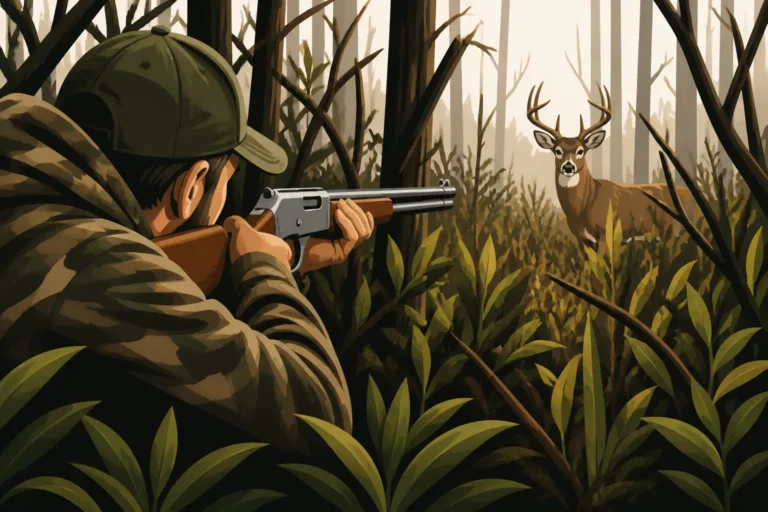
North Carolina's mountain coves are often choked with dense vegetation. We're talking thick rhododendron hells, mature hardwoods with massive trunks, and undergrowth that can obscure a deer at spitting distance. Finding a clear shooting lane, especially for anything beyond 100 yards, can be a monumental task. You might spot a buck working a bench across the cove, but then realize there's a wall of saplings or a giant oak precisely between you and its vitals.
This dense cover means that many of your shots, even if they're physically "long" across a hollow, might actually be quite close after you've stalked into a position with a clear line of sight. Or, it forces you to take a shot through a small window, demanding incredible precision and confidence in your rifle and yourself. Sometimes, the only shot you get is a tight one through a brushy opening, requiring you to be ready for anything from 20 to 200 yards. This constant variability in shot opportunity is why your "practical range" needs to be highly adaptable and rooted in your ability to be accurate in diverse field conditions, not just at the bench.
Wind and Thermals on a Blue Ridge Slope
If you've spent any time hunting the high country, you know that wind is rarely a simple, consistent factor. In the coves and hollows, thermals are constantly at play, especially during those critical dawn and dusk hours. As the sun rises, air warms and pushes up the slopes; as it sets, cold air sinks down into the hollows. Add in prevailing winds, and you've got a recipe for swirling, unpredictable air currents that can wreak havoc on a bullet's flight path.
A consistent crosswind in open country is one thing – you can typically hold for it. But when you're shooting across a deep, V-shaped cove, the wind might be coming from one direction on your side, swirling in the bottom, and then hitting the opposite slope from a completely different angle. Even a slight breeze can push a bullet enough at longer ranges to cause a poor hit, particularly on lighter projectiles. Understanding Wind and Thermals on a Blue Ridge Slope is crucial, and it means carrying reliable wind indicators, like a small puff bottle or milkweed, and using them constantly. Your practical range shrinks considerably when you can't accurately gauge wind, regardless of your other skills.
Factors Influencing Your Practical Shooting Range
Defining your "practical range" isn't a one-size-fits-all number. It's a dynamic calculation that combines your personal skill, your equipment's capabilities, and the ethical responsibility we all carry as hunters. Ignoring any one of these pieces is a recipe for trouble.
Your Personal Shooting Proficiency
Let's be real: your practical range begins and ends with your ability to consistently place a bullet exactly where it needs to go. It's not what your rifle is capable of, or what some YouTube shooter does at 1,000 yards. It's about what you can do, under pressure, in hunting conditions. This means more than just punching holes in paper from a bench rest. Can you shoot accurately from a kneeling position? How about off a pack? Can you use a treestand rail as a rest and still group shots?
True proficiency comes from deliberate practice, simulating field conditions. Get off the bench. Practice shooting from positions you'd actually use in the woods, whether it's leaning against a tree, sitting with crossed legs, or using your hunting pack as a rest. Understanding your comfort zone in these less-than-ideal positions is vital. If you can only confidently group shots within 1.5 inches at 200 yards from a solid bench, your practical range in the field might realistically be closer to 150 yards, especially if you're out of breath from a steep hike or dealing with a nervous tick. Your skills are the foundation; anything beyond them is just hope.
Rifle and Caliber Limitations
While personal skill is king, your rifle and the caliber you choose certainly play a significant role in your practical range, especially when considering the game you're after. For North Carolina deer and bear, you need a cartridge that not only shoots accurately but also retains enough energy to ethically harvest the animal. A common debate among hunters is often around calibers like the .243 versus a .270 or .308, or the increasingly popular 6.5 Creedmoor. Each has its strengths and weaknesses.
For example, a .243 might be incredibly accurate and pleasant to shoot, but its energy retention drops off faster than a .308 at longer ranges, particularly on larger-bodied mountain bucks or black bears. If you're considering 6.5 Creedmoor for Mountain Ridges, you're likely thinking about its flat trajectory and moderate recoil, which can certainly extend your accurate range. However, regardless of caliber, the bullet construction itself is equally important. You need a bullet designed to expand reliably at both high impact velocities (for close shots) and lower impact velocities (for longer shots). Knowing your rifle's ballistic chart and understanding how your chosen bullet performs at various distances, including its terminal energy, is absolutely non-negotiable for ethical hunting.
Optics and Sighting Systems
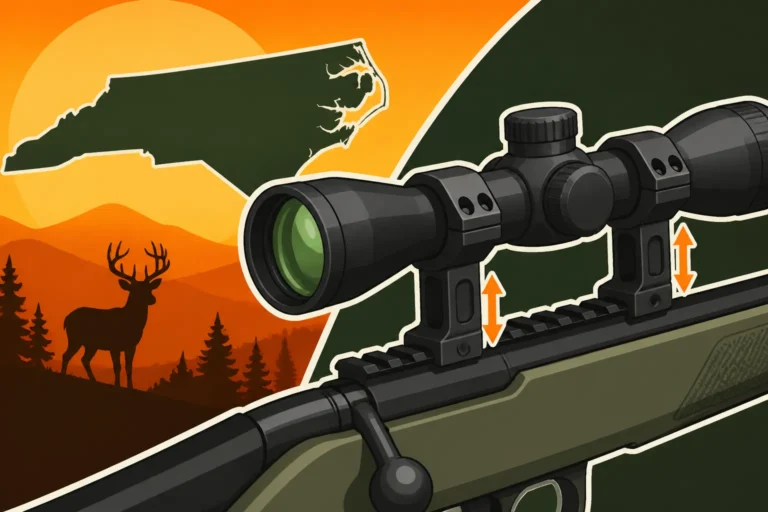
Your optics are your window to the target, and in the low-light conditions often found in deep mountain coves, quality makes a huge difference. A good scope with excellent light transmission can buy you precious minutes at dawn and dusk, when deer are most active. But it's not just about brightness; it's about clarity, a reticle that's easy to use, and reliable adjustments. For most mountain hunting in North Carolina, a scope in the 3-9x or 4-12x range is more than sufficient. You rarely need extreme magnification, and lower power settings offer a wider field of view, which is invaluable in thick cover or for quick target acquisition.
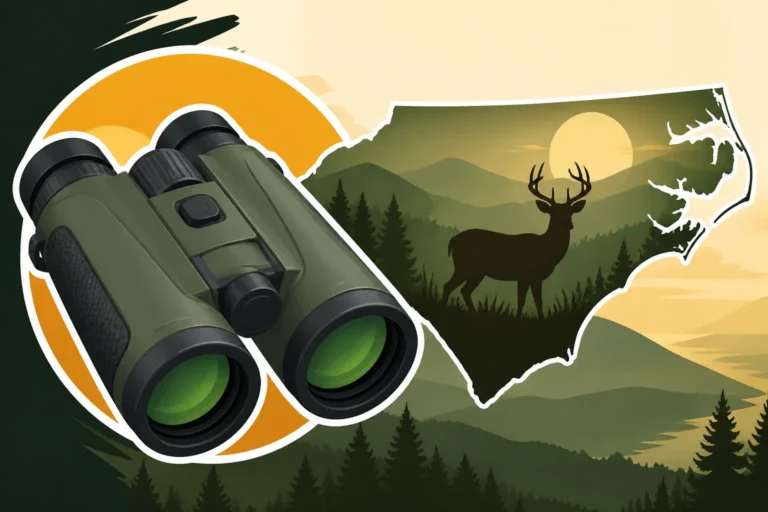
Beyond the scope, a reliable rangefinder is perhaps the single most important optical tool for mountain hunting. Forget the old tricks of estimating distance – they simply don't cut it on uneven terrain. An angle-compensating rangefinder, which gives you the true horizontal "shoot-to" distance, is essential. This eliminates the guesswork caused by uphill and downhill shots. Pair that with a quality set of binoculars, maybe 8×42 or 10×42, for spotting game in dense cover or across vast expanses. Remember, what you can see clearly and range accurately directly impacts your practical shooting range. If you can't identify your target clearly or precisely range it, you shouldn't be taking the shot. For more specific advice, check out Rifle Scopes for Low-Light Mountain Coves and Binocular Power for Mountain Hunting.
Ethical Considerations for Mountain Hunting
This is the big one. Your practical range isn't just what you can hit, but what you should hit. We owe it to the animals we pursue to make the cleanest, most humane kill possible. In the mountains, this ethical imperative takes on even greater weight. A poorly hit animal in a remote, rugged cove can quickly lead to a lost animal and an immense amount of suffering. The terrain makes Tracking a Deer Through North Carolina Leaf Litter incredibly difficult, let alone a wounded bear.
Before you ever squeeze the trigger, you must be 100% confident you can make a lethal shot. This means knowing your personal limits – if you're shaking from exertion, if the light is fading, if the wind is swirling violently, or if you simply don't have a stable rest, it's better to pass on the shot. There will always be another deer, another bear. Your practical range extends only as far as your ability to ensure a swift, clean kill under the specific conditions of that moment, regardless of how far you can hit a target at the range. Always prioritize the ethical shot above all else.
Developing Your Skills for Mountain Shots
Knowing your gear is one thing, but honing your personal skills to perform under the unique pressures of mountain hunting is another entirely. This isn't just about shooting; it's about anticipating, adapting, and executing when it truly counts.
Field Position Practice
As we've touched on, bench shooting is a great baseline, but it's not hunting. In the mountains, you're rarely afforded the luxury of a perfectly level, cushioned rest. You might find yourself needing to take a shot from a kneeling position after a hard climb, or from a sitting position with your elbows braced on your knees, or even prone on a steep incline. Your best bet for a stable shot might be leaning against a tree trunk, using a downed log, or resting your rifle over your pack.
Dedicated practice in these "field positions" is paramount. Set up targets at varying distances, and try shooting from kneeling, sitting, and prone. Simulate leaning your rifle against a fence post or using your backpack. This isn't about speed; it's about stability and consistency. Learn how to quickly and quietly get into a solid shooting position, whether it's using a shooting stick, a bipod, or just natural terrain. The more comfortable and practiced you are with these real-world positions, the more confident you'll be when that mountain buck finally steps out.
Rangefinder Mastery and Angle Compensation
The days of eyeballing distances in the mountains are long gone, especially if you want to extend your practical range beyond bowhunting distances. A quality rangefinder with angle compensation is an absolute must-have. Simply put, on steep terrain, the straight-line distance to your target is not the distance your bullet "sees." Gravity acts on the horizontal component of the bullet's travel, not the line-of-sight distance. An angle-compensating rangefinder calculates this true horizontal or "shoot-to" distance, preventing shots from going high on uphill or downhill angles.
But owning one isn't enough; you need to master it. Practice using your rangefinder quickly and efficiently. Can you pull it out, range an object, and get back on your rifle in seconds, without excessive movement? Can you range multiple points around a potential shot zone? Many hunters find it useful to range landmarks before game appears, so if an animal steps out near that rock or that specific tree, you already have its distance. For long shots, especially if you don't have an angle-compensating model, a good rule of thumb is that for every degree of angle, your bullet acts as if the target is slightly closer horizontally. Trust your rangefinder; it's one of your most reliable tools against mountain deceptions.
Reading the Terrain for Shot Opportunities
Mountain hunting is as much about strategy as it is about shooting. The most skilled shooter with the best rifle is useless if they can't find clear shot opportunities. This comes down to reading the terrain and understanding how game animals use it. Reading a Ridge for Mountain Zone Deer means looking for saddles, benches, creek bottoms, and natural funnels where deer are likely to travel. These areas often provide the best, albeit sometimes brief, clearings for a shot.
As you move through a cove, constantly be evaluating potential shooting lanes. Where could a deer appear? If it does, what kind of shot would it be? What's your maximum clear distance? Are there any natural rests nearby? By pre-visualizing these scenarios, you're not reacting blindly when an animal appears; you're executing a pre-planned strategy. Sometimes, this means passing on a potential shot and moving to a better position, even if it adds extra hiking or time. Having a mental map of your current position's shooting potential is key to extending your effective range, not just your physical shooting capability. Tools like the GoHunt app can be invaluable for studying topography, marking potential shooting positions, and understanding the nuances of wind and thermals, which many GoHunt users swear by for planning their movements.
Gear Considerations for Mountain Hunting Success
Your gear choice for North Carolina mountain hunting isn't just about comfort; it's about survival, efficiency, and ultimately, your ability to make ethical shots. Every item in your pack should serve a purpose in extending your practical range or ensuring a successful hunt.
Choosing the Right Rifle and Ammunition
When it comes to Rifle Setups for North Carolina Deer Hunting in the mountains, balance is key. You want a rifle that's accurate, powerful enough for the game, but not so heavy it becomes a burden on long, steep climbs. A lightweight rifle might feel great on the shoulder, but a super-light barrel can heat up quickly, affecting accuracy on follow-up shots, and increase felt recoil. Most hunters find a rifle weighing between 7-9 pounds (scoped) to be a good compromise for mountain conditions. The stock material also plays a role – synthetics are often preferred over wood for their durability and resistance to warping in wet conditions.
Ammunition is equally critical. For mountain hunting, you want reliable, high-quality hunting bullets that will perform consistently at various ranges and impact velocities. This means a bullet designed for controlled expansion, good weight retention, and deep penetration. Don't skimp on ammunition; practice with the exact load you intend to hunt with, and ensure your rifle likes it. For example, if you're using a .308, make sure your rifle groups well with a premium 165-grain or 180-grain bullet, rather than a cheaper target load. For dialing in long shots, ballistic calculators, often found within advanced hunting apps like GoHunt, can provide precise data for your specific rifle and ammunition at various temperatures and elevations.
Essential Optics for Mountain Hunters
We've already established the critical roles of a quality rifle scope and an angle-compensating rangefinder. Let's delve a bit deeper. When selecting your scope, look for clear glass, a robust construction that can handle bumps and knocks, and a reticle that you're comfortable with. Some hunters prefer simple duplex reticles and dial their turrets for longer shots, while others prefer BDC (bullet drop compensating) or Christmas tree-style reticles for quick holdovers. The choice is personal, but consistency is key. Ensure your turrets track accurately if you plan to dial.
For binoculars, an 8×42 or 10×42 offers a great balance of magnification and field of view. Look for models that are fogproof and waterproof – the mountains are notorious for sudden weather changes. A good binocular harness will keep your optics secure and readily accessible, preventing them from bouncing around or getting damaged. Many hunters I know rely on GoHunt's mapping features to mark their practiced shooting lanes, and then use their binoculars to identify those pre-ranged spots during a hunt.
Stability and Support Systems
Even the steadiest marksman needs support for longer shots or when out of breath. A good bipod, shooting sticks, or a versatile hunting pack can provide the stability you need. Bipods are excellent if you plan to shoot primarily from a prone position, but they can be cumbersome in thick brush. Shooting sticks, either monopod, bipod, or tripod, offer more versatility for standing, kneeling, or sitting shots and are easier to adjust for uneven terrain. They are often a better choice for the varied shot opportunities you'll find in the mountains.
Your hunting pack itself can be an incredible shooting aid. A well-designed pack, when laid flat or propped up, can create a rock-solid rest for your rifle. Practice shooting off your pack to see how stable it is and if it provides the right height. This integrated support means one less item to carry separately and one more way to achieve stability in the field.
Carrying and Protecting Your Gear
Long treks in steep, rugged terrain demand thought about how you carry your gear. A comfortable, well-fitting pack is paramount. Look for one with a good suspension system, hip belt, and external rifle carry options if you don't want to carry it in your hands all day. A sturdy Packs for a Pisgah Forest Day Hunt often features these options.
Your rifle needs protection from the elements and accidental damage. A robust sling that allows for comfortable carry, even over long distances, is a must. If rain or snow is in the forecast, consider a scope cover and a rifle sleeve or even a simple garbage bag to protect your rifle's finish and action from moisture. Nothing ruins a hunt faster than a fouled scope or a rifle that won't fire due to moisture. Remember, every piece of gear you carry is part of your overall system designed to make you an effective and ethical hunter in the challenging North Carolina mountains. When planning your hunts, using platforms like GoHunt can help you overlay public land boundaries and identify key access points within the Hunting the North Carolina Mountains.
Disclaimer
This article is for general informational purposes only and does not constitute professional advice. Laws, prices and regulations vary by location and change over time. Consult a qualified professional for guidance on your specific situation.