Decoy Spreads for Currituck Sound Divers
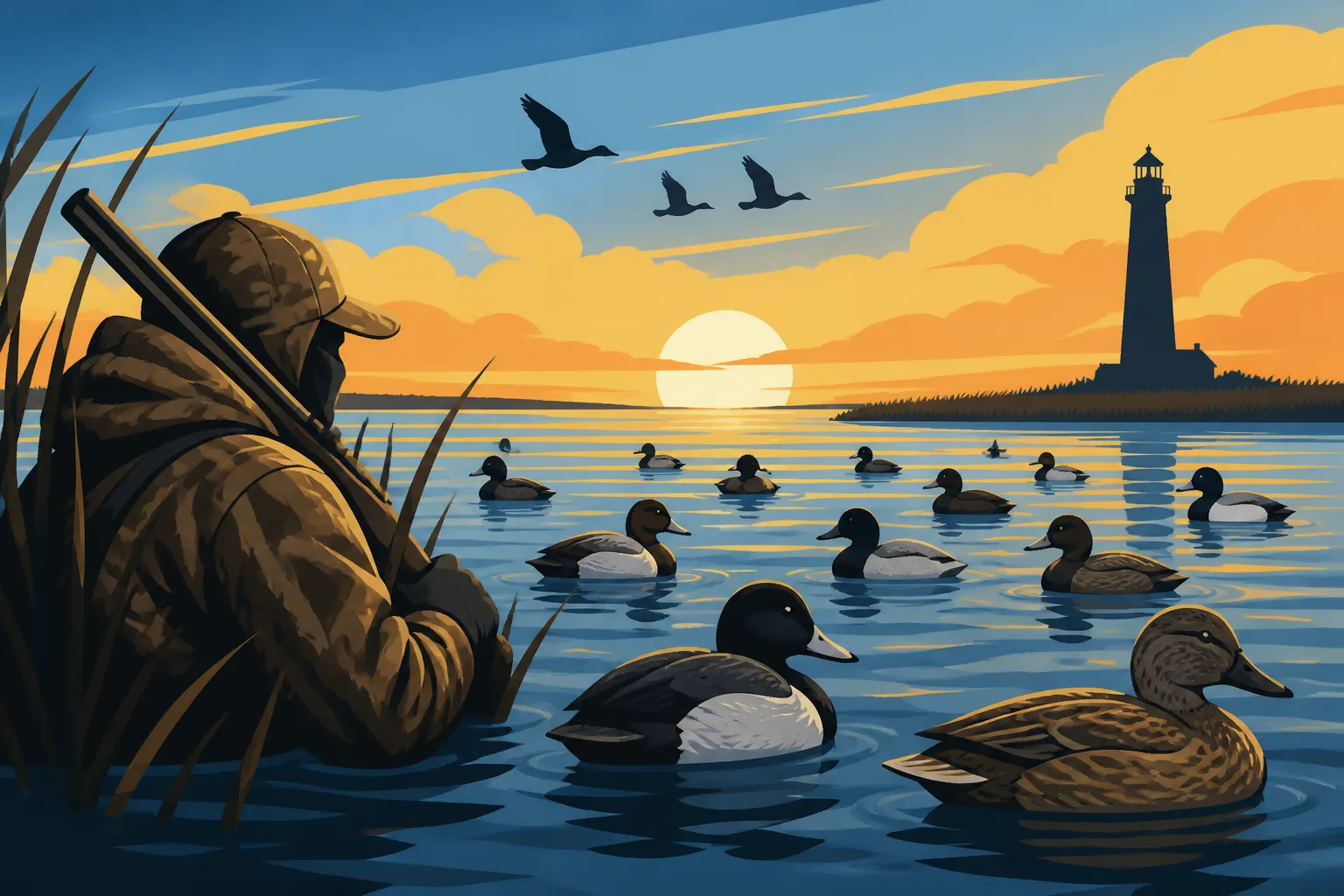
There's nothing quite like the rush of diver ducks barreling into your spread on Currituck Sound, but getting them to commit can feel like trying to convince a teenager to clean their room – seemingly impossible without the right approach. Many hunters struggle with inconsistent results because they're not tailoring their decoy setups to the specific behaviors of these fast-flying, open-water birds. This guide will walk you through the essential elements and advanced tactics for creating decoy spreads that consistently bring Currituck Sound divers screaming into range.
Understanding Diver Duck Behavior on Currituck Sound
To consistently fool diver ducks, you first have to think like one. Currituck Sound is a unique ecosystem, and the divers that call it home, or pass through, have specific habits dictated by the environment and their feeding preferences. Ignoring these fundamental behaviors is like trying to hunt deer without knowing what a scrape or rub looks like – you're just guessing.
Species of Divers Common to Currituck
When you're setting up on Currituck Sound, you're primarily targeting a few key species of diver ducks, each with its own quirks. Canvasbacks are often considered the king of divers, known for their large size and striking appearance. They’re strong flyers and often travel in large groups. Redheads are another common sight, known for their reddish-brown heads and distinctive blue bills. Scaup, both greater and lesser, are also abundant, often appearing in massive rafts that can stretch for hundreds of yards. Ruddy ducks, buffleheads, and goldeneyes make appearances too, though often in smaller numbers. Each species has a slightly different tolerance for hunting pressure and a preference for certain water depths or food sources. Understanding which species are most prevalent in your hunting area on a given day can help you adjust your spread for maximum appeal. It’s not just about getting any duck, it’s about getting the right ducks to commit.
Feeding Habits and Patterns of Divers
Unlike puddle ducks that dabble in shallow water, divers, as their name suggests, plunge underwater to find their food. On Currituck Sound, this typically means they're looking for submerged aquatic vegetation, clams, snails, and other invertebrates. The vast, shallow nature of the sound, with its abundant eelgrass and widgeon grass, makes it prime real estate for these birds. They'll often feed in areas with slightly deeper water, where these plants thrive, but still within a depth range that allows them to efficiently dive. Observing where ducks are naturally rafted up or actively feeding before the season or during scouting trips can be incredibly valuable. These are the locations where you'll want to concentrate your efforts, as the ducks are already conditioned to find food and security there. The key is to mimic a resting or feeding flock, signaling safety and sustenance.
Flight Paths and Approach Angles
Diver ducks are fast, powerful flyers, and they often come in low and hot, especially over open water. They typically prefer to land into the wind, much like an airplane, using the headwind to slow their descent. This means your spread needs to be set up to guide them into the optimal landing zone, usually downwind of your blind. Divers also tend to be less interested in circling high over a spread like some puddle ducks might. If they like what they see, they often commit quickly. If they don't, they're gone in a flash. Paying attention to prevailing winds, as well as the usual approach routes ducks take in a particular area, is critical. Are they flying along a specific shoreline, cutting across a point, or following a channel? Your spread should be positioned to intercept these natural flight lines and funnel birds directly into your shooting hole. Knowing the general direction from which birds approach will directly influence the orientation of your spread.
Essential Components of a Diver Decoy Spread
You wouldn't head out into the vastness of Currituck Sound without a reliable boat, just as you shouldn't go diver hunting without a well-thought-out collection of decoys. These aren't just plastic ducks; they're your primary tool for communication with passing flocks, convincing them that your little slice of the sound is the safest, most appealing spot to rest and refuel.
Decoy Types and Sizes
When it comes to diver decoys, bigger often is better, especially on a large body of water like Currituck Sound. Standard-sized decoys can get lost in the vastness, making it harder for high-flying birds to spot them. Magnum or super-magnum decoys offer superior visibility from a distance. The species mix in your spread is also important. While a spread of all canvasbacks can be deadly, mixing in redheads and scaup creates a more realistic and appealing "mixed bag" effect that can attract a wider variety of diver species. Some hunters even throw in a few geese or coot decoys as "confidence birds" to make the spread appear even more natural and safe. Just remember, quality over quantity is a good rule of thumb; a smaller spread of well-placed, realistic decoys is often more effective than a massive, jumbled mess.
Weighting and Rigging for Big Water
Currituck Sound can be a fickle beast, with strong winds and currents that can turn a perfectly set spread into a tangled disaster in a matter of minutes. Proper weighting and rigging are non-negotiable for diver hunting here. Texas rigs are a popular choice for their tangle-free nature and ease of deployment and retrieval. They consist of a heavy keel weight (often 8-12 ounces or more for big decoys in strong current) with a long mono or braided line that runs through the decoy's keel. This allows the decoy to slide freely, mimicking natural movement, and prevents lines from tangling. Another option is the longline rig, where multiple decoys are clipped onto a single main line, weighted at both ends. This is excellent for creating large, cohesive rafts of birds that are easy to deploy and pick up quickly. No matter your chosen method, ensure your weights are heavy enough to keep your decoys anchored even in a stiff chop, and that your lines are robust enough to withstand being pulled and stretched. Nothing saps morale faster than chasing lost decoys across the sound.
Motion Decoys and Confidence Birds
In the world of diver hunting, static spreads can sometimes look lifeless to wary birds. That's where motion decoys and confidence birds come into play. Simple jerk cords, which allow you to manually create ripples and bobbing motion among a few decoys, can be incredibly effective in mimicking active, feeding birds. Battery-operated floater decoys with spinning wings, or even simple wind-powered spinners, can also add that crucial element of lifelike movement. These motions break up the monotony and catch the eye of passing ducks. Beyond motion, don't underestimate the power of confidence birds. Throwing a few full-bodied goose floaters or a handful of coot decoys around the edges of your spread can make the whole setup look more inviting. Geese are often seen resting with ducks, and coots are constantly dabbling and feeding, signaling that the area is safe and productive. These subtle additions can make all the difference in convincing wary divers to drop their guard. Decoy Placement for Pressured North Carolina Birds can offer more insights into how these elements work.
Classic Diver Spreads for Currituck Sound
There's no single "magic bullet" decoy spread that works every time. Conditions on Currituck Sound change with the wind, the weather, and the day-to-day pressure. However, experienced diver hunters have developed several classic spreads that form the backbone of successful hunts. These aren't just random arrangements; they're designed to capitalize on diver behavior and funnel birds into the sweet spot for a shot.
The J-Hook or Fish Hook Spread
The J-hook, or fish hook, is arguably one of the most popular and effective diver spreads for open water. Imagine a large J or hook shape, with the bend of the hook extending out into the open water and the long shank running back towards your blind, which is positioned at the base of the hook. The vast majority of your decoys are clustered at the "bend" of the J, creating a highly visible mass that draws attention from afar. The long "shank" of the J then acts as a natural runway, guiding ducks to land within the curve of the hook, directly in front of your blind.
This spread works exceptionally well because divers prefer to land into the wind, often setting down just beyond the main body of the flock. With the bend of the J positioned upwind, ducks will naturally fly past it and attempt to land in the calm water inside the curve. The spacing is key here – the main mass of decoys should be fairly tight, simulating a raft of resting birds, but the "runway" decoys can be more sparsely spread to encourage a landing approach. You might use some of your magnum decoys in the main mass to increase visibility and then transition to standard or slightly smaller decoys as the J curves towards your shooting hole. It’s a classic for a reason, providing both visibility and a clear landing zone.
The V or Vee Spread for Landing Zones
Another highly effective formation, particularly for guiding birds into a specific pocket, is the V or Vee spread. This spread is essentially two long lines of decoys that converge towards a central point, creating a funnel shape. Your blind is usually positioned at the apex of the V, or slightly back from it. The open end of the V faces the direction from which you expect ducks to approach, typically upwind.
The beauty of the V spread lies in its ability to create a clear, inviting landing strip for incoming birds. Ducks will naturally follow the "path" created by the two lines of decoys, funneling them right into the open water pocket at the point of the V. This gives them a sense of security and a clear space to set their wings. You can vary the length of the legs of the V, and the distance between them at the open end, depending on the number of decoys you have and the size of the water you're hunting. For Currituck Sound, long legs are often beneficial to maximize visibility. Some hunters will place a few "confidence" decoys, like coots or geese, just outside the V to add to the realism without cluttering the landing zone. This spread is fantastic for windy days when ducks are looking for a definitive, protected spot to settle in.
The Blob or Massed Spread for Visibility
Sometimes, simplicity is key, especially when you need to grab attention from miles away across a wide-open sound. The "blob" or massed spread does exactly that. As its name implies, this spread involves grouping the vast majority of your diver decoys into one or two large, tight rafts. Imagine a big, amorphous cluster of birds, resting and feeding together.
The primary goal of the blob spread is sheer visibility. On a huge expanse of water like Currituck, where ducks might be flying high, a compact, dense mass of decoys stands out far better than a thinly spread line. It screams "safety in numbers" and signals a large, contented flock. Your blind would typically be positioned slightly away from the main blob, downwind, with a clear "landing hole" between your blind and the mass of decoys. Ducks, seeing the large group, will often fly over or past it and then swing around to land a short distance away, into the wind, landing in your target zone. This spread is particularly effective on bluebird days with minimal wind, or when you know ducks are flying very high and need a strong visual cue. It's also excellent for drawing in large rafts of scaup or redheads that are used to congregating in vast numbers. Remember, the denser the blob, the more visible it becomes.
| Spread Type | Primary Advantage | Ideal Conditions | Considerations |
|---|---|---|---|
| J-Hook | Guides birds into landing zone | Moderate to strong winds, clear approach path | Requires significant decoys for the "mass" |
| V-Spread | Creates funnel for precise landing | Consistent wind direction, targeted approach | Can be less visible from extreme distances |
| Blob/Massed | Maximum visibility from afar | Calm days, high-flying birds, large water | May require motion decoys to appear more "alive" |
| Longline Series | Efficient deployment, natural raft | Strong currents, consistent flight lines | Retrieval can be cumbersome if lines tangle |
Advanced Strategies and Adjustments for Success
Even with the best decoy spread, diver hunting on Currituck Sound isn't a "set it and forget it" affair. The truly successful hunters are those who constantly observe, adapt, and refine their approach. This is where experience, local knowledge, and a little help from modern tools can really make a difference.
Reading the Wind and Current
Currituck Sound is a dynamic environment, and ignoring the wind and current is like trying to paddle upstream without a paddle. Divers almost always want to land and take off into the wind. This fundamental behavior dictates the orientation of your spread. Your primary landing zone should always be downwind of your main decoy mass, allowing birds to approach and set their wings into the breeze, giving them a comfortable, controlled descent. If the wind shifts, even slightly, your spread might need adjustment. A quick realignment of a few key lines can transform a dead spread into a hot one.
Current, while less about duck flight, is critical for decoy movement. Decoys that are all facing the same direction, rigidly, look unnatural. A strong current can help provide natural motion to your Texas-rigged decoys, making them appear to be actively feeding. However, too strong a current can also pull your lines, tangle your spread, or even cause decoys to drag if not weighted sufficiently. You might need to use heavier weights on some days, or even double-weight critical lines, especially at the ends of longlines. Observing how your decoys sit in the water relative to the wind and current throughout the morning is a constant task, and making small, tactical adjustments can significantly improve your success.
Adjusting for Hunting Pressure and Time of Day
North Carolina's waterfowl hunting can get busy, especially on a popular body of water like Currituck Sound. As the season progresses and birds experience more hunting pressure, they become warier and more educated. What worked on opening day might not cut it a month later. Early in the season, ducks might commit to smaller, less elaborate spreads. As pressure mounts, you might need to increase the size of your spread, add more motion, or even vary your species mix to present a more convincing picture. A Hunting Pressure on North Carolina Public Land strategy applies just as much to waterfowl.
Similarly, the time of day often influences diver behavior. Early morning, during the first flight, ducks might be more eager to commit. Later in the morning, after they've been shot at or have fed, they might be looking for a safe loafing area. This could mean tweaking your spread to emphasize a comfortable resting area rather than an active feeding zone. Sometimes, reducing the size of your spread in the late morning, making it look like a smaller, less conspicuous flock, can even work on highly pressured birds who have learned to avoid the massive "kill holes." Don't be afraid to experiment throughout the day; what doesn't work at sunrise might be deadly at 10 AM.
Incorporating GoHunt for Scouted Locations
In today's hunting world, technology can be a powerful ally. While nothing replaces time on the water, tools like the GoHunt app can provide invaluable data and mapping capabilities that significantly enhance your scouting and setup. For Currituck Sound divers, GoHunt can help you analyze aerial imagery to identify key features like changes in water depth, subtle channels, submerged aquatic vegetation beds, and potential travel corridors. You can mark areas where you've observed ducks feeding or resting, helping you pinpoint the most productive locations for your spreads.
Imagine being able to precisely drop pins on where you saw canvasbacks rafted up last week, or where the eelgrass beds are densest. GoHunt allows you to do just that, creating a digital "diary" of your scouting efforts. This becomes especially useful when dealing with shifting conditions on the sound. You can use historical data on the app to recall successful spots from previous years or to cross-reference observations from earlier in the season. When you’re trying to optimize your Decoy Spreads for Currituck Sound Divers, having accurate GPS coordinates for specific features or past observations means you're setting up based on concrete intelligence, not just guesswork. It's like having a detailed playbook for the sound, right in your pocket.
Setting Up Your Blind and Shot Placement
You can have the most perfect decoy spread in the world, but if your blind is a beacon of human activity or your shot angles are off, those divers will either flare or you’ll be left scratching your head. Integrating your concealment with your decoy strategy is the final, crucial step to success.
Blind Concealment in the Marsh or Open Water
For diver hunting on Currituck Sound, your blind is your sanctuary and your secret weapon. Whether you're hunting from a layout boat, a permanent marsh blind, or a brushed-in boat blind, concealment is paramount. Divers have excellent eyesight, and anything that looks out of place or too "hard" can cause them to flare. If hunting a marsh edge, use natural vegetation like reeds, cattails, and marsh grass to break up your outline. Don't just stick a few pieces in; make it look like part of the natural landscape. Pay attention to shadows and sun angles, especially during golden hour; a blind that's perfectly hidden in the shade might be silhouetted against the rising sun.
For open-water hunting, layout blinds or low-profile boat blinds are often necessary. These need to be well-camouflaged with natural materials that match the surrounding water, sky, and any sparse vegetation. Painting your boat to blend in with the water's surface, and using heavy netting or fast-grass to cover hunters and equipment, makes all the difference. Remember, the goal is to disappear. Ducks shouldn't see you until they're cupped and committed, legs down, right in your shooting hole. A poorly concealed blind will ruin even the most artfully crafted decoy spread. For more on this, check out Layout Blind Hunting Coastal Plain Fields.
Optimizing Shot Angles Within the Spread
Once your spread is meticulously laid out and your blind is invisible, the final piece of the puzzle is understanding how to position yourself for the best shot opportunities. Your decoy spread should create a clear "kill hole" or landing zone, typically downwind of your main decoy mass and directly in front of your blind. This is where you expect the ducks to commit and land.
When setting up, visualize the incoming flight path. Divers often approach low and fast, looking to set down into the wind. If your blind is correctly positioned downwind of the landing zone, birds will be flying towards you as they approach, and then swinging broadside as they cup their wings to land. This offers ideal quartering-away or broadside shots. Avoid placing decoys too close to your blind, which can draw birds too near and make shooting awkward, or too far, leading to missed opportunities. The sweet spot is usually 20-30 yards from the blind, giving you clean, ethical shots. Consider the arc of your shotgun's pattern and the speed of the birds; having them commit at an ideal range significantly increases your chances of a successful harvest. Pay attention to how ducks respond to your spread during the hunt. If they're landing short, move a few decoys closer. If they're flaring wide, extend your arms. Hunting Currituck Sound Diving Ducks means understanding how these angles play out on the water.
Disclaimer
This article is for general informational purposes only and does not constitute professional advice. Laws, prices and regulations vary by location and change over time. Consult a qualified professional for guidance on your specific situation.