Turkey Shotguns and Chokes
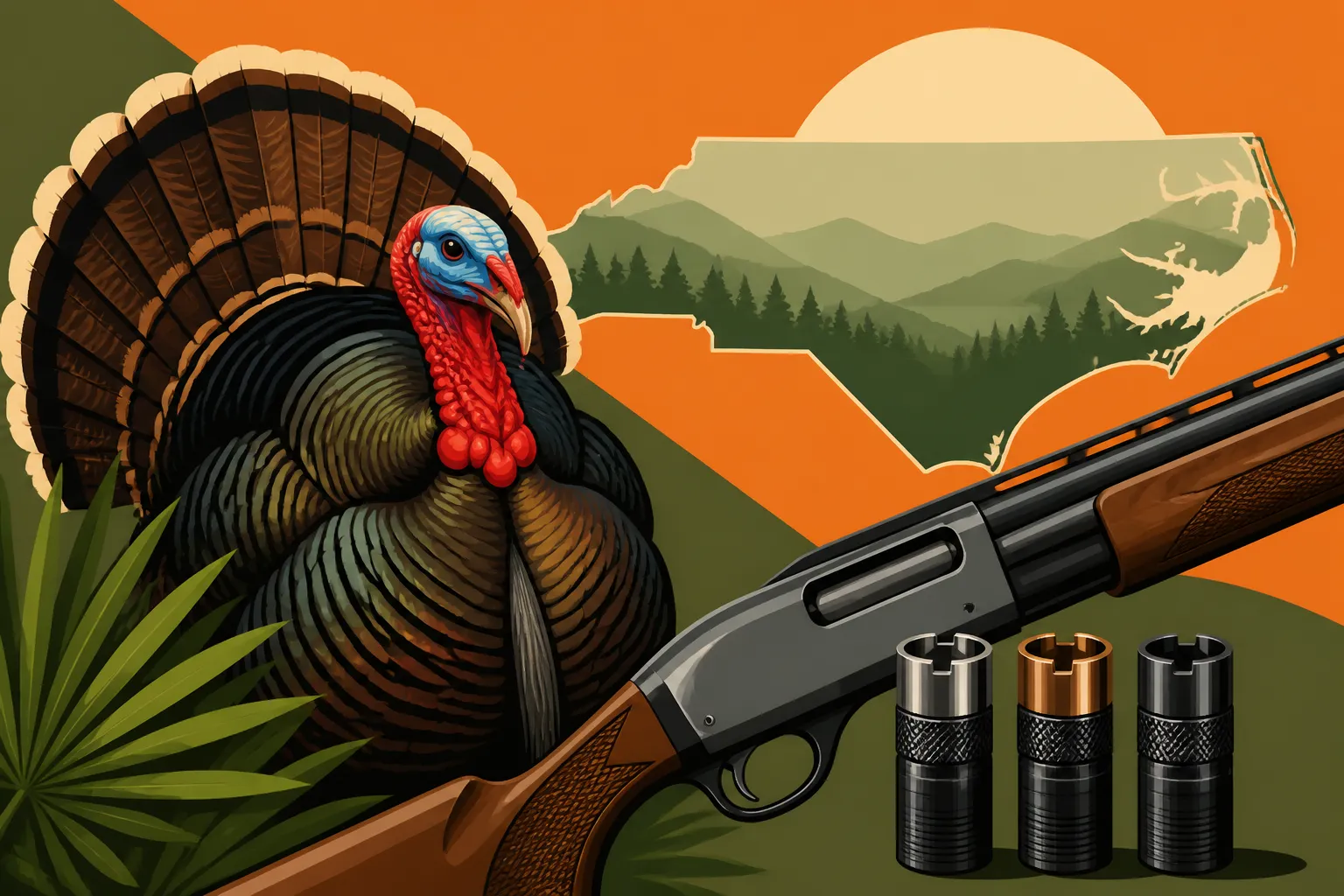
For many North Carolina turkey hunters, the pursuit of a gobbler is as much about the science of the scattergun as it is the art of the call. It can be incredibly frustrating to spend hours scouting, set up perfectly, only to have your shot string betray you at the moment of truth. This guide is here to unravel the mysteries of turkey shotguns and chokes, helping you understand how to build a setup that reliably puts birds down, whether you're working a Piedmont field edge or a mountain gobbler.
Why Your Turkey Shotgun Isn't Just "Any" Shotgun
Thinking that any old shotgun you have lying around will do for turkeys is a common pitfall, and one that often leads to disappointment in the field. Turkey hunting demands precision in a way that dove or duck hunting simply doesn't. You’re not just throwing a cloud of shot in the general direction; you’re aiming for a small, critical area on a bird's head and neck, often at distances that push the limits of shotgun performance. This isn't about bragging rights; it's about ethical, clean kills.
The Dedicated Turkey Gun Advantage
A dedicated turkey shotgun is purpose-built for the task at hand. This isn't to say you can't use a modified duck gun, but a true turkey rig offers several advantages that make a significant difference. These guns often come with shorter barrels, making them more maneuverable in thick cover – something you'll appreciate when crawling through brush to get into position on a wary gobbler in a coastal pocosin or trying to slip through dense mountain laurel. The shorter barrel also typically results in slightly wider patterns at very close range, which can be a blessing if that bird suddenly appears at 10 yards.
Beyond the barrel, dedicated turkey shotguns often feature finishes designed for concealment, such as matte black or various camouflage patterns. You might also find them equipped with specialized sights like fiber optics or even drilled and tapped for optics like red dot sights or low-power scopes, which can dramatically improve your aim. While these features might seem like luxuries, they contribute to a more effective and ultimately more ethical hunting experience. You want every edge you can get when a mature tom is strutting at 30 yards.
Beyond the Basic Bird Blaster
Consider the specific demands of North Carolina hunting. Our state offers incredibly diverse terrain, from the open agricultural fields of the Piedmont and Coastal Plain to the dense, rugged mountains. A shotgun that works well pass-shooting doves over a cornfield might be unwieldy when you're trying to quickly shoulder and swing on a gobbler that pops up unexpectedly in tight timber. The ability to make quick, precise shots from awkward positions is paramount.
Additionally, a turkey gun typically endures less wear and tear than a waterfowl gun, which often sees harsh conditions and corrosive salt marsh environments. This means you can invest in features like specific choke tubes and sighting systems without constantly worrying about their longevity in extreme weather. It allows you to truly dial in a single, reliable system year after year, building confidence that will pay off when that longbeard finally steps into range. The more consistent your setup, the more consistent your results, and the fewer frustrating misses you'll have to recount at deer camp.
Understanding Turkey Chokes: What They Are and Why They Matter
If you’ve ever walked into a sporting goods store and stared blankly at the wall of choke tubes, you're not alone. The world of shotgun chokes can feel like a labyrinth of technical jargon, but for turkey hunting, understanding this crucial component is absolutely vital. The choke is, quite simply, a constriction at the end of your shotgun barrel that controls how quickly your shot string spreads after leaving the muzzle. For turkeys, we’re almost always talking about tightening that pattern as much as possible.
The Role of Constriction
In turkey hunting, the goal is to deliver as many pellets as possible into a very small, vital area: the head and neck of the gobbler. Unlike other bird hunting where a wide, even pattern is desired for hitting fast-moving targets, turkeys require a dense, concentrated pattern to ensure a clean kill. This is where choke constriction comes into play. The tighter the choke, the more constricted the shot string, and the higher the pellet count you can expect in a small target area at longer ranges.
Standard chokes range from Cylinder (no constriction) to Full, but for turkeys, you'll almost always be looking at something much tighter: Extra Full (XF) or Super Full. These chokes are designed to squeeze those pellets together, maintaining a tighter group for a greater distance. It’s important to remember that more constriction isn't always better for every load or every gun, and blindly choosing the tightest choke without patterning can actually lead to uneven patterns with large gaps.
Popular Turkey Choke Options
Turkey chokes come in a variety of styles and constrictions, and many manufacturers offer specialized options. Here’s a breakdown of common types you'll encounter:
- Extra Full (XF): This is often the starting point for many turkey hunters. It provides significant constriction, suitable for standard lead loads and many heavier-than-lead options. It offers a good balance of range and pattern density for typical turkey hunting distances.
- Super Full / Turkey Specific: These chokes are designed with even tighter constrictions than XF. They are often optimized for specific shot sizes and heavier-than-lead payloads like tungsten super shot (TSS). Many choke manufacturers produce lines specifically labeled "Turkey" or "Gobbler Getter," indicating they are engineered for maximum pattern density. These are usually non-ported, allowing for consistent patterns.
- Ported Chokes: Some chokes feature ports (small holes) near the muzzle end. The idea behind these is to reduce recoil and muzzle jump by redirecting gases. While they can be effective for comfort, some hunters feel they can slightly disrupt the pattern, especially with certain loads. However, many hunters use them successfully.
Understanding the internal geometry of these chokes and how they interact with your chosen ammunition is key. There's no one-size-fits-all answer, which is why patterning (which we’ll discuss shortly) is so critical.
Gauge, Action, and Barrel Length: Making Your Shotgun Choice
Once you understand chokes, the next step is selecting the right shotgun platform itself. This isn't just about what looks good; it's about matching the tool to the task and your personal preferences for comfort and effectiveness. North Carolina's varied terrain means you'll want a versatile and reliable setup.
The Great Gauge Debate: 12, 20, and Beyond
The 12-gauge has long been the undisputed king of turkey guns, and for good reason. It offers the largest payload capacity, meaning you can send more pellets downrange with each shot. This translates to a denser pattern and often greater effective range, especially with traditional lead shot. When using heavier-than-lead loads like TSS, a 12-gauge can become an absolute powerhouse.
However, the 20-gauge has seen a significant resurgence in popularity, particularly with the advent of super-dense TSS shot. A 20-gauge loaded with TSS can often outperform a 12-gauge with lead, delivering a devastating pattern with less recoil and a lighter, more maneuverable gun. This is a huge advantage for youth hunters, those sensitive to recoil, or anyone who values a lighter carry during long treks across public lands like Pisgah National Forest or through dense coastal swamps. While the 28-gauge and .410 are also seeing some niche use with specialized loads, the 12 and 20 remain the most practical choices for most North Carolina turkey hunters.
| Gauge | Common Pros | Common Cons | Ideal Uses (NC) |
|---|---|---|---|
| 12-Gauge | Maximum pellet count, wider range of ammo, powerful with lead or TSS | Heavier recoil, heavier gun, potentially less maneuverable | All-around hunting, longer shots, open fields |
| 20-Gauge | Lighter recoil, lighter gun, excellent with TSS, good maneuverability | Less pellet count with lead, fewer traditional ammo options | Youth hunters, recoil-sensitive, dense timber, run-and-gun |
Action Types: Single-Shot, Pump, or Semi-Auto?
The action of your shotgun refers to how it loads and fires. Each type has its pros and cons for turkey hunting:
- Single-Shot: Simple, reliable, and often the most affordable option. It forces you to make that first shot count, as there's no quick follow-up. For a minimalist approach, it's hard to beat. Recoil can be stout due to lighter gun weight.
- Pump-Action: The classic choice for many hunters, offering rugged reliability and the ability to cycle different loads manually. They are generally less expensive than semi-autos and can withstand harsh conditions. The manual cycling can be noisy if you're not careful, which might spook a close gobbler.
- Semi-Automatic: These guns offer reduced recoil and the ability to get a quick second or third shot off, if needed. This can be beneficial in situations where a bird gets up after the shot, or if you're hunting in a group and need to contribute to a follow-up. However, semi-autos require more cleaning and maintenance, and some designs can be finicky with lighter loads. Choose a reliable model that's known for cycling heavy turkey loads without issue.
Ultimately, the best action type is one you're comfortable and proficient with. Focus on consistent accuracy with your first shot, as that’s usually all you’ll get for a turkey.
Barrel Length: Maneuverability vs. Sight Radius
Turkey shotguns generally feature shorter barrels than those used for waterfowl or upland birds. You'll typically find turkey barrels in the 20 to 24-inch range. The primary advantage of a shorter barrel is maneuverability. When you’re trying to navigate dense thickets, crawl on your belly, or quickly swing on a bird that appears from behind a ridge line in the Uwharrie National Forest, a shorter barrel is a huge asset.
Some hunters worry that shorter barrels reduce range or velocity, but with modern ammunition and choke technology, this effect is negligible for typical turkey hunting distances. What you might notice is a slightly shorter sight radius, which can make precise aiming a bit more challenging with open sights. This is one reason many turkey hunters opt for a red dot sight or low-power scope, which essentially negates any disadvantage from a shorter sight radius and significantly enhances aiming precision.
Ammunition Matters: Pairing Your Gun and Choke with the Right Loads
You can have the fanciest turkey shotgun and the tightest choke on the market, but if you don't pair it with the right ammunition, you're just making noise. The interaction between your gun, choke, and chosen shotshell is the secret sauce to a devastating turkey pattern. This isn't a place to cut corners or grab whatever's cheapest on the shelf.
Lead vs. Heavier-Than-Lead (HTL)
For years, lead shot was the only option for turkey hunters. Traditional lead loads, usually in sizes #4, #5, or #6, are still effective within reasonable ranges (typically 30-40 yards) when paired with a good choke. The key is consistent density and enough energy to penetrate the skull and neck bones.
However, the game changed dramatically with the introduction of "heavier-than-lead" (HTL) shot, primarily bismuth and tungsten super shot (TSS).
- Bismuth: Denser than lead, bismuth offers better energy retention and harder hitting patterns than lead, while still being softer than steel, making it safe for older shotguns not rated for steel shot. It’s an excellent choice for a step up from lead without the premium price of TSS.
- Tungsten Super Shot (TSS): This is the undisputed king of turkey loads today. TSS is significantly denser and harder than lead, allowing for much smaller shot sizes (like #7, #8, or #9) to carry more energy and penetrate deeper. The result is an incredibly dense, hard-hitting pattern with more pellets per shell, effectively extending ethical killing ranges. A 20-gauge with TSS can often outperform a 12-gauge with lead, completely revolutionizing what’s possible for hunters using smaller gauges or wanting lighter recoil. Many hunters attest that TSS has changed how they hunt, allowing for greater confidence at longer ranges.
Shot Size and Velocity Considerations
Choosing the right shot size depends on your preferred shot material (lead, bismuth, TSS) and your choke.
- Lead: #4, #5, #6 are common. #4s offer more energy per pellet but fewer pellets per shell. #6s offer more pellets but less energy. Many hunters find #5 to be a good balance.
- Bismuth: Often found in #4, #5. Similar to lead in application, but with improved performance due to density.
- TSS: Typically #7, #8, #9. Don't let the small number fool you; these tiny, dense pellets carry incredible energy. A #9 TSS pellet hits harder than a #4 lead pellet. The sheer number of pellets in a TSS load creates a devastating pattern.
Velocity also plays a role, though often secondary to pattern density. Most modern turkey loads are designed to achieve optimal velocities for their respective shot types. Some loads are "high velocity," others are "standard." It's less about choosing the fastest load and more about finding the load that patterns best with your specific gun and choke combination. A slower, denser pattern is always preferable to a faster, sparse one.
It’s often beneficial to choose your choke after you’ve decided on your preferred ammunition. Some chokes are specifically designed and advertised to perform best with certain types of shot (e.g., "TSS specific" chokes). This is where research and patterning really become crucial. North Carolina Muzzleloader Tactics might focus on a different type of hunting, but the principle of matching components for optimal performance remains the same across all firearm types.
Patterning Your Rig: The Only Way to Know for Sure
This is arguably the most critical step in preparing your turkey shotgun, yet it's often overlooked or rushed. You absolutely cannot skip patterning your shotgun. Buying a new choke and expensive turkey loads and just assuming they'll work perfectly together is a recipe for heartbreak and potentially wounded birds. Patterning is how you see exactly what your gun, choke, and ammo combination will do in the real world.
The Science of the Shot String
When you pull the trigger, the shot leaves the barrel as a tightly packed mass, then begins to spread into what's called a "shot string" or "pattern." The choke's job is to control that spread. Your goal in patterning is to determine how many pellets land within a critical kill zone (typically a 10-inch circle, representing a turkey's head and neck) at various distances. You're looking for a dense, even distribution of pellets within that circle, with no significant gaps or "holes" that a gobbler's head could slip through.
A common misconception is that a tighter choke always means a better pattern. Not true. Sometimes, too much constriction can deform the pellets, leading to flyers and an overall less effective pattern. Different guns, even of the same make and model, can "like" different ammunition and choke combinations. It's a highly individual process, and the only way to figure out your gun's sweet spot is to shoot it. This is similar to how a rifle shooter meticulously develops a load for accuracy; turkey hunting demands the same precision with your shot pattern.
Step-by-Step Patterning Process
Here’s a practical approach to patterning your turkey shotgun:
- Gather Your Supplies: You'll need your shotgun, several different brands and types of turkey loads (even slight variations can make a difference!), a variety of choke tubes if you have them, a sturdy rest (sandbags, bipod), hearing protection, eye protection, and large paper targets. Some targets are specifically designed with a turkey head outline and a 10-inch circle for easier analysis.
- Set Up Your Range: Start at 20 yards, then move to 30, 40, and even 50 yards. You need to know your effective range.
- Shoot Systematically:
- Start with a known good choke (e.g., an Extra Full or Turkey-specific choke).
- Load one type of ammunition and fire a shot at your target from your chosen distance (e.g., 30 yards).
- Walk down and examine the target. Count the number of pellets within the 10-inch circle. Look for even distribution. Mark the center of the pattern.
- Repeat with the same load/choke combo at least 2-3 times to ensure consistency.
- Switch to a different load with the same choke, and repeat the process.
- Then, switch to a different choke with your favorite load, and repeat.
- Keep detailed notes! This is crucial. Which load, which choke, which distance, and how many pellets in the 10-inch circle.
- Analyze Your Results: Identify the combination that consistently puts the most pellets into the 10-inch kill zone with an even distribution at your maximum comfortable range. Most hunters aim for at least 80-100 pellets in that 10-inch circle for a reliable kill. If you're using TSS, you might find even higher numbers.
Remember to aim for the center of the turkey head on the target. If your pattern consistently hits high, low, or to one side, you might need to adjust your sights or optics. This is where fiber optic sights or a red dot sight truly shine, allowing for precise point-of-aim adjustments.
Common Patterning Mistakes to Avoid
- Rushing It: Don't try to pattern multiple loads and chokes in one quick session. Take your time, let your barrel cool between shots, and analyze each target thoroughly.
- Not Using a Rest: Hand-holding a powerful turkey gun will introduce human error. Use a solid rest to eliminate variables and get true pattern results.
- Shooting Too Few Rounds: One shot isn't enough. Always shoot multiple times with the same combo to confirm consistency.
- Ignoring Recoil: If a load kicks so hard you flinch, your pattern will suffer in the field. Find a balance between performance and comfort. This is where a 20-gauge with TSS often wins, especially for long waits in a ground blind.
- Not Testing at Realistic Ranges: Don't just shoot at 20 yards. Know your 40-yard pattern cold, and test out to 50 or even 60 yards to determine your absolute ethical maximum. This knowledge empowers you to make smart decisions when a bird hangs up just out of reach.
After you've done the work, you'll have a clear picture of your shotgun's capabilities. This confidence is invaluable when that gobbler finally comes into range. You can use tools like GoHunt to scout and plan your hunts, but the patterning process is a hands-on exercise that builds true skill and understanding of your equipment.
Shotgun Accessories and Setups for North Carolina Turkeys
Once you’ve got your gun, choke, and ammo dialed in, it's time to think about the accessories that can further enhance your turkey hunting success in North Carolina. These additions aren't just for show; they can significantly improve accuracy, comfort, and stealth in the field.
Sights and Optics: Enhancing Precision
Traditional bead sights can get the job done, but for the precision required in turkey hunting, many hunters opt for enhanced sighting systems:
- Fiber Optic Sights: These bright, high-visibility sights are a significant upgrade over a single brass bead. They gather ambient light, making them easy to see in low-light conditions common during early morning hunts. They provide a clearer sight picture and faster target acquisition.
- Red Dot Sights: A red dot sight is a game-changer for many turkey hunters. It provides a single, bright aiming point that's easy to see against any background. There's no front and rear sight alignment to worry about; simply put the dot on the turkey's head and pull the trigger. This dramatically increases accuracy and confidence, especially for longer shots or when a bird moves unexpectedly. Brands like Vortex, Holosun, and Burris offer popular, rugged red dot sights suitable for shotguns.
- Low-Power Scopes: Some hunters prefer a low-power variable scope (e.g., 1-4x or 1.5-5x). These offer magnification, which can be beneficial for precise aiming at longer distances, especially in open country. However, they can be slower to acquire a target quickly in dense cover and add weight. If you choose a scope, make sure it’s robust enough to handle the recoil of heavy turkey loads.
Regardless of your choice, ensure your sights are properly zeroed to your specific turkey load during the patterning process. A red dot or scope, once zeroed, helps ensure your point of impact matches your point of aim every single time. Rifle Scopes for Low-Light Mountain Coves covers optics for a different discipline, but the principle of matching optics to conditions and ensuring precision holds true.
Slings and Carrying Comfort
North Carolina turkey hunting, especially on public lands like the Nantahala National Forest, often involves significant walking. A comfortable and secure sling is not a luxury; it's a necessity. You’ll be carrying your shotgun for hours, often hands-free while calling, glassing, or climbing over obstacles. A wide, padded sling that doesn't slip off your shoulder will make a world of difference in your comfort and endurance.
Look for slings with non-slip backing and quick-adjust features. The ability to quickly tighten the sling when still-hunting or loosen it for a quick shot opportunity can be very valuable. Durability is also key, as your sling will endure brush, sweat, and sometimes rain. A good sling allows you to focus on the hunt, not on how uncomfortable your gun is to carry.
Camouflage and Concealment
Turkeys have incredibly sharp eyesight. While your clothing is the primary concealment, a shiny shotgun can give you away in an instant. Most dedicated turkey shotguns come with matte or camouflage finishes to prevent glare. If your gun is glossy, consider adding a camouflage gun wrap or using camouflage tape to break up its outline and eliminate any reflective surfaces. Every little bit of concealment helps when trying to fool a wary gobbler that's hung up at 60 yards.
This includes any optics or accessories. Make sure your red dot or scope also has a non-reflective finish, or cover it as needed. The idea is to make your entire setup blend seamlessly with your surroundings, whether you're hunkered down against a big oak or tucked into a ground blind on a field edge. Brushing In a Blind on a Field Edge underscores the importance of proper concealment, and that extends to your firearm.
Recoil Reduction for Better Shooting
Heavy turkey loads produce significant recoil, especially in lighter guns. Excessive recoil can lead to flinching, poor accuracy, and a generally unpleasant shooting experience. Several accessories can help mitigate this:
- Recoil Pads: Most modern shotguns come with effective recoil pads, but some aftermarket options offer even better absorption. This is a relatively inexpensive upgrade that can make a big difference, especially during patterning sessions when you're firing many rounds.
- Weighted Stocks: Some hunters add weight to the stock of their shotgun to balance the gun and absorb recoil. This is less common but can be an option for those who are particularly sensitive to kick.
- Ported Chokes or Muzzle Brakes: As mentioned earlier, some chokes are ported to vent gas and reduce muzzle rise and perceived recoil. While effective, always pattern these carefully to ensure they don't negatively impact your shot string. Muzzle brakes, while more common on rifles, are available for some shotguns and offer significant recoil reduction, but they also increase muzzle blast and noise.
A comfortable gun is a gun you'll shoot better. Don't let recoil be the reason you miss that bird of a lifetime. Invest in ways to manage it, so you can stay focused on the shot.
Maintaining Your Turkey Shotgun
Your turkey shotgun is a precision instrument, and like any fine tool, it requires proper care and maintenance. This isn't just about keeping it shiny; it's about ensuring reliability and peak performance when it matters most. Skipping maintenance can lead to malfunctions, rust, and degraded accuracy.
Regular Cleaning and Inspection
After every hunting trip, especially if you've been out in wet, muddy, or dusty conditions common in North Carolina, give your shotgun a thorough cleaning.
- Barrel: Use a good quality bore cleaner and brush to remove powder residue and plastic fouling from the barrel. Follow up with patches until clean, then apply a light coat of oil for rust protection. Pay special attention to the choke tube, as fouling can build up quickly in that constricted area. Remove the choke tube periodically, clean its threads, and apply anti-seize compound before reinstalling to prevent it from seizing in the barrel.
- Action: For pump and semi-automatic shotguns, clean the action to remove dirt, carbon, and spent powder residue. Lightly oil all moving parts. Consult your owner's manual for specific instructions on disassembling and cleaning your particular model.
- Exterior: Wipe down all exterior metal surfaces with an oiled cloth to prevent rust. Inspect the stock and fore-end for any damage.
Regular inspection is just as important as cleaning. Look for any signs of wear, loose screws, or damaged components. Check your optics to ensure they are secure and free of fog or damage. Catching a small issue before it becomes a major problem can save your hunt.
Storage and Transport
How you store and transport your shotgun also impacts its longevity and reliability.
- Storage: Store your shotgun in a dry environment. A good gun safe or cabinet is ideal, protecting it from moisture, dust, and unauthorized access. Avoid storing it in a soft case for long periods, as these can trap moisture and promote rust. Always ensure it's unloaded before storage.
- Transport: When traveling to and from your hunting grounds, use a sturdy, protective case. This prevents dings, scratches, and damage to your sights or optics. If you're going to be driving on rough back roads, securing your gun in its case will keep it from bouncing around. Many hunters opt for a hard case for maximum protection, especially for airline travel if you're venturing further afield.
Taking good care of your turkey shotgun means it will be ready to perform year after year. A well-maintained firearm is a reliable firearm, and reliability is paramount when you've got a gobbler strutting at 35 yards. North Carolina Deer Camp Traditions often involve taking care of gear, and that spirit applies to turkey season too.
Table: Common Turkey Choke Constrictions and Shot Types
Choosing the right choke involves understanding how different constrictions are typically paired with various shot materials and sizes. This table offers a general guideline; remember that patterning is the ultimate test for your specific setup.
| Choke Constriction | Typical Constriction (Approx.) | Common Shot Types | Recommended Shot Sizes | General Effective Range | Notes for Turkey Hunting |
|---|---|---|---|---|---|
| Full | 0.035" – 0.045" | Lead, Bismuth | #4, #5, #6 | Up to 35-40 yards | Good starting point for lead, but often not tight enough for modern turkey loads. |
| Extra Full (XF) | 0.050" – 0.065" | Lead, Bismuth, Light TSS | #4, #5, #6, #7 TSS | Up to 40-45 yards | A solid choice for many lead and bismuth setups. Often a factory turkey choke. |
| Super Full / Turkey Specific | 0.065" – 0.080"+ | Lead, Bismuth, TSS | #4, #5, #6, #7, #8, #9 TSS | Up to 50+ yards | Designed for maximum pattern density. Best paired with premium (HTL) loads. |
| TSS Specific | Varies (optimized for TSS) | TSS | #7, #8, #9 TSS | 50+ yards | Chokes specifically engineered for TSS, often with unique internal geometry to prevent pellet deformation. |
This guide has covered a lot of ground, from selecting the right gauge and action to understanding the nuances of chokes and ammunition. Remember, the goal is always a clean, ethical kill, and a thoroughly patterned and well-maintained shotgun is your best tool for achieving that in the diverse and challenging turkey woods of North Carolina.
Disclaimer
This article is for general informational purposes only and does not constitute professional advice. Laws, prices and regulations vary by location and change over time. Consult a qualified professional for guidance on your specific situation.