Reading a Tidal Creek for Deer Movement
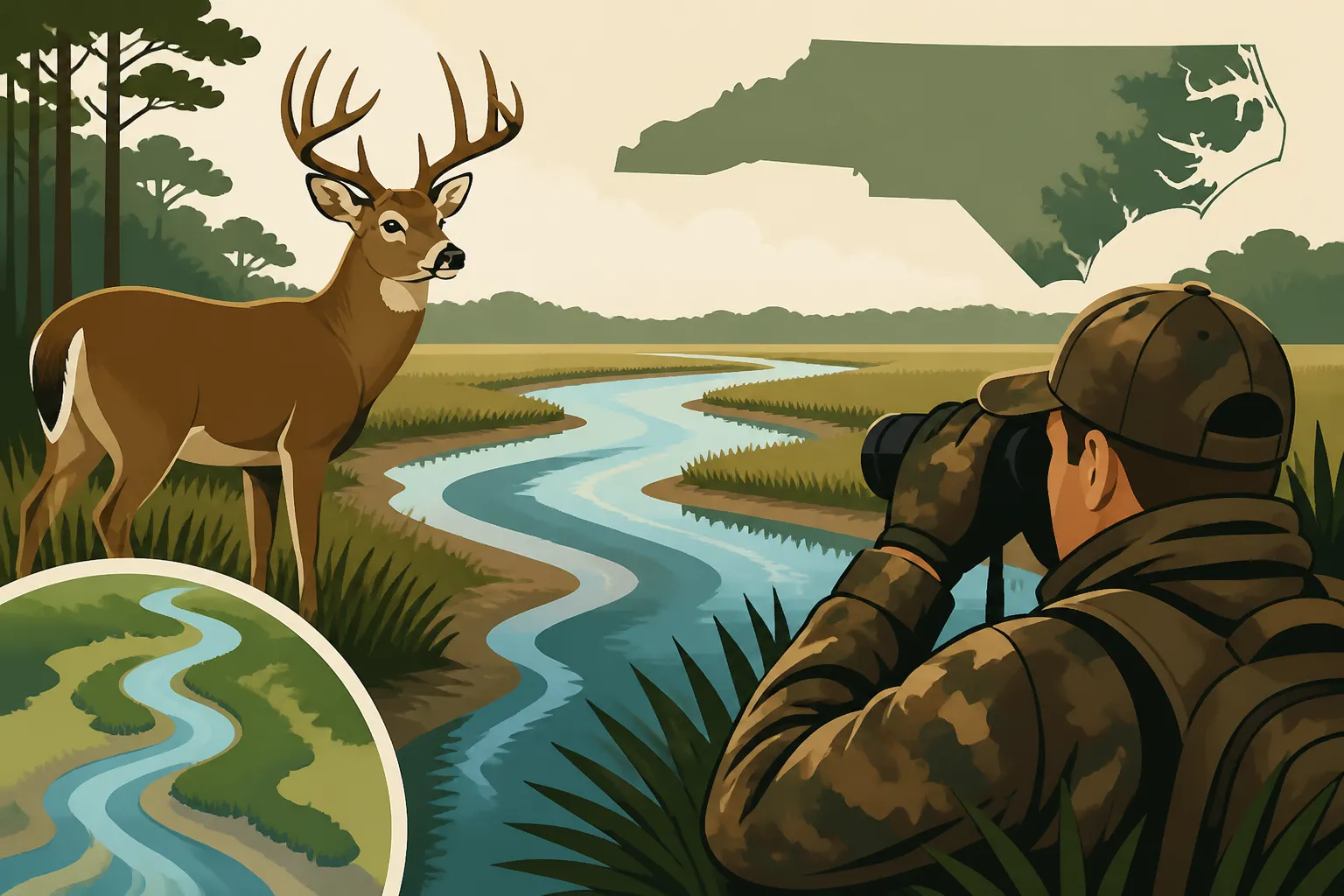
Hunting deer around North Carolina's coastal tidal creeks can feel like trying to solve a moving puzzle. The water shifts, the ground changes, and what looked like a perfect ambush point an hour ago is now under three feet of murky water. It's a unique challenge that frustrates many, but with the right understanding, you can learn to read these dynamic environments and significantly boost your success. This guide will help you decipher the patterns of deer movement influenced by the ebb and flow of our beautiful coastal tides.
Understanding the Dynamics of North Carolina Tidal Creeks
North Carolina's coastal plain is a labyrinth of rivers, sounds, and, yes, countless tidal creeks. These aren't just pretty waterways; they're vital arteries that shape the landscape and dictate how wildlife, especially whitetails, navigate their world. If you want to consistently find deer in these areas, you first have to understand the environment they call home.
The Influence of Tides on Deer Behavior
Think about it: deer are creatures of habit, but in a tidal creek environment, their habits are constantly being reshaped by the moon. When the tide comes in, low-lying areas, marsh edges, and even some smaller islands can become completely submerged. This forces deer onto higher ground, concentrating their movement to specific pinch points and travel corridors that remain dry. Conversely, a falling tide can open up new feeding grounds in exposed marsh flats, revealing succulent vegetation or allowing access to areas that were previously unreachable. Deer adapt to these cycles, often timing their movements – particularly feeding and bedding transitions – to coincide with specific tide stages.
It's not just the sheer volume of water, either; the speed of the current can also play a role. A strong outgoing tide can create distinct flow patterns, sometimes washing out trails or creating new barriers of debris. Deer, being efficient travelers, will instinctively seek the path of least resistance. This means they'll often utilize the same high-and-dry routes repeatedly, day after day, regardless of the tide's phase, simply because those are the most reliable routes. Understanding this principle is fundamental to anticipating their next move. Many hunters, myself included, have spent frustrating hours watching an empty marsh, only to realize later that the deer were simply waiting for the water to drop or had already moved to higher ground.
Identifying Key Features of a Tidal Creek System
When you look at a map of a tidal creek system, it might seem like a chaotic mess of water and land. But there are distinct features that deer key into. First, look for guts and drains. These are the smaller channels and ditches that snake through the marsh, often connecting to larger creeks. At low tide, these can become critical travel routes for deer trying to get from one section of dry land to another. At high tide, they act as barriers, funneling deer to narrower crossing points.
Next, pay close attention to marsh islands and elevated hammocks. These are patches of higher ground, sometimes just a few feet above the surrounding marsh, that provide crucial bedding cover or staging areas. Deer will often bed on these islands, using the water as a natural barrier against predators or hunters. They'll also use the edges of these islands as transition zones between feeding in the marsh and retreating to thicker cover. Finally, identify the mainland edges – where the solid upland timber meets the tidal marsh. These transition lines are always active, as deer move between the safety of the woods and the abundant food sources found in the marsh. When you're Hunting Coastal Plain Pocosin Swamps, you'll notice similar emphasis on these higher, drier pockets within the wet landscape.
The Role of Salinity and Vegetation
The salt content of the water in a tidal creek system profoundly influences the vegetation that grows there, which in turn affects what deer will eat and where they'll find cover. Closer to the ocean, the water is more saline, leading to vast expanses of saltmarsh cordgrass – tall, tough stuff that offers good cover but little in the way of palatable food for deer. As you move further upstream or deeper into the marsh where freshwater runoff dilutes the salt, you'll start to see more brackish and freshwater-loving plants. This is where the buffet opens up for deer.
In these less saline areas, you might find switchgrass, cattails, sedges, and various forbs that deer will browse on. This shift in vegetation is a key indicator of where deer are likely to spend their time feeding. Look for edges where these more palatable plants meet denser cover, or where they butt up against higher ground that offers bedding. Furthermore, the freshwater influence often means more diverse hardwood species on adjacent uplands, providing acorns and other mast crops that become irresistible food sources, especially during the fall. Understanding this subtle gradient can help you predict exactly which parts of a massive tidal creek system are most likely to hold deer, versus those that are just open marsh.
Scouting Strategies for Tidal Creek Deer
Effective scouting in a tidal creek environment is a bit different from your typical big woods or agricultural field scouting. You're not just looking for tracks and rub lines; you're deciphering a complex interaction between land, water, and deer movement. This often requires patience and a good eye for subtle clues that might be missed in other habitats.
Locating High-Ground Travel Corridors
Deer, like us, prefer to keep their hooves dry whenever possible. In tidal creek areas, this means they'll gravitate towards the highest available ground for travel, especially during high tide. Start by looking for subtle ridges, natural levees, or elevated edges along creek banks. These natural pathways often become heavily used travel corridors. During low tide, venture out into the marsh and look for well-worn trails that disappear and reappear with the water levels. These "ghost trails" indicate paths deer use when the water is down, allowing them to access new feeding grounds or shortcut across sections of marsh that are impassable during high tide.
Also, pay attention to man-made features. Old logging roads, ditch banks, or even elevated powerline cuts can provide essential dry travel routes through otherwise soggy terrain. These can act as significant funnels, concentrating deer movement into predictable patterns. I remember one hunt on the Hunting Croatan Forest Pocosin Edges where deer consistently used an old, slightly raised dike road to traverse a vast pocosin, completely ignoring the lower, wetter areas. These linear features, whether natural or man-made, are goldmines for stand placement because they force deer to travel in a more predictable fashion, regardless of the water level.
Pinpointing Bedding Areas and Food Sources
Deer in tidal creek areas will typically bed on slightly elevated islands, hummocks, or along the edges of the mainland where the timber meets the marsh. These spots provide them with a dry place to rest and often offer a strategic vantage point to observe their surroundings, with the water acting as a protective barrier. Look for dense thickets of young pines, wax myrtle, or other coastal vegetation that provide excellent cover. On some of these islands, you might find signs of heavy browsing, indicating a preferred bedding and feeding spot.
For food sources, beyond the brackish vegetation discussed earlier, turn your attention to the upland edges. Hardwood bottoms, especially those with oaks, can drop acorns that deer will hammer. Persimmon trees, wild grapes, and various briars also provide crucial forage. Deer will often stage in the dense cover of the marsh or on a high spot, waiting for dusk to fall before venturing out to these upland food sources. Remember that in coastal environments, deer are quite adaptable, often using different food sources depending on the season and tide cycle. A great tool for uncovering these hidden gems is to use mapping apps like those that come with a GoHunt subscription, allowing you to visually identify elevated ground and varied vegetation types before you ever step foot in the marsh.
Using Technology for Tidal Creek Reconnaissance
Modern technology has revolutionized how we scout, and it's especially invaluable in complex environments like tidal creeks. Start with aerial imagery from services like Google Earth or dedicated hunting apps like GoHunt. These tools allow you to identify subtle elevation changes, discern patterns of vegetation, and pinpoint potential travel corridors and bedding areas from the comfort of your home. You can often spot those elusive marsh islands, old roadbeds, or fingers of high ground that would be nearly impossible to find on foot without days of trudging through muck. This kind of digital scouting is far more efficient than stumbling through a swamp blind.
Beyond satellite imagery, consider using topographic maps, though in flatter coastal areas, the contour lines might be widely spaced. Still, they can highlight the slightest changes in elevation that become critical deer highways when the tide is high. Don't forget tide charts! This is perhaps the most crucial technological tool for tidal creek hunting. Knowing the exact times of high and low tide, and even the predicted height of the water, allows you to anticipate deer movement patterns. You can time your hunts to coincide with specific tide stages, knowing exactly when a certain crossing will be exposed or submerged. This level of preparation is essential for success in these dynamic environments, similar to how you'd use Reading Aerial Photos for Piedmont Deer to understand terrain features in a different part of the state.
Hunting Tactics in Tidal Creek Environments
Once you've done your homework and understand the lay of the land (and water!), it's time to translate that knowledge into effective hunting tactics. The key here is adaptability and an appreciation for the unique challenges these areas present.
Setting Up for Shifting Water Levels
This is perhaps the biggest challenge. A stand placed perfectly at low tide might be completely submerged or inaccessible at high tide. You need to scout at different tide stages to understand how the water truly impacts your potential setup. Look for trees on slightly higher ground, or in areas where the water doesn't rise quite as dramatically. If using a ladder stand or hang-on, ensure it's high enough to accommodate the highest predicted tide during your hunt. Ground blinds can be tricky in low-lying areas, but if you find a substantial hummock or a dry bank, a well-brushed-in blind can be incredibly effective, especially if you also employ Using a Ground Blind on North Carolina Public Land.
Often, the best strategy is to have multiple stand locations. One might be optimal for low tide, overlooking exposed marsh flats or dry guts. Another might be for high tide, covering a narrow pinch point on higher ground where deer are funneled. You need to be flexible and willing to move based on the tide chart and current conditions. And don't forget your entry and exit routes—a great stand location is useless if you can't get to it silently and without spooking deer, which is a particular challenge when the water levels are constantly changing.
Entry and Exit Routes to Avoid Detection
Moving quietly through a tidal marsh is notoriously difficult. The squishy ground, fallen branches, and potential for sloshing through shallow water can all give you away. The first rule is to plan your route meticulously using your mapping apps. Identify the driest paths, even if they're longer. When the tide is low, you might be able to walk exposed mud flats or guts, which can be quieter than pushing through dense marsh grass. When the tide is high, you'll likely be forced onto higher, drier edges, but these are also where deer are concentrated, increasing your chances of bumping them.
Always use the wind to your advantage, just like in any other hunting scenario. However, in coastal areas, winds can be notoriously shifty, especially near large bodies of water. Have backup routes or be prepared to change your plans if the wind shifts unexpectedly. And for footwear, invest in high-quality, comfortable rubber boots. They are absolutely essential for silent movement and staying dry in these environments. Trying to walk through a coastal swamp in regular hiking boots is a recipe for soaked socks, blisters, and an unhappy hunt. Think about what's needed for Rubber Boots for Swamp Walking and acquire the right gear.
Timing Your Hunt with the Tides
This is where all your preparation truly pays off. Deer movements are often directly correlated with the tidal cycle. A rising tide can push deer out of low-lying feeding areas and force them into specific travel corridors to reach higher bedding grounds. This can create excellent opportunities for ambushing deer as they move. A falling tide, conversely, might draw deer out of cover to feed on newly exposed vegetation in the marsh.
Many experienced coastal hunters swear by hunting the last two hours of a falling tide and the first two hours of a rising tide. This four-hour window often sees the most concentrated deer activity as they adapt to the changing water levels. Keep a tide chart handy, either on your phone (if you have service) or a printed copy, and plan your arrival and departure times accordingly. Don't be afraid to hunt during midday if the tide is hitting a prime stage; deer don't just move at dawn and dusk when the water is pushing them around.
Here's a quick reference on how tides generally influence deer movement:
| Tide Stage | Typical Deer Behavior | Hunting Opportunities |
|---|---|---|
| High Tide | Forced onto higher ground, concentrated movement along elevated corridors, bedding on marsh islands or mainland edges. | Good for ambushing deer on pinch points or travel routes between high ground. Focus on stand sites overlooking elevated edges. |
| Falling Tide | Begin moving to access newly exposed marsh flats and guts for feeding. Can travel through previously submerged areas. | Excellent for catching deer moving into feeding areas in the marsh. Stand sites near the edges of exposed flats or along primary drainage guts. |
| Low Tide | Access to full range of marsh for feeding, but also most spread out. Can cross wider areas. | Deer may be widely dispersed in the marsh. Focus on primary food sources or areas where they'd stage before moving to upland cover. |
| Rising Tide | Begin to move out of low-lying areas as water encroaches, heading towards higher ground or staging areas. | Strong opportunity to intercept deer moving from feeding areas back to bedding or more secure high ground. Focus on escape routes and pinch points. |
Common Challenges and Troubleshooting
Hunting tidal creek country is never easy. There are unique hurdles you'll face that demand a bit more preparation and mental fortitude. Understanding these challenges beforehand can help you mitigate their impact and ensure a more enjoyable, and successful, hunt.
Dealing with Mosquitoes and Other Pests
Let's be real: coastal North Carolina in early season is practically a mosquito sanctuary. From late summer well into fall, these blood-sucking fiends are a relentless nuisance. They don't just bite; they can drive you absolutely crazy, making it impossible to sit still or concentrate. It's not just mosquitoes either; gnats, ticks, and even deer flies can make your life miserable. This is where good bug repellent becomes as critical as your rifle.
Invest in a quality repellent with a high DEET concentration (30-40% is usually effective) or a permethrin-based treatment for your clothing. Treat your outer layers, hat, and even your backpack. Consider bringing a head net for those particularly bad days, especially during North Carolina Archery Season Opening Day when the weather is still warm. Some hunters even opt for bug suits, like those from Thermacell, which create a small zone of protection around you. Don't underestimate the impact these pests can have on your hunt; being uncomfortable and swatting bugs constantly is a surefire way to spook deer and ruin your focus.
Overcoming Scent Control Issues in Humid Conditions
North Carolina's coastal plain is famously humid, and humidity is scent's best friend. Your human odor hangs in the air, gets trapped in the dense vegetation, and drifts through the marsh long after you've passed. This makes traditional scent control methods even more challenging but no less critical. Deer in these areas are often incredibly wary, constantly using their noses to detect danger. You need to pull out all the stops.
This means a meticulous scent control routine: showering with unscented soap, washing your hunting clothes in scent-free detergent, storing them in airtight bags, and dressing at the vehicle. Use scent-absorbing sprays on your boots and outer layers before heading in. Even then, the humidity can work against you. Focus intensely on understanding the prevailing wind directions and thermals. In flat, marshy areas, the wind can swirl unpredictably, and subtle air currents might carry your scent further than you think. You might consider specific Scent Control Gear for Humid Coastal Hunts designed for these conditions. Always try to approach your stand from downwind, even if it means a longer walk, and be ready to adapt if the wind shifts during your sit.
Recovering a Deer from a Watery Environment
This is a scenario every coastal hunter dreads, but it's a real possibility. When you make a good shot on a deer in a tidal creek environment, it might still run into the water or into an impenetrable thicket. Tracking in these conditions is incredibly tough. Blood trails are quickly washed away by rising tides or absorbed by soggy ground. Dense vegetation makes visibility almost zero. This is why shot placement is paramount, but even then, things happen.
If you suspect your deer ran into the water or a thick swamp, mark the last spot you saw it or found blood. Take note of the tide stage. If the tide is rising, act quickly before the water gets too deep to retrieve the animal. If it's falling, you might have a bit more time for the water to recede, potentially making the recovery easier. Bring a sturdy rope or drag, and consider a small, inflatable boat or kayak if you anticipate needing to cross deeper water to retrieve your deer. A strong headlamp is crucial if you're tracking after dark. Having a buddy or two to help can make a huge difference in these situations, as Dragging a Deer Out of a Coastal Swamp is often a two- or three-person job. Be prepared for a physically demanding and potentially messy recovery.
Disclaimer
Please note that hunting regulations, seasons, and licensing requirements can change. Always consult the latest North Carolina Wildlife Resources Commission (NCWRC) regulations before planning any hunt. The information provided in this article is for general guidance and informational purposes only and does not constitute legal or professional advice.