Alligator River National Wildlife Refuge Hunting
Hunting the Alligator River National Wildlife Refuge can feel like stepping into another world, a vast, wild expanse where the whispers of ancient pocosins and the rustle of dense cane make every step a discovery. Many hunters, especially those new to this unique coastal environment, often find themselves overwhelmed by the sheer scale of the landscape and the specific regulations that govern hunting within a National Wildlife Refuge. This guide aims to demystify the process, offering practical advice and insight into successfully planning and executing a hunt in this incredible North Carolina wilderness.
Understanding the Alligator River National Wildlife Refuge Landscape
The Alligator River National Wildlife Refuge isn't your typical North Carolina hunting ground. Sprawling across over 150,000 acres in the northeastern part of the state, it's a mosaic of pocosin swamps, freshwater marshes, pine forests, and hardwood bottomlands, all intertwined with an intricate network of canals and ditches. This unique environment shapes every aspect of hunting here, from how animals move to where you can even set foot. It demands a different approach, a blend of traditional hunting skills and a deep respect for the unforgiving nature of a true wetland wilderness.
A Unique Coastal Ecosystem
Imagine a landscape dominated by dense, impenetrable vegetation – that's the pocosin. "Pocosin" is an Algonquin word meaning "swamp on a hill," and it perfectly describes these elevated bogs, often characterized by thick, woody shrubs like gallberry, titi, and bay, growing out of acidic peat soil. While it can be incredibly tough to traverse, these pocosins are precisely what makes the refuge a sanctuary for a tremendous amount of wildlife. They offer unparalleled cover and refuge, especially for larger game like deer and bear, which can disappear into the thickets almost instantly. Interspersed within these dense areas are "islands" of slightly higher ground, often with pine or cypress stands, which become crucial travel corridors and bedding areas. Understanding this interplay between impenetrable cover and these subtle high spots is key to unlocking hunting success. The extensive network of canals and ditches, originally dug for logging or drainage, also serves as both barriers and pathways for animals, and often, for hunters as well.
Species You'll Encounter Beyond Game
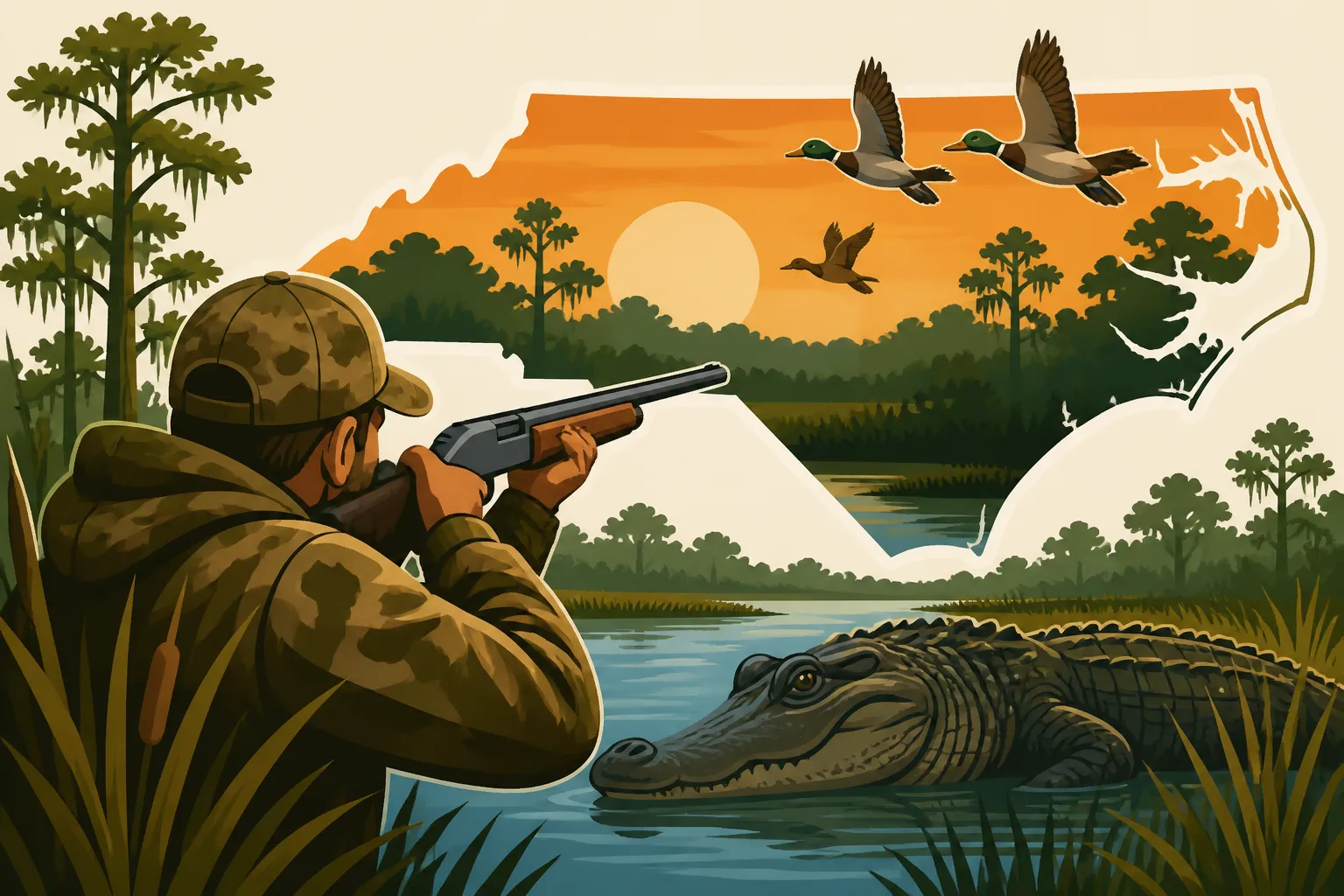
While your primary focus might be deer or bear, it's impossible to hunt Alligator River without encountering its incredible biodiversity. This refuge is famous as a habitat for the critically endangered red wolf, a species that was reintroduced here decades ago. While seeing one is rare, knowing they are present adds a layer of respect for the ecosystem. You'll also likely spot American alligators – yes, they are indeed in the Alligator River! They prefer the canals and open water, but they can be found basking in sunnier spots along roads and paths. Keep an eye out for diverse birdlife, from wading birds like herons and egrets to various raptors circling overhead. The refuge is also home to a healthy population of black bears, which are often sighted by hunters and tourists alike. Encounters with bobcats, otters, and various reptiles and amphibians are also common. It’s a reminder that you're hunting in a vibrant, complex ecosystem, and every animal plays a role. This rich tapestry of wildlife contributes to the wild, untamed feel of the refuge and makes every trip an adventure, even if you don't fill a tag.
Navigating Permits, Regulations, and Seasons
Hunting in a National Wildlife Refuge carries distinct rules that differ significantly from state game lands or private property. The Alligator River NWR has its own set of specific regulations, permit requirements, and hunt dates that hunters absolutely must understand before heading afield. Failing to do so can lead to frustration, or worse, legal trouble. It's not just about having a valid state license; it’s about having the right refuge-specific authorization too.
The Alligator River Refuge Permit System
To hunt in the Alligator River National Wildlife Refuge, you'll need more than just your standard North Carolina hunting license and big game privileges. The refuge operates under a special permit system. Typically, hunters are required to obtain a specific refuge hunt permit, often issued through a lottery or a limited quota system, especially for popular big game species like bear and sometimes deer. These permits dictate the specific hunt dates, allowed weapons, and sometimes even the designated hunting zones within the refuge. It's critical to check the refuge's official website or contact their office well in advance of the season for current application periods, deadlines, and rules. Don't assume your general state license covers you for refuge hunting; it almost certainly won't. North Carolina Hunting Licenses and What They Cost covers the state-level requirements, but the refuge is an additional layer. Missing the application window for these permits is a common mistake that can cost you an entire season's opportunity.
General Regulations Specific to the Refuge
Beyond permits, the refuge imposes a host of general regulations designed to protect its unique environment and ensure public safety. For instance, specific rules govern vehicle access, often restricting hunters to designated roads and parking areas. Off-road travel is almost universally prohibited to prevent damage to the sensitive wetland ecosystem. Tree stand usage is also tightly controlled; many refuges prohibit permanent stands and may have strict guidelines on portable stand types, placement, and how long they can remain in the woods. You might also find limitations on baiting, the use of dogs (especially for deer), and even the types of ammunition allowed. Blaze orange requirements, while standard in North Carolina, might have specific refuge-level nuances depending on the hunt type. Moreover, many refuges require hunters to check in and check out daily at designated stations and to report all harvest, even if it's an unsuccessful hunt. These rules are in place for good reason – to manage limited resources and provide a quality experience while minimizing impact. Always carry a copy of the refuge regulations with you, or at least have them readily accessible on your phone, to avoid any misunderstandings.
Deer and Bear Seasons Within the Refuge
The hunting seasons within Alligator River NWR do not always align perfectly with the statewide North Carolina seasons. Instead, the refuge establishes its own specific hunt dates, which are often shorter and more restricted. For deer, there might be specific archery, muzzleloader, and gun seasons, each with its own limited timeframe. These dates are designed to manage the deer population within the refuge's carrying capacity and to minimize conflicts with other refuge activities. Similarly, bear hunting is typically highly regulated with very specific dates and zones. North Carolina's black bear population is thriving, and the coastal plain bears, including those in the refuge, are known for their impressive size. North Carolina's Black Bear Population details the overall health of the bear population. However, given the high concentration of bears and the potential for human-wildlife conflict, refuge bear hunts are usually highly sought-after and strictly managed. It’s crucial to know exactly when the season is open for your chosen species and weapon type, and in which specific areas of the refuge you are permitted to hunt. These details will be outlined in the refuge's annual hunt brochure or on their website, and it's your responsibility to be informed.
Essential Strategies for Deer Hunting
Hunting deer in Alligator River NWR is a test of patience, woodsmanship, and adaptability. The dense pocosin cover and the often-wet terrain mean you can't always rely on traditional deer hunting tactics. Deer here are masters of concealment, disappearing into the thickest brush with seemingly no effort. Successful hunters learn to "read" the subtle signs of movement and adapt their approach to the unique challenges of the coastal swamp environment.
Scouting the Pocosin Edges and Islands
Effective scouting is paramount in Alligator River, and it often begins well before the season opens. Because the pocosin is so thick, deer tend to utilize edges: the interface between the dense scrub and slightly more open pine stands, agricultural fields (if present on adjacent private lands), or the berms alongside canals. These edges become natural travel corridors. Look for tracks, scat, and rubs along these transitional zones. Even more critical are the "islands" of higher ground within the vast swamps. These islands, often only a few acres in size, offer drier bedding areas and a slight elevation advantage, making them magnets for deer. Using aerial maps, especially tools like onX Hunt, can be invaluable for identifying these subtle elevation changes and potential islands within the pocosin sea. Spend time walking these areas, even if it's challenging, to understand how deer are navigating the terrain. Pay close attention to pinch points where thick cover funnels deer into smaller travel lanes. These spots are golden.
When you're out there, bring your waterproof boots and be prepared to get wet. The terrain changes quickly. One moment you're on relatively dry ground, the next you're slogging through ankle-deep water. Focus on finding fresh sign – recent tracks, fresh droppings, and active rubs or scrapes. Deer in this environment don't move vast distances in the open; they pick their way through cover, and their sign will be concentrated along these subtle features. Reading North Carolina Mud for Fresh Deer Movement can help you interpret what you find. Remember, you're looking for evidence of routine movement, not just random tracks.
Stand Placement in Dense Cover
Given the extreme density of the cover, traditional long-range shooting opportunities are rare. Your stand placement needs to reflect this reality. Most shots will be relatively close, often under 50 yards, sometimes even closer. This means focusing on tight funnels, trail intersections within thickets, or overlooking those crucial pocosin islands or canal berms. Consider elevated stands, whether a hang-on, climber, or even a sturdy ground blind, to get above the thick undergrowth and improve your visibility and scent dispersion. However, remember the refuge's rules on stand types and longevity. If using a ground blind, brushing it in well is essential. Brushing In a Blind on a Field Edge offers good tips, even if you're not on a field edge.
One common mistake is placing a stand where you can only see a few yards. You need to find those rare pockets where you can see perhaps 30-40 yards down a trail or into a small opening. Deer will often pause at these openings before entering or exiting dense cover. Setting up on the downwind side of a known travel route or bedding area is critical, but remember that swirling winds can be common in dense, uneven terrain. Consider prevailing winds but also be prepared to adjust your setup or hunt plan if the wind changes. Access to your stand should be as quiet and concealed as possible, particularly in the morning, to avoid spooking deer as they move in the dim light.
Patience and Persistence in a Challenging Environment
Hunting the Alligator River NWR demands a significant amount of patience and persistence. Deer are not always on the move in this environment, often bedding down for long stretches in the thick cover. It's not uncommon to sit for hours without seeing anything, only for a buck to materialize silently from the brush. Still-hunting, moving slowly and deliberately through promising areas, can be effective if done carefully, but even then, movement is minimal. This is not a place for fast-paced hunting; it's a grind.
The challenging terrain itself requires persistence. You'll likely encounter mosquitos, ticks, and snakes, especially in warmer weather. Waterproof gear and appropriate insect repellent are non-negotiable. Don't underestimate the physical demands of navigating the swamps. A long drag out after a successful kill can be truly exhausting. Plan your extraction route, especially if you're hunting deep in the refuge. Having a buddy can make a world of difference for safety and game retrieval. Dragging a Deer Out of a Coastal Swamp provides insights into this specific challenge. Mental toughness is as important as physical fitness here; embrace the challenge, enjoy the wild solitude, and celebrate every small success.
Tactics for Bear Hunting
The Alligator River National Wildlife Refuge is renowned for its large black bear population, making it a highly desirable destination for bear hunters. These bears are robust, often reaching impressive sizes due to the abundant food sources and secure habitat the refuge provides. However, hunting them in such dense, wet terrain presents its own unique set of challenges that require specialized tactics and a deep understanding of bear behavior.
Locating Bear Sign in the Swamp
Bears leave distinct signs, and learning to identify them is crucial. Look for tracks along muddy trails, canal banks, and at the edges of water bodies. Their large paw prints are unmistakable. Scat can indicate their diet – often berries, acorns, or other plant matter, depending on the season. One of the most telling signs is "bear rubs" on trees, where bears scratch and rub their backs, leaving hair and claw marks. These often occur along commonly used travel corridors. Look for overturned logs or disturbed ground where bears have been digging for grubs or roots. Hunting Coastal Bears in Thick Pocosin Cover delves into how these bears move and live.
Finding these signs in the dense pocosin means getting off the beaten path, but carefully. Focus your search on areas with abundant natural food sources like blackberry thickets, wild blueberry patches, or areas with oak trees (if any are present on higher ground) that drop acorns. Bear dens can be found in hollow logs or dense thickets, but these are generally avoided by hunters. Use tools like GoHunt to study satellite imagery and identify potential habitat features, focusing on areas where food sources and dense cover meet. Bear trails, though often faint, will connect these key areas, and if you can find an active one, it could be a productive spot for a stand.
Still-Hunting Through Thick Brush
Still-hunting is a highly effective, albeit physically demanding, tactic for bears in Alligator River. This involves moving incredibly slowly and deliberately through the dense cover, pausing frequently to scan and listen. Bears, despite their size, can be remarkably quiet, especially in thick brush. Your goal is to spot the bear before it spots you. Focus on areas where you've found fresh sign or where you anticipate bears will be moving between feeding and bedding areas. This might be along the edges of the pocosin, near a canal, or on one of those slightly higher "islands" within the swamp.
This type of hunting requires extreme patience and acute senses. Listen for subtle sounds – a rustle in the leaves, a broken branch, or the distinct grunts or woofs of a bear. Visibility is often limited to mere yards, so every step needs to be calculated. The wind is your constant companion; always try to keep it in your favor, as a bear's sense of smell is legendary. You'll need rugged, quiet clothing that can withstand being snagged by thorns and branches. Expect to move only a few hundred yards in an hour or two. It’s a true test of endurance and stealth, but it can pay off with a close-range encounter.
Understanding Refuge-Specific Bear Rules
Bear hunting in Alligator River National Wildlife Refuge typically has some of the most stringent regulations. Beyond the required refuge permit, there are often specific rules regarding weapon types (e.g., no rifles larger than a certain caliber, or restrictions on ammunition), hunting methods (e.g., baiting is almost always prohibited, and the use of dogs might be restricted or allowed only by special permit during specific seasons), and even the sex or size of the bear that can be harvested. These rules are put in place to ensure a sustainable harvest and manage the bear population responsibly.
It's absolutely vital to review the refuge's specific bear hunting regulations each year, as they can change. Bear harvest limits are often very low, sometimes a single bear per hunter per lifetime, or specific to the refuge. Bear checking requirements are also typically mandatory and quite strict; you’ll need to report your harvest to the refuge staff, not just the state. Be aware of carcass handling regulations, especially concerning head and hide removal for biological data collection. Ignoring these rules can lead to severe penalties, including fines and loss of hunting privileges. Make sure you know the exact boundaries of the hunt areas; some parts of the refuge might be closed to bear hunting entirely.
Waterfowl and Small Game Opportunities
While deer and bear often steal the spotlight, Alligator River National Wildlife Refuge also offers limited, but sometimes excellent, opportunities for waterfowl and various small game species. These hunts can provide a different challenge and a chance to experience the refuge's diverse ecosystems in a unique way. However, like big game, these opportunities are tightly controlled and require careful planning.
Limited Waterfowl Hunting
Waterfowl hunting in Alligator River NWR is typically restricted to specific areas, often managed impoundments or designated marsh zones, and usually requires a special refuge permit. The refuge is an important wintering ground for a variety of ducks and geese along the Atlantic Flyway, including species like mallards, green-winged teal, wood ducks, and various diving ducks. North Carolina Waterfowl Migration Timing shows why this area is so important. These hunts are often highly competitive, with permits issued through a lottery system for specific dates or blinds. Hunters will need to consult the refuge's annual hunt brochure for details on application periods, drawing dates, and blind locations.
The hunting experience itself can be fantastic if you draw a desirable spot. Expect to use traditional waterfowl hunting gear: waders, decoys, calls, and a reliable shotgun with non-toxic shot (which is required for all waterfowl hunting in North Carolina and within the refuge). Setting up in designated blinds or along specific marsh edges means you'll need to be prepared for potentially long waits in cold, wet conditions. Understanding decoy placement for the specific species you're targeting is crucial. Given the limited access and controlled environment, waterfowl here can sometimes be less pressured than on public waters outside the refuge, offering quality shooting opportunities.
Exploring Small Game Potential
Beyond the big game, the refuge can also offer some opportunities for small game hunting, though these are often less highlighted and might be open during different periods or in different zones. Species like squirrels and rabbits are present, especially in the more upland or hardwood sections of the refuge, if such areas are open to small game hunting. Squirrel hunting, in particular, can be a delightful way to experience the more wooded areas, listening for the chatter and rustle of bushytails. Squirrel and Small Game Hunting in North Carolina provides a good overview of state rules, but again, always check refuge-specific rules.
As with all refuge hunting, specific permits and regulations will apply. You'll need to verify if small game hunting is even permitted, and if so, during what dates and in which areas. Often, small game opportunities will coincide with broader seasons, but could still be subject to refuge-specific bag limits or weapon restrictions. Hunting small game here can be a more relaxed experience compared to the intensity of a bear hunt, offering a chance to introduce new hunters to the field or simply enjoy the refuge's natural beauty at a slower pace.
Preparing for Your Hunt: Gear and Safety
Successfully hunting in Alligator River National Wildlife Refuge isn't just about knowing the rules and where the animals are; it’s also about being properly equipped and prioritizing safety. The unique terrain and remote nature of the refuge demand specific gear and a cautious approach to ensure a successful and safe outing.
Essential Gear for Swamp Hunting
The phrase "swamp hunting" immediately brings to mind certain necessities. First and foremost, waterproof gear is non-negotiable. High-quality rubber boots, chest waders, or at least knee-high waterproof boots are essential for navigating the wet, muddy, and often submerged terrain. Your outer layers should be water-resistant or waterproof, and durable enough to withstand snags from thorns and brush. Layering your clothing is key, as conditions can change rapidly from chilly mornings to warm afternoons, and heavy exertion will make you sweat. Boots for North Carolina Swamps and Ridges emphasizes the importance of proper footwear.
Beyond clothing, a sturdy backpack is vital to carry your essentials: water, snacks, a compass or GPS (like a reliable app on your phone, possibly supplemented by onX Hunt for offline maps), a headlamp for navigating in low light, a first-aid kit, a knife, and emergency fire-starting supplies. Insect repellent is crucial, especially during warmer months, to combat mosquitoes and ticks. A game cart or sled can be invaluable for extracting a deer or bear, but be realistic about its utility in truly deep swamp. Often, a strong drag rope and a willing partner are your best tools.
| Item | Purpose | Why it's Critical in Alligator River NWR |
|---|---|---|
| Waterproof Boots/Waders | Stay dry, navigate submerged areas | Terrain is consistently wet, muddy, and often submerged. |
| Durable Rain Gear | Protection from rain and thick brush | Frequent precipitation, dense undergrowth will soak and tear regular clothes. |
| Layered Clothing | Adapt to changing temperatures and exertion | Rapid shifts in coastal weather; intense physical activity generates heat. |
| GPS/Mapping App | Navigation and tracking | Easy to get disoriented in dense, featureless pocosins. |
| Headlamp | Low-light navigation | Essential for early morning entry and late evening exit. |
| Insect Repellent | Prevent bites from mosquitoes/ticks | High populations of biting insects in wetland environments. |
| First-Aid Kit | Address minor injuries | Remote location means medical help is not readily accessible. |
| Communication Device | Emergency contact, coordination | Cell service can be spotty; two-way radios with hunting partners are wise. |
| Water & Snacks | Sustenance and hydration | Physically demanding hunts require ample fuel. |
| Game Drag/Rope | Game retrieval | Challenging terrain makes dragging game very difficult without assistance. |
Safety Considerations in Remote Terrain
Hunting in a remote, wild area like Alligator River NWR means taking personal safety seriously. Cell phone service can be unreliable or nonexistent in many parts of the refuge, so don't rely solely on your phone for navigation or emergencies. Inform someone of your hunting plan: where you're going, your planned route, and when you expect to return. This "float plan" is crucial in case of an emergency.
Be mindful of the wildlife. Alligators are present, and while generally shy, they can be dangerous if provoked, especially during nesting season or if they are accustomed to being fed. Bears, too, are common; know basic bear safety protocols, such as carrying bear spray and making noise in dense areas. Understand that encounters with venomous snakes (cottonmouths, rattlesnakes) are possible, especially in warmer weather; watch where you step and reach. Always hunt with a buddy if possible, or at the very least, stick to well-defined plans. Carrying a whistle can be helpful for signaling a partner or for emergency situations. Your most important tool is common sense and respect for the wilderness. Always stay aware of your surroundings and make smart decisions.
Disclaimer
This article is for general informational purposes only and does not constitute professional advice. Laws, prices and regulations vary by location and change over time. Consult a qualified professional for guidance on your specific situation.