North Carolina Whitetail Color Phase Rarities
Every deer hunter in North Carolina has seen countless shades of brown and gray on the whitetails that roam our woods. From the bright reddish-brown of a summer coat to the muted, thick gray of winter, these variations are as common as pine trees in the Sandhills. But every so often, a whisper goes through the hunting community, a rumor of something truly unique: a whitetail deer that defies the typical color palette. These rare color phases are more than just an interesting sight; they’re genetic marvels that leave many hunters wondering what exactly they’re seeing and what it means for the deer herd. This guide will take a deep dive into these fascinating whitetail color rarities you might just encounter in the Tar Heel State.
The Genetics Behind North Carolina Whitetail Coat Colors
Before we can truly appreciate the rare, we need to understand the norm. The vast majority of white-tailed deer in North Carolina exhibit a range of brown to grayish-brown coats, often with white undersides, inner legs, and a signature white tail that flags when alarmed. This coloration isn't accidental; it's a finely tuned adaptation, honed over millennia, to help them blend seamlessly into their diverse North Carolina habitats. Whether it's the dappled sunlight of a Piedmont hardwood forest, the dense shadows of a coastal pocosin swamp, or the rugged terrain of the Blue Ridge Mountains, their natural camouflage is paramount for survival.
The specific shade and pattern of a deer's coat are determined by a complex interplay of genetics. Multiple genes control the production and distribution of pigments like melanin, which dictates the dark colors, and other lesser-known pigments. Environmental factors, such as diet and the amount of sunlight, can also subtly influence the coat's appearance, leading to slight variations even within the same geographic area. Think of it like human hair color – there's a broad spectrum of browns, blacks, blondes, and reds, all determined by our genes, but with slight variations in shade that can be influenced by sun exposure or diet. This genetic blueprint is usually very stable, but occasionally, a mutation occurs, leading to a truly anomalous coat color.
Sometimes, these genetic variations manifest as slight deviations from the norm, like a deer with an unusually dark face or a particularly light body, but still within the expected range. It's when these mutations lead to a complete absence or overabundance of pigment, or a distinctly patchy pattern, that we enter the realm of true rarities. These anomalies are often recessive traits, meaning both parents must carry the specific gene for the offspring to display the unusual coloration. This is why you might only see one or two such deer in an entire hunting career, even in areas with thriving deer populations. For serious hunters wanting to understand the local deer population, tools like Scouting With the NC Wildlife App can provide valuable insights into deer movements and general population health, though spotting these rare individuals still comes down to luck and keen observation.
White Whitetails: Albinism, Leucism, and Piebalds
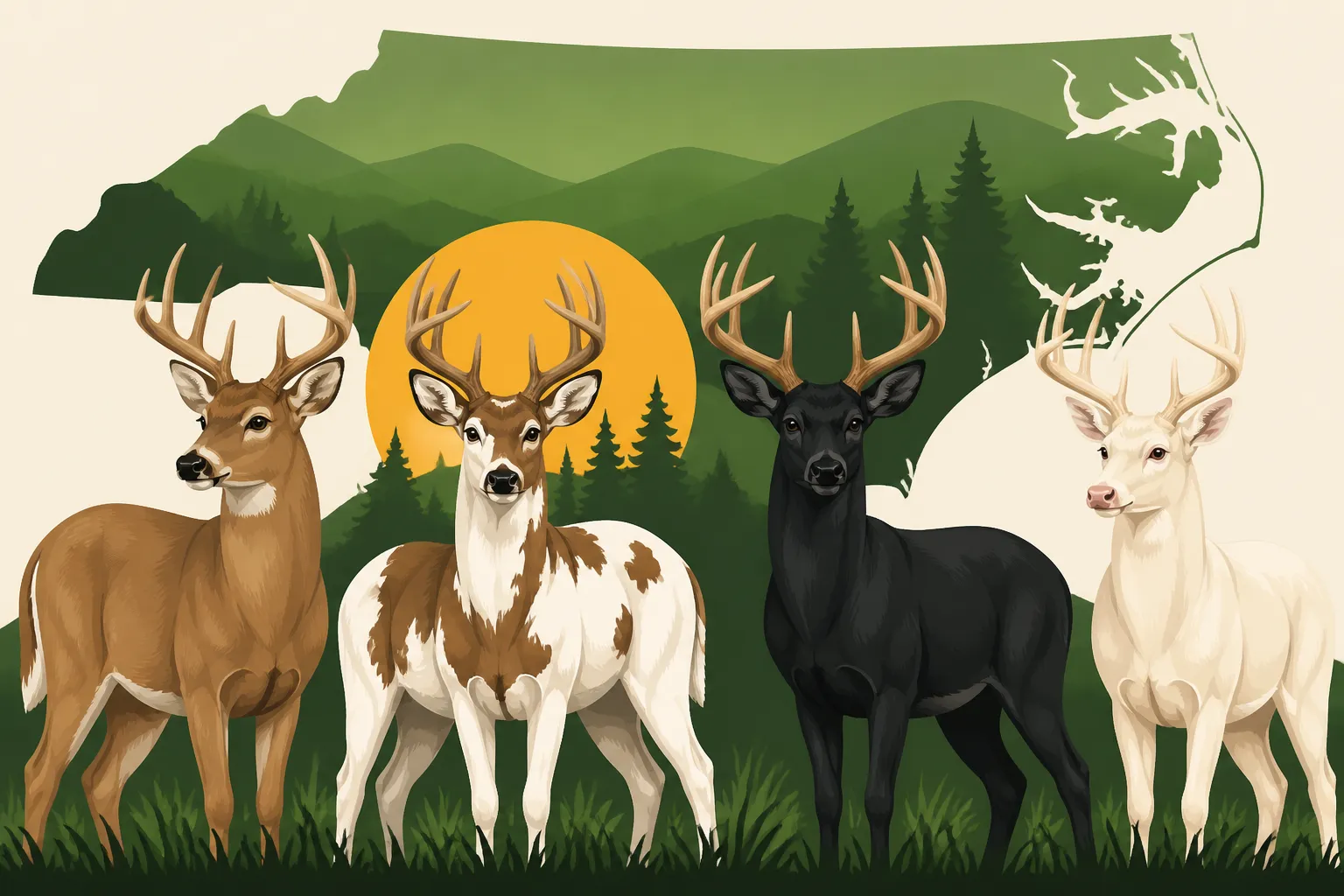
When most hunters think of a "white deer," they're often lumping several distinct genetic conditions into one category. In reality, there are three primary ways a whitetail deer can appear predominantly white, each with its own genetic explanation and visual characteristics. Understanding these differences can help you correctly identify what you're seeing should you be lucky enough to cross paths with one of these ethereal creatures.
True Albinism: The Pink-Eyed Ghost
True albinism is perhaps the most striking and rarest of the white deer conditions. An albino deer lacks all pigment in its body, not just in its fur, but also in its skin, eyes, and hooves. This complete absence of melanin is due to a specific genetic mutation that prevents the production of the pigment. The most definitive characteristic of a true albino is its eyes, which will appear pink or reddish due to the visible blood vessels lacking any masking pigment. Their nose and hooves will also be pale or pinkish, rather than the typical black.
These deer face significant challenges in the wild. Their stark white coat makes them highly visible to predators, both during the day and under moonlight, reducing their natural camouflage to almost zero. Vision can also be impaired; the lack of pigment in their eyes makes them extremely sensitive to bright sunlight, often causing them to squint and potentially limiting their ability to see clearly. This can affect their foraging, their ability to evade danger, and even their navigation through dense cover. In North Carolina, seeing a true albino whitetail is an exceptionally rare event, often passed down as a local legend for decades.
Leucism: White with Normal Eyes
Leucism is a more common, though still very rare, form of reduced pigmentation. Unlike albinism, leucistic deer have a partial loss of pigment. This means their fur can be entirely white, or they might have patches of white fur mixed with their normal brown coat, but crucially, their eyes, nose, and hooves will retain their normal dark pigmentation. You'll see those familiar dark brown eyes, a black nose, and dark hooves, despite the white fur. The genetic mutation causing leucism is different from albinism; it affects the pigment cells (melanocytes) from developing properly, but it doesn't affect eye color in the same way.
Leucistic deer often have a slightly better chance of survival than true albinos, simply because their vision is usually unimpaired. However, they still suffer from the same camouflage issues, making them highly conspicuous in their natural habitat. Their striking appearance, while beautiful to behold, is a major disadvantage when predators like coyotes are on the prowl. If you're using aerial mapping tools like GoHunt to analyze habitat before a hunt, you might spot areas with dense cover where a leucistic deer might have a slightly better chance of evading detection, but ultimately, they stand out.
Piebaldism: The Patchwork Deer
Piebaldism is probably the most frequently observed "white deer" anomaly in North Carolina, although it’s still very rare. A piebald deer has a patchy coat, with irregular white spots and splotches covering parts of its body, mixed with areas of normal brown fur. The amount of white can vary wildly, from just a few small patches to almost entirely white with only a few brown spots remaining. Like leucistic deer, piebalds typically have normal dark eyes, noses, and hooves, as their pigment production isn't entirely shut down, just unevenly distributed.
Beyond just the coat, piebald deer can often exhibit other physical deformities that are linked to the same genetic mutation. These can include a bowing of the roman nose, short or abnormal leg bone structures (leading to a shorter stature), chest deformities, and even internal organ issues. These associated problems can make piebald deer weaker, less agile, and more vulnerable to environmental stresses and predators. While still a rare sight, their presence is sometimes more localized, suggesting that the recessive gene might be more concentrated in certain areas of the state where a specific lineage has been able to reproduce. If you are scouting using tools like GoHunt, and you find areas with concentrated reports of unique deer sightings, it might indicate a localized genetic prevalence.
To help distinguish between these conditions, here's a quick comparison:
| Trait | Albinism | Leucism | Piebaldism | Melanism |
|---|---|---|---|---|
| Coat Color | Pure white | White (can be patchy) | Patchy white and normal brown | Dark brown to black |
| Eye Color | Pink/Red | Normal (dark) | Normal (dark) | Normal (dark) |
| Nose Color | Pink | Normal (dark) | Normal (dark) | Normal (dark) |
| Hoof Color | Pale/Pink | Normal (dark) | Normal (dark) | Normal (dark) |
| Pigment Loss | Complete | Partial (fur only) | Partial (patchy fur) | Pigment overproduction |
| Rarity | Extremely Rare | Very Rare | Rare, but most common "white" type | Extremely Rare |
| Other Issues | Vision impairment, sun sensitivity | Camouflage disadvantage | Skeletal deformities, internal issues | None typically associated, better camouflage in certain environments |
The Enigmatic Black Whitetail: Melanism
While white deer often capture the imagination, there's an equally rare and perhaps even more mysterious genetic anomaly: melanism. A melanistic whitetail is essentially the opposite of an albino; it possesses an excess of dark pigment, resulting in a coat that ranges from very dark brown to almost completely black. Instead of a lack of melanin, there's an overproduction, or a different distribution, of the dark pigment.
Melanistic whitetails are exceedingly rare across their range and are particularly uncommon in North Carolina. In fact, most reported sightings of true melanistic whitetails tend to be concentrated in a few specific regions, notably parts of Texas and a few other Southern states. Why this trait is more prevalent in certain areas is still a subject of scientific study, but it likely points to specific genetic lines in those populations where the recessive gene has become more established. In North Carolina, encountering a melanistic deer would be an incredibly unique experience, far rarer than even a piebald.
Unlike albinism or piebaldism, which can often come with health disadvantages, melanism typically doesn't present any obvious physical or health issues for the deer. Their vision and physical structure are usually normal. In fact, a darker coat might even offer a slight camouflage advantage in certain low-light environments, such as dense, shadowy timber or under the canopy of deep evergreen forests. However, this is largely speculative, as their overall rarity makes it difficult to study their survival rates compared to normally colored deer. If you are tracking deer movement on your hunting property with trail cameras, seeing a melanistic deer would definitely be a once-in-a-lifetime capture. You can map out areas with unique habitat features using advanced mapping software, perhaps identifying dense, dark timber patches where such a dark-phased deer might thrive.
Encountering and Managing Rare Color Phase Deer in North Carolina
So, you're out hunting in the rolling hills of the Piedmont or the dense swamps of the Coastal Plain, and you spot it: a deer unlike any you've ever seen. What do you do? For many hunters, encountering a rare color phase whitetail, especially a true albino or a strikingly piebald animal, brings a mix of awe and a moment of ethical deliberation.
Biologically speaking, these deer are still Boswellia virginianus – North Carolina whitetails. They are subject to the same hunting regulations, bag limits, and reporting requirements as any other deer. There are no statewide protections for these genetic variants, meaning they are legal to harvest if they meet the antler criteria for the season and zone. However, many hunters choose not to harvest them. There's an unwritten code among some sportsmen that these unique animals are special, a testament to the marvels of nature, and should be allowed to live. This is purely a personal ethical choice, not a legal mandate. For some, the opportunity to take such a rare animal is a lifelong dream, while for others, seeing it is reward enough.
If you are fortunate enough to encounter one of these rare deer, whether you choose to harvest it or not, documenting the sighting can be a fascinating personal record. A clear photograph or video can be invaluable. If you're a data-oriented hunter, you might even consider noting the exact location and time using a GPS on your phone or a tool like GoHunt. This kind of anecdotal data, when shared with local biologists, could potentially contribute to understanding the prevalence of these genetic traits, although formal studies on these specific rarities in North Carolina are limited.
Regardless of your decision, the experience of seeing a truly unique whitetail in North Carolina is something special. It reminds us that even in the familiar woods we tread year after year, there are still surprises waiting. It’s a testament to the rich White-Tailed Deer Across North Carolina population and the genetic diversity that lies within. Keep your eyes open, enjoy the beauty of the wild, and who knows, perhaps you'll be the next to share a tale of the ghost deer or the black phantom of the North Carolina woods. Don't forget to report any harvested deer according to North Carolina's regulations; you can learn more about this in articles like North Carolina Deer Reporting Requirements or use the NC Wildlife App for ease. For those deeply interested in the specifics of deer populations and health, insights can sometimes be gleaned from general harvest data discussed in posts like North Carolina Deer Population Estimate.
Disclaimer
This article is for general informational purposes only and does not constitute professional advice. Laws, prices and regulations vary by location and change over time. Consult a qualified professional for guidance on your specific situation.