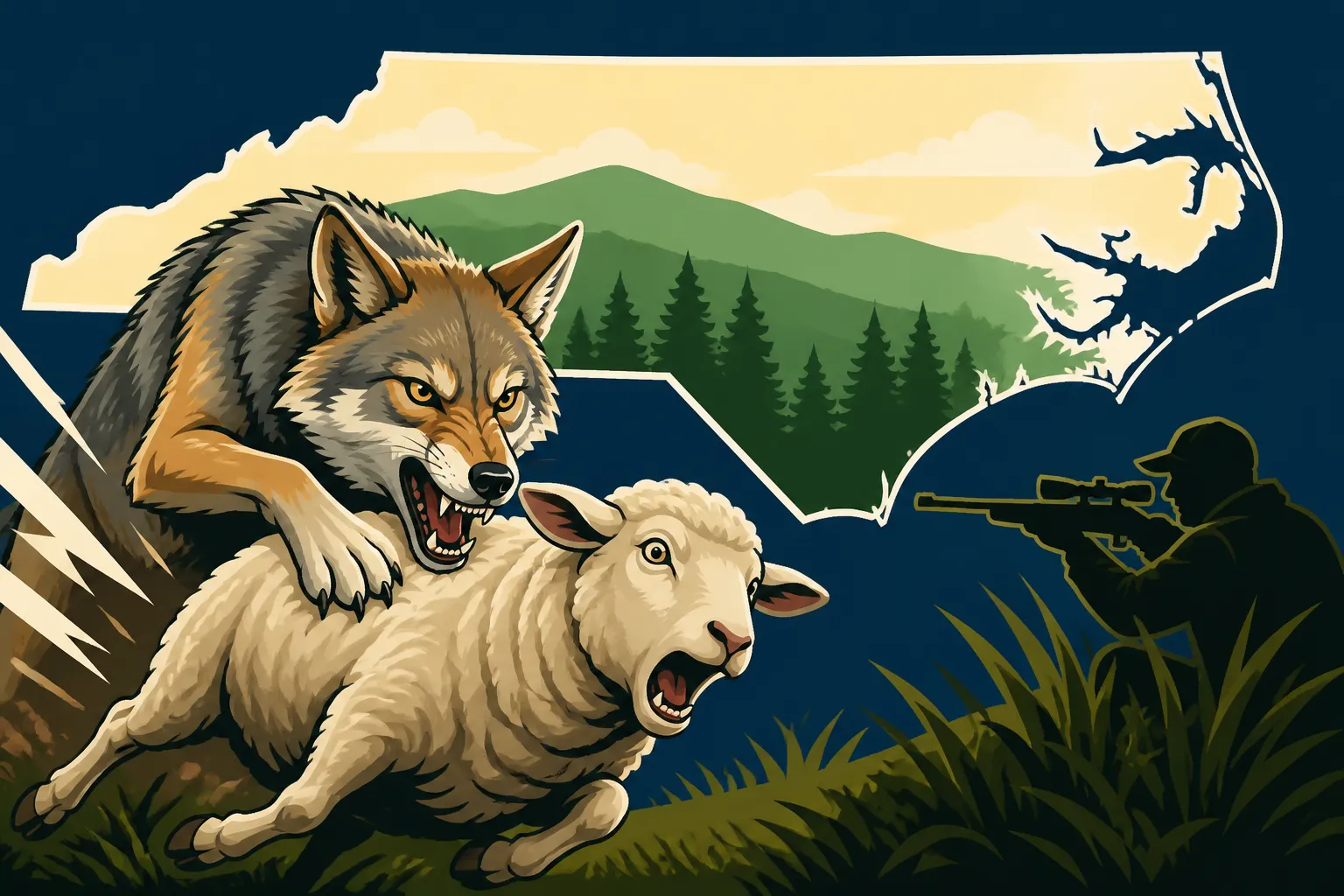
North Carolina Coyote Attacks on Livestock
For those of us living on farms, homesteads, or even just properties bordering wilder spaces in North Carolina, the sight of coyotes can be a common occurrence. However, when those sightings turn into actual losses of livestock, it’s not just a frustration—it’s a genuine threat to our livelihoods and peace of mind. This guide aims to provide practical, realistic information on understanding, identifying, and preventing coyote attacks on your precious animals, whether they're backyard chickens, sheep, goats, or even calves.
Understanding the Coyote Threat to North Carolina Livestock
It's truly heartbreaking to wake up and find a prized chicken coop ransacked or a young lamb missing. Many North Carolina farmers and hobbyists feel the deep sting of these losses. The rise of coyote populations across our state has, unfortunately, coincided with an increase in depredation incidents on domestic animals. It's not always easy to pinpoint the culprit without some detective work, and the emotional toll of protecting your animals can be immense.
North Carolina's Expanding Coyote Population
Coyotes, once primarily a western species, have truly found a home in North Carolina, adapting to everything from our sprawling mountain ranges to the dense coastal plains. They’re incredibly resilient and opportunistic. While their primary diet usually consists of small rodents, rabbits, and deer fawns, their adaptable nature means they're always on the lookout for an easy meal. This is especially true when natural food sources are scarce, or when a property presents an irresistible opportunity. Understanding their presence is the first step in protecting your herd. For a broader overview, take a look at Coyotes and Predators in North Carolina.
We’ve seen their numbers steadily increase over the past few decades, pushing into areas where they were historically absent. This expansion means that even folks in seemingly suburban areas might experience coyote activity, let alone those of us in more rural settings. Their ability to thrive near human habitation is a double-edged sword: it speaks to their incredible intelligence, but also to their potential to become a nuisance for livestock owners. The widespread availability of unsecured food sources, whether it's pet food left outside, fallen fruit, or even easily accessible garbage, can also draw them in closer to our homes and barns.
The Opportunistic Predator Mindset
Coyotes are often described as "opportunity predators," and that description hits the nail on the head. They aren't generally going to go for a direct confrontation if there's an easier path. A weak fence, an open gate, a small enclosure that can be dug under or jumped over – these are all invitations. They learn quickly, and if they find success once, they're likely to return. This is why vigilance is so crucial. The challenge is that coyotes are incredibly intelligent and can adapt their hunting strategies based on what's available and what risks are involved.
They're particularly keen on preying on vulnerable animals. Young calves, lambs, goat kids, and poultry are all prime targets because they present less of a fight and are often less protected. Even adult sheep or goats can be vulnerable if isolated or if the coyote is particularly desperate or bold. It’s not about malice, it’s about survival for them, and our livestock sometimes become the path of least resistance. Knowing North Carolina Coyote Range and Density can help you assess your local risk.
Specific Livestock Vulnerabilities to Coyote Attacks
Different types of livestock present varying levels of vulnerability. Small animals like chickens, ducks, and rabbits are, understandably, the most at risk. They often free-range or are kept in coops that, while seemingly secure, might have subtle weak points. Larger livestock, such as sheep and goats, can also be targeted, especially younger individuals or pregnant ewes/does. Calves, particularly newborns, are also vulnerable, even if their mothers are present.
Here's a quick look at common vulnerabilities:
| Livestock Type | Primary Vulnerabilities | Typical Attack Patterns |
|---|---|---|
| Poultry (Chickens, Ducks) | Small size, often free-range, flimsy coops, roosting in trees | Head, neck, breast wounds; often carried away whole; multiple kills |
| Lambs/Kids | Small, inexperienced, separated from mother, isolated pasture | Throat, flank, hindquarters; can be dragged away; often single kills but multiple in litters |
| Adult Sheep/Goats | Isolated animals, older/sick individuals, poor fencing | Throat, hindquarters; puncture wounds; signs of struggle |
| Calves | Newborns, alone in pasture, lack of maternal defense | Throat, belly, tail; often target of opportunity |
It's worth noting that coyotes are masters of exploitation. If a group of animals is panicked, they might try to scatter them, making it easier to single out a weaker individual. They also excel at using cover, patiently waiting for the opportune moment to strike. This is why understanding their behavior, and not just their presence, is so vital for effective protection. Knowing what a North Carolina Coyote Diet in Farm Country consists of generally can help predict their opportunistic shifts.
Identifying and Confirming Coyote Depredation
One of the most frustrating aspects of livestock loss is not knowing for sure what happened. Was it a coyote, a stray dog, a bobcat, or something else entirely? Misidentifying the predator can lead to ineffective prevention strategies. Learning to read the "crime scene" is a skill every livestock owner in North Carolina should cultivate.
Typical Attack Patterns and Wounds
Coyotes leave distinct clues. When attacking poultry, they often kill multiple birds, sometimes without eating them all, or they may carry smaller birds away entirely. With lambs, kids, or calves, coyotes typically go for the throat, attempting to crush the windpipe or sever major blood vessels. You might find puncture wounds, often two pairs from their canines. If they feed on larger animals, they might start around the flanks or hindquarters. Unlike domestic dogs, which often play and tear indiscriminately, coyotes tend to be more efficient killers, focusing on vital areas.
Look for signs of a struggle. Drag marks, disturbed ground, broken vegetation, or even clumps of fur from the victim can all point to an attack. The absence of a body can also be a clue, especially with smaller animals that can be easily carried off. If the animal is still alive but injured, examine the wounds carefully. Clean, paired punctures often indicate a coyote, while more ragged, tearing wounds could suggest a domestic dog attack. The challenge is that sometimes these signs are subtle, especially in dense brush or tall grass.
Scat, Tracks, and Other Sign
Becoming a backyard detective is part of the job. Coyote tracks are generally oval-shaped, with four distinct toe pads and visible claw marks. The front two toes are usually closer together, and you can often draw an "X" through the center of the track without touching the outer toes. Their stride is usually straight and purposeful, often in a single file line. Domestic dog tracks, on the other hand, tend to be more varied, sometimes wider, and can show more splayed toes.
Coyote scat (feces) often contains hair, bone fragments, and sometimes even seeds or berries, depending on their diet. It's usually rope-like and tapered at both ends, varying in size based on the coyote's age and what it has eaten. Finding scat near an attack site, especially if it contains identifiable fur from your livestock, is a strong indicator. Other signs might include rub marks on fences where they’ve squeezed through, or fresh digging under perimeter barriers. Looking at a tool like GoHunt's mapping software can help you visualize potential travel corridors coyotes might use on or near your property, helping you pinpoint areas to check for tracks and scat. This kind of information can be invaluable in understanding where they are coming from and going to.
The Importance of Professional Assessment
When in doubt, don't hesitate to reach out to a professional. The North Carolina Wildlife Resources Commission (NCWRC) often has wildlife biologists or enforcement officers who can assist with depredation identification. They have extensive experience reading signs and can help confirm if a coyote is indeed the culprit, or if another predator is at play. Their expertise can save you time, money, and emotional distress by ensuring you implement the correct prevention and management strategies.
Sometimes, especially with larger animals, a necropsy might be required to determine the exact cause of death, but this is usually reserved for more significant losses. For most small farmers, understanding the basic signs is critical. Don't just assume; investigate thoroughly. It’s better to gather as much evidence as possible, even taking photos of the scene, tracks, and wounds, before any clean-up.
Prevention Strategies for Livestock Protection
Once you’ve confirmed coyotes are an issue, it’s time to act. Prevention is always better than reaction, and a multi-pronged approach usually yields the best results. It's about making your livestock a less appealing and harder target.
Fortifying Fencing and Enclosures
This is often the first line of defense, and for good reason. A robust fence can deter many coyotes. Standard barbed wire or woven wire fences might not be enough on their own. Coyotes are exceptional diggers and jumpers.
Consider these enhancements:
- Woven Wire with a Hot Wire: A sturdy woven wire fence, perhaps 4-5 feet high, combined with an electric "hot" wire at the top (to deter jumpers) and another along the bottom (to deter diggers) can be highly effective. The bottom hot wire should be close to the ground, maybe 6-8 inches up, to deliver a discouraging shock.
- Dig Guards: Burying wire mesh (like hog wire or hardware cloth) a foot deep and angling it outwards at the base of your fence can prevent digging. This creates a barrier that coyotes encounter when they try to dig under.
- Roller Bars: For existing fences, attaching roller bars or smooth wire at the very top can make it impossible for a coyote to get a foothold and climb over.
- Netting for Poultry: For chickens and other small fowl, overhead netting is essential to prevent aerial attacks, but also ensure the sides are fully enclosed and dug-in.
It's not just about the fence itself; it's about consistency. Check your fences regularly for breaches, loose posts, or areas where coyotes might have dug under. A single weak point can compromise the entire system. Remember, coyotes are smart; they'll probe until they find an easy entry. GoHunt’s property line tools can help you clearly delineate your boundaries and ensure your fencing is strategically placed where it’s most needed, especially if your property borders dense woods or public lands.
Utilizing Livestock Guardian Animals
This is a time-tested method that has proven incredibly effective for many North Carolina farmers. Certain breeds of dogs, donkeys, and llamas have a natural instinct to protect their herd.
- Livestock Guardian Dogs (LGDs): Breeds like Great Pyrenees, Anatolian Shepherds, and Akbash dogs are bred for this purpose. They bond with the livestock and see them as their family. Their presence, bark, and scent are often enough to deter coyotes. It’s crucial to get an LGD puppy from working lines and ensure it's properly bonded with your livestock from a young age. These aren't pets; they are working animals whose job is to protect.
- Donkeys: Some donkeys, particularly jennets (females) and geldings (castrated males), can be excellent guardians. They are naturally territorial and will aggressively chase and kick coyotes. However, not all donkeys are suited for this role, and it's best to introduce them slowly and observe their behavior with your specific livestock. They need to be socialized to the animals they're meant to protect, but not overly handled by humans.
- Llamas: Similar to donkeys, llamas can also act as guardians. They are known to alarm call and chase off predators. Again, temperament is key, and not all llamas are effective guardians. A single male llama can often protect a small herd of sheep or goats.
The key with any guardian animal is selection and integration. Do your research, talk to other farmers, and ensure you're getting an animal suited for the task. It's a significant investment, but often well worth it.
Habitat Modification and Deterrents
Making your property less attractive to coyotes involves more than just physical barriers. It's about reducing their comfort and access to potential food sources.
- Remove Attractants: This is paramount. Don't leave pet food outside, secure garbage cans, and promptly remove any deceased livestock. Fallen fruit from orchards can also attract coyotes and other wildlife, so consider clearing it regularly.
- Clear Brush and Cover: Coyotes use dense brush, tall weeds, and overgrown areas for cover to stalk prey or to travel unseen. By clearing these areas, especially along fence lines and around pastures, you reduce their ability to approach undetected. Maintaining a clear buffer zone makes them feel more exposed.
- Lighting and Noise: Motion-activated lights around barns and enclosures can startle coyotes. Some farmers even use noisemakers or specialized predator deterrent lights that mimic blinking eyes, though coyotes can sometimes habituate to these over time. Strategic use of these can offer short-term or supplementary protection.
- Night Penning: For smaller livestock like sheep, goats, or poultry, bringing them into a secure barn or predator-proof pen at night is one of the most effective measures. Coyotes are often most active at dawn, dusk, and throughout the night.
Legal and Management Options for North Carolina Coyotes
Sometimes, despite your best prevention efforts, coyote depredation persists. Knowing your legal options and how to manage the population responsibly is crucial. This isn't about eradication, but about responsible control to protect your animals.
North Carolina Coyote Hunting and Trapping Regulations
North Carolina has recognized the need for coyote management, and they are classified as a nuisance species. This means they can be hunted year-round on private lands with no bag limit. This offers a significant tool for landowners dealing with ongoing depredation. If you're considering hunting, remember that all general hunting regulations and licensing requirements still apply. You'll need a valid North Carolina hunting license. For details on what you need, check out North Carolina Hunting Licenses and What They Cost and North Carolina Hunter Education Requirements.
For those facing consistent problems, hunting can be a way to reduce localized populations that are causing issues. Night hunting coyotes with the use of artificial lights is also permitted on private lands, but there are specific rules and regulations around this, so be sure to review Night Hunting Rules for North Carolina Coyotes carefully. This method can be especially effective as coyotes are often more active after dark.
Trapping is another highly effective method for removing problem coyotes. North Carolina allows trapping coyotes during regulated furbearer seasons, and also permits landowners, their agents, or authorized nuisance wildlife control operators to trap coyotes that are causing damage to private property outside of these seasons. However, trapping requires specific knowledge and skill, and it's essential to understand and abide by all state regulations regarding trap types, placement, and checking schedules. Improper trapping can be inhumane or illegal, so it’s vital to be well-informed or seek professional assistance. For more on trapping in general, see Running a Trapline in Rural North Carolina.
Working with Wildlife Agencies
The North Carolina Wildlife Resources Commission (NCWRC) is a valuable resource. If you're experiencing significant or persistent livestock losses, especially if you're unsure how to proceed, contact your local NCWRC district office. They may be able to offer advice, connect you with nuisance wildlife control operators, or even provide direct assistance in some cases. While they can’t be on every farm, they are there to help landowners manage wildlife conflicts.
Understanding the available resources and regulations is part of being a responsible landowner. Sometimes, forming North Carolina Wildlife Cooperator Agreements with neighboring properties or local agencies can create a more comprehensive approach to predator management across a wider area, as coyotes don't respect property lines. This collaborative effort can often be more effective than individual actions.
Ethical and Effective Trapping Techniques
Trapping is a skill that takes time and practice to master. It's not simply setting a trap; it's about understanding coyote behavior, knowing where to set traps, and using the right bait or lure. If you're not experienced, hiring a professional nuisance wildlife control operator is highly recommended. These individuals are licensed, knowledgeable, and can often resolve the issue quickly and humanely.
For those interested in learning, consider attending trapping workshops or seeking mentorship from experienced trappers. Ethical trapping prioritizes the welfare of the animal and ensures non-target species are not harmed. Modern traps are designed to be humane, and responsible trapping involves checking traps frequently, using proper anchoring, and knowing how to dispatch trapped animals quickly and ethically. It's a serious undertaking, but one that can be very effective in managing specific problem coyotes that are repeatedly preying on your livestock.
Disclaimer
This article is for general informational purposes only and does not constitute professional advice. Laws, prices and regulations vary by location and change over time. Consult a qualified professional for guidance on your specific situation.