When North Carolina Coyotes First Arrived
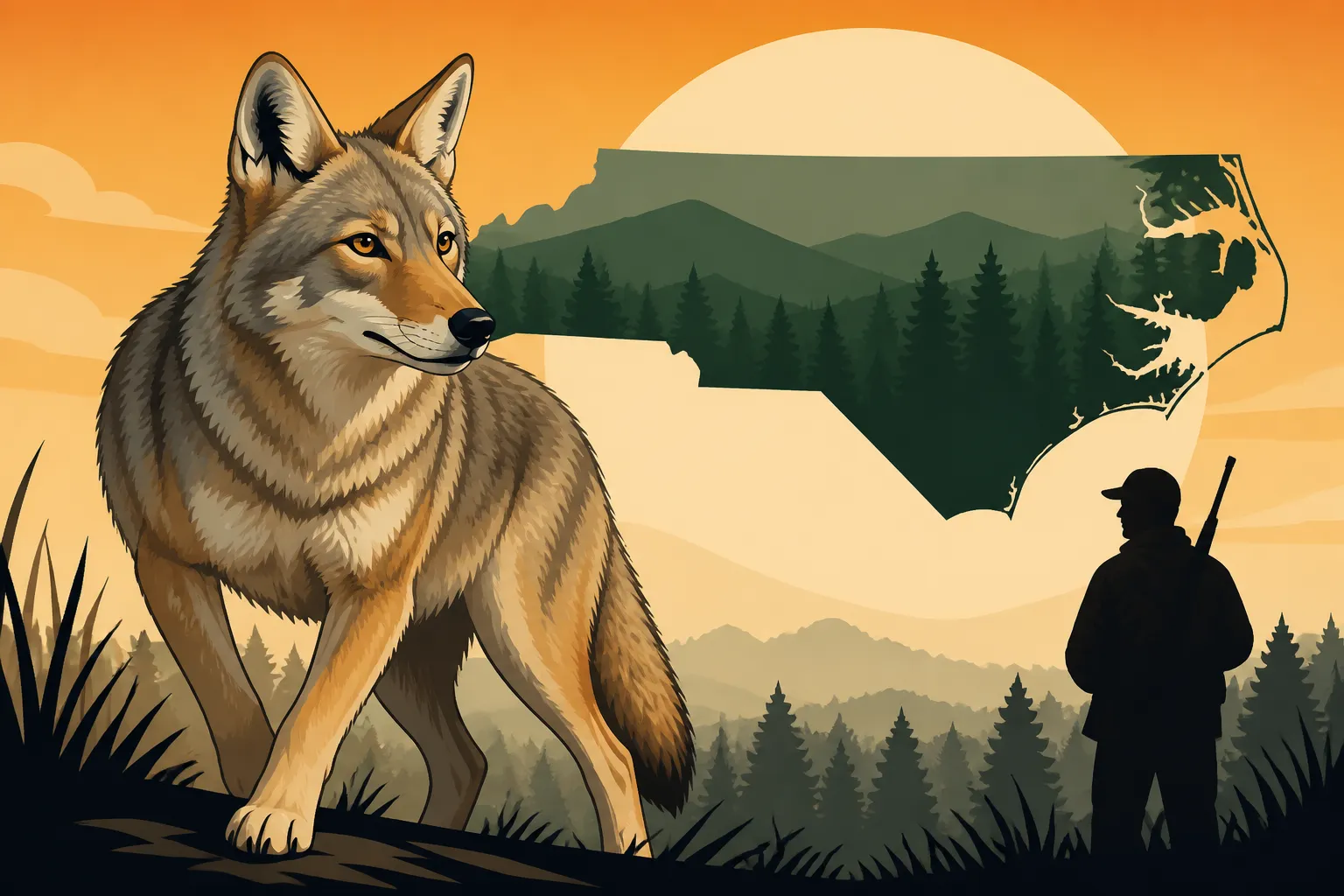
It's easy to assume that coyotes have always been a part of North Carolina's wild landscape, given how ubiquitous they are now. But the truth is, these cunning canines are relatively new arrivals to our state, and their journey here tells a fascinating story of adaptation and expansion. This guide will walk you through when and how coyotes established their presence in North Carolina and the lasting impact they've had on our beloved wildlife and hunting opportunities.
The Quiet Migration: Tracing North Carolina's Coyote Arrival
For generations, the eastern United States, including North Carolina, was largely devoid of coyotes. Our native predators like bobcats and foxes filled those niches, along with the much larger black bear. The idea of a coyote here was, for a long time, alien. But that all began to change, quietly at first, then with increasing speed. Their journey was a testament to their resilience and adaptability, a slow, methodical spread from their ancestral homes in the West.
Initial Foothold in the Mountains
The earliest confirmed sightings of coyotes in North Carolina began to pop up in the western, mountainous regions of the state. Imagine those first few pioneering coyotes, perhaps young males or females dispersing from established packs, pushing eastward from states like Tennessee and Virginia. These weren't large, organized invasions; they were individual animals, covering impressive distances in search of new territories, less competition, and abundant food sources. This movement was likely happening over many years, with sporadic observations that didn't immediately signal a widespread establishment. They found ideal conditions in the vast, rugged terrain of the Blue Ridge and Great Smoky Mountains, with plenty of cover and game.
The rugged mountains provided a perfect environment for these newcomers to find their footing. Dense forests, deep hollers, and an abundance of deer, small game, and even livestock offered a ready larder for a species known for its opportunistic diet. Hunters and landowners in counties like Cherokee, Clay, and Graham were likely the first to notice these unfamiliar canids, often mistaking them for unusually large foxes or smaller, leaner wolves. It was a subtle shift in the wildlife landscape that foreshadowed a much larger demographic change across the entire state. Their presence here laid the groundwork for their eventual push further east.
The Eastward Expansion Across North Carolina
Once established in the mountains, the coyotes didn't stop. Their population slowly but surely grew, and the natural process of dispersal continued to drive them eastward. From the high peaks, they gradually moved into the rolling hills of the Piedmont. This was a slower, more deliberate spread than many might imagine, not a sudden explosion. It was driven by young coyotes seeking their own territories, moving along creek bottoms, through agricultural lands, and even skirting the edges of developing suburban areas. The Piedmont, with its mix of farmlands, small woodlots, and expanding human settlements, provided a new range of opportunities for these adaptable animals.
Eventually, they reached the Coastal Plain, adapting to the vastly different terrain of swamps, pine forests, and open agricultural fields. By the early 2000s, it was clear that coyotes were no longer a novelty; they were a permanent fixture in virtually every county in North Carolina, from the Tennessee border to the Outer Banks. This eastward movement wasn't uniform; some areas saw them earlier and in greater numbers than others, but the overall trend was undeniable. Understanding this gradual colonization is key to appreciating North Carolina Coyote Range and Density today.
More Than Just Walking: How Coyotes Colonized North Carolina
The idea of coyotes simply "walking" across the continent is a bit simplistic, though natural dispersion was absolutely the primary driver. Their incredible biological fitness allowed them to take advantage of various factors, and their rapid expansion caught many by surprise. It's a prime example of how a species can exploit new environments when conditions are favorable.
Natural Dispersion and Adaptability
Coyotes are biological super-adaptors. Unlike a lot of species that stick to a very narrow habitat niche, coyotes are incredibly flexible. You’ll find them thriving everywhere from the highest ridges of the Appalachian Mountains, slipping through thick timber and laurel slicks, all the way down to the flat, agricultural fields of the Piedmont, where they might be denning in woodlots surrounded by row crops. They’ve even made their way to the dense pocosin swamps and maritime forests along our coast, which speaks volumes about their survival instincts. This broad adaptability meant that once they started their journey eastward, very little in North Carolina's diverse landscape acted as a true barrier to their spread.
Their social structure plays a huge role in their dispersion. While they form packs, young coyotes, particularly yearlings, are often pushed out of their natal territories to seek new grounds. These dispersing individuals can travel hundreds of miles, crossing rivers, highways, and diverse habitats, driven by instinct to find unoccupied niches where they can establish their own territories and find mates. This constant outflow of young, adventurous coyotes acted like a biological pump, pushing their front lines ever eastward. Using a mapping tool like GoHunt can help you visualize these natural corridors that coyotes use, from river drainages to unbroken tracts of timber.
The Human Factor and Misconceptions
It's a common misconception that coyotes were intentionally "stocked" in North Carolina by wildlife agencies or even by private individuals trying to control deer populations. This is largely untrue. While some illegal releases of coyotes might have occurred in scattered instances, particularly in the Southeast decades ago, the scientific consensus is overwhelmingly clear: the vast majority of coyote colonization in North Carolina, and indeed the entire East, has been due to natural range expansion. Coyotes simply walked here.
However, human activity did inadvertently create favorable conditions for their spread. The widespread removal of apex predators like wolves in the eastern states left a vacuum in the ecosystem. This created an open niche that coyotes, with their generalist diet and prolific breeding, were perfectly poised to fill. Furthermore, agricultural landscapes provide abundant food sources (rodents, crop damage, even small livestock) and good cover in fragmented woodlots. The extensive network of roads, while a hazard, also provides corridors of relatively easy travel. Hunters looking for sign might use a detailed mapping application like GoHunt to scout areas near agricultural fields or recent timber cuts, as these fragmented habitats are often prime coyote country.
The Ripple Effect: Coyotes and North Carolina's Wildlife
The arrival of a new, highly adaptable predator like the coyote doesn't happen in a vacuum. It inevitably sends ripples through the existing ecosystem, altering dynamics that have been in place for centuries. For hunters and wildlife enthusiasts in North Carolina, these changes have been a significant topic of discussion and concern, particularly regarding our beloved game species.
Impact on Deer and Turkey Populations
One of the most talked-about impacts of coyotes among North Carolina hunters is their effect on deer populations. Coyotes are opportunistic predators, and while adult, healthy deer are generally too large and agile for a single coyote, fawns are a different story. Numerous studies have shown that fawn predation by coyotes can be a significant factor, especially in areas with high coyote densities. This means that a smaller percentage of fawns survive to adulthood, which can influence the overall North Carolina Deer Herd Size and age structure.
Similarly, wild turkeys, particularly poults (young turkeys), are vulnerable. Coyotes will prey on turkey nests, snatching eggs, and are adept at catching poults and even adult hens, especially during nesting season or when birds are on the ground. This contributes to predation pressure that can affect North Carolina Turkey Population Estimate and annual turkey hatches. While coyotes are just one piece of a complex predator puzzle (bobcats, raccoons, and opossums also prey on turkeys), their widespread presence adds another layer of challenge for these game species. This is why many hunters actively pursue coyotes.
Competition and Coexistence with Native Predators
Before coyotes arrived, the bobcat was a top small-to-medium sized predator in North Carolina, along with foxes. The introduction of coyotes created a new dynamic. Coyotes are larger and often more aggressive than bobcats and foxes, leading to competition for food resources and territory. While bobcats are still thriving in many areas, particularly in dense cover, their interactions with coyotes can sometimes be antagonistic, with coyotes occasionally predating on bobcats or displacing them from prime hunting grounds.
The relationship with the critically endangered red wolf, found in a small area of eastern North Carolina, is even more complex. Coyotes and red wolves can hybridize, which poses a genetic threat to the small, pure red wolf population. This interbreeding is a significant management challenge for conservation efforts, highlighting how the arrival of one species can have far-reaching and often unforeseen consequences for another, particularly when that species is already on the brink.
Concerns for Livestock and Pets
Beyond wildlife, coyotes also present real challenges for rural landowners, farmers, and even suburban residents who live near wild spaces. Coyotes are known to prey on livestock, particularly smaller animals like chickens, ducks, sheep, and young calves. This can result in significant economic losses for farmers, adding another layer of frustration and prompting active management efforts. The sound of a coyote chorus near a farm often signals genuine concern for vulnerable animals.
For pet owners, especially those living in areas bordering forests or open fields, coyotes pose a threat to outdoor pets. Small dogs and cats left unsupervised can easily become prey. This has led to an increased awareness among residents about the need to protect their animals, bringing pets indoors at night, securing yards, and being vigilant during dawn and dusk, which are prime coyote activity times.
| Impact Area | Pre-Coyote NC Landscape | Post-Coyote NC Landscape |
|---|---|---|
| Top Small Predator | Bobcat, Fox | Coyote, Bobcat, Fox |
| Fawn Predation | Black Bear, Bobcat (lower intensity) | Coyote, Black Bear, Bobcat (higher intensity) |
| Turkey Poults/Nests | Raccoon, Opossum, Fox | Coyote, Raccoon, Opossum, Fox (increased pressure) |
| Small Game Predation | Bobcat, Fox, Raptors | Coyote, Bobcat, Fox, Raptors (broadened pressure) |
| Livestock/Pet Threat | Minimal (occasional dog/fox issues) | Increased, especially for smaller stock and outdoor pets |
Living with a New Predator: Management and Hunting Strategies
With coyotes now firmly entrenched across North Carolina, the focus for hunters, landowners, and wildlife managers has shifted from preventing their arrival to effectively managing their presence. This means understanding the tools and strategies available to mitigate their impact, particularly on game species and agricultural interests.
North Carolina's Year-Round Hunting and Trapping
Recognizing the widespread impact and prolific nature of coyotes, North Carolina has implemented regulations that classify them as a nuisance species. This is a crucial distinction because it generally allows for year-round hunting and trapping of coyotes on private land. This gives landowners and hunters significant flexibility to manage coyote populations throughout the year, without being restricted by specific seasons, unlike regulated game animals. This approach reflects a statewide acknowledgement of the challenges coyotes present.
For hunters, this means there's almost always an opportunity to pursue coyotes. Many combine coyote hunting with other activities, or dedicate specific outings to predator control. Methods range from calling, still-hunting, and even using night vision or thermal optics where legal on private land. This differs from other regulated species like deer, where seasons and bag limits are strictly defined. For example, similar year-round rules apply to other nuisance species, as detailed in North Carolina's Year-Round Hog Rule on Private Land, offering comparable flexibility to landowners and hunters.
Landowner Strategies for Mitigation
Beyond direct removal through hunting and trapping, landowners have a variety of strategies they can employ to reduce conflicts with coyotes. Fencing, particularly electric or specialized predator-proof fencing, can be very effective at protecting livestock and deterring coyotes from entering pastures or coops. Keeping livestock penned at night, especially during vulnerable birthing seasons, is another common practice. Simple measures like securing trash cans and removing pet food left outdoors can also reduce attractants that draw coyotes into residential areas.
Many farmers also employ what are known as "livestock guardian animals" – breeds of dogs (like Great Pyrenees), donkeys, or even llamas – that are specifically bred and trained to protect herds from predators. These animals integrate with the livestock and act as a deterrent. Using a mapping application like GoHunt can help landowners identify potential travel corridors for coyotes on their property, allowing them to strategically place deterrents or focus their hunting efforts on those high-traffic areas.
Understanding Coyote Behavior
Effective coyote management, whether through hunting or deterrents, often starts with understanding their behavior. Coyotes are most active during dawn and dusk, but can be active at any time, especially when food is scarce or they are undisturbed. They use a variety of calls, from barks and yips to full-fledged howls, to communicate, locate pack members, and mark territory. Learning to recognize these calls can give you an edge, whether you're trying to locate them for hunting or simply want to know if they're active near your home.
For hunters, mimicking these calls is a primary tactic. Learning to use distress calls, pup-in-distress sounds, or even challenge howls can draw curious or territorial coyotes into range. Knowing their preferred habitat – dense cover for bedding, open areas for hunting, and water sources – also improves success rates. Consider reading up on specific techniques like Coyote Calling in North Carolina Farm Country to refine your approach. The more you know about these intelligent animals, the better equipped you'll be to coexist with or pursue them.
Disclaimer
This article is for general informational purposes only and does not constitute professional advice. Laws, prices and regulations vary by location and change over time. Consult a qualified professional for guidance on your specific situation.