Crop Damage Costs From North Carolina Hogs
Oh, the humble hog. To many, a symbol of delicious barbecue. But to North Carolina farmers, feral hogs are an absolute nightmare, an invasive force that costs them untold thousands of dollars every single year in ruined crops and damaged land. If you're a farmer, or even a landowner trying to manage your property, you know the crushing frustration of seeing your hard work obliterated overnight by these relentless beasts. This guide is dedicated to shedding light on the very real and often devastating crop damage costs from North Carolina hogs, giving you a clearer picture of the financial hit and the broader impacts these animals have on our agricultural heartland.
The Devastating Impact of Feral Hogs on North Carolina Agriculture
Let's face it, when we talk about feral hogs, we're not just talking about a few critters causing minor mischief. We're talking about an ecological wrecking ball that leaves a trail of economic destruction in its wake. North Carolina's rich agricultural landscape, from the vast cornfields of the Coastal Plain to the peanut and sweet potato farms of the eastern and central regions, provides an irresistible buffet for these destructive animals. The sheer numbers and their voracious appetites mean that damage can escalate from a nuisance to a complete financial catastrophe in a shockingly short amount of time.
Understanding the Scale of the Problem
It’s hard to truly grasp the problem without understanding just how many feral hogs are out there and how quickly they multiply. These animals are prolific breeders, with sows capable of having multiple litters a year, often with a high survival rate for their piglets. This explosive reproduction means that populations can skyrocket, turning a small group into a massive sounder almost before you know it. When a sounder of twenty, thirty, or even fifty hogs moves into a field, the damage isn't just cosmetic; it's total devastation. They root, they trample, and they consume, moving through acres of crops with frightening efficiency. We've talked before about How Many Feral Hogs North Carolina Has, and the numbers are truly staggering, making it clear why the impact is so widespread and severe.
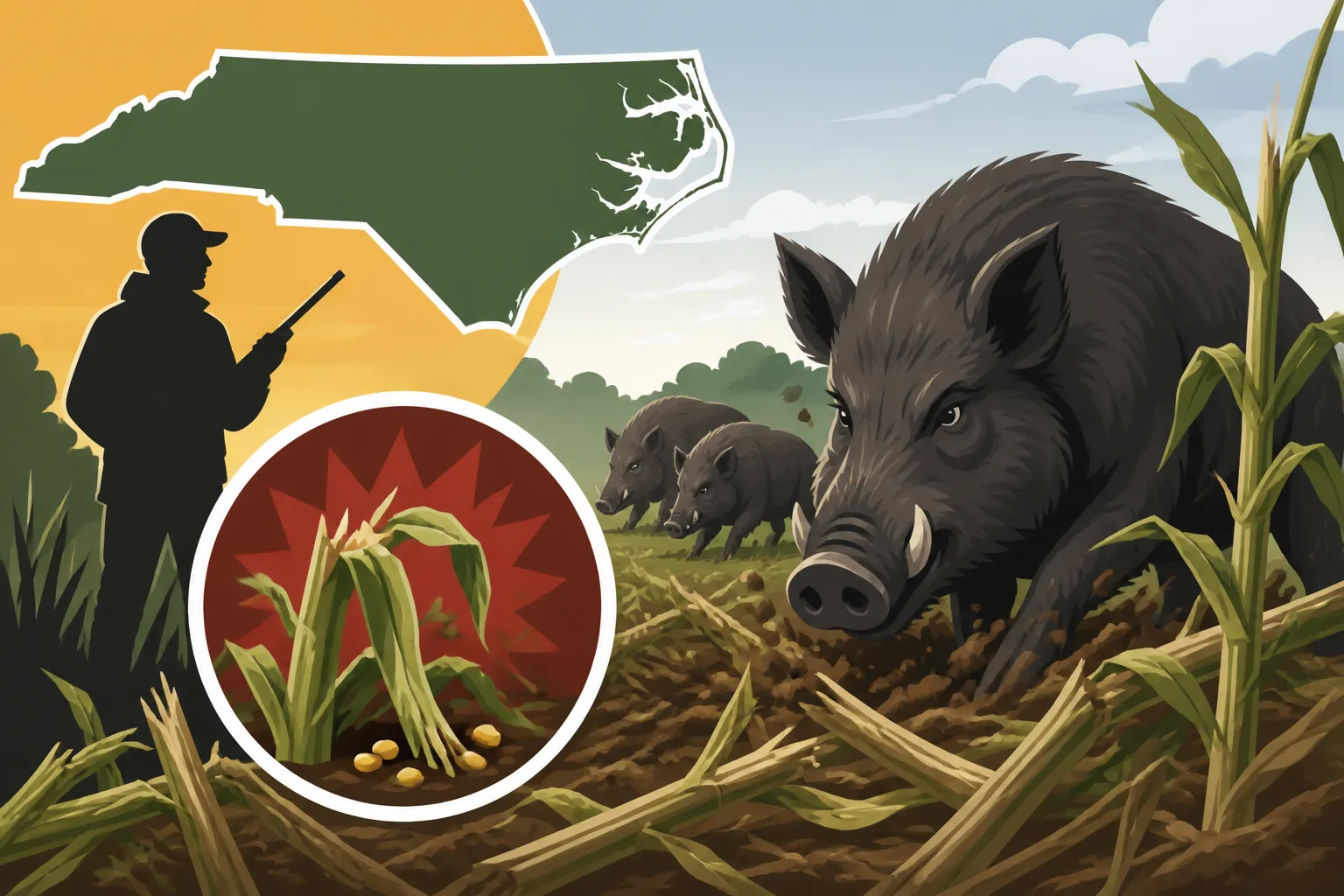
Imagine planting an entire field of corn, nurturing it through weeks of growth, seeing the stalks heavy with developing ears, only to wake up one morning and find swaths of it flattened and eaten. It’s soul-crushing. These aren't just hungry deer nibbling a few leaves; these are animals that will systematically destroy a field, pulling up plants, eating roots, and leaving behind a muddy, torn-up mess that's nearly impossible to salvage. Their impact on different regions, from the mountains to the coast, varies slightly, but the underlying destruction remains the same. The question of Which North Carolina Counties Have the Most Hogs often correlates directly with areas experiencing the most severe agricultural losses.
Direct Financial Losses for Farmers
The most obvious and immediate cost comes from direct crop loss. Feral hogs are omnivores, but they absolutely adore agricultural crops. Corn, soybeans, peanuts, sweet potatoes, wheat, oats, and even specialty crops like watermelons and cantaloupes are all on their menu. For a farmer, the sight of a field ready for harvest being torn apart is devastating.
Let's break down the direct financial hit:
- Lost Yield: This is the most significant factor. Hogs will eat the crops directly, reducing the amount that can be harvested. For example, a field of corn can see a significant percentage of its yield lost to hogs breaking stalks and eating ears before maturity.
- Replanting Costs: Sometimes, if the damage occurs early enough in the growing season, a farmer might try to replant. This means additional expenses for seed, fertilizer, fuel, and labor—all costs that cut into or even eliminate any potential profit from that field.
- Reduced Quality: Even crops that aren't completely destroyed can be damaged to the point where their market value is significantly reduced. Bruised fruits, partially eaten vegetables, or tainted grains might not be marketable at full price, if at all.
- Crop Insurance Complications: While some crop insurance policies might cover certain types of wildlife damage, navigating the claims process and proving the full extent of the loss due to feral hogs can be a bureaucratic nightmare. The insurance might not cover the full market value or all associated costs. This ongoing battle with direct destruction is why farmers are often desperate for effective control measures.
Beyond the Immediate Crop Destruction: Hidden Costs and Long-Term Effects
The financial burden of feral hogs extends far beyond the immediate loss of crops. There's a whole host of "hidden" costs that chip away at a farmer's bottom line and can have long-lasting environmental consequences. These are the expenses that aren't always immediately obvious but add up significantly over time, making feral hog management a constant, uphill battle for North Carolina landowners.
Infrastructure Damage and Repair Expenses
Feral hogs aren't just content to eat your crops; they'll tear up anything in their path. Farm infrastructure, which is costly to install and maintain, often bears the brunt of their destructive habits. Think about it:
- Fencing: Hogs are incredibly strong and persistent. They'll root under fences, break wires, and push through barriers to get to a food source. This means constant fence repair or replacement, which involves buying new materials—posts, wire, staples—and dedicating precious time and labor to fixing breaches. A sturdy fence line might deter deer, but hogs often treat it as a challenge.
- Irrigation Systems: Sprinkler heads, drip lines, and even underground pipes are not safe from rooting hogs. They can chew through lines, break risers, and generally wreak havoc on expensive irrigation equipment. Replacing or repairing these components is not only costly but can also disrupt water delivery to crops, leading to further yield loss if not addressed quickly.
- Farm Roads and Ditches: Their constant rooting and wallowing can erode field edges and damage unpaved farm roads, making it harder to access fields with equipment. They can also clog drainage ditches, leading to water management issues. These repairs might seem minor individually, but cumulatively, they represent a significant maintenance burden. Every broken fence post or busted irrigation line is a hit to the wallet and another task added to an already overwhelming workload.
Soil Degradation and Environmental Impact
Perhaps one of the most insidious long-term costs of feral hog activity is the damage they inflict on soil health and the broader ecosystem. Their rooting behavior isn't just about finding food; it's a deep, systematic disturbance of the topsoil layer.
- Erosion: When hogs tear up the ground, they expose bare soil to the elements. Rain and wind can then easily carry away this loose topsoil, leading to increased erosion. This is particularly problematic on sloped fields or near waterways. Erosion means lost nutrients, reduced organic matter, and ultimately, a less productive soil for future crops.
- Reduced Soil Health: Beyond erosion, the constant churning of the soil can disrupt beneficial microbial communities and alter soil structure. This makes the soil less fertile and more susceptible to compaction, requiring farmers to potentially invest more in soil amendments or tillage practices to compensate, adding further costs down the line.
- Water Quality Contamination: Feral hogs often defecate and wallow in or near water sources. Their waste carries bacteria and nutrients that can contaminate streams, rivers, and ponds, posing risks to both aquatic life and human health. This environmental degradation is a cost borne by the entire community, not just the individual farmer. It also impacts the overall health of the land, something many landowners work tirelessly to protect.
Disease Transmission Risks
Another significant, though often unseen, cost of feral hogs is their potential to transmit diseases. These animals are carriers for a variety of pathogens that can affect domestic livestock, wildlife, and even humans. The threat of disease outbreak adds a layer of anxiety and potential financial ruin for farmers with livestock operations.
- Swine Brucellosis: This is a bacterial disease that can cause abortions, infertility, and lameness in domestic swine. If a feral hog population introduces brucellosis to a commercial hog farm, the economic consequences can be catastrophic, leading to herd testing, culling, and severe market restrictions.
- Pseudorabies: Though largely eradicated from domestic swine in the U.S., feral hogs remain a reservoir for this viral disease. It can cause reproductive problems in hogs and is often fatal to other mammals like cattle, sheep, goats, and dogs. An outbreak on a farm could lead to severe losses of various livestock.
- Other Pathogens: Hogs can also carry leptospirosis, E. coli, salmonella, and various parasites. These can contaminate water sources, feed, and pasturelands, posing risks to both domestic animals and human health if meat from infected animals is improperly handled or if contamination spreads to other farm products. While not directly a hog disease, there's always the broader concern about wildlife health, especially given recent issues like Chronic Wasting Disease Risk in North Carolina in deer populations. The potential costs associated with veterinary care, testing, quarantines, and lost market access due to disease outbreaks are immense and a constant worry for North Carolina farmers.
The Financial Burden of Feral Hog Management
So, what do you do about it? The fight against feral hogs is relentless, and it comes with its own set of financial burdens. Farmers and landowners aren't just passively accepting the damage; they're actively trying to mitigate it, and these efforts cost money, time, and resources. Understanding these management costs is crucial to appreciating the full economic impact of the feral hog problem.
Trapping and Control Efforts
Trapping is often considered one of the most effective methods for reducing feral hog populations, especially when dealing with entire sounders. However, it's not cheap, nor is it a one-time fix.
- Equipment Costs: High-quality traps, often large panel traps or corral traps, represent a significant upfront investment. These aren't your typical small game traps; they need to be robust enough to hold multiple powerful hogs. Then there's the cost of remote triggering systems, which are increasingly popular for maximizing catch rates by waiting for the entire sounder to enter.
- Bait and Attractants: Consistent baiting is essential to draw hogs into traps and keep them coming back. Corn, soured grains, and commercial attractants all cost money, and you'll go through a lot of it.
- Labor and Time: Trapping is labor-intensive. It requires scouting for hog activity, setting up traps, monitoring them (sometimes daily), checking cameras, and then processing the caught animals. This takes away valuable time that farmers could be spending on their crops or other farm duties. The learning curve for effective trapping can also be steep, and poor technique can lead to hogs becoming "trap shy." For a deep dive into tactics, you might want to read up on Trapping North Carolina Feral Hogs.
- Maintenance: Traps need regular maintenance and repair, as hogs can be incredibly destructive even when captured. Broken panels, bent gates, and damaged cameras all add to the ongoing expense.
Hunting as a Management Tool
While trapping often targets entire sounders, hunting plays a critical role, particularly in applying pressure and removing individual hogs or smaller groups. Many landowners and hunters dedicate significant time and resources to hunting feral hogs, even though it's often a losing battle against their reproductive rates.
- Equipment: Hunters invest in firearms, ammunition, optics, and sometimes specialized gear like night vision or thermal scopes for hunting after dark. This is legal on private land in North Carolina with certain regulations, as detailed in Night Hunting Hogs With Lights on Private Land.
- Time and Fuel: Just like trapping, hunting takes time away from other activities. Scouting, setting up, and actively hunting require fuel for vehicles and ATVs, and hours spent in the field.
- Coordinating Efforts: Effective hunting for management often requires coordinating with multiple individuals or a dedicated hunting club. This might involve sharing knowledge, pooling resources, and ensuring consistent pressure across a property. Sometimes, landowners will use platforms like GoHunt to connect with experienced hunters who can help reduce hog populations, offering access in exchange for their efforts. This kind of collaboration is vital.
- The "GoHunt" Advantage: GoHunt can serve as a valuable platform for landowners struggling with hog populations. By using such a service, landowners can potentially connect with hunters who are eager for opportunities to pursue feral hogs, which are often considered nuisance animals. This can help increase hunting pressure on the property, which is a key component of effective population control. Hunters, on the other hand, can use tools like GoHunt to find new hunting grounds and contribute to wildlife management efforts. While it's not a silver bullet, strategic hunting, particularly with organized efforts, can make a dent.
Government Programs and Assistance
Many farmers naturally look to state or federal agencies for assistance with such a widespread and costly problem. While programs exist, they often fall short of fully addressing the scale of the financial damage or providing comprehensive support.
- Technical Guidance: Agencies like the USDA often provide technical assistance, workshops, and educational materials on best management practices for feral hog control. This information is valuable, but it doesn't directly offset financial losses.
- Cost-Share Programs: Occasionally, there might be limited cost-share programs available that help farmers cover a portion of the expenses for implementing control measures, such as purchasing traps. However, these programs are often competitive, have limited funding, and may not cover the full extent of the costs incurred. They are rarely designed to reimburse for crop losses.
- Research and Monitoring: Government agencies also invest in research to better understand feral hog biology, movements, and control methods. While beneficial in the long term, this doesn't offer immediate financial relief to farmers facing current crop devastation. Unfortunately, the current efforts, while well-intentioned, often feel like a drop in the bucket compared to the tidal wave of feral hog destruction. This means the primary financial burden often falls squarely on the shoulders of individual farmers.
Real-World Scenarios: What North Carolina Farmers Face
To really hit home the crop damage costs from North Carolina hogs, let's look at some hypothetical, but very realistic, scenarios. These illustrate the daily struggles and financial hits that farmers across our beautiful state endure because of these pervasive pests.
A Piedmont Corn Farmer's Plight
Imagine Farmer Joe, who owns a 200-acre corn farm in Chatham County, right in the heart of the Piedmont. He's been farming this land for generations, but the last five years have seen an explosion in feral hog activity. This past spring, he planted his corn, invested heavily in fertilizer, and saw a beautiful stand coming up. Mid-summer, just as the corn was in its milk stage – prime eating for hogs – a large sounder moved in. They flattened a 10-acre section of his prime bottomland field, systematically tearing down stalks and devouring the tender ears.
Farmer Joe estimates that those 10 acres would have yielded at least 150 bushels per acre, worth a substantial amount on the market. That's a direct loss of potential income. Beyond that, the soil in that flattened area was so heavily rooted and compacted that he'll have to invest extra in deep tillage next season to restore its fertility, adding to his operational costs. He also found a section of his electric fence along the creek bottom completely pushed over, requiring him to spend a full day and several hundred dollars on repairs. These are the kinds of stories that are tragically common, and they highlight why the issue is so critical. He's even been looking at resources like GoHunt to find hunters willing to help alleviate some of the pressure on his land, hoping for consistent efforts from experienced individuals.
Sweet Potato Losses on the Coastal Plain
Now let's head east, to the rich, sandy loam of Duplin County, where Farmer Sarah grows sweet potatoes – a cornerstone of North Carolina agriculture. Sweet potatoes are a high-value crop, and their shallow root structure makes them incredibly vulnerable to feral hog rooting. Last fall, just weeks before harvest, Sarah discovered a nightmare in one of her main fields. Hogs had systematically rooted up several rows, not just eating the potatoes but scarring and damaging hundreds more that were left behind.
The direct loss from eaten and damaged sweet potatoes was significant, representing thousands of dollars in unmarketable produce. But the hidden costs mounted too. Her crew had to spend extra time sorting the damaged potatoes from the good ones, increasing labor costs. The contamination risk from hog feces on the remaining crop also meant extra scrutiny and potential rejection from buyers, adding to her stress and uncertainty. Her neighbor, who hunts in the area and uses resources like Scouting With the NC Wildlife App to track game, noticed increased hog sign near her fields for weeks before the damage. The impact of feral hogs in areas where they reproduce rapidly, like the Coastal Plain, which we discuss in Why Coastal Plain Hogs Reproduce So Fast, means that these events are becoming more frequent and more severe for farmers like Sarah.
The fight against feral hogs in North Carolina is an ongoing, costly battle for our farmers. Their resilience is incredible, but the financial and emotional toll is immense.
| Cost Category | Description | Example Impact |
|---|---|---|
| Direct Crop Loss | Hogs eating or destroying crops before harvest. | Lost revenue from entire sections of corn, soybeans, or sweet potatoes. |
| Replanting Costs | Expense of re-seeding damaged fields. | Additional seed, fertilizer, fuel, and labor costs without guaranteed recovery. |
| Reduced Crop Quality | Damage making crops unmarketable or lower value. | Bruised fruit, partially eaten vegetables, or tainted grains selling at a discount. |
| Fencing & Infrastructure | Damage to fences, irrigation, roads, and farm equipment. | Costs for new materials (wire, posts), labor for repairs, and equipment downtime. |
| Soil Degradation | Erosion, compaction, and loss of fertility from rooting. | Need for increased soil amendments, deep tillage, and long-term reduced productivity. |
| Disease Transmission | Introduction of diseases to livestock or other wildlife. | Veterinary costs, testing, potential culling of livestock, and market restrictions. |
| Trapping Equipment | Purchase and maintenance of traps, cameras, and remote systems. | Significant upfront investment for effective corral traps and ongoing repair costs. |
| Bait & Attractants | Ongoing expense for baiting traps and luring hogs. | Regular purchase of corn, specialty attractants, and other feed. |
| Labor & Time (Management) | Time spent scouting, setting, monitoring traps, and hunting. | Hours diverted from farming tasks, fuel costs for travel, and hunter coordination. |
| Hunting Gear | Investment in firearms, ammunition, optics, and night vision. | Personal expenditure for hunters or landowners seeking to reduce hog populations. |
Disclaimer
This article is for general informational purposes only and does not constitute professional advice. Laws, prices and regulations vary by location and change over time. Consult a qualified professional for guidance on your specific situation.