Why Edgecombe County’s Case Worried Biologists
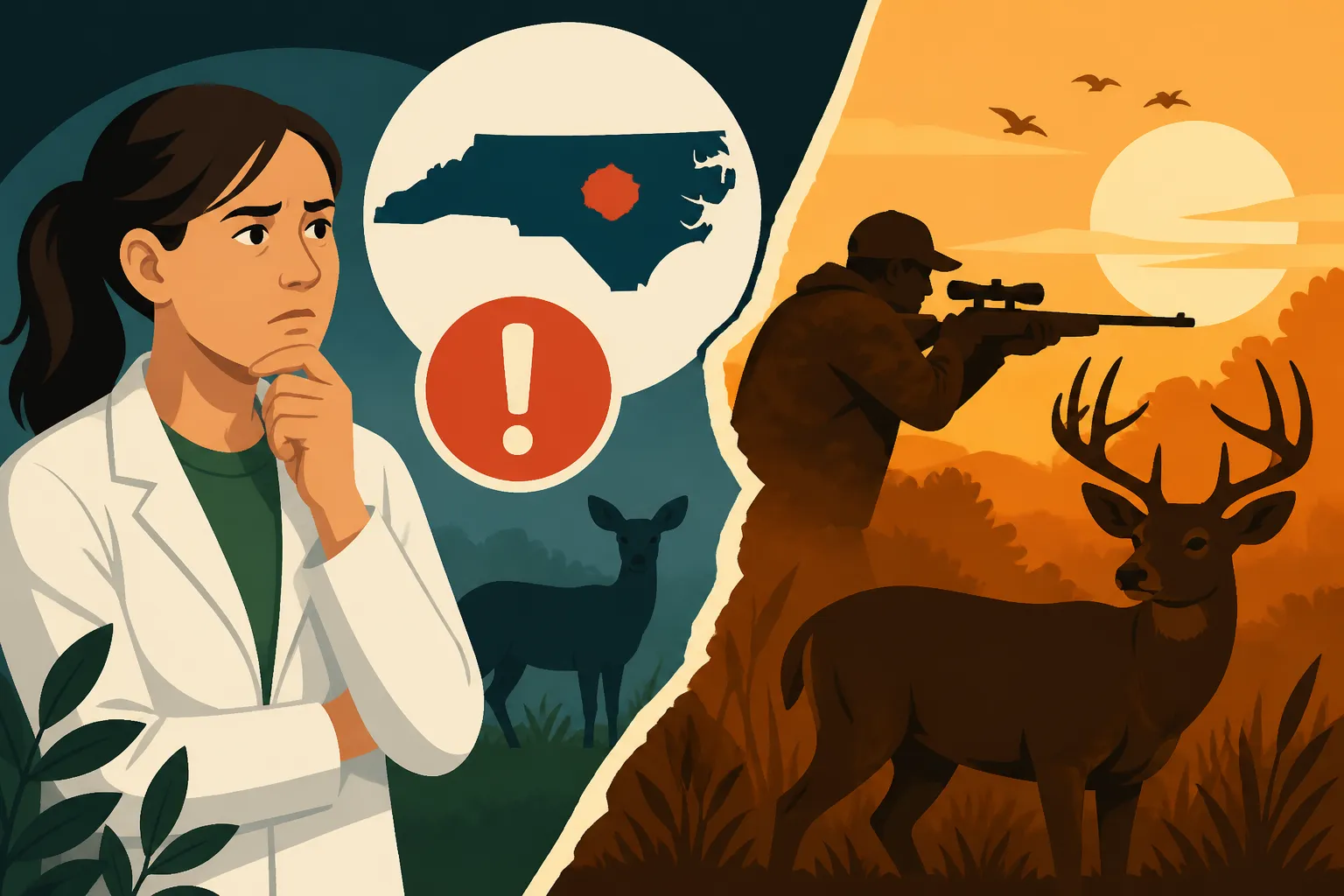
For those of us who cherish North Carolina's hunting heritage and the health of our deer herds, the news of Chronic Wasting Disease (CWD) arriving in the state was a gut punch. But when a case was confirmed in Edgecombe County, it wasn't just another number; it immediately sparked a deeper level of concern among wildlife biologists and avid hunters alike. This guide will explore Why Edgecombe County's Case Worried Biologists and what it means for the future of deer management and hunting in the Old North State.
Understanding Chronic Wasting Disease (CWD) in North Carolina
Chronic Wasting Disease is a serious, fatal neurological disease affecting deer, elk, and moose. It's caused by abnormal proteins called prions, which can persist in the environment for years, making containment incredibly challenging. For years, North Carolina biologists worked tirelessly to prevent CWD from crossing our borders, implementing rigorous surveillance and testing protocols. The discovery of the disease within our state was a somber day for many.
The Nature of CWD and Its Threat
Imagine a disease that slowly, inexorably, wastes away a deer's brain, causing abnormal behavior, extreme weight loss, and eventually death. That's CWD. It's not bacterial or viral; it's a prion disease, similar to "mad cow disease" in cattle. This means it doesn't respond to antibiotics or typical vaccines. The prions can be shed by infected animals through saliva, urine, and feces, contaminating soil and plants, which healthy deer can then ingest. This environmental persistence is what makes CWD such a formidable adversary for wildlife managers. It's a slow burn, but once established, it's incredibly difficult to eradicate, changing the landscape of hunting and deer management forever.
The threat of CWD extends beyond individual animals. It can lead to long-term population declines, alter herd demographics, and impact hunter participation. The long incubation period means an animal can be infected and shedding prions for months or even years before showing any symptoms, silently spreading the disease through a seemingly healthy population. Understanding the full scope of the disease and its potential impact is crucial for every hunter in North Carolina, especially given the state's diverse deer populations, from the mountains to the coast. You can learn more about the broader implications by reading our piece on Chronic Wasting Disease Risk in North Carolina.
Early CWD Detections and Surveillance Efforts
North Carolina's journey with CWD began with detections primarily centered in the Yadkin Valley region, specifically around Surry and Yadkin counties. These initial cases, while devastating, were somewhat geographically contained within a specific region. Biologists quickly established CWD Management Areas (CMAs) and implemented intensified surveillance and testing. Hunters in these areas became vital partners, submitting samples to help track the disease's spread. This focused effort was aimed at understanding the prevalence and preventing wider dissemination.
The early CWD detections led to significant changes in local hunting practices, including mandatory testing requirements in some areas and strict rules about moving deer carcasses. For instance, you can find details on Mandatory Testing Inside a CWD Surveillance Area to understand the changes hunters faced. The North Carolina Wildlife Resources Commission (NCWRC) mobilized resources, setting up convenient sampling stations and educating hunters on the importance of participation. This collaborative approach was, and continues to be, the cornerstone of our state's strategy to combat CWD.
The Geographic Significance of Edgecombe County's Case
The detection of CWD in Edgecombe County wasn't just another positive test; it marked a significant and concerning geographical leap for the disease within North Carolina. This wasn't merely an expansion of the existing CWD footprint in the Yadkin Valley; it represented a new, isolated hot spot in a vastly different part of the state.
A New Front in the Coastal Plain
The initial CWD cases in North Carolina were concentrated in the northwestern part of the state, primarily in counties like Surry and Yadkin, within the Piedmont and foothills. Edgecombe County, however, sits squarely in the Coastal Plain. This geographical separation immediately raised red flags. It meant that CWD wasn't just spreading contiguously from an existing epicenter; it had somehow jumped a considerable distance, implying either a separate introduction event or long-distance translocation by an infected animal or carcass.
This jump to the Coastal Plain fundamentally changed the CWD management strategy. Instead of focusing on containing a single known area, biologists now faced two distinct CWD fronts, separated by hundreds of miles. The Coastal Plain environment, with its vast agricultural lands, dense pocosin swamps, and unique deer movement patterns, presents different challenges for surveillance and management compared to the more mountainous or rolling Piedmont terrains. The implications for the North Carolina Deer Population Estimate in the eastern part of the state suddenly became a critical consideration.
Proximity to Major Transportation Corridors and High-Density Areas
One of the greatest concerns with the Edgecombe County detection was its location relative to major transportation corridors. Edgecombe is intersected by significant interstate highways and other primary roads that connect the eastern part of the state to the Piedmont and even further west. This proximity immediately brought up questions about how the disease arrived there and, more importantly, how easily it could spread to other counties via human-assisted means.
Imagine a hunter from a CWD-negative county harvesting a deer in Edgecombe, unknowingly transporting an infected carcass or parts back home. While strict North Carolina Carcass Movement Restrictions are in place for CWD Management Areas, a new, isolated detection can catch people off guard before awareness fully spreads. Furthermore, Edgecombe County, while rural in many parts, is not far from major population centers and has a mix of agricultural land, timber operations, and private landholdings. This blend of environments and human activity increases the complexity of controlling disease spread compared to more remote, less traveled areas.
Potential Ramifications for Wildlife Management
The Edgecombe County CWD case presented a host of new challenges and concerns for wildlife management, forcing biologists to re-evaluate their strategies and allocate resources differently. It wasn't just about managing an existing problem; it was about confronting a potentially new, widespread threat.
Challenges for Containment in a New Region
The primary challenge with the Edgecombe case was containment. With CWD popping up in a completely separate region from the initial Yadkin Valley cluster, the concept of a single, defined containment zone became more complicated. Biologists faced the daunting task of understanding if this was an isolated incident or if other undetected cases existed nearby, creating a broader, unmapped zone of infection. This "geographic isolation" meant that standard perimeter-based containment strategies needed to be adapted significantly.
Instead of reinforcing existing CWD management boundaries, the Edgecombe detection necessitated the rapid establishment of a new CWD Surveillance Area (CSDA) or management zone, essentially creating a second front in the battle against the disease. This required rapid deployment of personnel, equipment, and public outreach to a region that might have had less prior exposure to intensive CWD messaging. The learning curve for both hunters and local wildlife staff in this new zone was immediate and steep, adding layers of complexity to an already challenging situation. Organizations like GoHunt provide excellent mapping tools that can help hunters visualize these new regulatory boundaries, which are constantly being updated by wildlife agencies.
Increased Surveillance and Testing Efforts
The discovery in Edgecombe County immediately triggered an intensification of surveillance and testing efforts in the surrounding counties. Biologists needed to determine the extent of the outbreak: was it truly a single isolated case, or was it indicative of a wider, undetected spread in the Coastal Plain? This meant more resources dedicated to sampling deer harvests, targeted surveillance of road-killed deer, and increased public outreach campaigns encouraging hunters to submit samples for testing.
The increase in testing put a strain on laboratory resources and personnel. Every submitted sample had to be processed, analyzed, and tracked, requiring a significant logistical undertaking. The goal was to quickly delineate the boundaries of any potential CWD spread from the Edgecombe detection and to prevent it from quietly establishing itself further across the eastern part of the state. This proactive and aggressive sampling strategy is critical to understanding the true footprint of the disease and guiding future management decisions. You can learn more about how hunters contribute by reading our article on North Carolina CWD Testing for Hunters.
Adapting Hunting Regulations and Carcass Movement Restrictions
With a new CWD hot spot in the Coastal Plain, hunting regulations and carcass movement rules had to be adapted quickly to prevent further spread. Existing rules, primarily tailored for the Yadkin Valley, needed to be expanded and communicated to hunters in the new CWD management area. This often means changes to how deer can be processed, transported, and disposed of after a harvest.
For example, hunters might be restricted from moving whole carcasses out of the CWD-affected counties, instead being required to debone the animal on-site or at a local processor within the zone. This measure helps prevent the accidental transport of prions in bones, spinal cord, or brain tissue to uninfected areas. Additionally, increased signage, public meetings, and online resources became essential to inform hunters about these rapidly evolving rules. The NCWRC strives to make these regulations as clear as possible, often providing maps and detailed guidelines on their website to help hunters comply and do their part in managing CWD.
Implications for North Carolina Hunters and Local Economies
Beyond the biological implications, the Edgecombe County CWD case carried significant weight for North Carolina's hunting community and the local economies that rely on it. It brought new anxieties and required adaptation from everyone involved.
Hunter Concerns and Participation
For North Carolina hunters, especially those in the eastern counties, the Edgecombe CWD detection brought a new layer of concern. Many hunters began asking questions about the safety of venison, the long-term health of their local deer herds, and what new regulations might mean for their hunting traditions. The thought of CWD spreading to their favorite hunting grounds or impacting their ability to share venison with family and friends was, understandably, unsettling.
This concern can, in some cases, lead to a decrease in hunter participation. If hunters perceive increased regulatory burdens, heightened health risks, or a decline in deer populations due to the disease, they might choose to hunt less frequently or even step away from the sport. This is a critical issue, as hunters are often the most valuable partners in CWD surveillance and management, providing samples and acting as eyes and ears on the ground. Maintaining open communication and building trust between wildlife agencies and the hunting community is paramount to ensuring continued participation and collaboration in the face of CWD. Using resources like GoHunt to stay informed about regulatory changes is more important than ever.
Impact on Venison Consumption and Local Businesses
The question of venison safety is a common concern wherever CWD is found. While health organizations indicate no strong evidence of CWD transmitting to humans, the recommendation is always to avoid consuming meat from CWD-positive animals. This often leads to increased caution among hunters, with many choosing to have their harvested deer tested before consuming the meat, especially if hunting within a CWD management area. This shift in behavior can have several ripple effects.
Local businesses tied to the hunting industry, such as deer processors, sporting goods stores, and local restaurants that cater to hunters, can also feel the pinch. If hunter participation drops or if there are fewer deer being processed locally due to CWD concerns, these businesses can experience economic downturns. For example, a processor in a CWD-affected county might see a decrease in whole carcasses brought in, instead receiving deboned meat, which changes their workflow and revenue. The economic vitality of many rural areas in North Carolina is intrinsically linked to healthy wildlife populations and robust hunting seasons, making CWD a serious economic as well as ecological threat.
The Hunter's Role in CWD Management
Despite the concerns, hunters remain the single most important group in the fight against CWD. Their passion for wildlife and commitment to conservation are indispensable. In North Carolina, the NCWRC relies heavily on hunters to comply with regulations, submit deer samples for testing, and report any deer exhibiting signs of illness. Every hunter who participates in testing or adheres to carcass movement restrictions becomes a vital part of the statewide surveillance network.
This proactive engagement is not just about compliance; it's about stewardship. By understanding the disease, adapting practices, and supporting wildlife agencies, hunters ensure the long-term health of the deer herd and the sustainability of hunting for future generations. The responsibility to help contain and manage CWD falls on all of us who enjoy North Carolina's wild places and its abundant game. Tools like the NC Wildlife App can help hunters report observations and find information on sampling stations, making it easier to play an active role.
| Concern Factor | Yadkin Valley CWD Detections (Initial) | Edgecombe County CWD Detection (Later) | Why It Worried Biologists |
|---|---|---|---|
| Geographic Location | Piedmont/Foothills (Northwestern NC) | Coastal Plain (Eastern NC) | New, isolated front: Implied long-distance jump, possibly new introduction, or undetected spread. |
| Proximity to Traffic | Connected, but more localized distribution | Intersected by major interstate highways (e.g., I-95 corridor) | High spread risk: Increased potential for human-assisted transport to other regions. |
| Landscape/Habitat | Rolling hills, mixed forests, agriculture | Vast agricultural fields, dense pocosin swamps, maritime forest | Diverse challenges: Different terrain and deer behavior could complicate surveillance/containment. |
| Deer Population Density | Varied, but often good densities | Historically strong deer populations, particularly in agricultural areas | Impact on large population: Potential for rapid spread in a dense, productive area. |
| Public Awareness | Growing, but concentrated in CWD Management Area (CMA) | Initially low in new region, requiring rapid education campaign | Catch-up game: Needed to quickly inform and educate a previously less-affected hunter base. |
| Management Complexity | Focused on expanding known boundaries | Required establishing a new, separate CWD Surveillance Area (CSDA) or CMA | Resource strain: Doubled the geographic scope and logistical demands for management. |
Disclaimer
This article is for general informational purposes only and does not constitute professional advice. Laws, prices and regulations vary by location and change over time. Consult a qualified professional for guidance on your specific situation.