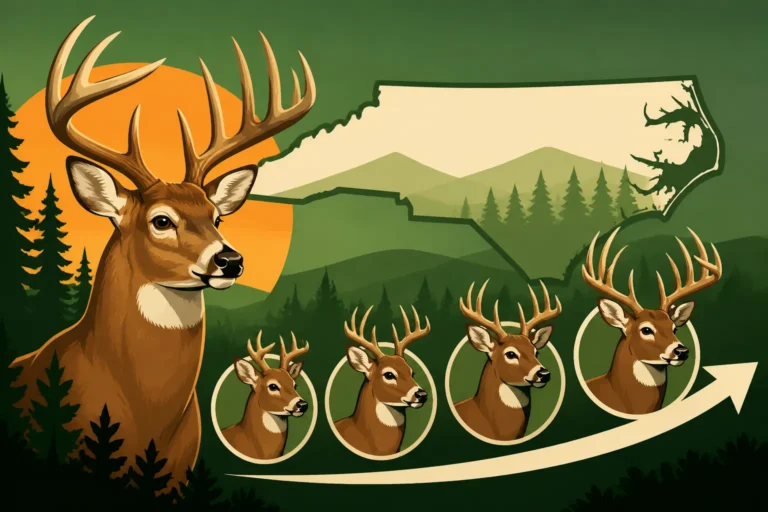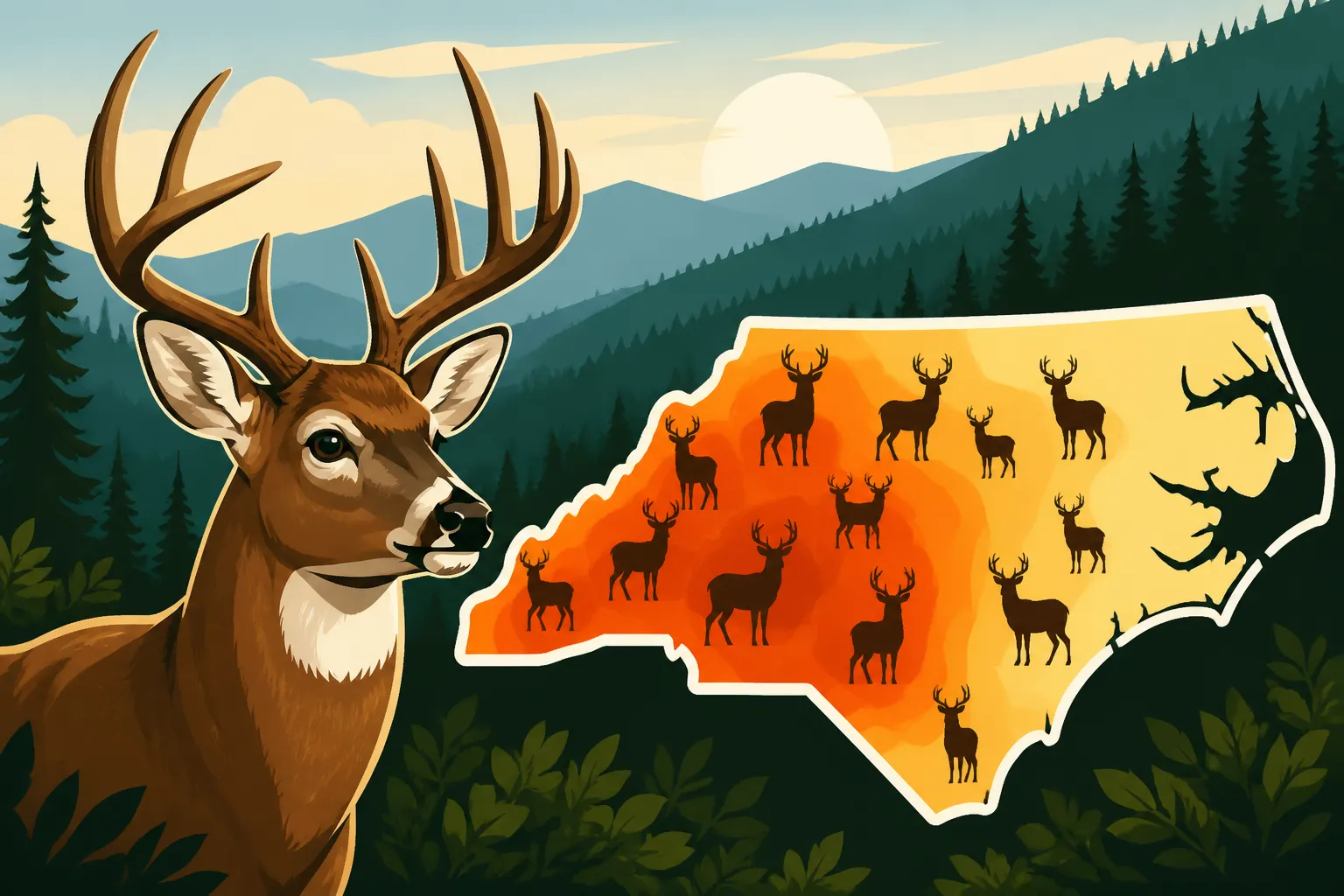
Mountain Zone Deer Density
If you've spent any time at all chasing whitetails in North Carolina, you've probably heard folks talk about the "Piedmont bucks" or the "Coastal Plain swamps" and the sheer numbers of deer they see. But for those of us who love the rugged beauty of the Mountain Zone, that conversation often turns to frustration. It can feel like you're hunting ghosts up there, leaving many to wonder, "Is there even any deer up here?" This guide is all about shedding some light on the reality of deer density in North Carolina's majestic mountains, what truly influences it, and how you can still find incredible success in this challenging yet rewarding terrain.
Understanding Deer Density in North Carolina's Mountain Zone
Let's be honest, when most hunters hear "deer density," they often picture fields full of deer in the Midwest or the rich farmlands of the North Carolina Piedmont. The Mountain Zone, with its sprawling national forests and steep topography, simply doesn't fit that mold. Deer density refers to the number of deer living within a given area, and it's heavily influenced by a cocktail of environmental factors that are distinctly different in our western counties.
First off, the sheer scale of the landscape plays a huge role. Imagine a square mile of dense, untouched forest in Pisgah National Forest compared to a square mile of mixed agricultural fields and small woodlots in the Piedmont. The mountain terrain, while vast, often provides less consistent, high-quality forage to support large, concentrated herds. Deer are animals of opportunity and efficiency, and if they have to work harder to find food, they'll naturally spread out more. This leads to a lower overall deer per square mile compared to regions with abundant agricultural crops or fertile river bottomlands. It doesn't mean there are no deer; it just means they're not as numerous or as easily observed as they might be elsewhere. Hunters often get discouraged by long periods without seeing a deer, but that's often a characteristic of hunting in these expansive, less dense areas, not an indication that the deer aren't there at all.
Beyond food, other factors like predation, weather patterns, and even historical land use all contribute. While predators are present across the state, the mountain regions often host a robust population of coyotes and even black bears, which can certainly impact fawn survival rates and, over time, overall herd numbers. The harsh winters at higher elevations can also take a toll, though North Carolina's mountain deer are incredibly resilient. It's a complex ecosystem, and the deer herd has adapted to thrive within these specific conditions, even if it means they don't reach the same densities as their lowland cousins.
The Unique Challenges of Mountain Deer Habitat
Hunting in North Carolina's Mountain Zone isn't just a physical challenge; it's a mental one, too. The very nature of the habitat makes finding deer a different ballgame compared to, say, hunting Piedmont farmland deer. We're talking about vast tracts of timber, often steep and unforgiving, with limited visibility. The deer here aren't concentrated around agricultural fields or small, segmented woodlots. Instead, they roam across enormous areas, driven by natural food sources and seeking refuge in the abundant cover.
One of the biggest differences is the almost complete reliance on natural browse and mast crops. When the acorns drop, especially white oaks, deer can become highly localized to specific ridges or hollows. But a poor mast year can scatter them even further as they search for alternative food sources. This dependency means that scouting, and having tools like GoHunt to analyze terrain and potential food sources, becomes absolutely critical. You can't just set up on a field edge and expect to see deer regularly. You have to understand the nuances of the forest, from old logging roads that offer easier travel to benches where deer might bed or feed. The sheer density of the timber, particularly thick rhododendron and mountain laurel thickets, can also make visual encounters rare. You might be within bow range of a deer and never even know it. This cover also gives deer an incredible advantage, allowing them to move unseen and unheard, making every rustle of leaves a potential heart-stopper.
Elevation changes also play a significant role. Deer will often utilize different elevations depending on the time of day, weather conditions, and prevailing winds. During colder periods, they might seek lower, more sheltered areas, while in warmer weather or during the rut, they might be found higher up on the ridges. This constant variability demands a flexible and adaptable hunting approach. It's not about finding the spot, but rather understanding how deer use the entire mountain.
Strategies for Hunting Lower-Density Mountain Deer
So, if the deer density is lower and the habitat is challenging, how do you actually punch a tag in the North Carolina mountains? It comes down to a fundamental shift in strategy. Forget what you've learned about hunting over bait piles or relying on high-volume sightings. Here, success is about precision, patience, and a deep understanding of the land.
First and foremost, scouting is your most powerful tool. And I don't mean just a casual walk-through. We're talking about serious, boots-on-the-ground exploration, often well before the season. You need to look for historical sign – old rubs, scrapes, persistent trails, and most importantly, food sources. Spend time learning Finding Sign in Big Pisgah Timber. Understand that deer sign might be sparse, so when you find it, it means something. A single, fresh rub line can be more exciting than a dozen old tracks. Use digital mapping tools like GoHunt to analyze topography, identify potential funnels, saddles, and benches, and then verify these features on the ground. These tools can save you countless hours of wandering aimlessly.
When it comes to actual hunting, still-hunting and slow-moving observation are often far more effective than sitting in a static stand all day in a lower-density area. This method involves moving deliberately, taking a few steps, and then stopping to observe and listen for extended periods. You're covering ground, but you're hunting while you do it. Pay close attention to Wind and Thermals on a Blue Ridge Slope, as deer will use these air currents to detect danger. Being able to move silently and read the subtle clues of the forest floor is a skill that pays dividends here. For those who prefer to sit, focus your efforts on micro-habitat features: a specific oak flat dropping acorns, a hidden bench offering bedding, or a natural funnel between two draws. Don't just pick a tree; pick a feature that deer are using. Consider Treestand Setups in Pisgah National Forest or finding Where Nantahala Forest Bucks Bed to pinpoint these crucial spots.
Table: North Carolina Deer Density Factors by Region
| Factor / Region | Mountain Zone | Piedmont Zone | Coastal Plain Zone |
|---|---|---|---|
| Primary Habitat | Vast, steep, dense forests; natural browse/mast | Mixed agriculture, timber, urban fringe; diverse food | Swamps, pocosins, pine plantations; limited agriculture |
| Typical Density | Lower | Moderate to High | Moderate to High |
| Food Sources | Hard mast (acorns), natural browse, limited forbs | Agriculture (corn, soybeans), mast, planted food plots | Natural browse, pine cones, some agriculture, marsh plants |
| Visibility | Very Limited (dense cover, steep terrain) | Variable (fields offer open views, woods are thick) | Limited (thick pocosin, dense undergrowth) |
| Hunter Impact | High effort required for success | Moderate effort, more consistent sightings | Variable effort, can be physically demanding |
| Key Strategy | Thorough scouting, still-hunting, micro-focus | Food source hunting, stand hunting, trail cameras | Funnel hunting, drives, still-hunting |
Reading the Landscape for Mountain Whitetails
Success in lower-density mountain deer hunting hinges on your ability to interpret the landscape. Deer are creatures of habit and efficiency, even when spread out. They will use the terrain to their advantage for travel, feeding, and bedding. Your job is to identify these preferred pathways and hidden havens.
Focus on topographic features. Saddles, which are dips between two ridge points, act as natural highways for deer moving from one side of a mountain to another. Benches, those flat spots or shelves along a steep hillside, are often overlooked and can be prime bedding or feeding areas, especially if they catch the morning sun or offer a good vantage point. Creek bottoms and draws, particularly those with thicker cover or persistent water sources, serve as natural corridors. Don't forget about clear-cuts or recently logged areas. While initially barren, these areas soon grow up with dense, new browse that can be a magnet for deer, offering both food and unparalleled cover. You'll often find deer working the edges of this thick regrowth.
GoHunt or similar robust mapping platforms can be invaluable here. By layering topographic maps with satellite imagery, you can pinpoint these features from your couch, then confirm them on foot. Look for where a bench narrows into a point, or where several draws converge. These are often high-traffic areas, even if the overall deer density is low. Understanding Reading a Ridge for Mountain Zone Deer and how deer navigate these vast terrains will transform your hunting experience.
Finally, always be thinking about escape cover and bedding areas. Even in a lower-density area, deer still need safe places to rest during the day. This might be a thick stand of mountain laurel on a south-facing slope, a dense patch of pines, or a secluded bench offering thermal protection. Locating these bedding areas and understanding how deer travel to and from them, particularly during periods of low light, is key to intercepting a mountain whitetail. Remember, in these mountains, every encounter feels hard-earned, and that makes the success even sweeter. It’s about being a hunter, not just a shooter.
Disclaimer
This article is for general informational purposes only and does not constitute professional advice. Laws, prices and regulations vary by location and change over time. Consult a qualified professional for guidance on your specific situation.