Hunting Standing Cotton for Late Deer
Hunting late season deer in North Carolina can feel like trying to find a needle in a haystack, especially when the leaves are down, and the deer seemingly vanish. Many hunters focus on cut fields or bare timber, but often overlook one of the most productive, yet challenging, late-season havens: standing cotton fields. This guide will walk you through the unique advantages these fields offer and provide actionable strategies to successfully hunt them when other spots fall silent.
Why Standing Cotton Becomes a Late-Season Deer Magnet
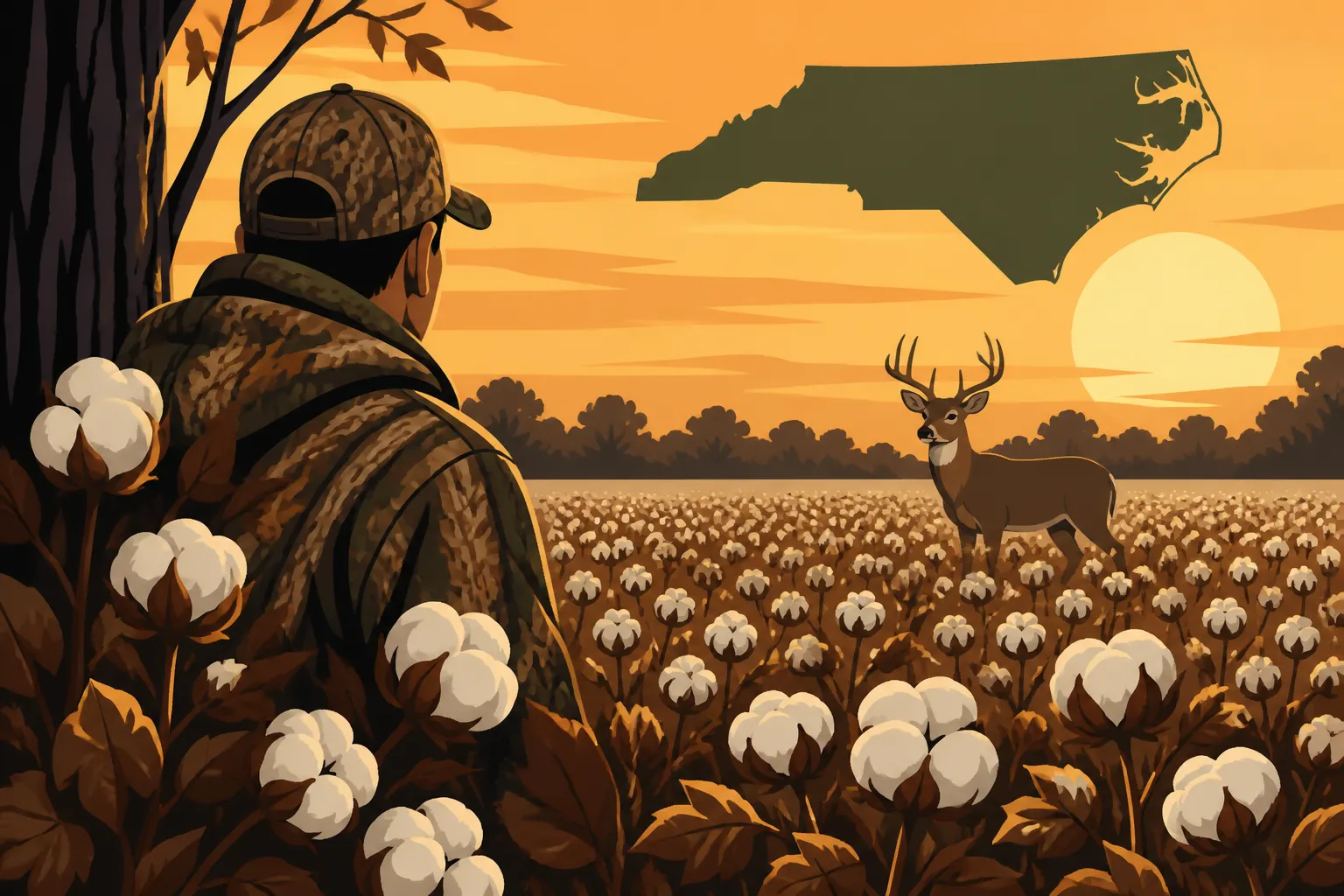
When the temperatures drop and other crops like corn and soybeans have long been harvested, a standing cotton field transforms into an irresistible sanctuary for whitetails. It’s not just a place they pass through; it becomes their bedroom, their dining room, and their safe haven all rolled into one. Understanding this magnetic pull is the first step to unlocking its hunting potential.
Unparalleled Thermal Cover and Security
Imagine you’re a deer in January, and a cold north wind is howling. Where would you rather be: standing in a barren hardwood bottom or nestled deep within a dense, chest-high thicket of cotton stalks? The answer is obvious. Standing cotton offers incredible thermal protection, blocking the wind and holding warmth better than almost any other natural cover on the coastal plain or Piedmont. The sheer density of the plants, even after defoliation, creates an almost impenetrable barrier to sight and sound, making deer feel incredibly secure. This security is why mature bucks, especially those that have been pressured all season, will gravitate towards these fields. They know they can bed down and move within the rows largely undetected by human eyes, making it a prime spot for Hunting Coastal Plain Pocosin Swamps which offer similar dense cover.
Residual Food and Hidden Forage
While the primary cash crop might be picked, a standing cotton field often still holds a surprising amount of residual food. There might be leftover cotton bolls, which deer will browse, or more importantly, a plethora of weeds and secondary growth that have flourished beneath the canopy. These fields are often nutrient-rich and, even in late season, can offer a steady, albeit less visible, food source compared to a lush green plot. Think of it as a hidden pantry. Deer will meticulously work their way through the rows, nibbling on whatever edible vegetation remains. This combination of food and cover means deer spend a significant portion of their day within the field, rather than just skirting its edges.
A Natural Funnel and Travel Corridor
Even though a cotton field might look like a vast, uniform block, the rows themselves create natural travel corridors for deer. They'll use these lanes to move from bedding to feeding areas, or simply to navigate the field without expending extra energy pushing through dense vegetation. Savvy hunters can leverage this inherent structure. The edges of a standing cotton field often adjoin timber blocks, creek bottoms, or other agricultural fields. These intersections become natural pinch points and funnels, where deer movement is concentrated as they enter or exit the dense cotton. Identifying these transition zones is key, similar to how one might Working a Creek Bottom for Late-Season Deer to find concentrated movement.
Scouting Standing Cotton Fields for Deer Activity
Scouting standing cotton is a different beast than traditional timber or open field scouting. You can't just walk through it willy-nilly; you'll blow deer out and ruin your chances. Patience, keen observation, and smart use of mapping tools are your best friends here. You need to understand how deer are using the field without directly disturbing it.
Reading the Edges and Observing from Afar
The edges of a standing cotton field will tell you much of the story. Look for well-worn trails entering and exiting the field, especially where the cotton meets timber, brush lines, or drainage ditches. Pay close attention to rub lines and scrape activity, particularly early in the late season. While the rut might be winding down in zones like the Piedmont or Coastal Plain, bucks still make rubs, and these can indicate a travel corridor. Use quality binoculars or a spotting scope from a distant vantage point—a neighboring hill, a powerline cut, or even a vehicle on a public road (where legal and safe)—to observe deer entering or exiting the field during low-light hours. Note their entry and exit points and how they move along the field's perimeter. A good mapping app like GoHunt can be invaluable here, allowing you to mark potential travel routes and plan your approach long before you ever step foot near the field.
Interpreting Wind Direction and Deer Entry
Wind is paramount when hunting standing cotton, perhaps even more so than in open woods because deer are often bedded so close to their travel routes. Deer will almost always enter and exit the field with the wind in their favor, or at least quartering to them, to detect potential threats. Therefore, understanding prevailing winds and thermals in your specific area is critical. If deer are bedding deep within the cotton, they'll often emerge into adjacent cover or other fields, circling downwind before committing. This behavior dictates your stand placement. You'll need to consider not just where they’re coming from, but how the wind will carry your scent. Using a tool like GoHunt's wind prediction overlay can help you anticipate deer movement patterns and select the best ambush points. For understanding broader seasonal patterns, referring to the North Carolina Deer Season Structure Explained can provide valuable context for late-season deer behavior.
Uncovering Hidden Trails and Bedding Pockets
While you want to avoid stomping through the middle of a standing cotton field, a cautious, strategic walk-through during the off-season or a non-hunting day (if permitted) can reveal hidden gems. Look for "tunnels" or clear lanes deer have created within the rows. These are not random; they are established travel routes. In some cases, you might even find small, flattened pockets where deer have bedded down, often near the center or in particularly dense patches for maximum security. When scouting, it's also worth examining any areas of slightly different terrain within the field – a subtle rise, a wetter depression, or a patch of thicker weeds – as these can create micro-habitats that deer favor. Remember, the goal is to confirm deer presence and patterns without pressuring them unnecessarily.
Effective Hunting Tactics for Standing Cotton Fields
Hunting standing cotton requires a blend of patience, precision, and sometimes, a willingness to adapt traditional methods. It’s not your typical timber hunt, and it certainly isn't an open-field scenario. The key is to exploit the deer's reliance on the cover while mitigating its challenges for the hunter.
Strategic Stand Placement on the Periphery
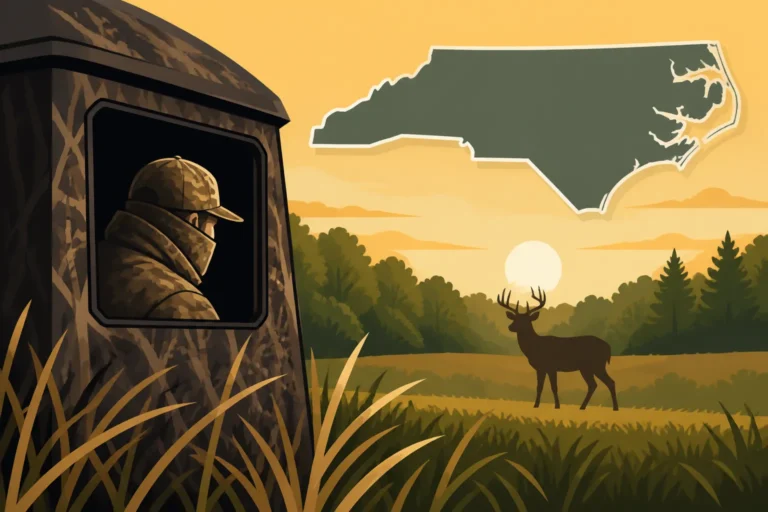
Since penetrating deep into the cotton can be disruptive, the most common and often most effective tactic is to set up on the field's periphery. Your stand should be positioned to overlook major entry/exit trails, pinch points, or funnels where deer transition between the cotton and adjacent timber or other cover. Think about the dominant wind direction for the days you plan to hunt and set up downwind of those likely entry points. A solid tree stand can provide the elevation needed to spot deer moving into or out of the cotton, offering better visibility over the dense stalks than you'd have on the ground. For those tricky spots where a tree is unavailable, a well-brushed-in ground blind can also be effective, especially if you can get it established early and let the deer get used to it. This technique mirrors some advice on Brushing In a Blind on a Field Edge.
Here's a quick comparison of popular hunting methods for standing cotton:
| Method | Pros | Cons | Ideal Scenario |
|---|---|---|---|
| Stand Hunting | Good visibility, scent control, less intrusive | Limited range, fixed position, may miss interior movement | Overlooking primary entry/exit trails, narrow field sections |
| Still-Hunting | Highly mobile, covers more ground | Difficult visibility, noisy, high chance of bumping deer | Smaller fields, following rows with perfect wind, experienced hunter |
| Small Deer Drive | Can push deer out of dense cover, high success | Requires multiple hunters, safety concerns, can over-pressure area | Large, dense fields, pushing to strategic standers, Deer Drives With Three or Four Hunters |
The Art of Still-Hunting the Rows
For the truly patient and stealthy hunter, still-hunting within the cotton rows can be an exciting, albeit challenging, endeavor. This method requires excruciatingly slow movement, often taking an hour or more to cover a hundred yards. You'll be relying on your ears more than your eyes, listening for the rustle of stalks or the crunch of frosted weeds. Move with the wind in your face or quartering to you. The rows themselves can provide a lane of travel, but visibility will be extremely limited, often only 10-20 yards. This is a game of inches and patience, where an unexpected glimpse of a deer can lead to a quick shot opportunity. It’s similar in principle to Still-Hunting Nantahala Forest Ridges where slow, deliberate movement is critical due to thick cover, though the terrain is vastly different.
Leveraging Small, Controlled Deer Drives
When standing cotton fields are exceptionally large and dense, and deer are consistently bedding deep within, a small, organized deer drive can be a highly effective tactic, especially later in the season. This isn't a chaotic push; it's a controlled effort with safety as the absolute top priority. Typically, you'd position standers at key exit points or funnels around the field, focusing on where deer have been observed leaving the cotton. One or two slow, deliberate pushers then enter the field, walking with the wind and making just enough noise to encourage deer to move. The goal isn't to blast through, but to gently prod the deer towards the waiting standers. This strategy requires good communication and careful planning to ensure everyone knows their role and the safe zones of fire. The late season, particularly as the Hunting Into the January First Close approaches, can be a great time for this, as deer are often concentrated.
Essential Gear and Preparation for Cotton Country
Hunting standing cotton isn't just about strategy; it's also about having the right gear to cope with the unique demands of this environment. From what you wear to how you navigate, a few thoughtful preparations can make all the difference between a frustrating bust and a successful hunt.
Durable Clothing and Footwear for Dense Cover
Standing cotton stalks, especially after defoliation, can be surprisingly abrasive and grabby. You'll want durable, snag-resistant outer layers. Jeans or canvas brush pants are often preferred over thinner hunting pants, as they’ll stand up better to the constant friction. For boots, waterproof is non-negotiable. Even on dry days, dew can soak cotton stalks, and you’ll quickly have wet feet if your boots aren’t up to the task. If you're planning to still-hunt or participate in a drive, consider boots with good ankle support to navigate the uneven ground and hidden obstacles within the rows. Think about the type of footwear you'd use for Boots for North Carolina Swamps and Ridges – something tough and water-resistant.
Optimized Optics and Navigational Tools
While long-range optics aren't as critical as in open country, good binoculars are still essential for spotting deer as they enter or exit the cotton, or for picking out movement in the dense cover. A 8x or 10x magnification is usually sufficient. A rangefinder might be less useful in the tight quarters of the cotton rows, but it's invaluable for determining distances to key landmarks or potential shot zones from your stand position. More importantly, a reliable GPS unit or a smartphone with a robust mapping app (like GoHunt) is a must. The rows can be disorienting, and it's easy to lose your sense of direction, especially if you’re still-hunting deep within the field. Mark your entry point, stand location, and any observed deer trails. This isn't just for navigation; it's a safety measure, too.
Scent Control and Quiet Movement
Scent control is always important, but particularly so when deer are likely bedding very close to your approach and ambush points. Use scent-eliminating sprays on your clothes, and avoid strong-smelling soaps or detergents. The sheer density of the cotton will help diffuse some scent, but a deer’s nose is still its best defense. For quiet movement, especially when still-hunting, ensure your clothing doesn't rustle loudly against the cotton stalks. Soft fabrics are better than noisy ones. If you carry a pack, make sure nothing rattles or clanks. Every little detail matters when you're trying to sneak up on or intercept a wary late-season deer. Consider your approach for Entry Routes Through Standing Soybeans where stealth and scent control are similarly vital.
Disclaimer
Hunting is an inherently dangerous activity. Always prioritize safety, understand and follow all North Carolina hunting regulations, and obtain proper landowner permission before entering private property. This guide is for informational purposes only and does not substitute for personal judgment, experience, or professional guidance.