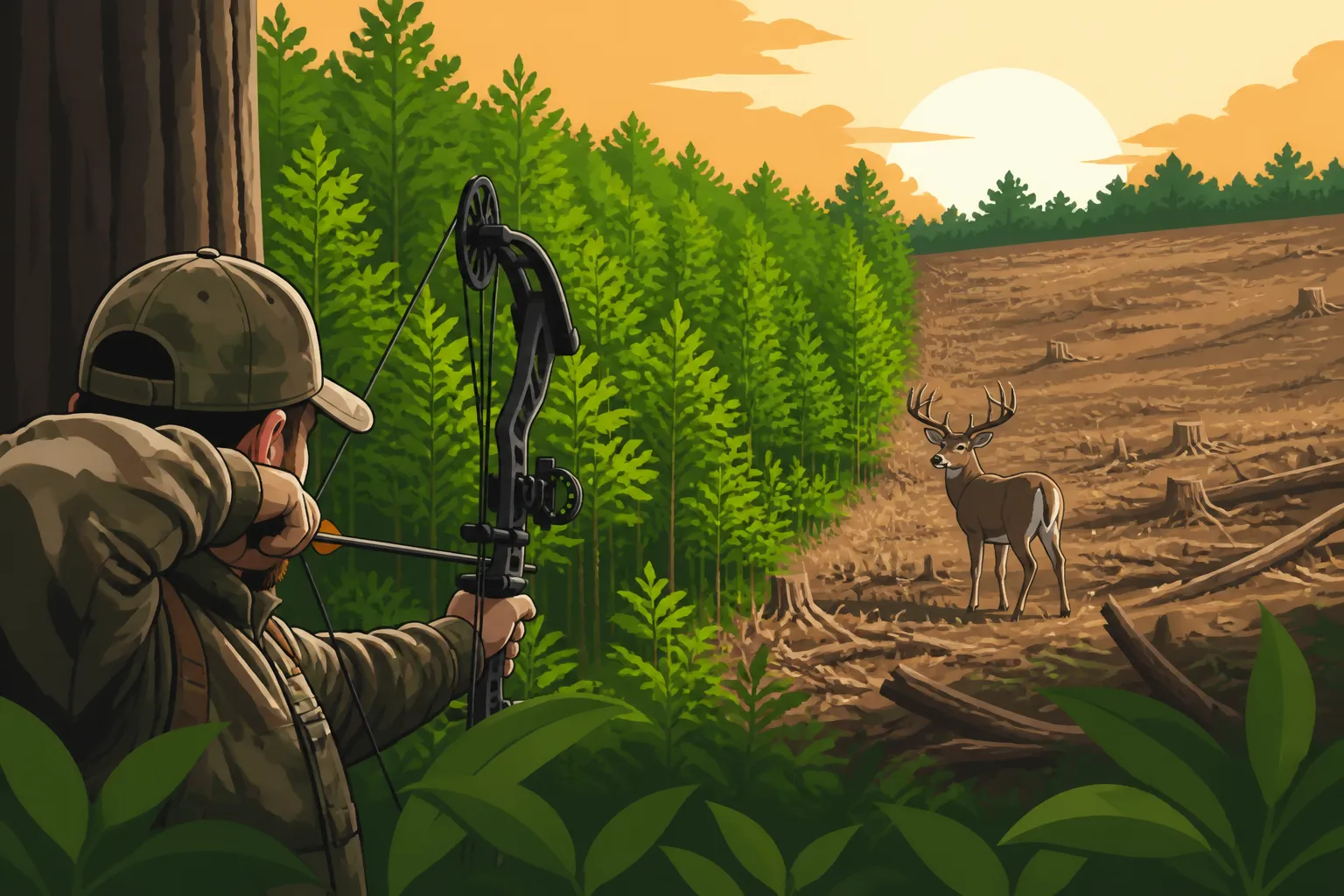
Hunting a Clear-Cut Regrowth Edge
Clear-cuts in North Carolina can, at first glance, look like an impossible maze of briars, tangled limbs, and thick, unforgiving brush. Many hunters see them as impenetrable barriers, opting instead for the perceived ease of mature timber. But dismiss these regenerating areas at your peril! What looks like chaos to us is often a five-star hotel for deer, bears, and other game, offering both incredible security and a buffet of fresh forage. If you’ve ever felt overwhelmed by these dense sections of woods, this guide is for you. We’re going to break down how to understand, scout, and successfully hunt a clear-cut regrowth edge in North Carolina, turning a daunting landscape into one of your most productive hunting spots.
Understanding the Dynamics of a Clear-Cut Regrowth Edge
A clear-cut isn't just a cleared patch of land; it's a dynamic, ever-changing ecosystem that, for several years, provides prime habitat. The "edge" where this regrowth meets older timber or other cover types is where the magic truly happens for hunters.
Why Clear-Cuts Attract Deer and Other Game
Deer are creatures of comfort, security, and opportunity, and clear-cuts offer all three in spades. Imagine a young deer, vulnerable to predators, finding sanctuary in a dense thicket of blackberry bushes and young pines. That's a clear-cut.
The sheer density of vegetation provides unparalleled security cover, allowing deer to bed down safely, out of sight from predators and hunters. It's a place where they feel safe enough to rest and digest, knowing they can hear or smell danger approaching through the dense foliage long before it's on top of them. This is especially true for mature bucks, who are notoriously wary and seek out the nastiest, thickest cover they can find.
Beyond security, clear-cuts are also incredible food factories. When sunlight floods the forest floor after a timber harvest, it ignites a burst of new growth. Forbs, grasses, briars, and young saplings like sweet gum, oak, and maple sprout up, providing a smorgasbord of highly nutritious browse that deer crave. This fresh, tender growth is often far more palatable and digestible than the mature forage found in older timber. This combination of food and cover makes the clear-cut an irresistible magnet, drawing deer from surrounding areas, particularly during daylight hours.
It's not just deer, either. Wild turkeys will feed on insects and seeds, especially in the earlier stages of regrowth. Rabbits thrive in the briar patches, creating intricate tunnel systems. Even black bears, especially in the mountainous or coastal regions of North Carolina, will seek out clear-cuts for the berries, soft mast, and dense cover they provide, using them as travel corridors or bedding areas. These areas are a hub of activity if you know what to look for.
The Stages of Regrowth and Their Appeal
The attractiveness of a clear-cut isn't static; it evolves with the age of the regrowth. Understanding these stages is crucial for effective hunting.
Years 1-3: The Herbaceous Explosion
In the first few years after a cut, the area is dominated by an explosion of herbaceous plants, grasses, and fast-growing briars like greenbrier and blackberry. This stage is a food paradise. Deer will spend significant time browsing on the tender shoots and leaves. While it offers some bedding cover, especially in really dense patches, it's primarily a feeding ground. Small game like rabbits and quail absolutely flourish here. For hunters, visibility can be surprisingly good in some spots during this phase, especially if the ground cover isn't overwhelmingly tall. This is often an ideal time for still-hunting, moving slowly and scanning for movement.
Years 3-7: The Woody Thicket – Prime Deer Habitat
This is often the sweet spot for deer hunting. Woody stems, young pines, and various hardwoods begin to dominate, creating an incredibly dense, almost impenetrable thicket. Briars are still abundant, but the saplings are growing taller, providing more vertical cover. At this stage, clear-cuts become phenomenal bedding areas. Bucks, in particular, will seek out the thickest corners and pockets, knowing they are virtually invisible. Food is still present, mostly as browse from the higher parts of the young woody plants, but the primary draw here is security. Hunting this stage often involves finding the edges where deer transition in and out, or carefully still-hunting the internal trails. This is where you'll find the most consistent deer activity, particularly daylight movement.
Years 7-15+: Canopy Closure and Diminishing Returns
As the trees continue to grow, their canopies begin to close, reducing the amount of sunlight reaching the forest floor. This shades out much of the low-growing forage and begins to thin out the understory. The clear-cut starts to lose its magnetic appeal as a primary feeding and bedding area. Deer will still use these areas for travel, especially along established trails or if pockets of thicker cover remain, but they won't hold the same density of game. At this point, hunters should start looking for newer clear-cuts or focus on the very edges where this older regrowth meets even older, more open timber, as these transitions still offer some appeal. The key is adapting your strategy as the forest grows and changes.
Scouting and Locating Productive Edges
You can't effectively hunt a clear-cut regrowth edge without thorough scouting. This isn't just about walking around; it's about systematically deciphering the landscape.
Reading Topography and Cover Transitions
Before you even step foot in the woods, pull out your mapping apps. Tools like GoHunt or the North Carolina Wildlife Resources Commission's own mapping resources are invaluable. Look for abrupt changes in cover type. The sharp, often irregular lines where a clear-cut meets mature timber, an agricultural field, a creek bottom, or even a different type of timber stand are your initial points of interest. These are the transition zones, the highways and crossroads for deer and other game.
Pay close attention to topography. Deer, much like people, prefer the path of least resistance. Look for fingers of timber that extend into a clear-cut, or narrow strips of regrowth that act as bridges between larger timber blocks. These are natural funnels, forcing deer movement into predictable patterns. Ridge lines and saddles that cross or meet a clear-cut can be major travel routes, especially during the rut when bucks are cruising. For example, understanding how deer use these elevated pathways, as discussed in Reading a Ridge for Mountain Zone Deer, is critical in our more rugged terrain. In flatter areas, look for slight elevations or dry islands within damp clear-cuts, as these often serve as bedding sites or travel routes during wet weather. Creek bottoms, even small ones, offer natural travel corridors and often have slightly different vegetation, providing both water and food.
Identifying Key Travel Corridors and Browse Sign
Once you've identified potential hot spots on your map, it's time to hit the ground. Your goal is to find concrete evidence of deer activity.
Trails: Look for distinct trails entering and exiting the clear-cut. These won't always be super highways like in mature timber; sometimes, they'll be faint tunnels through the brush, but they'll be there. Focus your search near points where the timber edge narrows, where a logging road cuts through, or where a drain meets the edge. Deer often create multiple entry and exit points, and identifying the most heavily used ones is key. You might notice a trail just inside the mature timber, paralleling the clear-cut edge, which offers the deer more security while still allowing them to scent-check the open regrowth.
Rub Lines and Scrapes: As the rut approaches in North Carolina, clear-cut edges become prime real estate for bucks to leave their calling cards. Look for rub lines—series of trees where bucks have rubbed their antlers—paralleling the edge or extending into the clear-cut. Scrapes, areas where bucks paw the ground, urinate, and sometimes rub an overhanging branch, are also common along these transition lines. Identifying a fresh scrape line, as detailed in Scrape Lines Along a Logging Road, tells you a buck is actively working that area. These signposts are invaluable indicators of buck activity and can guide your stand placement.
Browse and Bedding Areas: Deer are constantly eating. Look for nibbled saplings, torn leaves, and fresh tracks. Different plant species will show different types of browse. Greenbrier, honeysuckle, and young hardwood sprouts are favorites. The density of browse sign can indicate how heavily deer are using the area for feeding. Within the thickest parts of the clear-cut, or just inside the timber edge, you should also look for matted-down spots in the vegetation – these are bedding areas. Pay attention to their location relative to the wind; deer almost always bed in a way that allows them to use their nose to detect danger approaching from downwind. Scout with a purpose, using your GoHunt app to mark every piece of sign you find. This pre-season reconnaissance is critical, as it informs every decision you make when the season opens. Remember, thorough Scouting North Carolina Public Land Before Season will always pay off.
Effective Hunting Strategies for Regrowth Edges
Hunting clear-cuts requires a blend of patience, stealth, and smart positioning. The dense cover often means closer encounters, but also less room for error.
Stand Placement and Wind Considerations
When hunting clear-cuts, wind is not just a factor; it's the factor. Deer will almost always approach a food source or bedding area from downwind, circling to catch any scent. Therefore, your stand placement must prioritize keeping your scent out of the deer's nose. Consider the prevailing winds for your chosen area. If you're hunting an evening feed, set up on the downwind side of the clear-cut, anticipating deer to move in from the timber. For a morning hunt, if deer are bedding in the clear-cut, set up on the downwind side of their likely entry points into the mature timber.
Focus on funnel points where the clear-cut edge naturally narrows, or where a logging road, ditch, or creek forces deer into predictable paths. These are ideal spots for ambush. A small finger of timber extending into the clear-cut can be a lethal setup. You're looking for natural choke points that concentrate deer movement.
Your entry and exit routes are just as critical as your stand placement. You absolutely must have a quiet, scent-free way to get to and from your stand without spooking deer. This is especially true on pressured public land, where deer are already on high alert. If your approach blows deer out of the area before you even sit down, your hunt is already over. Consider how to utilize terrain features or existing trails that minimize your scent cone. The topic of managing Hunting Pressure on North Carolina Public Land really emphasizes this careful approach.
As for stand types, versatility is key. Ladder stands offer stability and height, but they are less mobile. Hang-on stands, combined with climbing sticks, provide excellent versatility for placing a stand precisely where you need it, often tucked just inside the timber edge overlooking the clear-cut. Saddle hunting has also gained popularity for its lightweight, mobile, and versatile nature, allowing hunters to adapt to changing conditions. Or, if you prefer to stay on the ground, a well-brushed-in ground blind, perhaps modeled after tactics for Brushing In a Blind on a Field Edge, can be incredibly effective, especially if you set it up several weeks in advance to allow deer to get used to its presence.
Here's a quick comparison of popular stand types for clear-cut hunting:
| Stand Type | Pros | Cons | Ideal Use Case |
|---|---|---|---|
| Ladder Stand | Stable, comfortable, easy to access. | Less mobile, more permanent, can be noisy to set up. | Overlooking consistent travel corridors or food sources. |
| Hang-on Stand | Versatile, mobile, can be placed in trickier trees. | Requires climbing sticks, less comfortable for long sits. | Adapting to changing patterns, deep in cover. |
| Saddle | Ultra-mobile, lightweight, 360-degree shooting. | Learning curve, not for everyone, requires specific trees. | Run-and-gun tactics, highly pressured areas. |
| Ground Blind | Excellent concealment, weather protection, good for kids. | Limited visibility, scent control challenging, needs pre-set. | Field edges, dense cover, established ambush points. |
Still-Hunting and Stalking Tactics
For many, still-hunting or stalking through the edge of a clear-cut is the most thrilling and effective way to hunt it. This method requires extreme patience and a keen eye. Unlike sitting in a stand, you are actively moving, albeit very slowly, through the habitat.
Your movement must be incredibly slow and deliberate. Take literally a few steps, then stop for several minutes. Use this time to scan every branch, every patch of briars, every shadow for any sign of a deer. Listen intently for rustling leaves, breaking twigs, or the subtle crunch of a deer feeding. Your eyes should be constantly searching for horizontal lines (a deer's back or belly) in a vertical world of saplings and brush, or for the tell-tale flick of an ear.
Always use the terrain to your advantage. If you're still-hunting the edge, stay just inside the mature timber line, using the larger trees for concealment while still being able to see into the clear-cut. If you venture into the clear-cut itself, use any depressions, rises, or thicker clumps of cover as your shield. Your goal is to move like a predator, unseen and unheard.
Once again, wind is paramount for still-hunting. You must hunt into the wind or with a strong crosswind. A swirling wind will constantly betray your position. If the wind isn't right, change your plan or hunt a different area. Trying to still-hunt a clear-cut with the wind at your back is an exercise in futility, as deer will smell you long before you ever see them.
Visibility in clear-cuts can be surprisingly poor, even from a high vantage point. Consider hunting during periods of light rain or fog. The rain dampens sound, making your footsteps quieter, and the fog provides an extra layer of visual concealment. These conditions can often lull deer into a false sense of security, making them more active and less cautious. Remember, the goal is not to cover ground quickly, but to cover ground effectively, picking apart every potential hiding spot. Whether you're bowhunting, which you can learn more about in Bowhunting North Carolina's Statewide Archery Season, or using a firearm, covered in North Carolina's Gun Deer Season by Zone, stealth is paramount.
Gear and Considerations for This Unique Habitat
Hunting clear-cuts presents specific challenges that your gear can either mitigate or exacerbate. Being prepared is half the battle.
Essential Equipment for Clear-Cut Hunting
First and foremost, your clothing needs to be tough. Clear-cuts are brutal on gear, full of thorns, briars, and sharp branches. Think durable, quiet materials like heavy canvas, tough synthetics, or specialized briar-resistant clothing. Tears are common, so choose something that can take a beating. Layering is always smart for North Carolina's varied weather, ensuring you can adapt to changing temperatures throughout the day. And don't forget the legal requirement for blaze orange. North Carolina has clear regulations, and knowing How Much Blaze Orange North Carolina Requires is crucial for safety, especially in dense cover where visibility is limited.
Optics are critical for picking apart the dense cover. A good pair of binoculars (8×42 or 10×42) will help you identify deer parts hidden by brush that would be invisible to the naked eye. A rangefinder is also essential for precise shot placement. Those short, quick shots in the timber can be deceiving, and knowing the exact distance to your target helps ensure an ethical harvest, especially when dealing with the limited visibility often found in clear-cut terrain. For more on this, check out Rangefinders in Thick Coastal Plain Cover.
Weapon choice depends heavily on your preferred method and the specific clear-cut. For still-hunting or stalking, a fast-handling shotgun with slugs can be very effective for quick, close-range shots. Rifles with brush-busting calibers (.30-30, .45-70, or even a .308 with heavier bullets) are also good choices. If bowhunting, ensuring clear shooting lanes is paramount, as broadheads need a clear path. Crossbows, legal during archery season in North Carolina, can offer a good compromise between rifle power and bow stealth, and you can learn more about their specific regulations in Crossbow Rules During North Carolina Archery Season.
Finally, never go into a clear-cut without reliable navigation. A GPS unit or a robust mapping app on your smartphone (like GoHunt, which works offline) is absolutely vital. Clear-cuts can be incredibly disorienting, with every section looking identical. Pin your truck, your stand, and any key sign you find. The last thing you want is to be lost and disoriented after dark.
Safety and Navigation in Dense Regrowth
Safety in a clear-cut demands extra vigilance. The lack of clear sightlines, the challenging terrain, and the thick cover all contribute to a heightened need for awareness. Always be aware of your surroundings and try to pick out distant landmarks before you dive in. It's easy to get turned around, so mentally mark your path, or drop breadcrumbs on your GPS.
Hunter orange is not just a legal requirement; it's a lifesaver. When visibility is measured in yards, making yourself as visible as possible to other hunters is paramount. If hunting with a buddy, maintain communication, whether through hand signals, quiet whispers, or two-way radios. Always let someone outside your hunting party know your exact location and your expected return time. This is especially important if you're venturing deep into a large clear-cut on public land, where help might be a long way off.
Retrieving a deer from a clear-cut can be incredibly challenging. If you are successful, be prepared for a difficult drag or, more likely, to quarter the animal and pack it out. Deer drags and carts are often useless in dense, uneven clear-cuts. A good game bag and a sharp field dressing knife are essential. If you harvest a large buck deep in the thick stuff, especially on a warm day, knowing how to bone out the animal and pack out the meat can be a game-changer. Consider the techniques for Dragging a Deer Out of a Coastal Swamp – many of those same principles of tough terrain apply here, even if it's not water. Plan for the worst and hope for the best, because success in a clear-cut often means a lot of hard work after the shot.
Clear-cuts, while initially intimidating, are truly some of North Carolina's best hunting grounds. They demand respect, careful planning, and a willingness to get into the thick of it, but the rewards are often worth every scratch and every tangled step. Embrace the challenge, and you might just discover your new favorite hunting hotspot.
Disclaimer
Hunting is an inherently dangerous activity. Always follow all applicable hunting regulations, practice safe firearm and archery handling, and be aware of your surroundings. This guide is for informational purposes only and does not replace proper hunter education or professional guidance. Always prioritize safety for yourself and others.