Layout Blind Hunting a Cut Cornfield
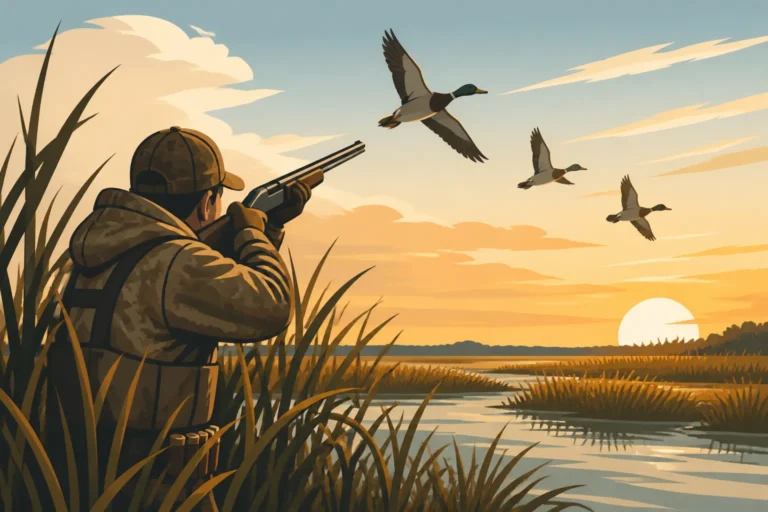
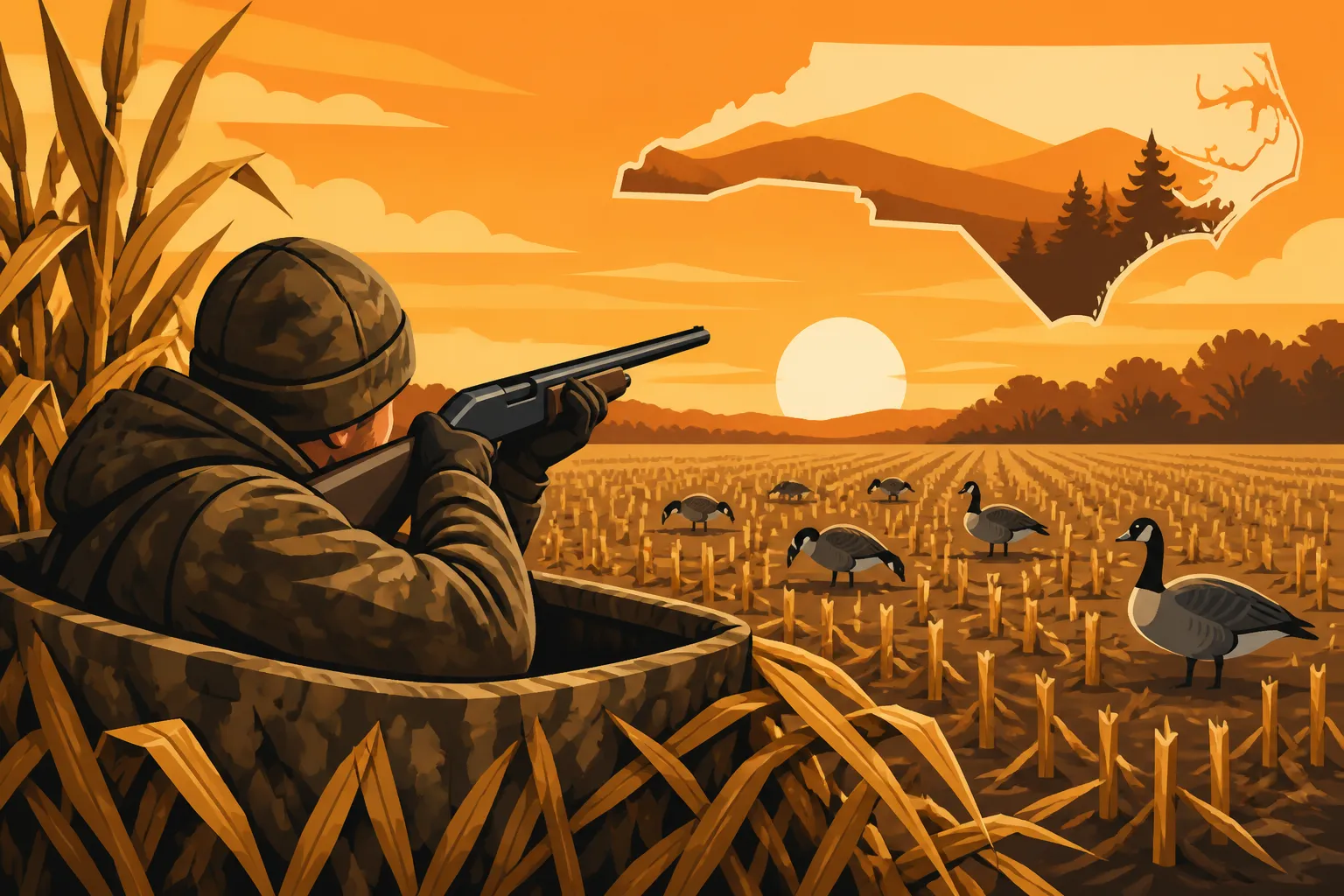
There's nothing quite like the sight of a flock of Canada geese or a wad of mallards committing to your spread, wings cupped, legs down, right over a cut cornfield. But turning that vision into a reality, especially when those birds have been pressured, requires a specific approach that a standard stand or blind just can't deliver. If you've ever struggled to disappear into the stubble or felt like your setup was more visible than the birds themselves, this guide is for you. We're going to dive deep into the art and science of layout blind hunting in North Carolina's cut cornfields, covering everything from initial scouting to calling birds into your lap.
The Irresistible Pull of Cut Cornfields for North Carolina Waterfowl
For waterfowl hunters, especially those targeting geese and certain duck species, a freshly cut cornfield is like a five-star buffet. It's a goldmine of spilled grain, offering high-energy sustenance critical for migration and surviving the colder months. But it’s not just about the food; these fields also offer wide-open spaces where birds can feel safe from ground predators and easily spot approaching threats.
Why Waterfowl Flock to These Golden Graveyards
Think about it from a bird's perspective. After a long flight, or even just a morning spent loafing on a nearby body of water, what's more appealing than a vast expanse of easy calories? The residual corn left behind by mechanical harvesters is a super-fuel. In North Carolina, with our rich agricultural landscape spanning from the Piedmont to the Coastal Plain, these fields are abundant. Canada geese, in particular, are notorious for hitting these fields hard, often flying predictable routes from their roosting and loafing areas to their chosen feeding grounds. You might also find good numbers of mallards, pintails, and wigeon, especially if there are puddles or low, wet spots in the field providing easy access to water. Understanding this fundamental draw is the first step in successful field hunting. It’s not just random; there’s a reason those birds are there, and it’s usually for food.
Specific Challenges of Field Hunting in North Carolina
While enticing, field hunting presents its own set of unique challenges. Unlike hunting in a swamp or along a river where natural cover abounds, a cut cornfield can feel incredibly exposed. The flat, open landscape offers little to hide behind, making concealment paramount. North Carolina weather can be fickle too, swinging from warm, sunny days to bitter cold winds and even sleet, often within the same week. This means your gear needs to be versatile, and your blind needs to offer more than just concealment—it needs to provide protection. Furthermore, birds in high-pressure areas become incredibly wary. They've seen it all, from poorly hidden blinds to unconvincing decoy spreads. They'll circle high, looking for anything out of place, making the hunter's job that much harder. This is where the strategic use of layout blinds truly shines, allowing hunters to vanish into the field's natural contours.
Scouting for the Sweet Spot in North Carolina's Harvested Fields
You can have the best blind, the most realistic decoys, and a call that sounds like a symphony, but if you're not where the birds want to be, it's all for naught. Scouting is, without a doubt, the most critical element of layout blind hunting in cut cornfields. It's about becoming a detective, reading the landscape and the birds' behavior to pinpoint their preferred dining locations.
Timing Your Reconnaissance and Reading the Field
Successful scouting isn't a one-and-done deal; it's an ongoing process, often starting before the season even opens and continuing right up to your hunt. Once the corn is cut, drive or walk the perimeter of potential fields, looking for signs of recent activity. What are you looking for? Droppings are a huge indicator. Fresh goose droppings, looking like green toothpaste, tell you birds are actively feeding there. Scrapes or disturbed stubble where ducks or geese have been grubbing for corn kernels are another tell-tale sign. Pay attention to specific patterns: Do the birds concentrate in one corner? Is there a particular low spot that holds water after a rain? Are they feeding along an old tractor path or a slight rise in the field? Birds are creatures of habit, and often, they'll return to the exact same spots day after day until the food source is depleted or pressure forces them elsewhere. Early mornings and late evenings are prime times to observe flight patterns. Watch where they enter and exit the field. This helps you understand their preferred approach and departure routes, which is vital for setting up your spread and positioning your blind for optimal shots.
Leveraging Technology for Unseen Advantages
In today's hunting world, technology can be a game-changer for scouting, especially on large, featureless fields. Aerial photography, available through apps and online mapping services, allows you to "see" the field from above, identifying subtle elevation changes, drainage ditches, tree lines, and even old fencerows that might not be obvious from the ground. These features can act as natural funnels or cover for birds, and knowing where they are helps you predict movement. A tool like GoHunt or similar mapping platforms can be invaluable for identifying property boundaries, potential access points, and even historical satellite imagery that might show previous years' crop rotations. You can mark specific feeding areas, potential blind locations, and decoy spread layouts right on your phone, making execution on hunt day much smoother. Remember to cross-reference aerial views with on-the-ground checks. A dry ditch on a map might be a muddy creek bed in reality, which could be a hotspot for puddle ducks. Don't forget to check weather patterns, specifically wind direction, leading up to your hunt. Knowing the prevailing winds will influence where birds land and how they approach your spread.
Mastering the Art of Layout Blind Setup and Decoy Spreads
Once you've done your homework and pinpointed the prime feeding area, the real work of disappearing into the landscape begins. Layout blinds are fantastic tools, but they're not invisible. It takes effort and attention to detail to make them truly effective.
Strategic Blind Placement for Optimal Concealment
Your layout blind needs to become part of the field. The best place for it is often in the birds' preferred feeding zone, or slightly downwind of it, allowing them to approach into the wind. Look for any natural depressions, existing tractor ruts, or slight rises that can help break up your outline. Even a subtle change in elevation can make a huge difference. Avoid placing your blind on the very top of a ridge where you'll be silhouetted against the sky. Instead, tuck it just below the crest. Consider the sun's position. If possible, place your blind so the sun is at your back, shining into the approaching birds' eyes, making it harder for them to spot you.
The absolute key, however, is brushing in. Your layout blind will come with stubble straps or loops. Use them! Gather actual cornstalks, grass, weeds, and whatever other natural vegetation is in the field around you. Tuck it into those straps until your blind literally looks like a random pile of crop residue. Don't be shy; over-brushing is almost impossible. Pay particular attention to the edges and the top, especially the headrest area. When a flock of wary Canada geese on their way to a nearby field for Early Goose Season Tactics in North Carolina starts circling, they have phenomenal eyesight, and any unnatural lump or straight line will stand out like a sore thumb. Remember, the goal is to disappear completely, making your presence undetectable to wary eyes.
Crafting Decoy Spreads to Lure In Waterfowl
Your decoy spread is the visual magnet that convinces birds to commit. For cut cornfields, you're primarily going to be focused on geese or a mixed spread for ducks.
Goose Spreads: For Canada geese, quantity often matters. A spread of 2-3 dozen full-body or shell decoys is a good starting point, with many hunters running 50 or more. Position the bulk of your decoys downwind of your blind, leaving a landing zone directly in front or slightly to the side, upwind of your position. Geese prefer to land into the wind, so make it easy for them. A common setup is a "J" or "U" shape, with the open part of the letter facing the wind, guiding birds right into your kill hole. You can also create family groups, placing 3-5 decoys close together, as geese are very social. Don't forget a few sentry or feeder decoys facing away from the landing zone, as if contentedly feeding. Some hunters even incorporate a few flapper or motion decoys to add realism, especially if hunting on private land where those are permitted.
Duck Spreads: If ducks are also using the field, you might consider a mixed spread. Ducks in fields are often puddling around small water pockets or feeding on fallen grain. A small cluster of mallard full-bodies or shells, maybe a dozen, mixed in with your goose spread, can add to the "confidence" factor, making the field look even more appealing. Focus on dabbling ducks like mallards, pintails, and wigeon, as they are the most likely to be found in agricultural fields, unlike Hunting Currituck Sound Diving Ducks that prefer open water. Place these duck decoys closer to any shallow water or low-lying areas in the field.
| Decoy Spread Type | Species Targeted | Ideal Wind Direction | Layout Blind Placement | Key Characteristics |
|---|---|---|---|---|
| "J" Hook | Geese | Blind at top of "J" | Inside the hook | Guides birds into kill hole; mimics natural feeding. |
| "U" Shaped | Geese, Mixed | Open end into wind | At the base of the "U" | Creates a large, inviting landing zone. |
| "X" Pattern | Geese, Mixed | Center into wind | At one arm of the "X" | Effective for varying wind, offers multiple landing spots. |
| Family Groups | Geese, Ducks | Grouped naturally | 15-20 yards from groups | Adds realism and comfort; birds often break off to land with groups. |
| Cluster/Puddle | Ducks | Near water/depressions | Edge of the cluster | Simulates ducks feeding in small, isolated groups. |
Always consider how the decoys will appear to approaching birds. Keep the landing zone clear and free of obstructions. The goal is to make it look as natural and inviting as possible.
Executing the Hunt: From Calling to the Shot
You've scouted, you've set up, and now the moment of truth arrives. Hunting from a layout blind requires patience, keen observation, and disciplined execution. It's about orchestrating the encounter from concealment and knowing exactly when to make your move.
The Art of Calling and Reading the Birds
Calling is about conversation and conviction. For Canada Geese on North Carolina Farmland, you'll primarily be using honks, clucks, and moans to grab their attention and bring them closer. Start with softer calls to initially get their attention, mimicking distant chatter. As they respond and begin to circle, become more aggressive, using excited honks and double clucks to convince them that your field is the place to be. If they break off, try a comeback call. Vary your calling with your hunting partners; multiple voices sound more realistic. For ducks, soft greeting calls, feeding chuckles, and quacks can work wonders, especially if they are already committed to the field.
However, calling too much, or at the wrong time, can spook birds. Observe their behavior closely. If they are locked on, wings set, making a direct approach to your spread, ease off the call. Let the decoys do the work. If they start to flare or show signs of suspicion, a few soft, reassuring clucks can sometimes calm them down. Reading the birds means understanding when they're receptive to calls and when they just need a little space to commit. It's a nuanced dance, honed by experience.
Patience, Observation, and Calling the Shot
The beauty of a layout blind is that you can watch the entire approach unfold. This requires immense patience. Don't peek your head up constantly; use the mesh viewing ports. As birds circle, keep your head still and focus on the lead birds. Wait for them to fully commit. For geese, this means wings cupped, feet down, settling into the decoys. For ducks, it's often the same, sometimes even landing among the fakes. The common mistake is to sit up too early, flaring the birds before they're in range or fully committed.
Communicate with your hunting partners. Designate a "caller of the shot" who will yell "Take 'em!" when the birds are perfectly positioned. This ensures everyone rises at the same time, presenting a unified threat and maximizing your shot opportunities. Ideally, you want birds at 20-30 yards, fully committed and vulnerable. Remember your safety rules; always identify your target and be aware of your field of fire. When the shot is called, rise quickly and smoothly, shoulder your shotgun, and acquire your target.
Shot Angles and Follow-Up
From a layout blind, most of your shots will be on birds directly overhead or slightly to your sides. This means you'll often be shooting at birds coming straight at you or going straight away, which can be challenging for beginners. Practice these angles before the season. When the birds are decoying perfectly, don't rush. Pick one bird, swing through it, and pull the trigger. If you connect, great. If not, quickly pick another bird. Your shotgun needs to be loaded with appropriate non-toxic shot for North Carolina Waterfowl Zones and Seasons compliance. For geese, steel BB or BBB, or heavier non-toxic alternatives, are common. For ducks, steel #2 or #3 usually does the trick.
After the shot, watch where the bird falls. If it's a clean kill, mark the spot. If it's merely wounded, a quick, ethical follow-up shot on the ground, if safe and legal, is crucial. Having a good retriever, like a well-trained Labrador, is invaluable for North Carolina Duck and Goose Bag Limits and for recovering birds quickly, especially in thick corn stubble or nearby ditches. Don't be afraid to leave your blind quickly to retrieve a downed bird, especially a cripple, to ensure it doesn't escape. Successful layout blind hunting is a combination of meticulous planning, perfect concealment, effective calling, and sharp shooting when the moment finally arrives.
Disclaimer
Hunting involves inherent risks, including but not limited to those associated with firearms, outdoor environments, and wildlife. Always prioritize safety, follow all local, state, and federal hunting regulations, and consider taking a certified hunter education course. This guide is for informational purposes only and should not replace professional instruction or legal advice. Always obtain appropriate licenses and permissions before hunting.