Pass-Shooting Doves Over a Water Hole
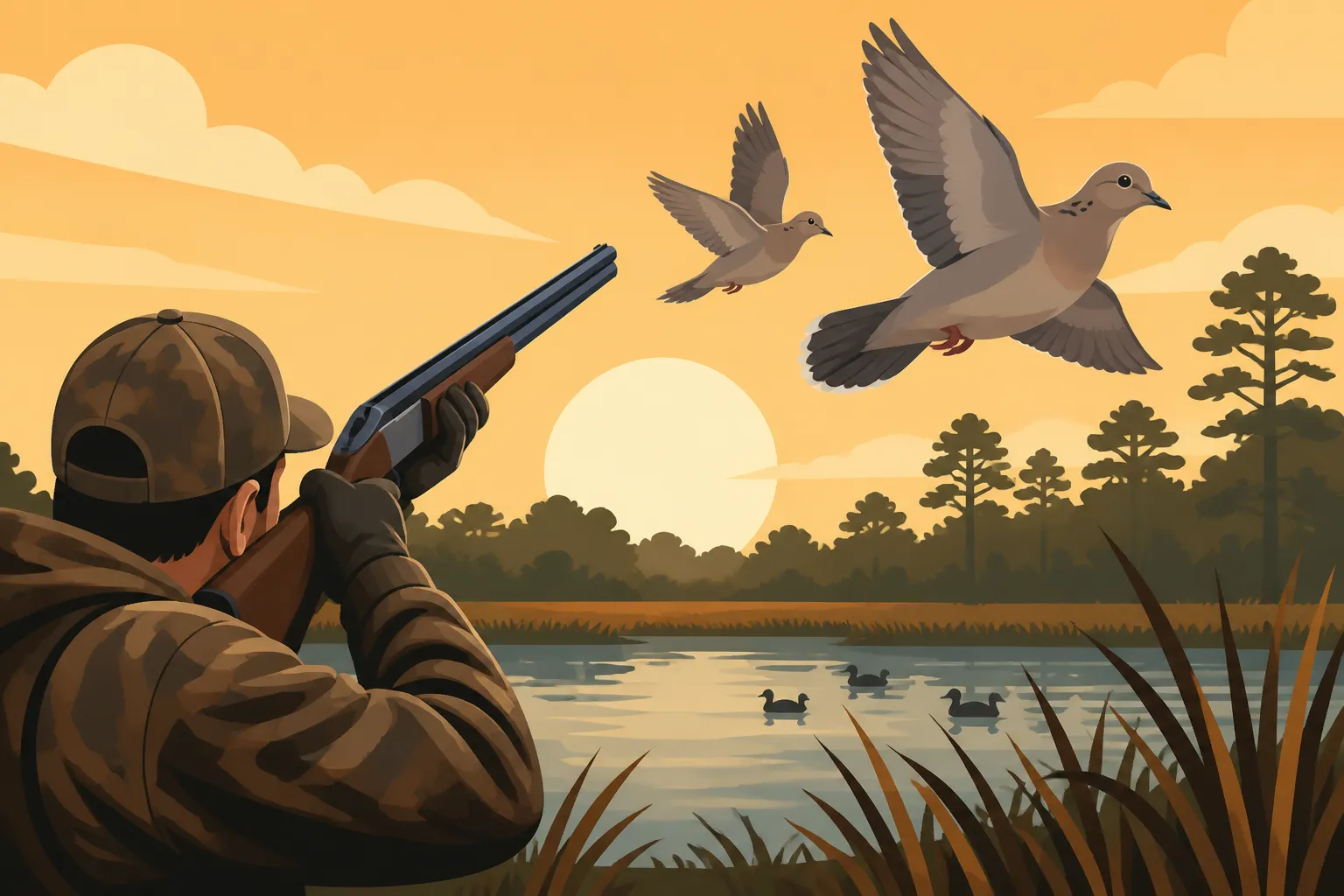
It's frustrating when you spend hours meticulously setting up in a prime dove field, only to find the birds are flying high, wide, and handsome, barely within range. North Carolina's dove hunting can be feast or famine, and when the traditional field hunts aren't cutting it, it's time to adapt. This guide dives deep into the often-underestimated tactic of pass-shooting doves over a water hole, offering a reliable alternative to get into consistent action.
The Irresistible Pull of North Carolina Water Holes for Doves
Doves, like all living creatures, need water. While we often focus on food sources like cut corn or sunflower fields, the need for hydration is just as crucial, especially during the hotter months of early dove season and dry spells. A well-placed water hole can act as an absolute magnet, drawing birds in from miles around, particularly when other water sources are scarce or hard to access.
Dove Behavior and Hydration Needs
Mourning doves are prolific eaters, constantly feeding on seeds. This high metabolism means they need frequent access to water to aid digestion and maintain hydration. You'll often see them feeding heavily in the morning and late afternoon, then making regular trips to water sources throughout the day, especially in the mid-morning and early afternoon heat. They prefer open, shallow edges where they can land easily, get a quick drink, and take off without much obstruction. Think about a shallow muddy edge, a sandbar, or even a small puddle in a field that isn't too overgrown. These spots offer them security from ground predators while they're vulnerable on the ground. Understanding this inherent behavior is the first step to successfully intercepting them.
Seasonal Patterns and Local Drought Impacts
The effectiveness of water holes as dove attractants can fluctuate significantly with the seasons and local weather patterns. Early season in North Carolina, typically around September 1st for the initial dove opener, can be quite warm, making water sources invaluable. As the season progresses into the cooler October and November splits, their reliance on water might slightly decrease but never completely disappears. Drought conditions, however, dramatically amplify the importance of a reliable water hole. When creeks dry up and agricultural ponds recede, that one accessible puddle or stock tank becomes an oasis for doves, concentrating their activity in a way that food fields simply cannot. During these dry periods, the birds aren't just looking for water; they're desperate for it, often making multiple trips a day. This is when your scouting really pays off, because even a seemingly insignificant muddy spot can turn into a prime hunting location. To learn more about these fascinating birds, check out our guide on Mourning Doves in North Carolina.
Mastering the Art of Scouting for Water Hole Doves
Finding the right water hole isn't always about the biggest pond or the clearest stream. It's about identifying the active water sources that doves are actually using. This takes a keen eye for detail and a bit of detective work, often long before opening day. You're not just looking for water; you're looking for signs of life.
Identifying Active Water Sources
The best water holes for dove hunting are usually shallow with bare, open edges. Doves are not big fans of landing in thick vegetation. They want to see what's around them, land, drink, and depart quickly. Look for stock ponds, natural depressions in fields, old logging road puddles, or even shallow areas of larger lakes or rivers where the water has receded, leaving exposed mud or sand. The key is to find dove sign: tracks in the mud, droppings along the edge, or even small feathers. These tell-tale signs are indisputable evidence that birds are using that specific spot. If you find a spot that has water but no sign, move on. It might look perfect to you, but if the doves aren't using it, it's a wasted effort. Often, the best spots are near large feeding fields, offering a convenient stop-off point for birds flying between their roosts and food. Using tools like GoHunt can give you a significant advantage here. Their satellite imagery allows you to pinpoint potential water sources from above, zoom in on features like bare edges, and even identify nearby agricultural fields that might be drawing birds. This remote scouting can save you countless hours of walking.
Reading Approach and Escape Routes
Doves are creatures of habit and efficiency. They'll almost always approach and depart a water source along the path of least resistance, often following natural flight corridors. These might be tree lines, fence rows, power lines, or even dips in the terrain. Watch how they fly in. Do they come in low over a specific corner of a field? Do they hug a line of oaks before dropping down? Identifying these predictable flight paths is critical for positioning yourself for pass-shooting. You want to be situated along these routes, not necessarily right on top of the water hole itself, but where you can intercept them as they come in or leave. This ensures you're shooting at birds in flight, which is the essence of pass-shooting, rather than birds on the ground. A slight rise in the terrain or a patch of taller cover near these routes can be an ideal spot for concealment. When you're in the field, take the time to simply observe for an hour or two. Don't hunt; just watch the birds' patterns. You'll be amazed at the consistent routes they take, day after day.
Using Mapping Tools for an Edge
In today's hunting world, digital mapping tools are indispensable, and for dove hunting over water, they can be a real game-changer. Services like GoHunt allow you to layer satellite imagery with topographic maps, showing you elevations and contours that indicate natural drainage and potential water collection points. You can mark potential water holes, measure distances, and even identify property boundaries – crucial for ensuring you're on public land or have secured permission for private tracts. Before you ever set foot in the field, you can virtually "scout" vast areas, eliminating unproductive spots and highlighting promising ones. Look for transitions: where a dense woodline meets an open field, often a small, muddy puddle forms just inside the tree line. Or perhaps a low-lying section in a cut bean field that tends to hold water after a rain. GoHunt also helps you visualize where birds might roost or feed in relation to the water, giving you a holistic view of their daily routine. This kind of advanced scouting is critical for understanding North Carolina's Deer Season Structure Explained and applies equally well to smaller game like doves.
Setting Up for Success: Positioning and Gear for Pass-Shooting
Once you've found your honey hole and observed the flight patterns, the next step is strategic setup. Pass-shooting isn't about decoying birds into a landing zone; it's about intercepting them cleanly in flight. This requires careful consideration of your concealment, your firearm, and your ammunition choices.
Concealment and Cover Considerations
Doves have excellent eyesight, and they'll flair at the slightest hint of danger. For effective pass-shooting, you need to blend seamlessly into the environment. Natural cover is your best friend. Look for thick bushes, a clump of cedars, or the edge of a timber line along their flight path. You don't need a fancy blind, though a simple pop-up blind can be effective if it blends in. The key is to break up your outline. Wear good camouflage that matches the surroundings. If you're on the edge of a cut field, earth tones and browns are best. If you're near a green treeline, opt for greens. Minimize movement; raising your gun too soon or shifting around in your seat will send birds scattering. Sometimes, simply sitting still against a large tree trunk is all the concealment you need. Remember, the goal isn't to be invisible, but to be indistinguishable from the background until it's time to shoulder your shotgun. Think about the angle of the sun too – if you can have the sun at your back, it makes it harder for doves to spot you as they approach.
Shotgun and Choke Selection for Doves
For doves, a 12 or 20 gauge shotgun is standard, with many hunters preferring a 20 gauge for its lighter weight and reduced recoil during a high-volume shoot. The choice often comes down to personal preference and comfort. What truly matters for pass-shooting doves is your choke selection. Unlike decoying over a field where birds might be slowing down, pass-shooting means fast, often distant birds.
| Choke Constriction | Ideal Range (yards) | Pattern Density | Best Use for Doves |
|---|---|---|---|
| Improved Cylinder | 20-30 | Open | Closer flushing birds, field hunting |
| Modified | 30-40 | Medium | Versatile, good for pass-shooting |
| Full | 40+ | Tight | Long-range pass-shooting, high flyers |
For pass-shooting, a Modified choke is often an excellent all-around choice. It provides a dense enough pattern for birds out to 40 yards but isn't so tight that it makes hitting erratic fliers impossible. Some hunters, especially those confident in their ability to lead fast-moving targets at a distance, might even opt for a Full choke, particularly if the birds are consistently flying very high. As for shot size, #7.5 or #8 lead shot is the standard for mourning doves. They are small birds, and these smaller pellets provide a dense pattern, increasing your chances of a clean kill. While not required for doves over most land, always ensure you're using non-toxic shot if hunting on specific public lands or waterfowl impoundments where it's mandated. To further optimize your setup, consider reviewing our guide on Shotguns for North Carolina Grouse and Dove.
Decoy Strategies and Their Relevance
For true pass-shooting over a water hole, traditional dove decoy strategies aren't usually the primary focus. You're not trying to entice birds to land in your spread. However, a little visual attraction can sometimes help. A spinning-wing decoy or two placed subtly near the water's edge can catch the attention of high-flying doves, sometimes drawing them in just a few yards closer to investigate, giving you a slightly better shot opportunity. But don't rely on them. Your main strategy remains finding those established flight lines and intercepting birds as they commit to their approach or exit from the water. Think of decoys as a minor enhancement, not the core tactic. If you do use them, keep them natural and sparse – a few stationary decoys on bare ground near the water can also work without being overly conspicuous.
Ethical Considerations and Safety Around Water Sources
Hunting over water, whether it's for waterfowl or doves, comes with its own set of ethical and safety considerations. It's not just about getting your limit; it's about responsible hunting and showing respect for the environment and other hunters.
Understanding Shooting Lanes and Backstops
When pass-shooting doves, especially around water, always be acutely aware of your shooting lanes and what lies beyond your target. Unlike hunting in an open field where pellets might fall harmlessly into dirt, water holes are often near timber, buildings, or roads. It's imperative to have a safe backstop for every shot. This means knowing where other hunters are (if any), avoiding shooting towards roads, homes, or livestock, and being mindful of the trajectory of your pellets. Never shoot at a low-flying bird if it means endangering something or someone on the other side. This is especially true if you're on public land, where other users might be present. Always assume there's someone just out of sight and plan your shots accordingly. For general guidance on hunting pressure, see Hunting Pressure on North Carolina Public Land.
Respecting Other Hunters and Property
Water holes can be popular spots, especially if they're particularly active. If you arrive and another hunter is already set up, find another spot or politely ask if you can join, respecting their decision either way. Never crowd another hunter or set up in a way that interferes with their shooting lanes or compromises their safety. If you're on private land, ensure you have explicit permission to hunt that specific water hole. North Carolina has strict rules about trespassing, and misunderstanding them can quickly ruin a hunt and damage landowner relations. Even if you have permission to hunt a larger tract, double-check that the water hole isn't excluded or reserved for other activities. Maintaining a good relationship with landowners is key for long-term access, and this starts with clear communication. It's why taking the time to Knocking on Doors in Piedmont Farm Country can pay dividends.
Retrieving Downed Birds Promptly
A critical ethical consideration, particularly when hunting near water, is the prompt retrieval of all downed birds. Doves are small and can be notoriously difficult to find, even on dry ground. Over water, a bird that falls into thick vegetation, deep water, or mud can be lost forever. Make an immediate mental mark of where the bird falls, and if possible, keep your eyes on it until you can physically get to it. If you're hunting with a retriever, that's a huge advantage. If not, consider wearing appropriate footwear, like waterproof boots or waders if the edges are muddy or shallow. Losing birds is not only wasteful but also disrespectful to the game you're pursuing. Make every effort to recover what you shoot. This commitment to ethical hunting ensures that we cherish the resource and uphold the traditions of the sport for future generations.
Disclaimer
Hunting is an inherently dangerous activity. Always prioritize safety, understand and obey all local, state, and federal hunting regulations, and ensure you have the appropriate licenses and permits. The information provided in this guide is for informational purposes only and should not replace proper hunter education or professional guidance. Stay safe and hunt ethically.