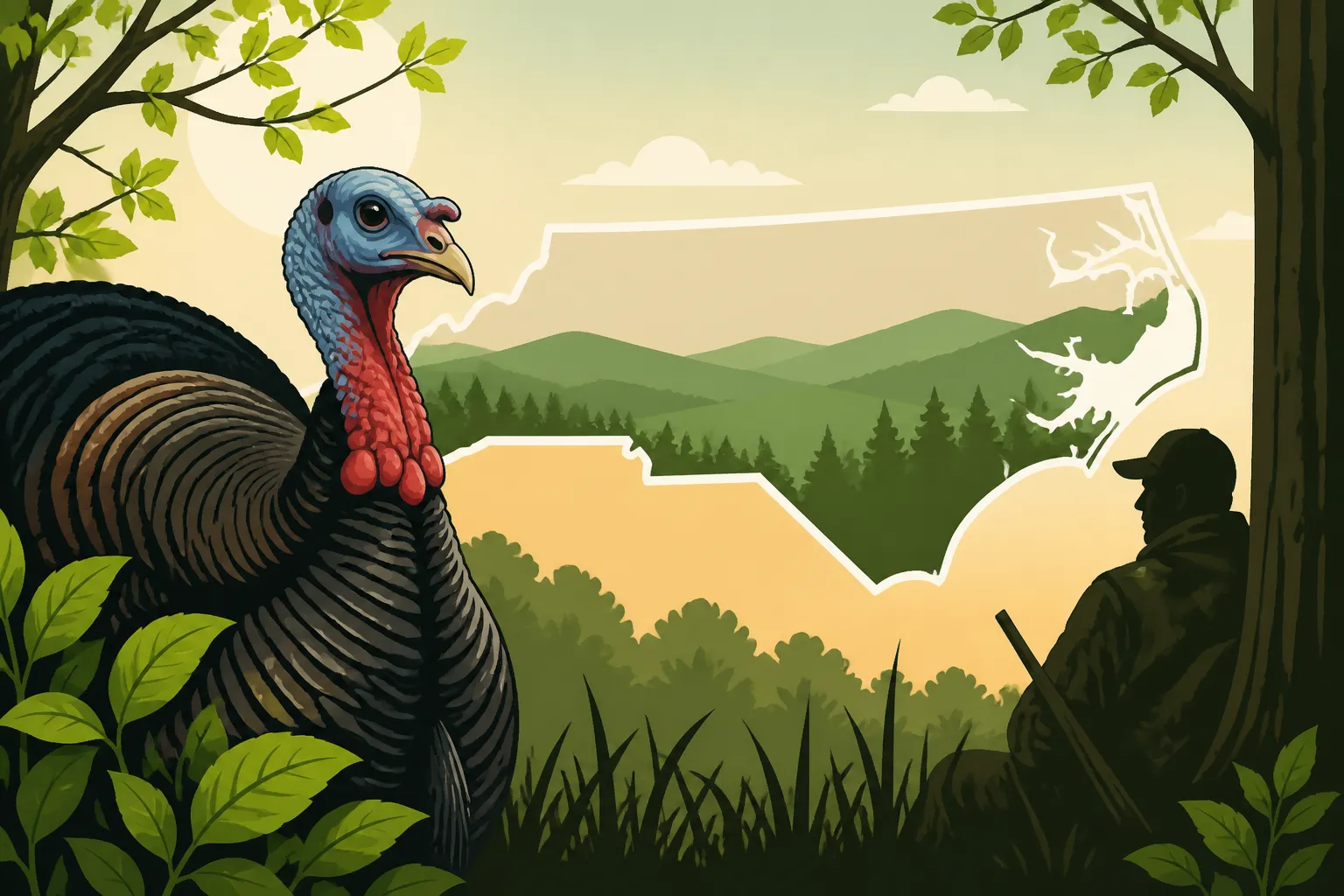
When North Carolina Gobblers Go Quiet in May
That feeling when April's hot gobblers suddenly go quiet in May can be incredibly frustrating. One day they're hammering every call, and the next, it's like the woods swallowed them whole. This guide is all about demystifying that late-season silence and equipping you with the tactics and patience needed to fill your tag when North Carolina gobblers get tight-lipped.
Understanding Why Gobblers Go Quiet in May
The transition from the enthusiastic gobbling of early spring to the near-silence of late May often leaves hunters scratching their heads. It's not that the turkeys disappear; their priorities and behaviors simply shift dramatically as the breeding season progresses and hunting pressure mounts. Understanding these changes is key to adapting your approach.
Post-Peak Breeding Season Dynamics
Early in North Carolina's spring turkey season, gobblers are fired up, actively seeking hens, and eager to establish their dominance. They're often seen strutting openly, gobbling furiously at every perceived competitor or potential mate. This is the peak of the breeding season, and their biological drive to reproduce makes them incredibly vocal and responsive to calls.
However, as May wears on, many hens have been bred and are now sitting on nests. The pressure for gobblers to find receptive hens diminishes considerably. They've either successfully bred a string of hens, or the remaining unbred hens are few and far between. This shift means their primary motivation for gobbling and strutting loudly is significantly reduced. Instead of broadcasting their presence, they might be quietly slipping through the woods, occasionally letting out a soft cluck or spit-and-drum only when they feel a hen is nearby. The woods become less of a grand theater and more of a subtle search, making them much harder to locate and draw in. This biological reality directly impacts why you might not hear them as much, or why your calls that worked perfectly in April suddenly fall on deaf ears. You might even notice changes in North Carolina Turkey Brood Survey Results later in the season, reflecting these nesting cycles.
Increased Pressure and Educated Birds
Beyond the biological clock, the cumulative effect of weeks of hunting pressure plays a massive role in making gobblers go quiet. Think about it: by May, these birds have heard countless locator calls, yelps, and cutting sequences. They've seen decoys, dodged hunters, and perhaps even lost a few buddies to well-placed shots. They're not dumb animals; they learn quickly.
Gobblers that have survived the initial rush become "educated." They associate aggressive calling with danger and loud gobbling with giving away their position. These mature birds become incredibly wary. They'll often move silently, using thick cover to their advantage, and will be much more reluctant to commit to a call, especially if it sounds too perfect or comes from a static location. This pressure is particularly prevalent on public lands and areas easily accessible to hunters. They know the drill, and their survival instinct kicks into high gear, transforming them from vocal Lotharios into stealthy shadows. When you're trying to figure out late-season patterns, a good mapping tool like GoHunt can be invaluable for pinpointing less-pressured areas.
Adapting Your Tactics for Quiet Gobblers
The shift in turkey behavior in May means that the aggressive, run-and-gun tactics that worked earlier in the season might just send birds running the other way. It's time to put on your detective hat and embrace a more subtle, patient approach.
Patience and Observation are Key
When gobblers aren't sounding off, your ears become secondary to your eyes. This is the time to slow down, become part of the landscape, and let the birds reveal themselves. Instead of covering ground quickly and calling frequently, pick a strategic location that offers good visibility and access to potential travel corridors, food sources, or roosting areas. Then, sit tight.
Being patient means sometimes waiting for an hour or more in silence, just listening for the softest cluck, purr, or even the distinct sound of a distant gobbler spitting and drumming. Watch for subtle movements in the underbrush, a flash of red head, or the tell-tale shimmer of a fanned tail. This "passive" hunting approach can be incredibly effective for pressured, quiet birds. They might not come rushing to a call, but they might casually wander into view if they feel unthreatened. Consider a setup where you can patiently observe a field edge, a pine plantation, or a hardwood bottom. I've personally found that using the satellite imagery on apps like GoHunt to scout new areas for potential travel routes and pinch points, and then setting up on those for extended sits, can make all the difference. Remember, the birds are moving more, but often without making a sound. Setting Up Against a Big Oak can provide excellent cover for these long waits.
Minimal Calling and Decoy Strategies
The loud, excited calling that was so effective in April can be a major turn-off for May gobblers. Instead, think "less is more." Focus on soft, contented hen sounds: subtle tree yelps, clucks, purrs, and soft contented purrs. The goal is to sound like a lone, available hen going about her business, not an aggressive one challenging a gobbler. A single cluck-and-purr sequence every 15-20 minutes is often plenty. You're trying to pique curiosity, not trigger a full-blown response that might make a wary bird hang up out of range.
Decoys also need a strategic shift. Forget the full strut gobbler or the jake fan setup that screams "challenge." For quiet, educated birds, a single, submissive hen decoy, or perhaps a jake decoy in a non-aggressive posture (like feeding), can be far more effective. You want to present a non-threatening, inviting scenario. A jake decoy can sometimes still draw in a silent gobbler looking to assert dominance without the visual threat of another adult tom. Consider your Decoy Placement for Pressured North Carolina Birds carefully; positioning them slightly off to the side, forcing the gobbler to walk past your position, can be a game-changer. Sometimes, even no decoy is the best decoy, allowing you to blend completely into the cover.
Locating Quiet Gobblers
Finding a gobbler that isn't gobbling feels like searching for a needle in a haystack, but it's not impossible. It requires a different kind of scouting and a keen understanding of where turkeys might be spending their time during this quiet phase.
Focus on Food and Water Sources
Even silent turkeys need to eat and drink. As spring progresses into May, the available food sources change. Early spring might have seen them concentrated on fresh green-ups or leftover agricultural fields. By May, they might be moving to different areas. Look for insects, soft mast like mulberries, or areas with emerging plant growth. If you're hunting in the Piedmont, for instance, Turkey Tactics for Piedmont Field Edges often revolve around finding these shifting food patterns.
Water is always a necessity, especially as temperatures rise. Creek bottoms, natural springs, and even puddles after a rain can be magnets for turkeys. Scouting these areas for fresh tracks, droppings, and scratch marks can tell you if birds are in the vicinity, even if they aren't gobbling. This is where pre-season scouting, or even scouting during the season, becomes paramount. Look for areas with ample cover nearby that allow birds to move discreetly between feeding, watering, and loafing spots. Pay close attention to transition zones—where one habitat type meets another—as these are often natural travel corridors.
Roost Hunting for Silent Departures
"Roosting" a bird the evening before is often the most reliable way to get on a quiet gobbler. Instead of relying on a morning gobble to locate them, you're pinpointing their bedtime spot. Head out before dusk and listen intently for fly-up cackles, wing beats, or even a soft cluck as birds settle into their roost trees. Sometimes a distant gobble right at fly-up can give them away. Once you've heard one, mark the location carefully (mentally or with a GPS).
The next morning, set up well before dawn, aiming to be within 100-150 yards of the roost tree, if possible, without spooking them. The goal isn't necessarily to call him off the roost with aggressive yelps, but to be in position when he pitches down. Often, these quiet May birds will fly down and immediately start looking for hens on the ground, or simply slip away silently to a feeding area. Your soft calling or gentle purrs can be very effective right after fly-down, mimicking a hen that has just pitched down nearby. Remember that North Carolina Turkey Roost Tree Preferences can vary by region, but generally, tall, sturdy trees near water or open fields are good bets. While Calling a North Carolina Gobbler Off the Roost can be exciting, sometimes a silent setup with good visibility is more effective. This is where Scouting North Carolina Public Land Before Season can give you a massive advantage.
Late-Season Considerations
Hunting in May presents its own unique set of challenges and rules that hunters need to be aware of. From fickle weather to important regulations, staying informed is just as crucial as adapting your calling strategy.
Navigating Late Spring Weather
North Carolina's weather in May can be incredibly unpredictable. One day it might be cool and pleasant, perfect for long sits. The next, it could be sweltering hot and humid, or a pop-up thunderstorm could roll through, drenching everything. This variability impacts both turkey behavior and hunter comfort.
Warm temperatures can make turkeys less active during the middle of the day, often pushing them to seek shade in thick cover. They might feed more actively early in the morning and late in the afternoon. Thunderstorms can make birds gobble erratically or push them to roost early. Being prepared for all conditions is essential. Dress in layers, carry rain gear, and always bring plenty of water to stay hydrated. Bug spray becomes a necessity as ticks and mosquitoes become much more active. Staying comfortable and dry will allow you to stay in the woods longer, increasing your chances of encountering a quiet gobbler.
Checking Regulations and Tag Limits
As the season winds down, it's easy to lose track of the calendar and your bag limits. North Carolina's spring turkey season has specific dates, and May typically marks the final stretch. Ensure you know the exact North Carolina Turkey Season Closing Date for your zone and county.
Equally important is keeping track of your harvest. There's a North Carolina Turkey Daily Bag Limit, and an overall season limit. Nothing ruins a successful hunt like realizing you've accidentally exceeded your allowed tags. Always check your license and the most current regulations from the NC Wildlife Resources Commission website before each hunt. This is also a good time to review reporting requirements, ensuring you properly check in any birds you harvest. For hunters who enjoy a more active approach, remember that Run-and-Gun Turkey Tactics on Public Land are still viable, but might need to be executed with greater stealth and less vocalization due to increased pressure.
Table: Early Season vs. Late Season Turkey Behavior & Tactics
| Characteristic | Early Season (April) | Late Season (May) |
|---|---|---|
| Gobbling Activity | High, frequent, often aggressive | Low, sporadic, often soft or non-existent |
| Hens | Actively seeking mates, often with gobblers | Many on nests, fewer receptive, often solo or with jakes |
| Hunting Pressure | Moderate to high, birds learning | High, birds are educated and wary |
| Gobbler Focus | Breeding hens, establishing dominance | Feeding, subtle hen searches, avoiding danger |
| Calling Strategy | Aggressive yelps, cutting, locator calls often work | Soft clucks, purrs, contented sounds, minimal calling |
| Decoy Strategy | Strutting gobblers, jake/hen combos | Single submissive hen, non-aggressive jake, or no decoy |
| Hunter Patience | Can be faster-paced, run-and-gun | Essential, long waits, observant, slow movements |
| Scouting Focus | Roosting, listening for gobblers, fresh sign | Tracks, droppings, feeding areas, water, silent roosting |
Disclaimer
Hunting is an inherently dangerous activity. Always prioritize safety, understand and follow all North Carolina hunting regulations, and consider taking a hunter education course. This guide is for informational purposes only and does not substitute for official regulations or professional instruction.