Bone Saws Versus the Gutless Method
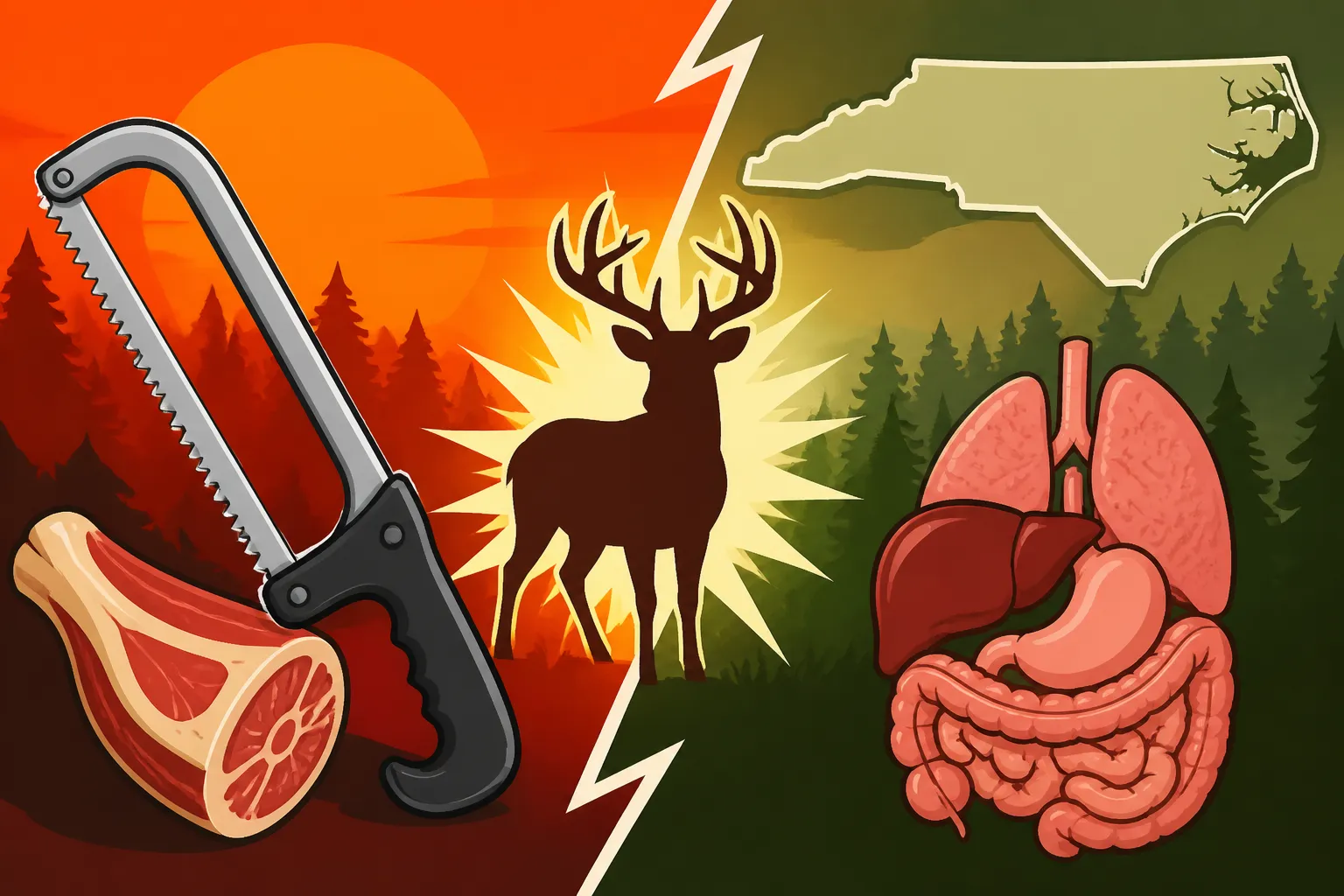
Alright, let's talk about one of the age-old dilemmas once you've successfully harvested an animal in North Carolina: how do you get that hard-earned meat from the woods to your cooler? It's a question that often comes with a hefty dose of sweat, frustration, and sometimes, a few pulled muscles. For many of us, the choice comes down to two primary strategies: the traditional bone saw method or the increasingly popular gutless method. This guide will dive deep into both, helping you decide which approach best suits your hunting style, the terrain you're tackling, and the size of your quarry.
The Traditional Approach: Bone Saws and Their Place
For generations, the bone saw has been a staple in many hunters' packs, and for good reason. It allows for a more traditional field dressing approach where you remove the entrails but keep the carcass largely intact, often splitting the pelvis and sometimes the sternum to ensure thorough cooling. This method has its merits, especially in certain situations, but it also comes with its own set of challenges that can make a long drag even longer.
When a Bone Saw Shines (and When It Doesn't)
A bone saw truly shines when you're hunting closer to home, have easy vehicle access, or are part of a hunting party with plenty of hands to help with the drag. If you drop a deer near a logging road in the Uwharrie National Forest or a Piedmont field edge, and you've got a buddy and an ATV or truck close by, a traditional field dress with a bone saw to split the pelvis is often the quickest way to get the animal cooling properly. It keeps the meat cleaner during the initial transport, as the hide remains largely intact over the quarters. It's also often preferred if you plan to hang the deer whole for a few days to age the meat before butchering, something many deer camps enjoy doing.
However, the bone saw method can quickly turn into a significant burden. Imagine harvesting a large buck deep in the steep, rugged terrain of the Pisgah National Forest. After a successful shot, you're faced with the prospect of dragging a 150-pound (or more) animal several miles over downed timber, through rhododendron thickets, and up and down unforgiving slopes. In these scenarios, having removed only the guts means you're still hauling a tremendous amount of weight, including the bones of the legs and spine, plus the skull and hide. The traditional method also means you're leaving a significant amount of entrails in the woods, which might be fine in remote areas but could attract unwanted attention or become an issue if you're hunting closer to populated areas or in places with specific carcass disposal rules, such as inside a CWD management area. Furthermore, the longer the whole carcass stays warm, especially on a warm early season hunt, the faster the meat can spoil, even with the guts removed.
Types of Bone Saws and What to Look For
Not all bone saws are created equal, and choosing the right one can make a difference in how easily you get through bone. You'll find a range from small, folding camp saws to more robust, fixed-blade models.
Folding Saws: These are incredibly popular due to their compact size and ease of carry. They fit neatly into a day pack or even a large pocket. Look for models with a sturdy locking mechanism to prevent accidental closure and a comfortable, non-slip grip. The blades are typically designed for cutting bone, often with aggressive teeth that make quick work of a pelvis or sternum. They're usually lightweight, making them an excellent choice for hunters who prioritize minimal gear.
Fixed-Blade Saws: Less common for field dressing, these are more akin to small hand saws. They offer greater rigidity and leverage, which can be an advantage on larger animals or tougher bones. However, their size makes them less portable, so they're usually reserved for processing at camp rather than deep in the field.
Key Features to Consider:
- Blade Material and Tooth Design: Stainless steel blades are preferred for rust resistance and ease of cleaning. Aggressive, alternating teeth patterns cut faster and with less effort.
- Handle Ergonomics: A comfortable, non-slip grip is crucial, especially when your hands are cold, wet, or bloody.
- Safety: A folding saw should have a strong lock. If it's a fixed blade, ensure it has a sheath for safe transport.
- Ease of Cleaning: Blood and tissue can get into every nook and cranny. Saws that are easy to rinse and sanitize are best for hygiene and longevity.
While a bone saw is a valuable tool, especially if you plan on processing your deer at camp later, it adds weight to your pack and may not be the most efficient solution for every recovery situation. Knowing when and where to deploy it is key. You might use one after Tracking a Deer Through North Carolina Leaf Litter and finding it close to a road, but if you're really far out, another method might be better.
Embracing Efficiency: The Gutless Method
The gutless method is gaining significant traction among hunters, particularly those who venture into remote areas, hunt solo, or target larger game species like elk and bear. While it sounds a bit intimidating at first, it's essentially a method of quartering an animal in the field without ever opening the body cavity. This means less mess, less weight to haul out, and often, faster cooling of the meat. It's a game-changer for many, especially when you're looking to minimize effort during extraction.
The Philosophy and Steps of Going Gutless
The core philosophy of the gutless method is efficiency and weight reduction. Instead of removing the internal organs, you focus on separating the muscle groups (quarters, backstraps, tenderloins) from the skeletal structure. This leaves the internal organs and the bulk of the skeleton in the field, drastically reducing the weight you need to pack out.
Here’s a simplified breakdown of the steps, which you'd certainly want to practice or watch videos on before attempting in the field:
- Position the Animal: Lay the animal on its side, ideally on a tarp or clean ground, though this isn't strictly necessary.
- Skin One Side: Carefully skin the top side of the animal down to the centerline of its back and chest. You'll expose one front shoulder, one hindquarter, and half of the backstrap.
- Remove the Top Front Shoulder: Detach the shoulder by cutting the muscles and connective tissue that hold it to the rib cage. There's no bone joint connecting it, making this surprisingly straightforward.
- Remove the Top Hindquarter: Locate the ball joint of the hip. You'll cut through the muscles and ligaments around it to free the hindquarter. A good, sharp knife is key here; you won't need a saw for this step.
- Access the Backstrap: With the hide peeled back, you can now expose the backstrap (the loin muscle that runs along the spine). Carefully cut along the spine and ribs to remove this strip of prime meat.
- Flip and Repeat: Once one side is deboned, flip the animal over and repeat the entire process for the other side.
- Retrieve Tenderloins: This is the only part where you might make a small incision into the abdominal cavity, usually from the underside, to reach the tenderloins that lie along the inside of the spine. Some hunters choose to skip this if they want zero internal exposure, but for many, it's worth the small cut.
- Pack It Out: Place all the boned-out meat into game bags (essential for cleanliness and cooling) and pack them into your frame pack.
This method requires a sharp, reliable Field Dressing Knives Worth Carrying, a good understanding of animal anatomy, and a methodical approach. It's not about speed the first time you do it, but about precision and cleanliness. Apps like GoHunt can be invaluable in scouting routes where you might expect to use this method, as the further from a road you are, the more appealing gutless becomes.
Advantages of the Gutless Method in North Carolina Terrain
The gutless method offers several distinct advantages, particularly for hunting in North Carolina's diverse and often challenging landscapes:
- Significant Weight Reduction: This is the primary benefit. By leaving the heavy bones and internal organs behind, you can reduce the weight of your load by 30-50% or more. This is monumental when you're faced with a multi-mile pack-out from a remote section of the Nantahala National Forest, or trying to navigate dense coastal pocosins.
- Faster Cooling: Quartering the animal into smaller, boneless sections allows the meat to cool down much faster than a whole carcass, even one that's been gutted. This is crucial during early season hunts when temperatures are still high, helping to prevent spoilage. You can get the meat into game bags and then quickly into a cooler, especially after Hunting After a Poor Acorn Year when deer might be smaller but still need quick cooling.
- Less Mess and Odor: Since you don't open the body cavity, you avoid dealing with the highly odorous and messy digestive tract. This can be a huge plus, especially if you're squeamish or trying to minimize your scent profile in the field. It also leaves a cleaner kill site.
- Easier Extraction from Difficult Terrain: Imagine recovering a deer from a deep ravine, a steep mountain slope, or a Recovering a Deer From a Coastal Swamp. Trying to drag a whole deer through such obstacles is a nightmare. With the gutless method, you can carry the meat out in manageable loads, making previously impossible recoveries much more feasible.
- Solo Hunter Friendly: For those who often hunt alone, the gutless method transforms a daunting task into a manageable series of smaller ones. You're not relying on anyone else to help you get a heavy animal out. It ties in well with being prepared, and knowing your capabilities when Hunting Pressure on North Carolina Public Land means you might be alone with your harvest.
- Reduced Risk of CWD Spread: In North Carolina's CWD management areas, there are strict rules about carcass movement. By leaving the spine and skull (along with the brain and lymph nodes where CWD accumulates) in the field, you significantly reduce the risk of inadvertently transporting infected material out of the zone, provided you're adhering to all local regulations regarding disposal. Check the North Carolina Carcass Movement Restrictions for the latest guidance.
The gutless method does require a bit more cutting and a good understanding of anatomy, but the benefits in terms of weight, cooling, and overall ease of extraction are undeniable for many North Carolina hunting scenarios.
Making the Call: Which Method is Right for You?
Deciding between a bone saw field dress and the gutless method isn't about one being inherently "better" than the other. It's about choosing the right tool for the job, based on the specific circumstances of your hunt. A smart North Carolina hunter is versatile, capable of deploying either method as needed.
Situational Analysis: Factors to Consider
Here's a breakdown of factors that should influence your decision:
| Factor | Bone Saw Method (Traditional) | Gutless Method |
|---|---|---|
| Distance to Vehicle | Short to moderate (< 1 mile), easy terrain. | Long (1+ mile), difficult terrain. |
| Terrain | Flat, open, accessible. | Steep, rugged, dense, swampy. |
| Number of Hunters | Multiple people for dragging. | Solo or small group (pack-out is easier with multiple trips). |
| Animal Size | Smaller deer, if you prefer whole carcass. | Larger deer, bear, or any animal for max weight reduction. |
| Temperature | Cold weather (meat cools slower but hangs longer). | Warm weather (rapid cooling is critical). |
| Intended Use | Hanging whole carcass for aging. | Immediate quartering and packing, boning at home. |
| Hygiene/Cleanliness | Generally clean exterior, but internal mess to manage. | Less internal mess, but more surface meat exposure in field. |
| Gear Required | Knife, bone saw, dragging rope. | Sharp knife(s), game bags, frame pack. |
| Skill Level | Basic field dressing knowledge. | Good understanding of animal anatomy, precise knife work. |
| CWD Zones | Higher risk of transporting CWD if spinal column/skull removed. | Lower risk if spine/skull left in field (check regulations). |
Consider a scenario: you've just taken a deer in a secluded part of the Croatan National Forest, miles from the nearest logging trail, near a deep pocosin. The ground is soft, the undergrowth is thick, and the humidity is high, even in late season. Dragging a whole deer through that environment would be an absolute nightmare, and the meat would likely spoil before you even got close to your truck. This is a prime example of when the gutless method, with your game bags and frame pack, becomes your absolute best friend. Dragging a Deer Out of a Coastal Swamp is precisely when you want boneless meat.
On the flip side, if you're hunting a Piedmont soybean field and the deer drops within a hundred yards of your truck, a quick traditional field dress with a bone saw to split the pelvis for cooling might be all you need. You can load it directly into the bed of your truck and head straight to the cooler or processing facility.
Integrating Both Approaches for Maximum Versatility
The most seasoned North Carolina hunters don't exclusively rely on one method. Instead, they understand the strengths and weaknesses of both and prepare accordingly. Your hunting pack should probably include a sharp knife, a good set of game bags, and a compact folding bone saw. That way, you're ready for whatever the hunt throws at you.
Before each hunt, especially if you're venturing into new territory, take a few moments to evaluate your plan:
- Scout your access: Use aerial maps, even those offered by services like GoHunt, to understand potential extraction routes. Will you be close to a road or deep in the backcountry?
- Check the weather: High temperatures mean rapid cooling is paramount, leaning towards the gutless method. Colder temps give you more leeway for a traditional field dress.
- Consider your company: Are you hunting solo, or do you have a strong hunting partner to help with the heavy lifting?
- Know the regulations: Be aware of any CWD zone specific rules that might influence how you handle the carcass, particularly if you plan on removing the head for a taxidermist.
Being prepared with the knowledge and tools for both bone sawing and the gutless method means you can adapt to any situation. Whether you're dressing a small buck on a mild autumn day or quartering a mature whitetail deep in the winter mountains, having these skills in your toolkit will make your post-harvest experience much smoother and more efficient. Knowing how to efficiently Butchering a Deer at Camp is also a skill that complements both methods. Don't forget your Coolers and Game Bags for Early Archery to keep that meat in top condition!
Disclaimer
This article is for general informational purposes only and does not constitute professional advice. Laws, prices and regulations vary by location and change over time. Consult a qualified professional for guidance on your specific situation.