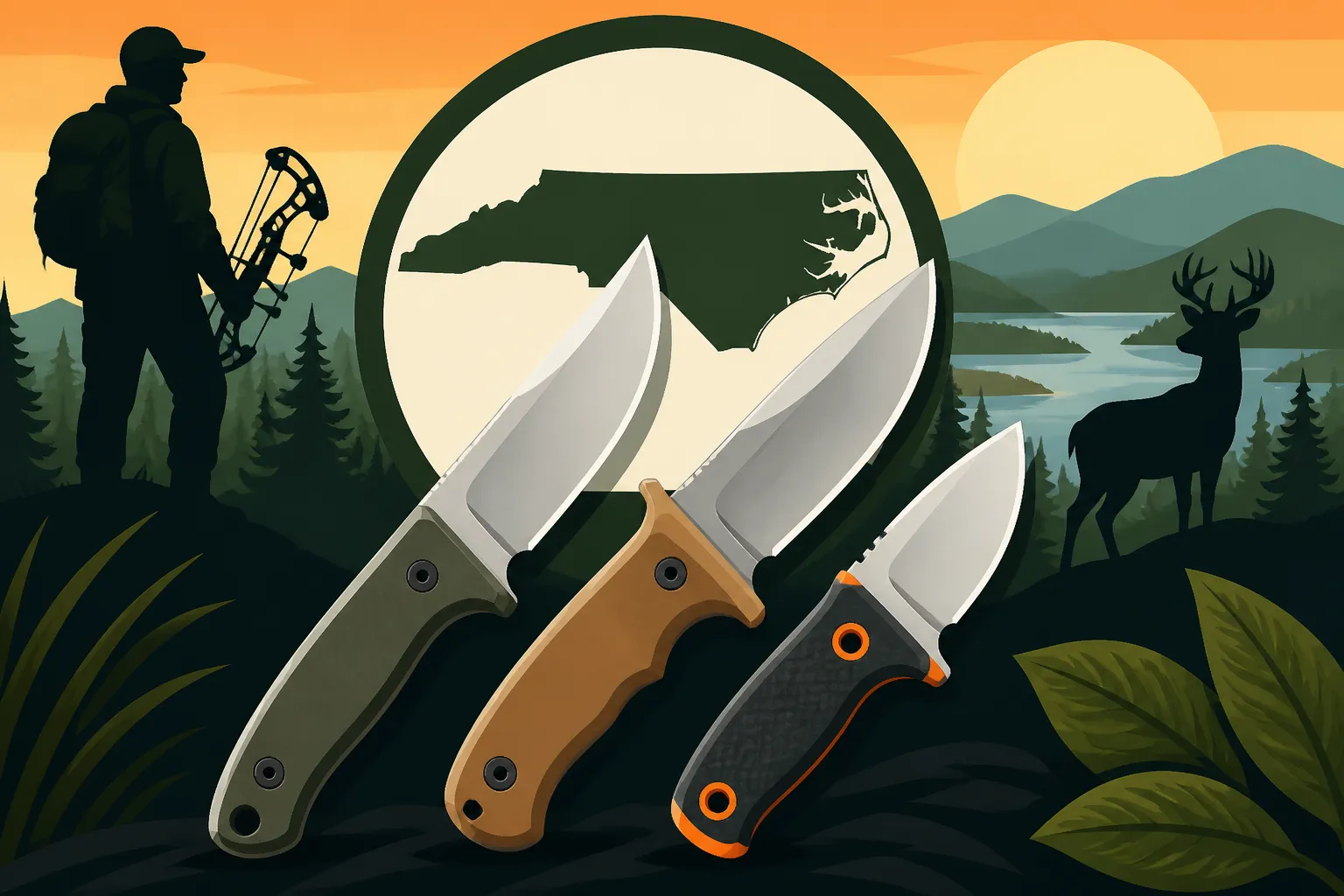
Field Dressing Knives Worth Carrying
There's nothing quite as satisfying as a successful hunt, bringing down a deer, turkey, or even a bear here in North Carolina. But then comes the moment of truth: the field dressing. This isn't just a chore; it's a critical step for preserving your harvest, and if you've ever fumbled with a dull, flimsy knife or one that's just too big for the job, you know the frustration. This guide is all about helping you choose the best field dressing knife, ensuring your experience is efficient, safe, and as clean as possible, no matter if you're in a cold mountain cove or a humid coastal swamp.
Why a Dedicated Field Dressing Knife Is So Important
Many hunters start out using whatever sharp knife they have lying around, maybe a pocketknife or a general-purpose utility blade. And while those can work in a pinch, a knife specifically designed for field dressing makes a world of difference. It's not just about sharpness; it's about control, safety, and hygiene during a task that can often be messy and challenging.
Imagine trying to open the body cavity of a large buck with a tiny, unstable blade while perched on a steep slope in the Pisgah National Forest, or perhaps trying to quickly dress a hog on a hot, humid day in the Coastal Plain. The wrong knife can turn a necessary task into a dangerous struggle, increasing the risk of accidents and contaminating your valuable meat. A well-chosen field dressing knife provides the precision needed for delicate cuts, the strength for tougher areas, and the ergonomics to maintain a secure grip even when your hands are slick. This investment in the right tool saves you time, effort, and ensures you're doing right by the animal you've harvested. It's truly a foundational piece of Meat Care Gear for North Carolina Hunters.
Beyond Just a Sharp Edge: Safety and Efficiency
Safety is paramount in any hunting activity, and field dressing is no exception. A knife that slips can lead to serious injury, not just to yourself but potentially to hunting partners assisting you. Dedicated field dressing knives often feature specialized handle designs and blade shapes that minimize the chance of slippage, even when dealing with blood and other fluids. This is especially crucial when you're working in less-than-ideal conditions, like kneeling on uneven ground or in low light after a late afternoon shot.
Beyond safety, efficiency plays a huge role in preserving the quality of your game meat. The faster and cleaner you can field dress an animal, especially in North Carolina’s often warm early seasons, the better the meat will be. Rapid cooling is key, and a knife that allows you to make quick, precise cuts without sawing or tearing helps facilitate this. For example, if you're out during the North Carolina Archery Season Opening Day in September, temperatures can still be quite high. Getting that animal gutted quickly is essential to begin the cooling process and prevent spoilage. A sharp, ergonomic knife makes quick work of the task, allowing you to focus on cooling and preparing the animal for transport, whether that involves dragging it or getting it to a cooler.
The Role of Hygiene in Meat Preservation
It's not a glamorous topic, but hygiene during field dressing is crucial for the quality and safety of the meat. A knife that's easy to clean, with minimal crevices for blood and tissue to accumulate, helps prevent bacterial contamination. Blades with simple, smooth designs are far easier to wipe down and sanitize in the field than those with intricate patterns or serrations that can trap debris.
Think about the environment where you're often field dressing – dirt, leaves, mud, and sometimes even standing water. Your knife will come into contact with these elements. Choosing a knife with a good stainless steel blade that resists rust and corrosion is a smart move for North Carolina's often humid climate, especially if you're Dragging a Deer Out of a Coastal Swamp. A clean knife helps ensure that when you're ready for Butchering a Deer at Camp, you're starting with the best possible foundation. Many experienced hunters will carry sanitizing wipes or a small bottle of hand sanitizer specifically for cleaning their hands and knives during and after the process, aiming to keep everything as clean as possible.
Key Features of an Ideal Field Dressing Knife
When you're looking for that perfect field dressing knife, you'll quickly realize there's a bewildering array of options out there. It's not about finding the "best" knife universally, but the best knife for you and the hunting situations you typically face in North Carolina. Let's break down the features that truly matter.
Blade Material and Profile
The heart of any good knife is its blade. For field dressing, you generally want a high-quality steel that holds an edge well, yet is relatively easy to sharpen in the field. Stainless steel is often preferred for its corrosion resistance, which is a major benefit in North Carolina's often wet and humid conditions. High-carbon stainless steels strike a good balance, offering both edge retention and rust resistance.
| Feature | Stainless Steel Knives | High Carbon Steel Knives | Replaceable Blade Systems |
|---|---|---|---|
| Corrosion Resistance | Excellent; ideal for wet, humid North Carolina | Good, but requires more diligent cleaning/drying | Excellent if blades are stainless; handle varies |
| Edge Retention | Good to Very Good, depending on alloy | Excellent; often holds an extremely fine edge | Varies greatly by blade material; generally good |
| Ease of Sharpening | Moderate to Easy | Can be more difficult to sharpen quickly | Easiest – just swap the blade! |
| Strength/Durability | Very Good | Excellent | Blades can snap if abused; handle is durable |
| Maintenance | Low; quick wipe down usually sufficient | High; must be cleaned and oiled to prevent rust | Low for blades; handle maintenance similar |
| Typical Use | All-around field dressing, general hunting | Hunters prioritizing ultimate sharpness/edge | Hunters valuing sharpness and convenience |
Blade profile is equally important. A drop point blade, where the spine gently curves down to meet the tip, is extremely popular. It offers a strong tip for piercing and a long, curved belly for skinning and slicing, all while being less prone to accidental punctures than a more acute point. A clip point has a more defined "clip" or concave curve at the tip, making it very precise for detail work, but also more delicate. For general field dressing, a drop point often provides the best all-around utility. Some knives also feature a specialized gut hook on the spine, which is designed to open the body cavity without piercing the intestines, a feature many hunters swear by for clean work.
Handle Design and Grip
You might not think much about the handle until your hands are cold, wet, or covered in blood, and suddenly that smooth, fancy handle becomes a liability. The handle of a field dressing knife needs to be ergonomic and provide a secure, non-slip grip under adverse conditions. Materials like textured rubber, G-10, or even certain synthetic polymers with aggressive texturing are excellent choices. They provide purchase even when wet and prevent your hand from sliding onto the blade.
Consider the size and shape of the handle in relation to your hand. A handle that's too small or too large will be uncomfortable and less secure. Many knives today feature finger grooves or swells that naturally fit the hand, enhancing control. A lanyard hole is another often-overlooked feature that can be incredibly useful, allowing you to secure the knife to your wrist or pack, preventing loss in thick brush or a murky swamp. This can be a lifesaver when you're bent over an animal, navigating uneven terrain, or hunting in areas like the Hunting Coastal Plain Pocosin Swamps where dropping a tool means it's likely gone forever.
Sheath and Carry Options
The sheath isn't just an accessory; it's a vital part of your knife system. A good sheath protects the blade from damage and, more importantly, protects you from the sharp blade. For a fixed-blade knife, a sturdy Kydex or heavy-duty nylon sheath with a secure retention mechanism is ideal. You want to be sure the knife won't accidentally fall out while you're crawling through dense cover or climbing into a stand.
The way you carry your knife also matters. Belt loops are common, but consider options for attaching to a pack strap or even directly to your clothing, depending on your hunting style. For hunters who do a lot of walking in varied terrain, like Still-Hunting Nantahala Forest Ridges, a sheath that keeps the knife secure and close to your body, without bouncing or snagging, is essential. Some sheaths offer multiple attachment points, allowing for horizontal or vertical carry. For replaceable blade systems, a sheath that safely stores extra blades is a huge plus.
Types of Knives for North Carolina Field Dressing
The market offers a range of field dressing knives, each with its own advantages. Understanding the differences will help you pick the one that best suits your hunting style and the game you pursue in North Carolina.
Fixed Blade Knives: The Traditional Workhorse
Fixed blade knives are the classic choice for serious hunters, and for good reason. They are inherently stronger and more reliable than folding knives because there are no moving parts to break or fail. The full tang construction (where the blade steel extends all the way through the handle) makes them incredibly robust, able to handle tougher tasks without fear of the blade snapping.
For field dressing, a fixed blade typically offers a blade length of 3 to 5 inches, which is generally considered the sweet spot. A longer blade can be cumbersome and difficult to control for intricate work, while a shorter blade might lack the reach for larger animals. The sturdy nature of a fixed blade makes it suitable for all types of North Carolina game, from deer to bear. When Handling a Bear After the Shot, you want a knife you can trust completely, and a quality fixed blade provides that confidence. Brands like Benchmade, ESEE, and traditional offerings from companies like Buck Knives are highly regarded in this category, often recommended in online forums or discussions you might find on platforms like GoHunt. Their durability and ease of cleaning make them a favorite among those who prioritize rugged reliability.
Folding Knives: Portability and Convenience
Folding knives have come a long way, with many modern designs offering surprising strength and stability. Their primary advantage is portability; they fold down to a compact size, making them easy to carry in a pocket or pack without needing a large, external sheath. This can be a huge benefit when you're trying to minimize bulk or prefer to keep your knife discreet.
However, a folding knife introduces potential weak points: the pivot and the locking mechanism. While modern lock-back, liner lock, and frame lock designs are robust, they are still more prone to accumulating blood and debris, which can affect their function or make them harder to clean thoroughly in the field. If you opt for a folder, choose one with a strong, proven locking mechanism and a simple design that allows for easy rinsing. Many hunters who choose a folding knife for field dressing might pair it with a small fixed blade for larger cuts, using the folder for finer work or as a backup. For deer, especially, a good folding knife can be perfectly adequate, offering a lightweight option for Packs for a Pisgah Forest Day Hunt.
Gut Hooks and Replaceable Blade Systems: Specialized Solutions
Some knives integrate a gut hook onto the blade's spine. This specialized hook is designed to zip open the abdominal cavity of an animal from the inside out, without piercing the intestines. Many hunters find this tool invaluable for performing a clean, quick incision, drastically reducing the risk of contaminating the meat. However, a gut hook adds a bit of complexity to the blade, making it harder to sharpen and sometimes more challenging to clean.
Replaceable blade systems are a more recent innovation that have gained significant traction. These knives use a handle that accepts razor-sharp surgical or utility blades. The main appeal is that you always have a surgically sharp edge; once a blade dulls, you simply pop it out and replace it with a fresh one. This eliminates the need for field sharpening, which can be a game-changer for hunters who value ultimate sharpness and convenience. For a hunter focused on speed and precision, especially when tracking a deer through dense North Carolina woods, the ability to always have a fresh, sharp edge can significantly improve efficiency. Platforms like GoHunt often feature discussions about the best replaceable blade systems and their specific advantages for different types of game.
While incredibly sharp, these blades are typically thinner and less robust than traditional fixed blades, meaning they are not suitable for prying, chopping, or heavy bone work. They are primarily for skinning and careful cuts. Hunters using these systems often carry a small supply of extra blades in their pack. They are excellent for initial cuts and skinning, but some hunters still prefer a robust fixed blade for breaking down joints or other tougher tasks.
Maintenance and Care for Your Hunting Knife
A good field dressing knife is an investment, and like any valuable tool, it needs proper care to perform its best and last for years. Neglecting your knife can lead to a dull edge, corrosion, or even failure when you need it most.
Sharpening Techniques for a Razor Edge
A truly sharp knife is a safe knife, as it requires less force to make cuts, reducing the chance of slippage. Learning to sharpen your knife effectively is a fundamental skill for any hunter. There are several popular methods, and finding the one that works for you is key.
- Whetstones/Sharpening Stones: These are traditional and highly effective. They require a bit of practice to maintain a consistent angle, but once mastered, they can produce a superb edge. You'll typically use a coarse stone to restore an edge, followed by a finer stone for refinement. Many hunters in North Carolina will carry a small, portable sharpening stone in their pack for touch-ups in the field.
- Pull-Through Sharpeners: These are convenient and easy to use, often having pre-set angles for quick sharpening. They are great for quick touch-ups but can sometimes remove more steel than necessary if used improperly.
- Guided Sharpening Systems: These systems use clamps and guides to ensure a consistent sharpening angle, making them excellent for beginners or those who want a perfectly replicated edge every time. They are usually more for at-home maintenance rather than field use.
No matter the method, always finish with a stropping motion (running the blade away from the edge on a leather strop or fine ceramic rod) to remove any burr and achieve a truly razor-sharp edge. Regular, light sharpening is always better than letting a knife get completely dull before tackling it.
Cleaning and Storage After the Hunt
After field dressing, your knife will be exposed to blood, tissue, and often dirt or grit. Proper cleaning immediately after use is crucial to prevent corrosion and maintain hygiene.
- Rinse Immediately: As soon as possible, rinse the knife thoroughly with water. If potable water isn't available, use stream water (if safe to do so) or wipe it down aggressively with wet wipes. This prevents blood from drying and adhering to the blade.
- Scrub and Sanitize: Use soap and water, and a brush if necessary, to thoroughly clean all surfaces of the blade and handle. Pay special attention to any crevices on the handle or pivot points on a folding knife. Some hunters even use a mild bleach solution (diluted) for extra sanitization, especially with concerns like Chronic Wasting Disease. Remember, if you're in a CWD Management Area, proper handling of all parts of the animal, including tools, is even more critical.
- Dry Thoroughly: This is perhaps the most important step to prevent rust. Ensure the knife is completely dry before storage. You can air dry it, or better yet, wipe it down with a clean towel. For carbon steel blades, apply a thin layer of food-grade mineral oil or camellia oil to the blade and pivot (for folders) to prevent rust.
- Proper Storage: Store your clean, dry knife in its sheath in a cool, dry place. Avoid storing it in a damp garage or shed where humidity can lead to rust. If storing for extended periods, check on it periodically to ensure no moisture has accumulated. When heading out for hunts like North Carolina's Gun Deer Season by Zone, ensure your knife is always in pristine condition, ready for action.
By dedicating a little time to care, your field dressing knife will be a reliable companion for countless North Carolina hunting seasons to come.
Disclaimer
This article is for general informational purposes only and does not constitute professional advice. Laws, prices and regulations vary by location and change over time. Consult a qualified professional for guidance on your specific situation.