Treestand Safety Gear for Steep Ground
Hunting in North Carolina's beautiful, rugged mountains or even the rolling, steep hills of parts of the Piedmont means facing terrain that can be as challenging as it is rewarding. When you're dealing with those steep slopes and uneven ground, setting up and hunting from a treestand becomes a whole different ballgame, and frankly, a much riskier one. This guide is all about equipping you with the right knowledge and gear to stay safe when your boots are on steep ground and your stand is high in a tree.
Why Steep Ground Changes the Treestand Safety Game
It's one thing to hang a stand on a relatively flat piece of ground in the Coastal Plain; it's another entirely when you're trying to find a level tree on a 30-degree slope in the Appalachians. The dynamics of safety change drastically, and understanding why is the first step to mitigating those risks. We're talking about physics here, and gravity doesn't care about your deer season.
Increased Risk of Falls
Gravity is absolutely not your friend when you're on a steep hillside. Any small slip or misstep on flat ground is bad enough, but on a steep slope, that incident is immediately amplified. A small stumble can quickly turn into a serious tumble, sending you rolling down the hill, especially when you're carrying a heavy treestand or a pack full of gear. The momentum of a fall on an incline can be relentless, and the consequences severe.
Think about the angle of descent. When you fall from a stand on steep ground, you don't just drop straight down into a nice, soft pile of leaves. You might swing uncontrollably into the face of the slope, potentially hitting rocks, stumps, or even sliding downhill, picking up speed and increasing the severity of injuries far beyond what a simple vertical fall might cause. This changes how your safety system needs to react and what kind of injuries you might sustain.
The inherent unevenness of steep terrain also means your footing is constantly compromised, both on the ground approaching the stand and when ascending or descending. You're rarely on truly flat, stable ground. This constant battle for balance adds layers of instability that just aren't present in flatter, more forgiving landscapes, demanding more focus and a higher degree of caution with every single movement. Reading a Ridge for Mountain Zone Deer always includes recognizing these terrain challenges.
Challenges with Setup and Stability
Anyone who has tried to level a ladder stand on a pronounced slope can tell you it's a nightmare. Conventional stands, often designed with the assumption of vertical trees on relatively flat ground, don't always adapt well to severe angles. You're essentially fighting the pitch of the hill just to get the stand's platform stable and secure enough to bear your weight. It takes more brute force, more patience, and often requires creative solutions.
Securing climbing sticks or sections of a ladder stand to a tree on a steep grade means constantly adjusting for that pitch. It's not just about getting the sticks vertical against the tree; it's about ensuring the base of each stick isn't going to shift, kick out, or create uneven pressure points when your weight is applied. The side-to-side forces are amplified by the angle, demanding extra effort and precision in every attachment point. Hanging a Stand on a Pisgah Ridge is a prime example of this struggle.
Even after a stand is up, the forces on the straps and cables are different compared to a level setup. The uphill and downhill tension can put increased shear stress on attachment points, and wind can catch the stand differently, creating more movement. You need to be doubly sure of every connection and strap, constantly re-checking for any slack. This is where scouting with advanced mapping tools like GoHunt can really help, allowing you to identify potentially flatter pockets or better-suited tree options before you're even lugging your stand up a mountain.
Essential Treestand Safety Gear Components
Okay, so we know steep ground is challenging. Now let's talk about the absolute must-haves for your safety toolkit. These aren't optional extras; they are fundamental pieces of gear that literally hold your life in their hands (or, well, around your body and the tree).
Full-Body Harness and Lifeline
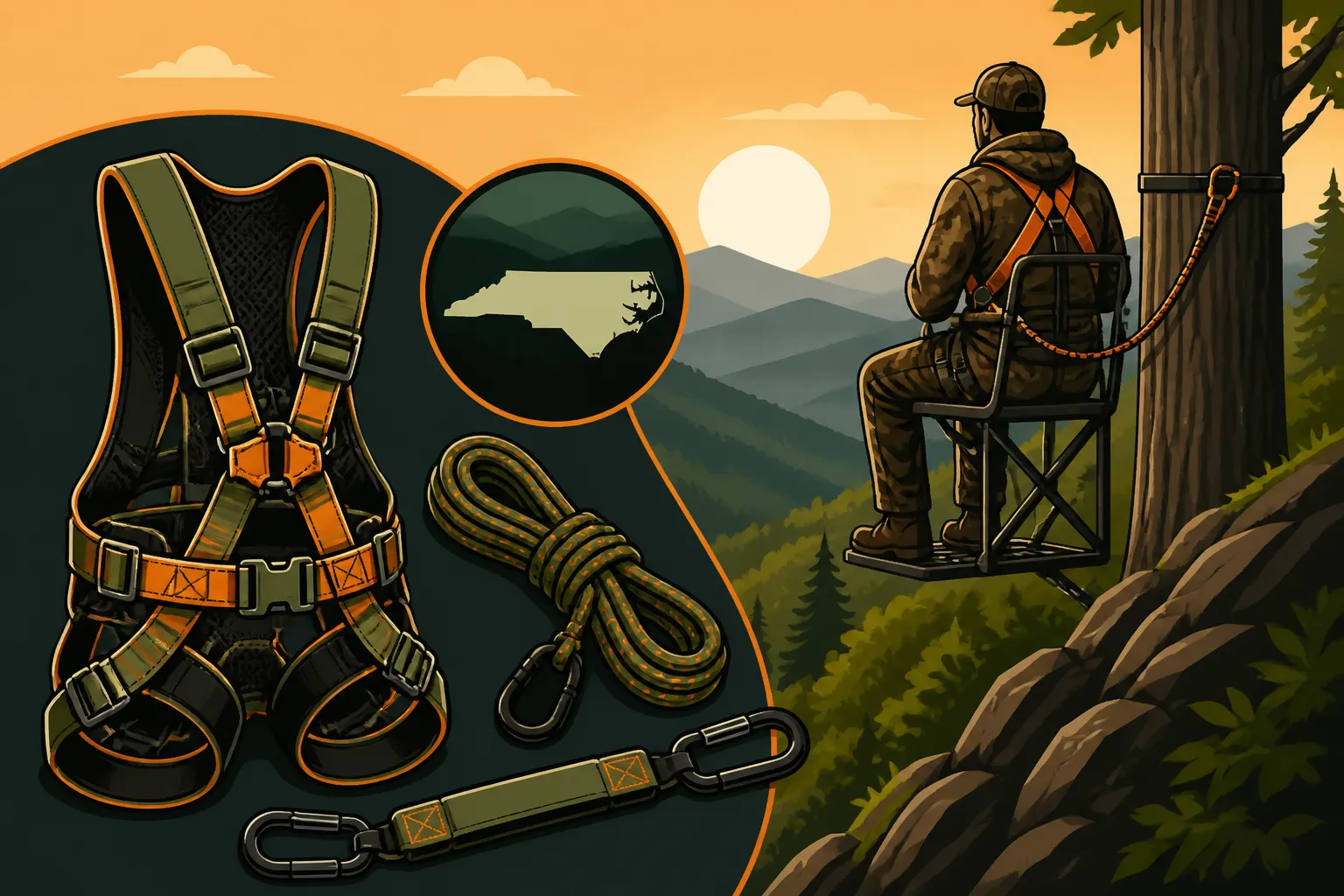
This is your absolute, non-negotiable, number one piece of safety gear. A full-body harness distributes the impact of a fall across your entire torso and legs, preventing the kind of concentrated pressure on a single point that can cause severe injury or even death if you were using an older-style chest or waist belt. Please, never even think about leaving the ground without wearing a properly fitted full-body harness.
The lifeline, often called a full-length safety rope or fall-arrest system, is what connects your harness to the tree from the very moment your feet leave the ground until they are safely back on terra firma. It means you're always tethered to the tree. Many hunters, even experienced ones, neglect this critical step, only putting their harness tether on once they're in the stand. That's a huge mistake, as statistics consistently show that the majority of treestand falls happen during the process of ascending or descending, not while sitting.
Make sure your harness fits snugly, but not so tight that it restricts movement or circulation. You should be able to comfortably breathe and move, but it shouldn't be loose enough to shift significantly. Practice putting it on in comfortable conditions, not for the first time in the dark with cold, fumbling fingers. Inspect your harness regularly for any signs of wear, tear, sun damage, or cuts. A good harness is not just a piece of gear; it's an investment in your life and your ability to come home safely to your family. Safety Harnesses and Lifelines are truly life-savers.
Suspension Relief Device
If, despite all precautions, you do experience a fall and are left hanging in your harness, simply suspending there can quickly become deadly. This is due to a phenomenon called suspension trauma, also known as "harness hang syndrome." It occurs when blood pools in your legs, cutting off circulation, which can lead to loss of consciousness, organ damage, and in severe cases, even death, often within a surprisingly short amount of time. A suspension relief device is a simple, often compact, strap that deploys from your harness, allowing you to create a foothold and stand up, thereby relieving pressure on your femoral arteries and restoring circulation.
This device is often overlooked or considered an afterthought, but it is incredibly important, especially if you're hunting alone in a remote area, which is a common scenario in many of North Carolina's vast public lands like the Nantahala National Forest. You might be hanging there for a significant period before help arrives, or before you can self-rescue, so having a way to keep blood flowing and maintain consciousness is absolutely critical.
Familiarize yourself with how to deploy and use your suspension relief device before you need it. It's definitely not something you want to be figuring out for the first time in a panicked, upside-down situation after a fall. Most devices are simple to use, but practice makes perfect, even for the worst-case scenarios. Ensure it's easily accessible and you can activate it even if one hand is injured or you're disoriented.
Emergency Signaling Devices
Whether you're hunting solo or with a trusted buddy, having a reliable way to call for help is absolutely crucial, particularly on steep, isolated terrain. This could be a loud whistle, a fully charged cell phone (though be realistic about service – it's often spotty or non-existent in mountain and deep woods areas), a satellite messenger like a Garmin inReach or a Zoleo, or even a simple air horn. The goal is to alert anyone within earshot or send a remote signal for emergency rescue.
If you've taken a tumble on steep ground, you might be injured, disoriented, stuck in a precarious position, or even trapped. In such situations, being able to communicate your distress and, crucially, your exact location, becomes paramount. Even if you're just a few hundred yards off a logging road, a twisted ankle on a rocky slope can quickly turn into a serious, life-threatening emergency if you can't get help.
Always, always tell someone your exact hunting location, your planned route (especially important in steep, unfamiliar territory), and your expected return time. This "hunt plan" is your absolute first line of defense. If you're using a GPS device for mapping, like one that integrates with GoHunt's detailed topographic and land ownership data, you can often share your exact pin drop or planned route with family or friends for added safety and quicker location in an emergency. First Aid Kits for Remote Mountain Ground are also essential to carry.
Specific Gear Considerations for Steep Terrain
Beyond the universal safety gear, certain components become even more critical or require special attention when you're dealing with North Carolina's steep hillsides. These are the details that can make the difference between a secure setup and a dangerous one.
Enhanced Tree Straps and Ratchets
For steep ground, you need to be exceptionally meticulous about how your stand is anchored to the tree. Standard cam-buckle straps, while often sufficient on level ground, can sometimes slip or gradually lose tension under the unique forces and pressures exerted on a stand on a slick-barked tree or severe angle. Consider stands that utilize robust ratchet straps or incorporate double-strap systems for maximum, unyielding security.
The tree itself can present challenges on steep ground. In parts of the Blue Ridge escarpment, you might encounter trees with rough, uneven bark, or even a slight natural lean that complicates stand placement. Straps need to bite firmly and evenly, ensuring a consistent hold around the trunk. Wider straps or those with integrated grip pads can offer a more secure purchase, distributing the load over a larger surface area and reducing the chance of digging in, shifting, or cutting into the tree over time.
Always, without exception, check for any slack after you've tightened everything. Wiggle the stand, put a little weight on it while still safely tethered. Any perceptible movement means you need to re-tighten or adjust. On a steep hillside, the constant gravitational forces are working to pull your stand downhill, so vigilance and frequent checks are absolutely key. Portable Stands for Public Land Mobility often come with high-quality straps for secure setups.
Climbing Aids and Ascent/Descent Devices
When navigating steep terrain, climbing sticks are generally preferred over bulky ladder stands or traditional climbing stands. Their independent sections can be leveled and secured more easily on an uneven ascent path, allowing you to adapt to the contours of the hill and the tree itself. Look for sticks with aggressive, non-slip steps and attachment methods that allow for tight, secure fastening without excessive tree damage. On severely steep slopes, a single, longer stick might even be harder to manage and secure than multiple shorter ones.
For added safety and ease of use, especially if you're constantly fighting gravity and traversing challenging angles, consider specialized ascent and descent devices. These can include rope-based systems with mechanical ascenders that grab the rope as you climb, or controlled descent devices that act as a friction brake if you slip or need to lower yourself slowly. These types of systems are often employed by saddle hunters for maximum flexibility and control, but they can be adapted for traditional fixed stands for an extra layer of security. Climbing Sticks for North Carolina Hardwoods are a popular choice, but ensure yours are robust enough for the job.
Rope-style climbing systems or single-line ascenders, while requiring a bit of a learning curve, can provide incredible benefits. They allow you to maintain continuous contact with the tree and control your movement more precisely than free-climbing on sticks or a potentially shaky ladder. Remember, the ultimate goal on steep ground is controlled, deliberate movement, not just speed or convenience. This deliberate approach also lends itself well to Saddle Hunting in North Carolina Hardwoods.
Specialized Footwear and Traction
Your boots are your absolute foundation, and on steep, often leaf-covered, rocky, or muddy North Carolina hillsides, superior traction is paramount. Forget smooth-soled hunting boots or anything designed for casual walking. You need aggressive tread, deep lugs, and excellent ankle support to prevent slips, falls, and sprains both on your approach to the stand and when negotiating your ascent and descent. A minor slip in less demanding terrain might be a nuisance; on a steep, rocky face, it could be catastrophic.
Many hunters unfortunately overlook the critical role of footwear as a primary safety item, but a slip on a wet root or mossy rock while carrying a stand can lead to a serious fall before you even get off the ground. Waterproofing is also incredibly important, as wet feet can quickly lead to discomfort, blisters, and reduced concentration, all of which can indirectly affect your overall safety and decision-making in challenging environments.
Consider boots with a stiff sole for better stability and reduced foot fatigue, especially when standing on climbing sticks or small stand platforms for extended periods. Some savvy hunters even add external ice cleats or traction devices during icy conditions, particularly in the higher elevations of the mountains where early season frosts or late-season snow can make slopes treacherous. Paired with a solid mapping app like GoHunt, which can highlight steep contours and potential obstacles, you can plan your approach routes to actively minimize walking on the sketchiest, most hazardous terrain. Boots for North Carolina Swamps and Ridges often feature these aggressive treads for diverse NC conditions.
Best Practices for Using Safety Gear on Steep Ground
Having the right gear is only half the battle. Knowing how to use it, practicing with it, and maintaining a constant awareness of your surroundings are what truly ensure your safety when hunting from a treestand on steep ground.
Pre-Season Inspection and Training
Before you ever step foot on a steep hillside with your stand, take the time to thoroughly inspect every single piece of your safety gear. This isn't just a suggestion; it's a non-negotiable routine that could literally save your life. Check your harness for frayed straps, worn stitching, and any cracks or damage to plastic or metal components. Examine your tree straps for cuts, UV damage (which can degrade synthetic materials), or any signs of excessive wear. Make sure all buckles, clips, and attachment points are functioning smoothly and securely.
Beyond inspection, practice is key. Take your harness and lifeline and practice using them at ground level, or in a controlled, safe environment. If you've recently switched to a new stand model or a different style of harness, spend ample time understanding how it works and how to properly don and adjust it. If you have a suspension relief device, safely simulate a fall (with a spotter and a very short, controlled drop) to understand how it deploys and how you'd use it under pressure. The more familiar you are with your gear, the less likely you are to fumble or make a critical error in a real emergency situation.
Consider setting up your stand in a safe, flat location, perhaps your backyard or a friend's property, and going through the entire motion of climbing, descending, and deploying all your safety gear. It might feel a bit silly, but building muscle memory and confidence in a stress-free environment is invaluable. This is also a good time to check that your Climbing Sticks for Rough Bark are still holding strong and you can confidently ascend them. Scouting North Carolina Public Land Before Season should also include mentally preparing for these safety protocols.
Buddy System and Communication
While North Carolina boasts vast public lands where solo hunting is a cherished tradition for many, on steep, remote terrain, a buddy system is highly recommended, if not outright essential. Having another hunter with you provides an immediate source of assistance if you experience a fall, get injured, or encounter any other emergency. They can quickly call for help, provide immediate first aid, or physically assist you if you're in a manageable situation.
If hunting alone – which many of us do – it is absolutely vital to tell multiple people exactly where you're going, your planned route, and when you expect to be back. Share your mapping coordinates, either verbally or by sending a pin drop. Agree on a specific check-in schedule. If you don't check in by the agreed-upon time, they know to initiate a search or call for emergency services. This simple, often overlooked step can drastically reduce response times in an emergency, potentially making the difference between life and death. Packs for a Day on Public Land should always include communication devices.
Consider carrying two-way radios, especially if hunting with a partner in areas where cell service is notoriously unreliable, which is common in the mountainous regions of North Carolina. A simple "I'm in the stand" or "Coming down now" message can prevent confusion, ensure everyone knows the status of their hunting party, and allow for quick communication if a problem arises. Clear communication is a cornerstone of safe hunting, especially in challenging environments.
Safe Entry and Exit Strategies
This is arguably the most critical phase where most treestand accidents occur – not while you're sitting comfortably in the stand, but during the dynamic transition from ground to stand, and back again. When you're dealing with steep ground, that transition is even trickier and fraught with amplified risks. Always, without exception, use your full-length lifeline from the precise moment your feet leave the ground until they are safely back on solid earth. This means clipping your harness tether to the rope before you step onto your first climbing stick or ladder rung.
Take your time. Do not rush, especially if it's dark, you're tired, or conditions are challenging (wet, icy, windy). Every single step on a climbing stick or ladder section needs to be deliberate, secure, and well-placed. Maintain three points of contact at all times – meaning two hands and one foot, or two feet and one hand – as you ascend and descend. When transferring from your top climbing stick or ladder section to the actual stand platform, be extra cautious, ensuring your tether remains securely clipped and taut. This is a moment of heightened risk.
When exiting your stand, simply reverse the process slowly and carefully. Do not, under any circumstances, unclip your harness tether until both of your feet are safely on the ground and you are well away from the immediate fall zone of the tree. Be incredibly mindful of your footing once you hit the dirt, as the ground might be even more uneven, slippery, or obscured than you remember from your ascent. Remember, safety isn't just about owning the right gear; it's about the conscious, consistent, and disciplined application of safe practices every single time you climb into or out of a treestand.
Steep Ground Treestand Safety Checklist
To help you remember all the critical points when heading out to those steep North Carolina hunting spots, here's a quick checklist. Make it a habit to run through this before every hunt.
| Item | Check Before Every Hunt on Steep Ground | Why It Matters |
|---|---|---|
| Full-Body Harness | Inspected thoroughly for any signs of wear, fraying, or damage to straps, stitching, buckles, or D-rings. Ensure it fits snugly but comfortably, allowing for full range of motion without being too loose. | This is your primary fall-arrest system, distributing impact across your body and preventing severe injury. Any compromise in its integrity can be catastrophic. |
| Full-Length Lifeline | Confirmed to be properly secured to the tree before your feet leave the ground. The tether is clipped into the lifeline before stepping onto the first climbing aid, and remains clipped until back on the ground. Inspected for cuts or damage. | Provides continuous fall protection from the ground up and back down. Most treestand falls occur during ascent or descent, making this constant connection crucial. |
| Suspension Relief Device | Easily accessible and in working order. You've practiced deploying it. | Prevents suspension trauma (harness hang syndrome) if you fall and are left hanging. This can buy you critical time for self-rescue or waiting for assistance. |
| Stand & Climbing Aids | Stand is securely mounted, level, and stable on the tree, with no wobble or excessive movement. All straps and ratchets are tight and free of slack. Climbing sticks/ladder sections are securely attached and able to bear weight without shifting. | Steep ground amplifies leverage and forces, making stand stability paramount. A loose stand or climbing aid significantly increases fall risk. |
| Emergency Signaling | Cell phone is fully charged (and in a waterproof case). A whistle, satellite messenger (like a Garmin inReach), or personal locator beacon (PLB) is accessible. A detailed hunt plan has been shared with multiple people, including exact location and expected return time. | Essential for calling for help, especially in remote North Carolina areas with spotty cell service. A shared hunt plan ensures timely search and rescue if you don't return. |
| Appropriate Footwear | Boots have aggressive, deep treads for maximum traction on slippery surfaces (wet leaves, mud, rocks). Good ankle support is crucial to prevent sprains on uneven terrain. | Prevents slips and falls while approaching, ascending, and descending. Stable footing is foundational to safe treestand use on steep ground. |
| Weather & Conditions | Checked forecasts for high winds, heavy rain, ice, snow, or extreme cold that could compromise gear, traction, or your physical endurance and decision-making. | Adverse weather significantly increases the risk of slips, reduces visibility, and can make rescue efforts more challenging and dangerous. Prioritizing safety over a hunt day is always the right call. |
| Scouting & Entry/Exit Route | Planned the safest path to and from the stand, noting any obstacles, particularly steep sections, loose rocks, or slippery creek crossings. Utilized mapping tools like GoHunt to study terrain contours and identify the least hazardous routes. | Minimizes risks on the ground before you even begin to climb, especially when navigating in the dark or with heavy gear over challenging terrain. |
| Mental Readiness | You are well-rested, sober, alert, and fully focused on safety protocols. Not distracted by external stresses. | Distraction, fatigue, or impairment are leading causes of accidents. A clear, focused mind ensures correct decisions and precise movements, especially during critical moments of ascent and descent. |
Disclaimer
This article is for general informational purposes only and does not constitute professional advice. Laws, prices and regulations vary by location and change over time. Consult a qualified professional for guidance on your specific situation.