.308 Versus .270 for Whitetails
Ah, the age-old debate among deer hunters, especially here in North Carolina! You're staring at the gun rack, perhaps in your local shop or just in your mind's eye, and you're torn between the reliable .308 Winchester and the venerable .270 Winchester for your next whitetail season. Both are fantastic cartridges, proven over decades, but each brings its own flavor to the deer woods, and understanding those nuances is key to picking the one that best suits your hunting style and the specific North Carolina terrain you plan to cover.
The Dependable .308 Winchester: A Workhorse for North Carolina Deer
The .308 Winchester is a compact powerhouse, a cartridge that has earned its stripes in military, law enforcement, and hunting applications worldwide. It's often hailed as one of the most versatile and efficient cartridges ever designed, and for good reason. For North Carolina deer hunters, it presents a compelling case, especially when you consider the varied landscapes we navigate, from the dense undergrowth of the coastal plain pocosins to the rolling hills of the Piedmont and the steep, thick ridges of our mountains.
Ballistics and Performance in the Field
When you look at the numbers, the .308 Winchester typically launches bullets ranging from 150 to 180 grains. A common 150-grain soft-point bullet might leave the muzzle around 2,800 feet per second. While it might not boast the flat trajectory of some magnum cartridges, its ballistic curve is exceptionally predictable and more than adequate for the vast majority of deer hunting scenarios you'll encounter here. Most shots at North Carolina whitetails happen within 200 yards, often much closer, and within that range, the .308 delivers ample energy and precision to cleanly harvest deer. It sheds less velocity at closer ranges, meaning it hits with a solid thud right where you need it to.
Moreover, the .308 maintains excellent terminal performance. With a good expanding bullet, it creates a substantial wound channel, disrupting vital organs effectively. Many hunters appreciate the clean, quick kills it provides without excessive meat damage, assuming good shot placement. The variety of bullet types available for the .308 is staggering, allowing you to tailor your ammunition choice precisely to your hunting conditions, whether you need a tough, bonded bullet for potential bone hits or a rapidly expanding bullet for quick energy dump on broadside shots.
Advantages in North Carolina's Diverse Terrain
One of the biggest unsung heroes of the .308 is its ability to be chambered in shorter-action rifles. This translates to lighter, more compact firearms that are an absolute dream to carry through the thick stuff. Imagine still-hunting through a dense stand of pine or navigating the laurel slicks in the mountains. A short, handy rifle chambered in .308 can be shouldered quickly, maneuvered through brush with less snagging, and brought to bear on a whitetail that might only offer a fleeting glimpse. This quick handling is paramount when you're Still-Hunting Nantahala Forest Ridges or pushing through dense river bottoms.
Furthermore, the .308 performs admirably in both short-range, quick-reaction scenarios and those slightly longer shots across a cut-over or a small field. While it's certainly not a dedicated long-range cartridge, it can hold its own out to 300 yards with a skilled shooter and quality optics, covering almost any ethical shot a North Carolina hunter would take on deer. Its inherent accuracy and moderate recoil also make it a favorite for many hunters who want to ensure they can make precise follow-up shots if needed, or simply want a comfortable rifle to shoot all day at the range.
Recoil and Shooter Comfort
Let's be honest, nobody likes getting beat up by their rifle. The .308 Winchester is known for its relatively mild recoil, especially when compared to some of its larger-caliber brethren. This isn't just about comfort; it directly impacts accuracy. A hunter who isn't anticipating a punishing kick is more likely to maintain proper form, execute a smoother trigger pull, and keep their eye on the target through the shot. This translates to better accuracy in the field and more confidence when that trophy buck steps out.
For hunters who might be recoil-sensitive, or for newer hunters just getting into the sport, the .308 is an excellent choice. It allows for extended practice sessions without fatigue, building muscle memory and proficiency that pays dividends during hunting season. This comfort factor also makes it a great choice for a youth hunter or anyone who prefers a softer-shooting rifle without sacrificing terminal performance on deer. After all, the best rifle for deer is the one you shoot most accurately, and comfort is a huge part of consistent accuracy.
The Classic .270 Winchester: Reach and Power for Whitetails
Stepping into the ring next is the iconic .270 Winchester, a cartridge that has been a favorite among deer and elk hunters for nearly a century. Developed by Winchester, it quickly gained a reputation for its flat trajectory and impressive downrange energy. In North Carolina, the .270 shines in different, yet equally valuable, scenarios, offering hunters another excellent option for pursuing whitetails across the state.
Understanding .270 Ballistics
The .270 Winchester typically propels lighter, more aerodynamic bullets, generally in the 130 to 150-grain range, at higher velocities than the .308. A standard 130-grain bullet can scream out of the muzzle at speeds approaching 3,100 feet per second. This higher initial velocity gives the .270 its hallmark flat trajectory, meaning less bullet drop over longer distances. For hunters who might find themselves needing to reach across a wider agricultural field in the Piedmont or down a long powerline cut, this flat-shooting characteristic is a significant advantage. It simplifies aiming, as you don't have to account for as much holdover at various ranges.
Despite its lighter bullet weights, the .270 carries substantial energy downrange. It delivers impressive hydrostatic shock, often dropping deer in their tracks with a well-placed shot. The relatively small diameter of the bullet, combined with its high velocity, can sometimes lead to slightly more meat damage if a bone is struck or if a rapidly expanding bullet is used on a close-range shot, but this is often manageable and a trade-off many hunters are willing to make for its flat trajectory and energy.
When the .270 Shines in North Carolina
The .270 truly comes into its own in those situations where a longer shot might be necessary. Think about Hunting Piedmont Farmland Deer, where open fields of corn or soybeans stretch out for hundreds of yards. Or perhaps you're glassing a powerline cut that disappears into the distance on public land. In these scenarios, the .270's ability to maintain a flatter trajectory and deliver solid energy at extended ranges gives you a distinct edge. It takes some of the guesswork out of holdover, allowing you to focus more on a clean break of the shot.
This cartridge also excels in environments where deer might be feeding at the edges of large clear-cuts, or if you're set up on a high ridge overlooking a distant basin. For a hunter who values maximum effective range and wants to simplify trajectory calculations, the .270 is a top-tier choice. While much of North Carolina hunting is indeed close-quarters, those opportunities for longer shots do arise, and the .270 is perfectly designed for them. It’s also a fantastic option for those who might also hunt larger game out west where longer shots are more common, making it a versatile choice for a variety of pursuits.
Considerations for the North Carolina Hunter
While the .270 offers impressive reach, it does come with a few considerations. The rifles are typically built on standard-length actions, which can make them a touch longer and heavier than many .308 rifles. This isn't a huge deal for stand hunting but can be noticeable on long hikes through rugged terrain. The recoil, while not punishing, is generally a bit sharper than the .308, especially with lighter rifles. This is another factor to consider for recoil-sensitive shooters or those who prefer extended range sessions.
Another point to ponder is bullet selection. While the .270 is very effective, some hunters might find the bullet selection slightly less diverse than the .308, though this is a minor quibble given the excellent modern hunting bullets available. Ensuring you choose a bullet with controlled expansion is key to minimizing meat damage, particularly on closer shots. As with any caliber, practice is paramount, and understanding your rifle's capabilities and limitations with specific ammunition is essential for ethical hunting.
Direct Comparison: .308 vs. .270 for North Carolina Whitetails
So, you're still weighing your options, right? It's like choosing between two fantastic tools in your toolbox – both will get the job done, but one might just feel a bit more natural or efficient for a particular task. Let's really drill down into the direct comparison that will help you make an informed decision for hunting here in North Carolina.
Key Differences in Practical Hunting Scenarios
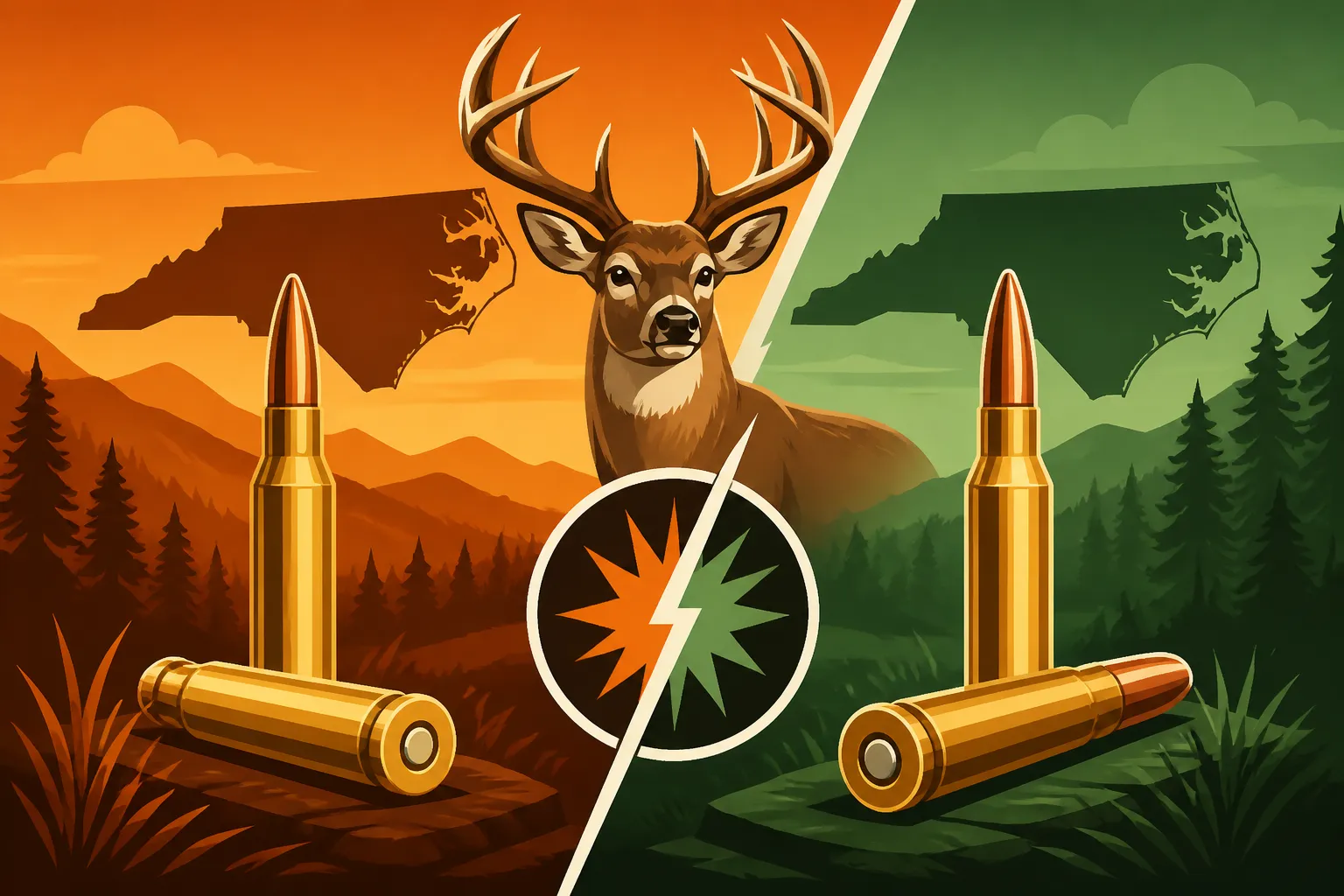
When you line them up side by side, the primary differences boil down to trajectory, recoil, and rifle platform.
- Trajectory: The .270 Winchester holds a clear advantage here, offering a flatter trajectory, especially beyond 200 yards. This means less bullet drop and potentially less need to hold high on longer shots. For instance, if you're Setting Up on a Piedmont Field Edge and expecting deer to cross at 250 yards, the .270 might offer a slight confidence boost in terms of point-blank range. The .308, while not a rainbow, requires slightly more holdover at those extended distances.
- Recoil: The .308 is generally perceived as having milder, more manageable recoil. This directly translates to greater comfort during practice and less flinching in the field. If you're going to spend hours at the range or if you're introducing a new hunter, the .308 often wins on this front.
- Rifle Platform: Because the .308 operates on a shorter action, rifles chambered for it tend to be lighter and more compact. This makes them easier to carry all day, quicker to maneuver in tight cover, and generally handier in thick woods, which is a common scenario when Hunting Coastal Plain Pocosin Swamps or navigating dense clear-cuts. The .270's standard long action rifles are still perfectly manageable, but you'll often feel the difference in length and weight.
Matching the Caliber to Your Hunting Style and Location
This is where your personal hunting approach and preferred hunting grounds really come into play.
- For the "Walk-Around" Hunter in Thick Cover: If you're primarily still-hunting, driving deer with a small group, or hunting areas with dense woods where shots are typically under 150 yards, the .308 Winchester is incredibly hard to beat. Its compact rifle size, manageable recoil, and ample knockdown power for close-to-midrange shots make it a fantastic choice. Think about hunting the steep, thick hardwoods of the mountains or the dense pines of the sandhills – a nimble .308 will feel right at home.
- For the Stand Hunter Over Open Areas: If your primary method involves sitting in a stand overlooking agricultural fields, powerline cuts, or clear-cuts where shots might stretch out to 200-300 yards, the .270 Winchester's flat trajectory is a significant asset. It reduces the margin for error on longer shots, giving you confidence when that buck finally steps out at the far end of the field. Many hunters who meticulously scout with tools like GoHunt and plan their stand locations for these longer visibility scenarios often gravitate towards the .270.
- Versatility: Both calibers are versatile enough to handle a wide range of North Carolina conditions. The truth is, a deer shot cleanly with either a .308 or a .270 will be a dead deer. The choice often comes down to optimizing for your most frequent hunting scenarios. If you hunt a mix of open and thick terrain, either will serve you well, but one might give you a slight edge in your most common situation.
Ammunition Availability and Cost
In terms of practical considerations, both the .308 Winchester and the .270 Winchester are incredibly popular cartridges, meaning ammunition is widely available in various bullet weights and constructions. You'll find them on the shelves of almost any sporting goods store or even larger retailers, especially as North Carolina's Gun Deer Season by Zone approaches. This commonality also generally means that ammunition for both is competitively priced, though specific premium hunting loads will naturally cost more.
You won't typically struggle to find options for either caliber, which is a big relief when you're stocking up for the season or trying out new loads. However, it's always a good idea to buy a few boxes of your chosen hunting load well in advance of the season to ensure you have enough for practice and to confirm your rifle's zero. There's nothing worse than scrambling for ammo right before North Carolina Archery Season Opening Day or the first gun opener.
| Feature | .308 Winchester | .270 Winchester |
|---|---|---|
| Bullet Weight | 150-180 grains (most common for deer) | 130-150 grains (most common for deer) |
| Muzzle Velocity | ~2,600 – 2,850 fps (150gr) | ~2,900 – 3,100 fps (130gr) |
| Trajectory | Excellent, but slightly more drop at long range | Flatter, less drop at extended ranges |
| Recoil | Moderate, generally considered milder | Moderate-plus, a bit sharper than .308 |
| Rifle Action | Short action (often results in lighter rifles) | Long action (can mean slightly longer/heavier rifles) |
| Typical Range | Highly effective up to 300 yards, superb at <200 | Highly effective up to 350+ yards, excellent at <250 |
| Cover Type Best For | Thick woods, brush, quick shots, still-hunting | Open fields, power lines, long clear-cuts, stand hunting |
| Ammunition Avail. | Excellent, very widespread | Excellent, very widespread |
Shot Placement and Ethical Hunting with Either Caliber
While we can debate the ballistic nuances of the .308 and .270 until the cows come home, there's one undeniable truth in ethical hunting: shot placement reigns supreme. No caliber, no matter how powerful or flat-shooting, can compensate for a poorly placed shot. Both the .308 and the .270 have more than enough power to humanely harvest North Carolina whitetails, provided the bullet lands where it needs to.
The Critical Role of Accuracy
It doesn't matter if you're shooting a .22LR or a .338 Lapua; if you don't hit the vitals, you're looking at a wounded animal and a potentially difficult or impossible recovery. For North Carolina deer, the goal is always a shot into the "boiler room"—the heart and lungs. This area offers the largest margin for error and almost always results in a quick, ethical kill. Many hunters use tools like the GoHunt app to not only scout potential stand locations but also to mentally visualize shot angles from those spots, ensuring they are prepared for the moment of truth.
Understanding deer anatomy is crucial. A broadside shot presents the largest target for the vitals. Quartering-away shots can be excellent, aiming for the opposite shoulder. Quartering-to shots are generally riskier due to increased bone and gut exposure. Never take a shot you're not 100% confident in. If the deer isn't presenting a clean, ethical shot, wait for a better opportunity. Patient hunters are often successful hunters, and they are always ethical hunters.
Choosing the Right Bullet Construction
Both the .308 and .270 benefit greatly from modern bullet technology. For deer, you generally want a bullet that expands reliably without disintegrating. Common bullet types include:
- Soft Point: A traditional, cost-effective choice that provides good expansion.
- Bonded Core: These bullets have the lead core chemically bonded to the copper jacket, preventing separation and offering excellent weight retention and penetration, especially on larger deer or if you hit bone.
- Partitioned: Bullets like Nosler Partitions have two distinct lead cores separated by a partition. The front expands rapidly for energy transfer, while the rear retains weight for deep penetration.
- All-Copper/Monolithic: These bullets deform and expand widely without losing any mass, providing excellent penetration and devastating wound channels. They are also a great lead-free option for those concerned about environmental impact.
Experimenting with different bullet types from your chosen caliber can significantly improve performance. What works well for short-range shots in thick cover might be different from what you want for a longer shot across an open field. Always verify accuracy with your chosen hunting ammunition before the season.
Practice, Practice, Practice
The single most important "gear" you can invest in is time at the shooting range. Knowing your rifle and your chosen ammunition intimately is paramount. Practice from realistic hunting positions—not just a bench rest. Practice shooting offhand, from kneeling, from a tree stand, or with shooting sticks, simulating the real-world conditions you might encounter. Work on your breath control, trigger squeeze, and follow-through.
Understanding your rifle's zero and how your bullet drops at various ranges is essential. Use a rangefinder to confirm distances, and if you expect longer shots, practice at those specific distances. Many hunters will zero their rifles to hit dead-on at 100 yards, which provides a good point-blank range for most North Carolina hunting. For the flatter-shooting .270, you might consider a 200-yard zero to maximize its flat trajectory, but always know your holdovers. The more comfortable and proficient you are with your firearm, the more confident and ethical you'll be in the field. This confidence, born from diligent practice, is what truly leads to success, regardless of whether you pick the .308 or the .270.
Ultimately, both the .308 Winchester and the .270 Winchester are superb choices for hunting whitetail deer in North Carolina. There isn't a "wrong" answer here, only a "better" fit for your individual preferences and hunting situations. Consider your primary hunting grounds, your comfort with recoil, and your desired rifle handling characteristics. Whichever you choose, invest in quality ammunition, practice religiously, and always prioritize an ethical shot. Happy hunting!
Disclaimer
This article is for general informational purposes only and does not constitute professional advice. Laws, prices and regulations vary by location and change over time. Consult a qualified professional for guidance on your specific situation.