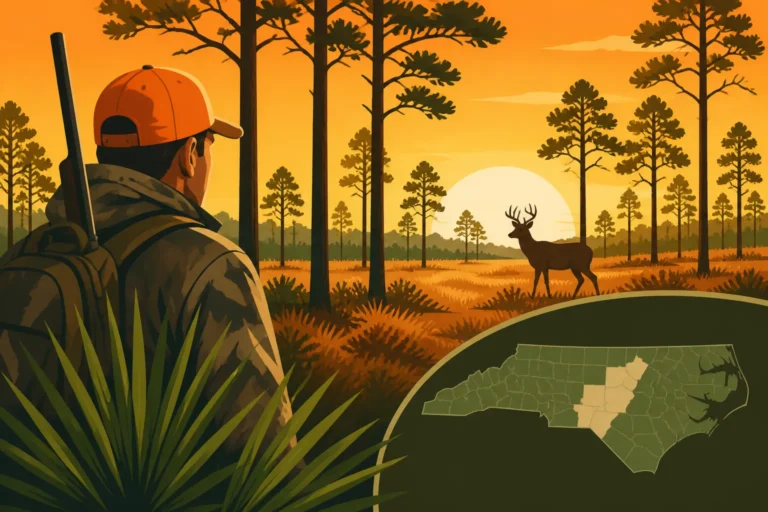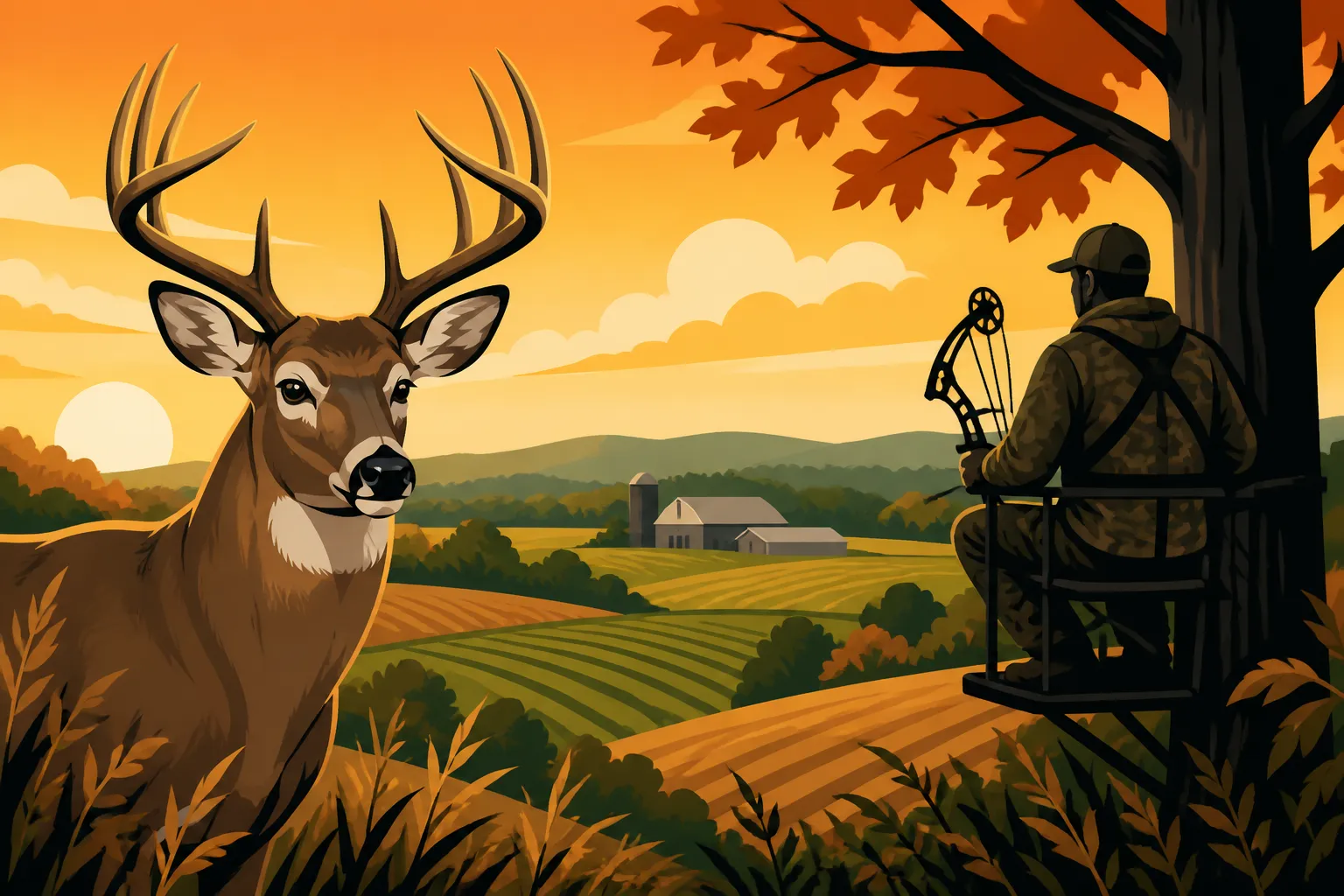
Hunting Piedmont Farmland Deer
Hunting deer in North Carolina's vast Piedmont region, especially around its sprawling farmlands, can be incredibly rewarding, but it often feels like you're chasing ghosts. These deer are smart, pressured, and blend seamlessly into a landscape that's constantly changing with crop cycles and human activity. This guide is designed to cut through that frustration, offering realistic, in-depth strategies to help you consistently find success on the ground.
Understanding Piedmont Deer Behavior in Farmland
When you're chasing deer in the Piedmont, particularly near agricultural fields, you're dealing with a different animal than the deep-woods buck. These deer are accustomed to human presence, the sounds of tractors, and the ebb and flow of farming life. Their patterns are intrinsically linked to the crops being grown and the small pockets of cover available. It’s a constant chess match, and understanding their motivations is your first step to winning.
Daily Patterns and Habitat Use
Piedmont farmland deer are masters of efficiency. They often live in much smaller home ranges than their mountain cousins, moving between readily available food sources and dense cover. Their days revolve around feeding in the early morning and late evening, usually in crop fields like soybeans, corn, or winter wheat, and then retreating to thick, often overlooked bedding areas during the daylight hours. These bedding spots aren't always vast tracts of timber; they can be as small as a fencerow grown up with briars, a creek bottom thicket, or even a small woodlot nestled between two fields. The deer are looking for security cover that offers concealment from predators and hunters, but also easy access to their primary food.
During the growing season, a standing cornfield or soybean field provides both food and incredible cover, allowing deer to move and bed within them. Once those crops are harvested, their entire world shifts. They'll transition to gleaning leftover grain or seeking out new food sources, often forcing them into more visible movements along field edges or into smaller, more defined pockets of timber. Understanding these seasonal shifts in habitat use is paramount. You might find a big buck consistently using a particular corner of a bean field in September, but come November, after harvest, he's likely moved his primary activity to a hardwood bottom 200 yards away, focused on acorns. This adaptability makes hunting them both challenging and exciting.
Rutting Behavior in Farm Country
The North Carolina rut, specifically in the Piedmont, can be explosive, but it's often more visible along field edges and in smaller timber blocks than in dense, unbroken forest. Unlike vast wilderness areas where bucks might roam for miles, a Piedmont buck looking for does might cruise the edges of a cut cornfield, scent-checking every entrance into a thicket, or travel a brushy fencerow connecting two woodlots. The concentrated nature of deer populations in these fragmented habitats means that when a doe comes into estrus, she can attract immediate attention, and the chase often unfolds in more open settings.
Scrape lines and rub lines are still critical indicators, but they might be found along the edges of a field, paralleling a creek, or on the fringes of a small, isolated woodlot. Bucks will use these visible travel corridors to leave their sign and scent-check for does. During peak rut, don't be surprised to see bucks actively chasing does across open fields in broad daylight, especially during overcast days or right before a weather front. Hunters who position themselves strategically on points of land jutting into fields, or in saddles that connect two timber blocks bordering fields, often have the best luck during this intense period. Keep in mind that a buck might just be passing through a particular field edge, so understanding Hunting the Rut in the Eastern Zones can help you pinpoint those crucial movement times.
Scouting Strategies for Piedmont Farmland
Successful hunting in the Piedmont begins long before you ever step into a stand. It starts with meticulous scouting, often from a distance, and definitely with a good understanding of the landscape. Farmland hunting demands a slightly different approach than typical public land scouting, as much of your intel will come from observing crop cycles and identifying subtle deer sign in high-traffic areas.
Reading Agricultural Fields
Agricultural fields are essentially giant buffet tables for deer, but their appeal changes throughout the season. Early in the archery season, standing soybeans or corn offer both forage and sanctuary. Deer will bed down deep within these fields, emerging at dusk to feed. Your scouting here involves looking for trails entering and exiting the fields, particularly where funnel points or pinch points occur – think narrow strips of timber or thick fencerows that force deer movement into a predictable lane. As crops mature, deer will focus on the most palatable options; for instance, they might prefer the protein-rich soybeans in summer and early fall, then switch to corn or peanuts after they dry down.
Once the harvest comes, typically late fall, the game changes entirely. Now, those fields become "gleaning" areas, and deer will move through them, picking up fallen grain or residual crops. This is when a cut cornfield can be a magnet for deer, especially if there's a nearby woodlot for bedding. You'll want to look for fresh tracks and droppings in the stubble, indicating recent activity. Sometimes, deer will even dig up leftover peanuts or soybeans. Using aerial imagery, perhaps through mapping software like GoHunt, allows you to identify these crop types and how deer might transition between them, giving you a massive advantage before you even set foot on the property.
Locating Key Cover and Travel Corridors
In the fragmented landscape of the Piedmont, identifying bedding cover and travel corridors is paramount. Deer aren't living in vast, unbroken forests. Instead, they rely on smaller, often linear, pieces of cover. These can include overgrown fencerows that act as natural highways between fields and woodlots, thick creek bottoms that offer concealment and water, or even small, dense pine thickets that might only be a few acres in size. These overlooked pockets of cover are where mature bucks often seek refuge during daylight hours.
Your scouting should involve methodical investigation of these areas. Look for well-worn trails, fresh rubs on small trees, and active scrape lines, especially where a fencerow meets a timber edge or where a creek bottom narrows. GoHunt can be incredibly helpful here, allowing you to trace these linear features, identify small woodlots, and pick out potential pinch points or funnels where deer movement is concentrated. Don't forget the power of trail cameras. Placing them strategically on these travel corridors, especially where they emerge from cover to enter a field, can give you invaluable insight into deer movement times and patterns. Remember, Reading Aerial Photos for Piedmont Deer is a skill worth developing to unlock these hidden gems.
Effective Hunting Tactics for Field Edges and Woodlots
Hunting Piedmont farmland deer often means adapting your strategies to smaller properties, closer proximity to homes, and the constant influence of agricultural activity. It’s not about covering vast ground; it’s about micro-managing your approach to specific, high-percentage locations.
Stand Placement on Field Edges
Setting up a treestand or ground blind on a field edge is a classic Piedmont tactic, but success hinges on meticulous placement and understanding deer entry/exit routes. For evening hunts, you want to be positioned downwind of where deer are likely to enter the field to feed. This often means scouting the edge of the field intensely for fresh tracks and trails. Deer often enter fields at specific points, especially where the timber line is irregular, or where a drain or low spot offers a discreet entry. Concealment is key – use mature oak trees, dense cedar thickets, or a natural point of timber that juts into the field to break up your silhouette.
Conversely, morning hunts on field edges are often more effective if you anticipate deer leaving the field to return to bedding cover. Position yourself to intercept them as they filter back into the woods, again, always mindful of the wind. A good strategy is to set up a stand back in the timber, 50-100 yards from the field edge, overlooking a known travel corridor that leads from the field to a thick bedding area. This allows deer to feel safer entering the field, and you intercept them as they transition. For more specific advice, check out Setting Up on a Piedmont Field Edge.
| Field Type | Deer Appeal | Best Time to Hunt | Stand Placement | Key Sign to Look For |
|---|---|---|---|---|
| Standing Corn | Food & Cover | Early Season (AM/PM) | Inside edges, travel lanes | Trails, broken stalks, droppings |
| Cut Corn | Gleaning | Late Season (PM) | Downwind, overlooking residual | Tracks in stubble, digging |
| Soybeans | Food & Cover | Early Season (AM/PM) | Funnels, pinch points | Browsing, tracks |
| Cut Soybeans | Gleaning | Late Season (PM) | Overlooking low spots/puddles | Tracks in mud, scattered beans |
| Winter Wheat | Food | Late Fall/Winter (AM/PM) | Edge of woodlot, near bedding | Grazing patterns, droppings |
| Pastures/Clover | Food | All Season (AM/PM) | Near woods edge, transition zones | Grazing, fresh droppings |
Still-Hunting and Drives in Smaller Tracts
While stand hunting is prevalent, still-hunting and small deer drives can be incredibly effective in the fragmented Piedmont landscape, especially on smaller, private tracts where deer are often pushed into specific areas. Still-hunting involves moving slowly and deliberately through a woodlot or creek bottom, taking a few steps, then pausing to scan for movement. This requires immense patience and an understanding of how to use cover to your advantage. Focus on areas with good visibility but also dense enough cover that deer feel secure. Creek bottoms that wind through fields are prime candidates, as are those brushy fencerows. Pay close attention to wind direction, moving into the wind or with a crosswind to keep your scent from blowing ahead of you.
For small deer drives, typically involving three or four hunters, communication and pre-planning are crucial. Identify a thicket or woodlot where deer are likely bedding. Position one or two "posters" on the downwind side, covering likely escape routes. Then, have one or two "drivers" slowly and quietly push through the cover, making just enough noise to encourage deer to move, not to bolt. This tactic can work wonders in pushing deer from a small, dense pine stand into an open cut field where posters are waiting, or from a creek bottom up onto a ridge. Safety is paramount; ensure everyone knows the hunting boundaries and safe shooting lanes before the drive begins. Deer Drives With Three or Four Hunters offers more specific advice on coordinating these small-scale hunts effectively and safely.
Navigating Private Land Access Challenges
The Piedmont is largely private land, which means gaining access is often the biggest hurdle to hunting success. It requires a different skill set than public land hunting, emphasizing communication, respect, and building trust. Many hunters get discouraged by "No Trespassing" signs, but a polite, well-prepared approach can often open doors you never thought possible.
Building Relationships with Landowners
The key to hunting private land in North Carolina, especially in the Piedmont, is forging genuine relationships with landowners. Don't just show up on their doorstep the week before season with a gun and a request. Start early, ideally in the off-season. Approach them respectfully, introduce yourself, and explain your interest in hunting. Offer to help with chores around the farm – mending fences, moving hay, picking up trash, or even helping with repair work. This demonstrates that you're not just there to take, but to contribute. Many farmers deal with crop damage from deer and hogs, so offering to help manage those populations can be a huge selling point.
Be clear about your intentions: how many people will be hunting, what species you're after, and how often you plan to be there. Be flexible and understand their needs. If they have cattle in a field, don't hunt it. If they're harvesting, stay away. Always leave the property cleaner than you found it. A small gift at the end of the season, like some venison summer sausage or a gift certificate to a local restaurant, can go a long way in showing your appreciation and ensuring continued access for years to come. Remember, you're building a relationship, not just asking for permission to hunt.
Understanding Trespass Laws and Written Permission
North Carolina's trespass laws are designed to protect private property rights, and as a hunter, it's your responsibility to understand and abide by them. Generally, to hunt on private land, you need permission from the landowner. While verbal permission is often sufficient, written permission is always best, especially for deer hunting. It protects both you and the landowner by clearly defining the terms of access, specific areas you can hunt, and any restrictions they might have. Some landowners may require it, and it can save you a lot of headaches if there's ever a misunderstanding or a complaint.
When approaching a landowner, have a simple written permission form ready that they can sign. This can include dates of access, names of hunters, vehicle descriptions, and any specific areas to avoid. Always respect "No Trespassing" signs and clearly marked boundaries. If you accidentally retrieve game that ran onto a neighboring property, you are still required to get permission from that landowner before entering their land, even if it's just to pick up your deer. Violating trespass laws can lead to fines, loss of hunting privileges, and, most importantly, can damage the reputation of hunters across the state. For comprehensive details on your responsibilities, consult Do You Need Written Permission in North Carolina?.
Late Season Considerations and Food Sources
As the calendar flips from fall to winter, deer hunting in the Piedmont takes on a different character. The leaves are down, crops are out, and deer are heavily focused on remaining food sources and conserving energy. This period can be challenging, but it also offers unique opportunities for the diligent hunter.
Post-Harvest Strategies
After the combines have rolled through, removing the vast majority of cover and food from many fields, deer in the Piedmont must adapt quickly. Their focus shifts dramatically to whatever persistent food sources remain. This is when the "leftovers" become critically important. For instance, a cut cornfield still has a tremendous amount of residual grain on the ground, and deer will spend hours, particularly in the evenings, gleaning these kernels. A hunter positioned downwind of a cut cornfield, perhaps with a well-brushed-in ground blind, can have excellent success.
Beyond gleaning, deer will also turn their attention to natural food sources. Acorns, if there was a good mast crop, will be heavily utilized, even if they're harder to find under leaf litter. Persistent soft mast, like persimmons that might still be clinging to branches, can also be a magnet. Farmers who plant winter food plots with crops like winter wheat, clover, or brassicas become incredibly attractive. These green fields provide vital nutrition when other food sources are scarce. Scouting these areas for fresh tracks and browsing pressure is key. Deer will often bed in the thickest cover available nearby and then transition to these food sources in the late afternoon. This is where Late-Season Food Sources for North Carolina Whitetails really shines as a hunting strategy.
Cold Weather Sitting and Pressure
Late season in the North Carolina Piedmont can bring some truly cold weather, occasionally even snow or ice. Deer react to these conditions by seeking out the most calorie-dense food sources and minimizing unnecessary movement. After a sharp cold front, deer often feed heavily, making the days immediately following a significant temperature drop excellent hunting opportunities. However, they also become very sensitive to pressure. With the leaves off the trees, visibility is increased, and deer are more likely to spot hunters or hear them approaching.
Adjusting your tactics means becoming even more stealthy. Consider using a ground blind for better concealment in leafless woods, or choosing stand locations that offer maximum visibility while minimizing your own exposure. Focus on sunny, south-facing slopes in woodlots for bedding, as deer will seek warmth there. On bitter cold days, they might even bed closer to their preferred food source to conserve energy. Hunter pressure also concentrates deer into smaller, overlooked pockets of cover. Don't be afraid to walk a little further or explore thick, nasty areas that other hunters avoid. These can often hold mature deer that have learned to evade detection by finding sanctuary in the roughest terrain.
Essential Gear for Piedmont Deer Hunting
Having the right gear for Piedmont deer hunting isn't about having the most expensive equipment, but rather selecting tools that enhance your effectiveness in this specific environment. From navigation to concealment, your gear choices can make a significant difference.
Navigation and Scouting Tools
In a landscape characterized by fragmented woodlots and numerous property lines, effective navigation is critical. While a traditional compass and paper map are always good to have, modern GPS devices and smartphone apps have become indispensable. Apps like GoHunt allow you to download offline maps, mark waypoints for stand locations, track your movement, and most importantly, clearly delineate property boundaries. This is especially vital when hunting private land bordering other private tracts or public game lands. Knowing exactly where you are and where the boundaries lie prevents accidental trespass and helps you understand how deer might be moving along those edges.
A good pair of binoculars is also essential, especially when scouting agricultural fields from a distance or glassing across open areas. An 8×42 or 10×42 power is usually sufficient, offering a wide field of view and enough magnification to spot deer movement or subtle sign from afar. A rangefinder is also a valuable tool for confirming distances to potential shooting lanes, especially in the varied terrain of the Piedmont where distances can be deceiving. Don't forget a reliable headlamp for early morning entries and late evening exits; it's safer and less disruptive than a handheld flashlight. For detailed navigation in complex terrain, knowing how to use Scouting With the NC Wildlife App or other digital mapping tools can save you countless hours and prevent frustration.
Concealment and Comfort
Concealment is paramount in the often-open settings of Piedmont farmland. Camouflage clothing that blends with the browns, grays, and muted greens of winter woods and agricultural fields is crucial. Consider layering your clothing to adapt to fluctuating North Carolina temperatures, which can swing wildly from morning chill to midday warmth. A good base layer, insulating mid-layers, and a quiet, waterproof outer shell will keep you comfortable and silent in various conditions. Don't forget to check North Carolina's North Carolina Blaze Orange Requirements to ensure you meet safety standards, especially during firearm seasons. Even during archery season, some hunters opt for an orange vest walking in and out of their stands.
Comfort in your stand is equally important, particularly during long late-season sits. A comfortable, quiet treestand or a well-brushed-in ground blind that offers protection from the wind can make a huge difference. Insulated boots are a must for keeping your feet warm and dry, particularly in the damp conditions often found in creek bottoms or low-lying fields. Finally, scent control is always a good idea. While you'll never be 100% scent-free, using scent-eliminating sprays, washing clothes in unscented detergent, and storing them properly can reduce your human odor and give you an edge over wary Piedmont deer.
Disclaimer
Hunting is an inherently dangerous activity. Always prioritize safety, understand and follow all North Carolina hunting regulations, and respect private property. This guide is for informational purposes only and should not replace proper hunter education or professional advice. Conditions and regulations can change, so always verify the latest information with the North Carolina Wildlife Resources Commission before heading afield.