Upland Guns for Mountain Grouse Cover
Hunting ruffed grouse in North Carolina's mountains is a special kind of challenge, one that tests your patience, your dog's nose, and certainly your shotgun handling. The dense cover, steep terrain, and lightning-fast flushes can make you feel like you're constantly fighting the mountain itself, often leaving you wondering if your trusty old scattergun is truly up to the task. This guide is all about helping you understand the specific demands of grouse hunting in our state and choosing the ideal upland gun to conquer those unique North Carolina conditions.
The Unique Challenge of North Carolina Grouse Hunting
North Carolina's mountain grouse hunting isn't for the faint of heart or the slow of swing. It’s a pursuit defined by rugged beauty and even more rugged conditions. We’re not talking about manicured coverts or wide-open timber where you have time to shoulder and aim. This is close-quarters combat with a feathered rocket, and your gear, especially your gun, needs to be an extension of your instinct, not a hindrance.
Decoding Mountain Grouse Habitat
When you're slogging through the Blue Ridge, you're not just walking; you're often climbing over fallen timber, pushing through dense rhododendron thickets, and navigating steep, rocky slopes. The grouse here love that impenetrable stuff—the kind of cover that makes you question your life choices but also promises a bird. Think of the shaded, moist pockets filled with mountain laurel, greenbrier, and young hardwoods, especially along the Blue Ridge Escarpment. These areas provide both food and protection, but they also severely limit your line of sight and your reaction time. It’s a dynamic environment that requires a gun that can be carried comfortably for miles and brought to bear instantly.
The Elusive Flush and Quick Shot
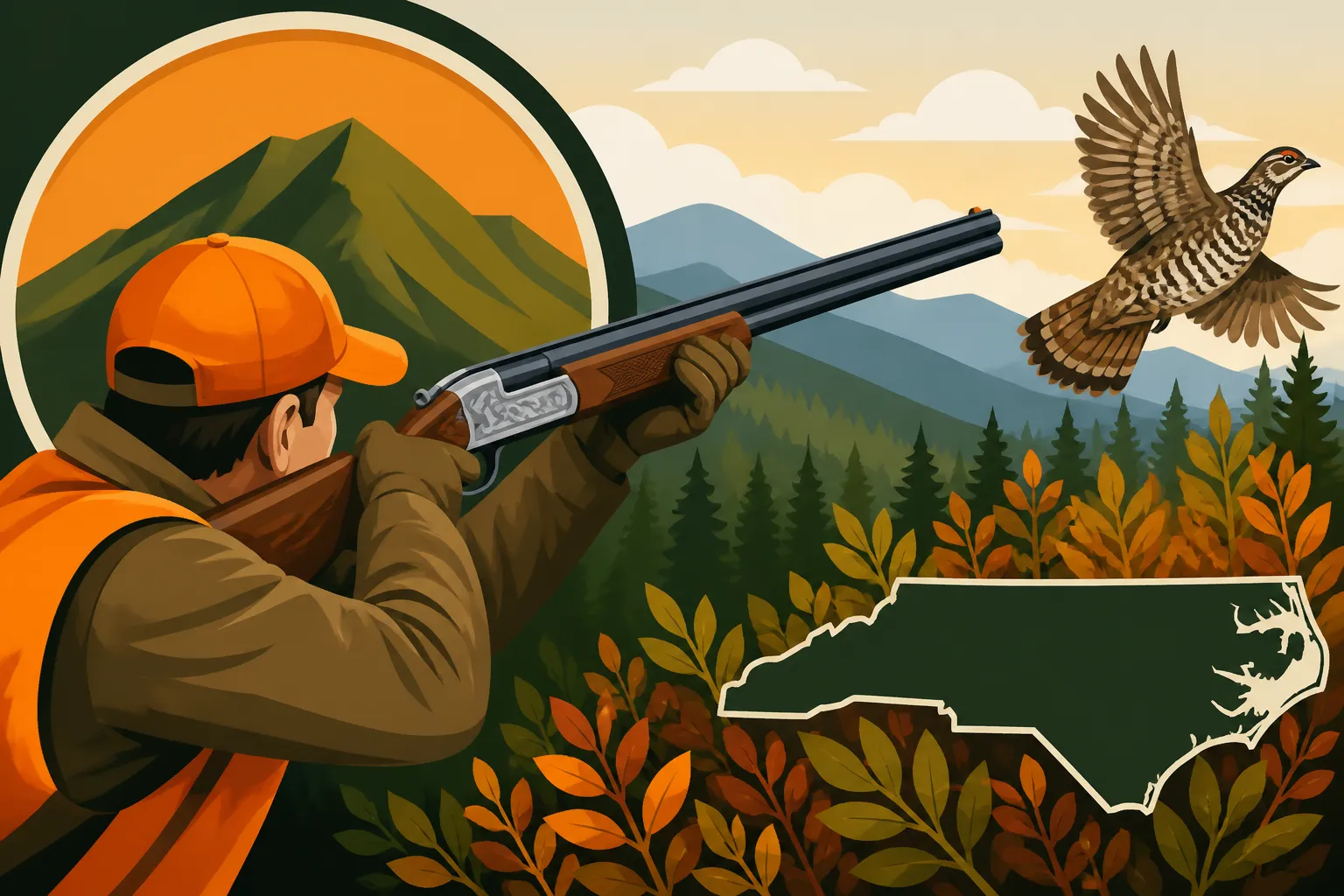
The North Carolina mountain grouse is a master of camouflage and surprise. Unlike a covey of quail that might hold tight or a pheasant that gives you a long run, a grouse often "explodes" from cover right at your feet or within mere yards, often disappearing behind a tree trunk or into a briar patch before you can even register what happened. This isn't a long-range shooting game; it's a test of reflexes, muscle memory, and an intimate knowledge of your shotgun. You'll rarely get more than a split second, sometimes less, to mount your gun, find the target, and pull the trigger before the bird is gone forever. This scenario demands a gun that points naturally, swings easily, and presents a forgiving pattern at very close ranges.
Choosing the Right Shotgun Type
The market offers a dazzling array of shotguns, but for the specific demands of North Carolina grouse hunting, some stand out more than others. Each type has its own personality, its own strengths and weaknesses, and understanding these will help you pick a partner for those long, steep days in the woods.
Double Barrels: Swift and Nimble for the Woods
Double barrels, whether side-by-side (SxS) or over-under (O/U), are the traditional choice for upland hunters, and for good reason. Their inherent balance and often shorter overall length make them incredibly quick to shoulder and swing in tight cover. A classic SxS with 26-inch barrels feels like a natural extension of your arms as you navigate dense woods, allowing for fluid movement and rapid target acquisition when a bird flushes. The ability to have two different chokes ready at a moment's notice (say, improved cylinder and modified) is also a distinct advantage, letting you pick the right pattern for the distance of the flush.
Over-unders offer a similar advantage in terms of balance and handling, often with a slightly narrower sighting plane that some hunters prefer. Both styles tend to be lighter than many semi-autos or pumps, a huge plus when you're hiking for hours up and down mountain slopes. The lack of a cycling mechanism in the forend means a slimmer profile, too, which can make a surprising difference when your hands are cold and tired, and you need to grab the gun quickly. For sheer nimbleness and a classic aesthetic that speaks to the soul of upland hunting, a double barrel is hard to beat.
Pump-Actions and Semi-Automatic Shotguns: Reliable Workhorses
While double barrels often get the romantic nod, modern pump-action and semi-automatic shotguns are incredibly effective tools for grouse hunting, especially if you prioritize reliability and shot capacity. A good pump gun, like a Remington 870 or Mossberg 500, is virtually indestructible, shrugging off mud, rain, and the inevitable bumps and scrapes of mountain hunting. Their simplicity of operation means fewer things to go wrong when you're miles from the truck, and their ability to cycle a variety of loads reliably is a big plus. However, they can sometimes feel a bit longer or bulkier than a double barrel, which might be a consideration in the thickest cover.
Semi-automatic shotguns, such as a Benelli Montefeltro or Beretta A400, offer the advantage of recoil absorption, making them more comfortable to shoot, especially if you're sensitive to recoil. Their quick follow-up shots can be invaluable when you're trying to put more pellets on a fast-moving bird, or if you're lucky enough to flush two birds close together. However, some semi-autos can be finicky with very light loads, which are often preferred for grouse, and their gas systems can be more susceptible to fouling in wet, dirty conditions compared to a pump or a break-action. When considering a semi-auto, looking at models known for their reliability with light field loads is crucial.
Gauge, Choke, and Ammunition for Grouse
When a grouse erupts from cover, you need a pattern that's wide enough to catch it quickly, but dense enough to bring it down cleanly. This balance is achieved through the right combination of gauge, choke, and ammunition choice. It's a dance between spread and density, and for North Carolina's mountain grouse, a nuanced approach often yields the best results.
The Gauge Debate: 20, 28, or 12?
For North Carolina grouse, lighter is often better, and this applies directly to your choice of shotgun gauge. While a 12-gauge is certainly capable, its heavier frame and increased recoil can be a drawback on long hunts through steep terrain. Many experienced grouse hunters gravitate towards the 20-gauge, which offers a fantastic balance of light weight, manageable recoil, and ample knockdown power for these relatively small birds. It’s light enough to carry all day, quick enough to mount, and potent enough to deliver a clean kill.
The 28-gauge is often called the "gentleman's gauge" or the "grouse gauge" for good reason. Its incredibly light recoil and even lighter guns make for a delightful hunting experience, and its patterns, when properly choked, are surprisingly effective. For close-range grouse, the 28-gauge is truly a joy to carry and shoot. If you're looking for an even more nimble package and primarily hunt at close ranges, don't overlook it. While less common, some dedicated grouse hunters even utilize the .410, though this requires exceptional shooting skill due to its smaller pattern and fewer pellets.
Mastering Your Pattern with Open Chokes
Given the extremely close ranges at which most grouse flushes occur, using an open choke is paramount. A full or modified choke, while great for pheasants or ducks, will result in patterns that are far too tight for a grouse flushing at 10 to 20 yards, leading to missed birds or excessive shot damage. The ideal chokes for grouse hunting are improved cylinder (IC) or even skeet. These chokes provide a wider, more forgiving pattern that increases your chances of connecting with a rapidly moving target at close quarters.
For a double barrel, having an improved cylinder in the first barrel and a light modified or even another improved cylinder in the second barrel is a popular and effective setup. This allows for a quick, wide pattern on the initial flush, with a slightly tighter (but still open) option if the bird somehow presents a longer follow-up shot. Experimentation at the patterning board with different chokes and ammunition is crucial. You want to see a consistent, even spread without large holes, especially at the distances you anticipate most of your shots. This is where researching patterns and ballistic data, perhaps using resources found on platforms like GoHunt, can really inform your decisions before you ever step foot in the woods.
Selecting the Right Shot Size and Load
Just like with choke, when it comes to ammunition for North Carolina grouse, less is often more. You don't need heavy magnum loads designed for waterfowl or tough pheasants. Instead, focus on light field loads with smaller shot sizes. Number 7.5 or 8 shot are the most common choices for grouse. These smaller pellets create a denser pattern, increasing the likelihood of multiple pellet strikes on a small bird without over-penetration or excessive meat damage. A typical load for a 20-gauge might be 7/8 oz or 1 oz of 7.5 or 8 shot, while a 12-gauge might use 1 oz or 1 1/8 oz.
The goal is to deliver enough energy to cleanly kill the bird without obliterating it. Avoid anything larger than 6 shot unless you're specifically targeting other species simultaneously. The lighter recoil of these field loads also contributes to a more pleasant hunting experience and allows for quicker recovery for follow-up shots. Always ensure your chosen ammunition patterns well with your specific gun and choke combination. A few boxes spent at the range patterning your gun will pay dividends in the field.
| Shotgun Type | Gauge Options | Typical Choke | Pros for Grouse Hunting | Cons for Grouse Hunting |
|---|---|---|---|---|
| Side-by-Side (SxS) | 20, 28, 12 | IC/Skeet & Mod | Quick handling, balanced, classic feel, two chokes | Lower capacity (2 shots), often higher cost |
| Over-Under (O/U) | 20, 28, 12 | IC/Skeet & Mod | Good balance, quick swing, two chokes | Lower capacity (2 shots), can be heavier than SxS |
| Pump-Action | 20, 12 | IC/Skeet | Reliable, durable, cost-effective, higher capacity | Can be bulkier, slower follow-up shot than semi-auto |
| Semi-Automatic | 20, 12 | IC/Skeet | Reduced recoil, fast follow-up, higher capacity | Can be finicky with light loads, more complex to clean |
Barrel Length and Handling in Thick Cover
In the challenging terrain of North Carolina's grouse country, every inch of your shotgun matters. A barrel that feels perfectly balanced on the trap range can become a cumbersome snagging device when you're wading through dense undergrowth. The key is to find a length that offers maximum maneuverability without sacrificing the natural swing and pointing characteristics you rely on.
Maneuverability in Rhododendron Thickets
The signature cover for North Carolina mountain grouse—those infamous rhododendron thickets, mountain laurel tangles, and dense sapling stands—demands a shotgun with a shorter barrel. Longer barrels, anything over 28 inches, tend to catch on branches, snag on briars, and generally impede your progress, especially when trying to quickly mount the gun. Shorter barrels, typically 24 to 26 inches for a double barrel or 26 to 28 inches for a pump or semi-auto, make a world of difference. They allow you to turn and point more quickly, get the gun into shooting position faster, and move through the woods with less effort.
Imagine a bird flushing to your left, back behind a dense laurel bush. With a longer barrel, you'd be fighting the foliage, losing precious fractions of a second. A shorter barrel allows for a tighter arc of movement, meaning you can get the muzzle on target faster and through a smaller opening. This maneuverability is not just about convenience; it directly impacts your ability to get a shot off on these notoriously fast-flushing birds.
The Art of a Balanced Swing
While a shorter barrel is great for navigating dense cover, you still need a gun that swings naturally and smoothly. A well-balanced shotgun feels like it wants to point itself, and the weight distribution plays a huge role in this. Too much weight forward, and the gun feels sluggish; too much weight rearward, and it feels whippy and hard to control. For grouse hunting, where shots are often taken on the move and in awkward positions, a neutral balance that allows for a smooth, intuitive swing is ideal.
Often, shorter barrels contribute to this balance, especially on lighter-framed guns. The overall length and weight distribution combine to create a shotgun that you can shoulder and swing without thinking, letting your instincts take over when that bird erupts. When you're considering a shotgun, shoulder it several times, swing it like you're tracking a bird, and even try it with a blindfold on (safely, of course!) to feel how naturally it comes to your eye. The gun that feels like it disappears into your hands is the one that will serve you best in the chaos of a grouse flush. You'll thank yourself for this thoughtful choice miles into a long day of Grouse Hunting the Blue Ridge Escarpment.
Accessories and Maintenance for the Upland Hunter
Beyond the gun itself, a few key accessories and a diligent maintenance routine can significantly enhance your North Carolina grouse hunting experience. The mountain environment is tough on gear, and being prepared means your focus can stay on the hunt, not on a malfunctioning gun or aching shoulders.
Slings and Carrying Comfort for Long Hauls
Grouse hunting in North Carolina means covering serious ground, often miles of challenging terrain. Carrying your shotgun by hand for hours on end will quickly tire you out and become a nuisance. A good quality sling is absolutely essential for hands-free climbing, navigating, and even retrieving your dog. Look for a sling that is wide, comfortable, and has a good grip to prevent it from sliding off your shoulder, especially when wearing a heavier coat or vest. Materials like neoprene or padded nylon are excellent choices.
A quick-adjust sling is a huge bonus, allowing you to shorten it for secure carry while bushwhacking, and then lengthen it quickly when you want to bring the gun to your shoulder for a shot. This small detail can make a massive difference in your comfort and endurance over a long day. You might even consider a setup like those reviewed on GoHunt for optimal carrying on steep inclines and through thick brush. Your back and shoulders will thank you when you're still fresh enough to focus on the next flush after miles of hiking in places like Pisgah National Forest.
Protecting Your Gun from Mountain Elements
The North Carolina mountains are beautiful but can also be unforgiving, with sudden rain showers, damp fog, and abrasive grit. Your upland gun needs to be able to withstand these elements. While modern finishes are quite robust, taking steps to protect your investment is smart. After every hunt, especially wet ones, wipe down your gun thoroughly, paying close attention to metal surfaces to prevent rust. A light coat of gun oil on exterior metal parts can go a long way.
Internally, moisture can also be an issue. If your gun gets soaked, disassembling it (if you're comfortable doing so) to dry and lightly oil internal components can prevent long-term damage. Pay attention to the bore, running a bore snake or patches through it to remove moisture and fouling. For those days when the weather is truly abysmal, consider a simple gun sock or cover to offer an extra layer of protection during transit or breaks in the weather. Keeping your gun clean and well-maintained ensures it will function flawlessly when that next grouse bursts from the cover.
Disclaimer
This article is for general informational purposes only and does not constitute professional advice. Laws, prices and regulations vary by location and change over time. Consult a qualified professional for guidance on your specific situation.