Layout Blinds and Marsh Boats
For waterfowl hunters across North Carolina, the struggle for effective concealment can be a real headache. Whether you're trying to disappear into a vast cut agricultural field or melt away into the expansive, featureless marsh of a coastal sound, Mother Nature often provides little in the way of natural cover. This guide dives deep into two of the most essential tools for waterfowl hunters facing these challenges: layout blinds and marsh boats, exploring how they offer the critical advantage you need to put birds in the bag.
The Diverse North Carolina Waterfowl Landscape
North Carolina offers an incredible variety of waterfowl hunting opportunities, from the vast coastal sounds to inland agricultural fields and winding rivers. Each environment presents its own unique set of challenges and demands specific concealment and access strategies. Understanding these diverse landscapes is the first step in choosing the right gear.
Coastal Plain Diversity: Sounds, Rivers, and Impoundments
The North Carolina Coastal Plain is a waterfowl mecca, drawing ducks and geese down the Atlantic Flyway. However, this blessing comes with a unique set of challenges. Places like the expansive Currituck Sound are often wide-open sheets of water, seemingly devoid of any natural cover tall enough to hide a standing hunter. Ducks and geese have incredible eyesight, and they've seen every trick in the book. Trying to hide behind a few sparse reeds in open water is a recipe for flaring birds and a frustrating morning. Similarly, the myriad coastal rivers, from the Roanoke to the Pamlico, feature sprawling oxbows and flooded timber, but also wide-open stretches where traditional shore blinds are impossible. Even managed impoundments, designed to attract waterfowl, often have low, exposed dikes or shallow edges that offer little natural concealment, especially for a large hunting party. The frustration here is palpable; you know the birds are using these areas, but getting close and staying hidden feels like an impossible task.
Piedmont Ponds and Agricultural Fields
Moving inland, the Piedmont region, while not typically known for its vast waterfowl numbers like the coast, still offers fantastic hunting opportunities on smaller farm ponds and agricultural fields. But again, concealment is king, and often in short supply. Picture a freshly cut corn or soybean field stretching for acres, or a small farm pond with manicured banks and no natural vegetation taller than your boots. Geese, in particular, are notorious for their ability to spot anything out of place from incredible distances. Ducks, too, will circle high and identify anything that looks "wrong" before committing to a decoy spread. Hunters often try to make do with a handful of cornstalks or a low ditch, only to watch flock after flock veer off at the last minute. This constant battle against wary eyes in wide-open spaces is precisely where specialized gear truly shines, turning what feels like an impossible situation into a successful hunt.
Layout Blinds: Your Concealed Edge
When hunting fields or open, shallow water, the concept is simple: get as low as possible and blend in perfectly. That's where layout blinds become absolutely indispensable. They are specifically designed to make you disappear into the landscape, mimicking natural clumps of vegetation or irregularities in the ground.
Types of Layout Blinds for Different Terrain
The market offers a great variety of layout blinds, each tailored for specific hunting scenarios. For those long days in vast agricultural landscapes, traditional low-profile field blinds are your best friend. These are typically aluminum-framed structures covered in camouflage fabric, designed to lay flat on the ground. They feature stubble straps galore, allowing you to weave in local vegetation like corn stalks, wheat stubble, or even bare dirt, making the blind virtually vanish. Brands like Avery, Final Approach, and Rogers Sporting Goods offer excellent models that provide comfortable, dry shelter while keeping you hidden. Setting up these blinds is usually quick, but brushing them in thoroughly takes time and attention to detail.
Then you have floating layout blinds, which are a game-changer for shallow open water, marsh edges, or even flooded timber where dry ground is nonexistent. These blinds have a sealed bottom, sometimes even a small pontoon system, that allows them to float just above the waterline. They provide a low profile while keeping you dry and warm in water that might be too shallow for a full marsh boat but too deep for a field blind. Many models even include dog platforms, so your retriever has a comfortable, concealed spot to await commands. Finally, there are pop-up or panel blinds, which offer a bit more versatility. While not as low-profile as a traditional field layout, they can be quickly erected along a field edge, at the base of a larger clump of bushes, or even on a small island in a pond, providing instant cover. For serious hunters, checking resources like GoHunt can help you scout and visualize exactly where each type of blind would be most effective on your chosen hunting grounds, letting you strategize before you even leave home.
Concealment Strategies and Field Dressing
Having a layout blind is one thing; making it disappear is another entirely. The key to successful layout blind hunting lies in meticulous concealment, often referred to as "field dressing" or "brushing in." This isn't just about throwing a few handfuls of grass over the top; it's an art form. First, always match the surrounding vegetation perfectly. If you're hunting a cut cornfield, you need to be covered in cut cornstalks. If it's a wheat stubble field, that's what goes on the blind. These blinds are equipped with hundreds of stubble straps precisely for this purpose. Take the time to gather vegetation from the exact spot you're hunting and weave it into every available loop. Don't leave any unnatural-looking gaps or bare spots.
Furthermore, consider your silhouette and background. Avoid placing your blind on a ridge or against a contrasting background that will make you stand out. Instead, try to position it against a darker line of trees, a fenceline, or in a slight depression where it breaks up your outline naturally. The sun's angle can also be your friend or foe; try to set up so the sun is in the birds' eyes, or so that your blind is in shadow. Remember to brush in after you've set your decoy spread, as the decoys will help distract the birds and provide a frame of reference for how well your blind blends in. The pros of a properly brushed-in layout blind are unparalleled concealment, allowing birds to finish directly over your spread. The cons, however, include limited mobility once you're set, and the potential for discomfort if the ground is uneven or the weather turns harsh. You’re committed once you crawl in, so make sure it's perfect. You can find more specific tactics for fields in Layout Blind Hunting Coastal Plain Fields.
Comfort and Safety Considerations
While concealment is paramount, comfort and safety in a layout blind are not far behind. You're often going to be spending hours, sometimes an entire morning or afternoon, lying mostly flat in potentially cold, wet, or muddy conditions. Modern layout blinds are designed with ergonomics in mind, featuring padded backrests, headrests, and sometimes even adjustable seats to minimize strain and keep you as comfortable as possible. Look for blinds with waterproof bottoms to prevent moisture from seeping through, and sturdy frames that offer wind protection. Nothing ruins a hunt faster than being miserably cold and wet.
Safety, of course, is non-negotiable. Especially on larger public hunting areas where other hunters might be present, it's crucial to make yourself visible when you're not actively hunting. Many layout blinds come with a bright orange or blaze pink safety flag that can be deployed when birds aren't working, alerting others to your presence. This is particularly important when walking out of the field in low light or when other hunters might be moving around. Always carry basic emergency gear within reach inside your blind: a first-aid kit, a whistle, a charged phone, and enough water and snacks to last your hunt. Being comfortable and safe allows you to stay focused and make the most of your time in the field.
Marsh Boats: Navigating the North Carolina Shallows
North Carolina's vast network of sounds, rivers, and coastal marshes often presents areas that are simply inaccessible by foot. This is where marsh boats, specialized craft designed for shallow water and concealment, become an absolute necessity for waterfowl hunters.
Different Marsh Boat Designs: Skiffs, Sneak Boats, and Jon Boats
When you're trying to navigate the intricate waterways and shallow flats of North Carolina's coastal regions or the backwaters of a large river, a regular boat simply won't cut it. That's why dedicated marsh boats are so popular. Skiffs, for instance, are stable, relatively wide-bottomed boats that can carry a good amount of gear and hunters. They're excellent for setting large decoy spreads and retrieving birds, but their size can sometimes limit access to the tightest, shallowest spots.
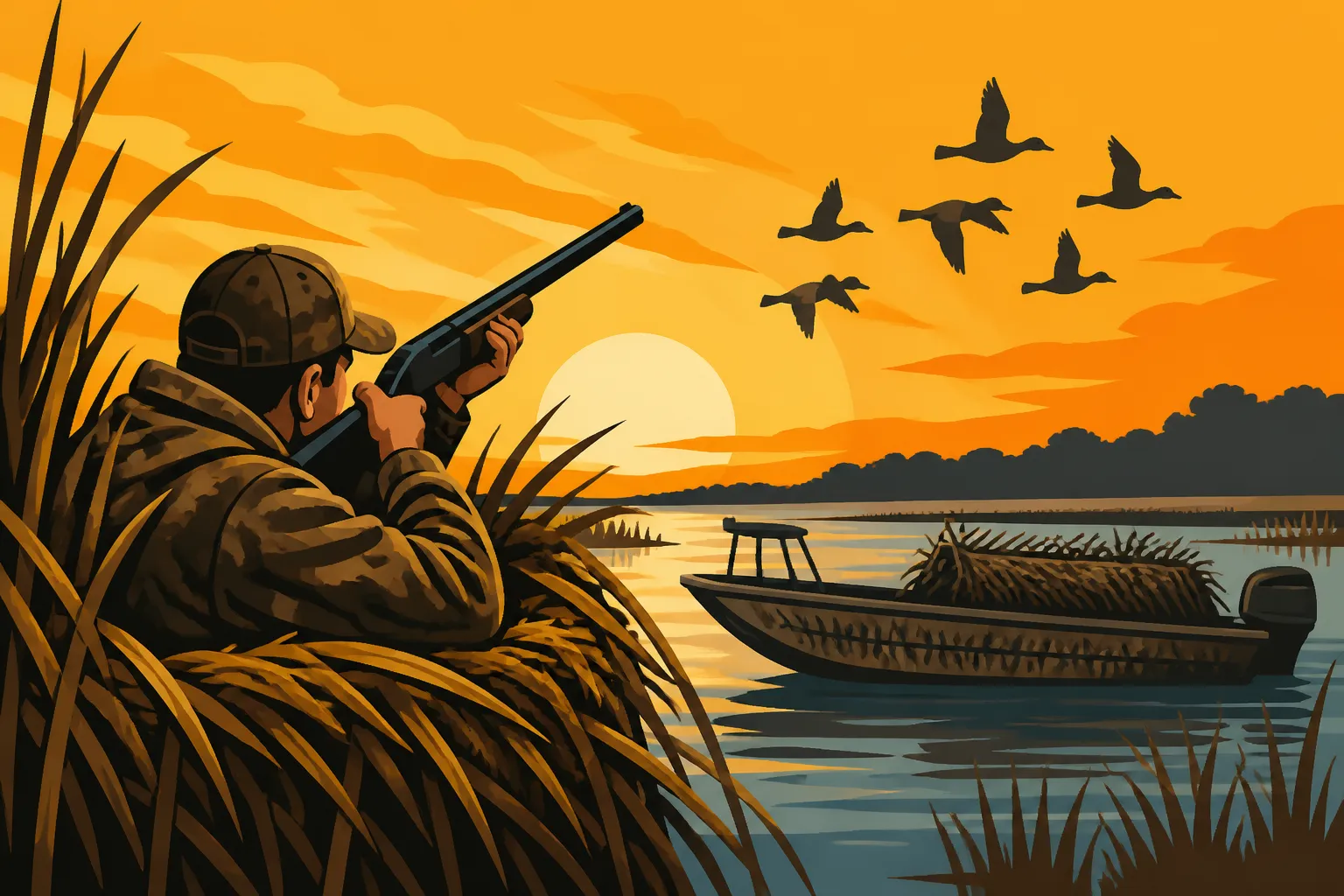
Then there are sneak boats, specifically designed for stealth and concealment. These boats typically have a very low profile, often with a camouflage pattern integrated into their design. They allow hunters to lay down, effectively becoming part of the boat, and can be easily brushed in with local vegetation. Sneak boats are usually smaller and lighter, making them ideal for solo hunters or small parties who prioritize getting into those hard-to-reach honey holes without being detected. Finally, classic jon boats, with their flat bottoms, are incredibly versatile. While not as stealthy as a dedicated sneak boat, they excel in extremely shallow water and can be easily customized with camouflage paint, blind frames, and mud motors, making them a popular choice for hunters needing a workhorse for diverse conditions. These boats are the backbone of a successful hunt in places like Currituck Sound, where getting to the birds often means crossing vast, shallow expanses.
Propulsion and Navigational Challenges
Navigating North Carolina's diverse waterways with a marsh boat is rarely a straightforward affair. While an outboard motor might get you across open water quickly, truly shallow, vegetated areas demand specialized propulsion. Mud motors, with their long shafts and propeller designs, are a godsend in places where a traditional outboard would simply churn mud or get bogged down. They're designed to push through thick vegetation, shallow sloughs, and soft bottoms, opening up hunting grounds that would otherwise be unreachable.
However, even with a mud motor, you'll still encounter conditions where only a push pole will do. These long, sturdy poles allow you to silently propel your boat through incredibly shallow water, over oyster beds, or around submerged obstacles without spooking birds. Paddles are also essential for quiet approaches, especially when you're making that final move into your desired spot before legal shooting light. Beyond propulsion, navigation itself presents challenges. North Carolina's coastal waters are notorious for shifting sandbars, hidden oyster reefs, submerged stumps, and dense floating vegetation. The tides, particularly in the sounds and tidal rivers, play a massive role; what was navigable water at high tide can become an impassable mud flat just a few hours later, potentially leaving you stranded for hours. Always check tide charts and be aware of your surroundings, especially when hunting Waterfowl Hunting Currituck Sound and the Coast.
Safety Gear and Boat Preparation
Just like any time you head out on the water, safety in a marsh boat is paramount. The wild and often remote environments where waterfowl thrive can quickly become dangerous if you're not prepared. Personal Flotation Devices (PFDs) are not just a legal requirement but a life-saving necessity. Make sure everyone on board has a properly fitting PFD and wears it, especially when moving through rough water or in cold conditions. Beyond PFDs, a well-equipped marsh boat should always have an anchor with sufficient line, extra mooring lines, and a comprehensive emergency kit that includes signaling devices like flares or an air horn, a first-aid kit, and a waterproof bag for your phone.
Before legal shooting light, when you're often running your boat in the dark, navigation lights (red/green bow lights and an all-around white stern light) are crucial for avoiding collisions with other vessels and for complying with regulations. A bailing bucket, extra fuel, and basic tools for minor engine repairs are also wise additions. Performing a thorough pre-trip check of your motor, battery, and fuel lines before every outing can prevent costly and dangerous breakdowns in remote areas. Remember, you're often far from assistance, so self-sufficiency is key.
Synergy: Combining Blinds and Boats for Ultimate Success
The true power of layout blinds and marsh boats often comes when they are used in conjunction. Rather than being isolated tools, they complement each other, unlocking new hunting possibilities and maximizing your effectiveness in diverse North Carolina waterfowl habitats.
Field Edge Layouts with Boat Access
Imagine a prime feeding field, perhaps cut corn or soybeans, that runs right up to the edge of a tidal river or a large impoundment. This is a common scenario in North Carolina, especially in the Coastal Plain. Birds will often fly off the water at dawn to feed in these fields. Here, a marsh boat becomes your invaluable transport system. You can load all your layout blinds, dozens of decoys, and gear into the boat, run swiftly and quietly (with push poles for the final approach) to a discreet spot along the field's edge, and then deploy your layout blinds directly onto the dry ground.
This strategy combines the best of both worlds: the superior concealment of a field layout blind with the efficient, often silent, access provided by a boat. It means you don't have to carry heavy gear across long, muddy fields in the dark. Once set up, the boat can be stashed away in nearby brush or anchored out of sight, ready for retrieval and bird transport. It’s an effective way to access fields that are otherwise tough to reach on foot, and it makes handling a limit of birds and packing up at the end of the hunt much easier.
Deep Marsh Blind Deployment
For those truly adventurous hunters targeting the remote, untouched pockets of the coastal marsh, a marsh boat is more than just transportation—it's your base of operations. These areas often lack any dry ground substantial enough for a traditional field blind, but they might hold incredible numbers of ducks or geese. In such cases, floating layout blinds become the answer. Your marsh boat will get you into these deep marsh areas, sometimes miles from the nearest solid ground.
Once you’ve reached your spot, you can deploy your floating layout blind, anchoring it securely amidst the reeds or cattails. The marsh boat itself can then be used to help brush in the floating blind, and once you've settled in, it can be stashed some distance away, out of sight. This strategy allows you to hunt areas where birds feel safe, precisely because these locations are so difficult for hunters to access. The challenge then becomes retrieving downed birds in the thick, often mucky marsh, but a good retriever, or simply having your boat nearby for quick recovery, is invaluable. Remember, platforms for dogs are often critical in these scenarios. You can even find optimal locations for deep marsh blind deployments using mapping tools like those offered by GoHunt, helping you identify channels and hidden pockets beforehand.
Decoy Spreads from a Marsh Boat
Setting up a large, realistic decoy spread, especially in open water or a vast marsh, can be incredibly time-consuming and physically demanding. This is where the efficiency of a marsh boat truly shines. Instead of lugging dozens of decoys by hand or in a cumbersome sled, you can load them all into your boat. As you motor or push-pole to your desired hunting spot, you can quickly and precisely deploy your decoy spread directly from the boat.
This method allows for rapid adjustments to your spread based on changing wind conditions or observed flight patterns, a huge advantage when dealing with wary birds. You can easily pull up anchors and shift the entire spread if birds are flaring from a particular angle. Furthermore, at the end of the hunt, picking up decoys is exponentially faster from a boat, saving you precious time and energy. Whether you're targeting divers on the sounds or puddle ducks in a shallow slough, a marsh boat makes managing your decoys an efficient operation. For more on optimizing your setup, check out Decoy Spreads for Currituck Sound Divers.
| Blind/Boat Type | Best Use Case | Pros | Cons |
|---|---|---|---|
| Field Layout Blind | Cut agricultural fields (corn, soy, wheat) | Excellent concealment, comfortable, protected from elements, low profile | Limited mobility once set, can be heavy to carry long distances |
| Floating Layout Blind | Shallow open water, marsh edges, flooded timber | Keeps hunter dry in water, low profile, can be set where no dry ground exists | Can be susceptible to current/wind if not anchored well, limited space, can be unstable |
| Sneak Boat | Shallow marsh, open water with sparse cover | Very low profile, stealthy approach, good for solo/small parties, can carry some gear | Limited carrying capacity, can be slow, less stable than larger boats |
| Jon Boat (w/ Blind) | Versatile for rivers, impoundments, access | Extremely versatile, stable, good carrying capacity, adaptable for blind frames, shallow draft | Can be noisy, not as inherently stealthy as sneak boats, requires more effort to conceal |
| Skiff (w/ Blind) | Large open sounds, hauling heavy loads | Very stable, excellent for large decoy spreads, good for rougher water, large carrying capacity | Deeper draft, heavier, less agile in tight spots, harder to hide |
Practical Considerations and Regulations
Investing in layout blinds and marsh boats means you're serious about waterfowl hunting in North Carolina. But simply owning the gear isn't enough; proper maintenance, thorough scouting, and a solid understanding of regulations are crucial for long-term success and safety.
Maintenance and Storage for Longevity
These pieces of gear are an investment, and like any investment, they require care to last. After every hunt, especially in the brackish or saltwater environments of the North Carolina coast, thoroughly rinse your layout blinds and marsh boat with fresh water. Saltwater is incredibly corrosive, and mud and vegetation can trap moisture, leading to rust, mold, and mildew. Pay particular attention to zippers, buckles, and any moving parts on your blind. Let everything dry completely, ideally in the sun, before folding or storing. Storing a damp blind is a surefire way to encourage mold growth, which not only smells terrible but also degrades the fabric.
For your marsh boat, beyond rinsing the hull, make sure to flush your motor thoroughly with fresh water after every saltwater outing. Check for any dings, scratches, or leaks that might need repair. Periodically inspect all electrical connections for corrosion. For off-season storage, find a dry, rodent-free place. Blinds can be folded and stored in their bags, while boats should be covered and, if possible, elevated to prevent moisture accumulation. Proper maintenance doesn't just extend the life of your gear; it ensures it's reliable when you need it most, preventing frustrating malfunctions during a crucial hunt.
Scouting for Optimal Blind and Boat Placement
The most advanced layout blind or marsh boat in the world won't guarantee success if you're not in the right spot. Effective scouting, both pre-season and in-season, is absolutely critical. Before the season even begins, spend time observing bird activity. Identify common flight paths, feeding areas, and roosting locations. Using aerial maps, which tools like GoHunt provide, can be incredibly helpful for identifying potential field edges, marsh channels, and shallow water spots that birds might be using. Pay attention to how the wind and sun affect these areas at different times of day. This initial recon can save you countless hours of trial and error once the season starts.
Once the season is open, on-the-ground scouting, even just driving around the evening before a hunt, can confirm recent bird usage and identify specific feeding or loafing patterns. Look for fresh sign like droppings, feeding craters in fields, or concentrations of birds. When you've identified a promising spot, consider the wind direction for the next day's hunt. You always want birds flying into the wind as they approach your decoys, offering a clean shot. Also, think about your entry and exit routes—can you get into your blind or boat without spooking birds, and can you get out safely and discreetly after the hunt? These small details, often overlooked, can make or break a hunting trip. You can learn more about general scouting in Scouting North Carolina Public Land Before Season.
Regulations and Public Land Access
North Carolina has a comprehensive set of regulations governing waterfowl hunting, and these can vary significantly depending on where and how you're hunting. It's not just about duck limits; it's also about specific equipment rules, designated hunting zones, and access restrictions. Always consult the current North Carolina Inland Fisheries and Wildlife Resources Commission regulations for the season you're hunting. Pay close attention to the specific rules for North Carolina Waterfowl Zones and Seasons, as dates and bag limits can differ.
On public lands, such as Game Lands or National Wildlife Refuges (e.g., Mattamuskeet National Wildlife Refuge Hunting Rules or Pocosin Lakes National Wildlife Refuge Hunting Access), there may be additional rules regarding boat size, motor restrictions, hunting hours, or even the type of blind you can use. Some areas may require specific permits or participation in quota hunts. Always be aware of "no-wake" zones or designated refuge areas where hunting is prohibited. While blaze orange is generally not required for waterfowl hunting, always know the rules for any given situation, especially if you're hunting during an overlap with other seasons. Boat registration and safety equipment requirements are also mandatory and rigorously enforced. Knowing and adhering to all regulations ensures a safe, legal, and enjoyable hunt, protecting both yourself and the resource.
Choosing the Right Gear for Your Hunt
Deciding on the perfect layout blind and marsh boat setup can feel overwhelming with all the options out there. But by breaking down your primary hunting scenarios, considering your budget, and looking at useful accessories, you can build a system that works perfectly for your North Carolina waterfowl adventures.
Matching Gear to Your Primary Hunting Grounds
The first and most critical step in choosing your gear is to honestly assess where you do most of your hunting. Are you predominantly a field hunter, targeting geese and ducks in cut agricultural fields in the Piedmont or Coastal Plain? If so, a sturdy, comfortable, low-profile field layout blind is going to be your absolute priority. Look for models with plenty of stubble straps, a durable waterproof bottom, and easy setup. You might not even need a dedicated marsh boat if your fields are accessible by truck, or perhaps a small jon boat for crossing a creek to access a field.
Conversely, if you're spending most of your time on the vast sounds, tidal rivers, or impoundments, then a marsh boat becomes the core of your setup. Your choice of boat – a stable skiff, a stealthy sneak boat, or a versatile jon boat – will depend on the specific water depth, distance you need to travel, and amount of gear you haul. For these water-centric hunts, a floating layout blind or a boat blind built onto your marsh boat will be key for concealment. Don't try to make a field blind work in open water or haul a massive skiff through a narrow, shallow creek. Matching your gear to your terrain is paramount for success and enjoyment.
Budgeting for Quality and Durability
Let's be real: waterfowl hunting gear can be a significant investment. Layout blinds, and especially marsh boats, are not cheap. However, this is one area where trying to cut corners too drastically often leads to frustration and replacement costs down the line. Cheap gear tends to fail at the worst possible moment—a zipper breaks on your blind in freezing rain, or a flimsy boat starts leaking miles from the ramp. Think of your gear as an investment in countless memorable hunts. Prioritize quality materials and construction.
When budgeting, consider the long-term. A well-maintained, higher-quality layout blind or marsh boat will last for many seasons, often holding good resale value if you decide to upgrade later. Always prioritize safety gear first; life jackets, navigation lights, and emergency kits are non-negotiable. Then, consider the core items that will get you out and keep you hidden. You might start with a more basic blind or boat and upgrade components over time. Tools like GoHunt can provide reviews and comparisons for various brands and models, helping you make informed decisions that balance cost with critical features and durability.
Accessorizing Your Setup
Once you have your core layout blind and marsh boat, a host of accessories can significantly enhance your hunting experience. For your decoys, invest in durable bags that protect them during transport and good quality decoy anchors and line to keep them in place, especially in windy or tidal conditions. If you hunt with a dog, a dog ramp or platform for your boat is essential for easy access and safety.
Consider comfort items for those long, cold waits: a portable heater for your blind (used safely and with proper ventilation), a comfortable seat cushion, and a good thermos for hot coffee or soup can make a huge difference. Blind accessories like shell holders, gear pouches, and gun rests keep your essentials organized and within reach. For water hunting, good quality waders are a must; you'll be getting in and out of the boat constantly, often in very cold water. Check out Waders for Sound-Side Marsh Hunting for more insights. And don't forget practical items like a reliable headlamp for dark mornings and evenings, and a sturdy blind bag to keep all your small essentials dry and organized. Blind Bags and Cold-Weather Gear offers some great suggestions. Each accessory, big or small, plays a role in making your North Carolina waterfowl hunt more enjoyable, safer, and ultimately, more successful.
Disclaimer
This article is for general informational purposes only and does not constitute professional advice. Laws, prices and regulations vary by location and change over time. Consult a qualified professional for guidance on your specific situation.